
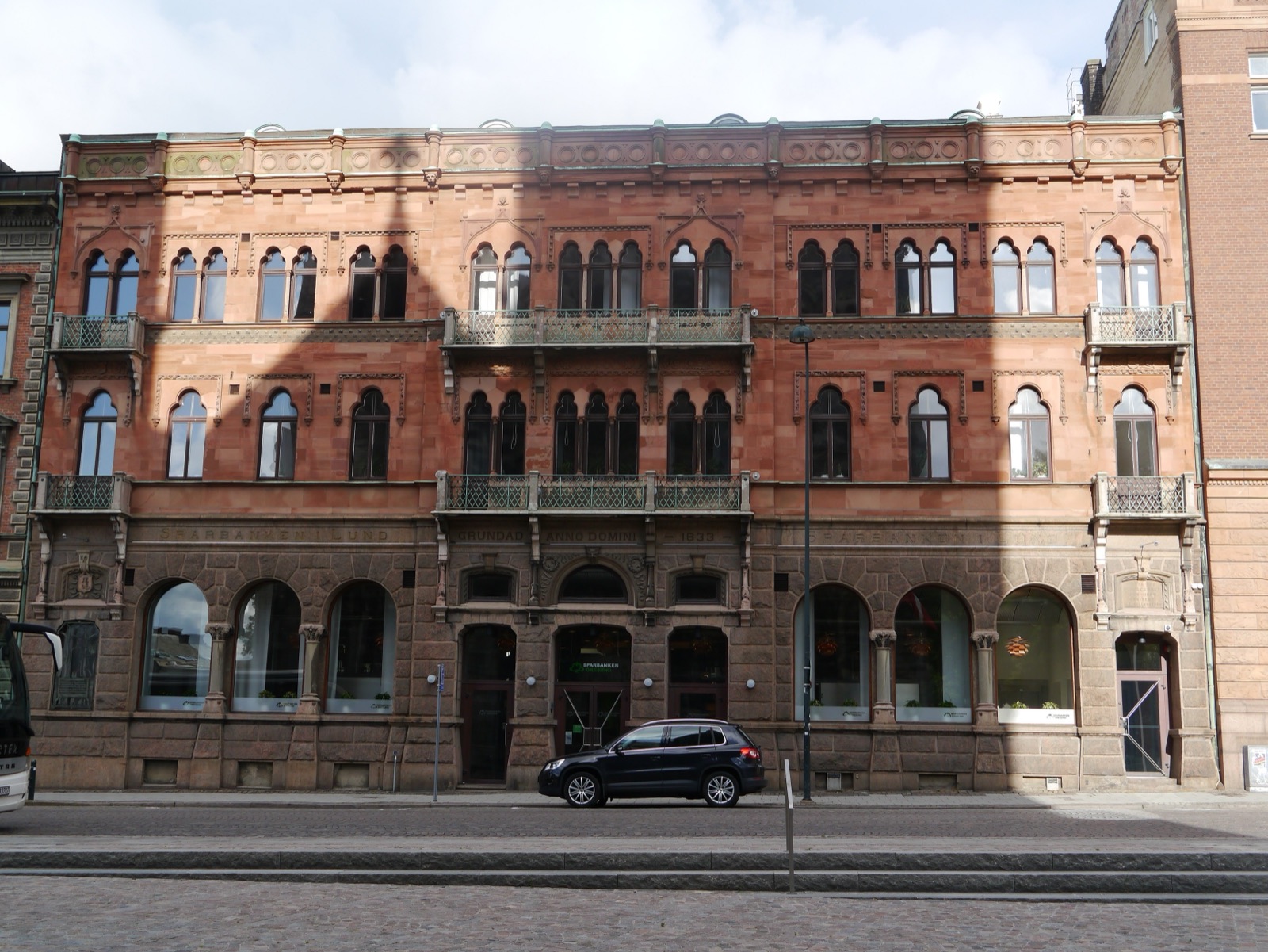
The main building of the former Vipeholm hospital outside Lund, today a secondary school. Built in 1935 as a state institution for adults with severe intellectual disabilities, it became, in the decade after 1945, the site of dental experiments carried out on patients who could neither leave nor consent. Wikimedia Commons / winvide, CC BY-SA 3.0.
The Vipeholm Experiments and the Toffee Made to Rot Teeth
Lund, Sweden, 1945–1955 — to discover what causes tooth decay, Swedish researchers fed institutionalised, intellectually disabled patients a specially made sticky toffee designed to ruin their teeth. The science it produced was real and lasting. So was the fact that no one ever asked the patients
- Category
- Health & Medicine
- Published
- Length
- 4,340 words · 19 min read
- Author
- The editors
There is a version of the Vipeholm story told as a triumph of public health: the studies that finally proved sugar causes cavities and gave the world the science of caries prevention. There is another told as a scandal: vulnerable people, unable to consent, deliberately harmed for data. Both are true, and the discomfort of holding them together is precisely what makes Vipeholm worth understanding. It is one of the clearest cases in the whole of medical history of good science produced by unethical means — and a reminder that the two are not opposites, but can be, terribly, the same act.
This is the story of that act.
Sweden's mouth of cavities
It is hard, now, to grasp how bad Sweden's teeth once were. In the first half of the twentieth century, dental caries was effectively universal in the Swedish population — children's teeth rotted, adults lost theirs young, and the cost to the public dental service, which the welfare state had committed to provide, was enormous and rising. Tooth decay was not a cosmetic worry; it was a major public-health problem, and one the authorities felt they did not actually understand. There were competing theories about what caused it — diet, heredity, vitamin deficiency, the chemistry of saliva — and no controlled proof of any of them.
In 1945 the National Board of Health (Medicinalstyrelsen) resolved to settle the question with a rigorous experiment. To do that properly required something that ordinary clinical research could not offer: a group of people whose diet could be controlled completely and identically for years, with no cheating, no snacks outside the study, no variation the researchers did not impose. In the free population, no such control was possible. In a closed institution, it was.
The pressure to act was not only medical but financial and political. Sweden had built, through the 1930s, one of the world's first comprehensive public dental services — Folktandvården, the national dental care system — committing the state to treating the population's teeth. That promise collided with a population whose teeth were catastrophically bad: surveys of military conscripts and schoolchildren found decay almost everywhere, and the cost of drilling, filling, and extracting on a national scale threatened to become unsustainable. For a welfare state that measured itself by its capacity to deliver universal care rationally and cheaply, caries was not just a disease but an administrative crisis. Solving it — understanding it well enough to prevent it rather than endlessly treat it — was a matter of real urgency to the authorities, and that urgency is part of what licensed the experiment that followed.
The institution and its people
Vipeholm had opened in 1935 as a national institution for adults deemed, in the categories of the era, "uneducable feeble-minded" — people with severe and profound intellectual disabilities for whom the state provided lifelong custodial care and little else. By the 1940s it held several hundred patients. They lived under total institutional control: their food, their movement, their days entirely administered. Many could not speak, and few had any way to advocate for themselves or to comprehend, let alone refuse, what was about to be done to them.
It is impossible to separate the Vipeholm experiments from the Sweden that produced them. This was the era of Swedish "race hygiene" and of a sterilisation programme, running from the 1930s into the 1970s, under which tens of thousands of people judged unfit — many of them poor, or disabled, or simply nonconforming — were sterilised, often under coercion. The same official mindset that could classify human beings as biological problems to be managed also made the residents of an institution like Vipeholm seem, to the researchers and authorities of the day, available — a resource for science rather than a community of people with rights. That background is not incidental to the story. It is the soil the experiments grew in.
For decades afterwards, none of this was treated as a scandal at all. The Vipeholm studies were cited in textbooks as a triumph, their ethical dimension simply unmentioned, in the same way the sterilisation programme went largely unexamined until the 1990s. The reckoning came late, when Swedish society began, at the end of the century, to look back at how it had treated the people it had once filed away as defective — the sterilised, the institutionalised, the "feeble-minded" of the old categories. It was in that wave of re-examination that Vipeholm was revisited as something other than a scientific success story, most thoroughly in historical scholarship of the 2000s that reconstructed, from the archives, exactly what had been done and to whom. The patients themselves left almost no trace in the record beyond their teeth; they are present in the great foundational caries study as data points, and almost nowhere as people with names.
The patients were, in the cold logic of experimental design, ideal subjects. They were a stable, captive population; their diet could be fixed absolutely; and they could be observed for years. Every quality that made them scientifically valuable was a quality that made them powerless.
It is worth pausing on what that control actually meant in practice. At Vipeholm, the researchers did not have to persuade anyone to follow a diet, monitor compliance, or worry that a subject might quietly eat something off-plan; the institution simply served the prescribed food, and the patients ate what they were given, day after day, year after year. The same walls that defined these people as wards of the state defined them, for the duration of the study, as a controlled environment. In the language of experimental design this was a strength — the elimination of "confounding variables." In human terms it was the elimination of choice. The two descriptions point at exactly the same fact, and the gap between them is the whole moral problem of Vipeholm in miniature: what reads, in a methods section, as rigour reads, in a hospital ward, as the total absence of a person's say over their own body.
The experiments
The Vipeholm work unfolded in two broad phases. The first, beginning in 1945, was a set of vitamin and nutrition studies, testing whether supplements or dietary changes could reduce caries. These produced little: adding vitamins did not meaningfully protect the teeth, and the question of what actively caused the decay remained open.
So the researchers turned the experiment around. If they could not easily prevent caries, they would induce it — deliberately — and by controlling exactly how, they would isolate the cause. This was the second and decisive phase, the carbohydrate studies that ran from roughly 1947 to 1949. Patients were divided into groups fed different regimes of sugar: some received sugar at meals, some in sweetened drinks, and some in the form that would make the study famous — sticky sweets eaten between meals.
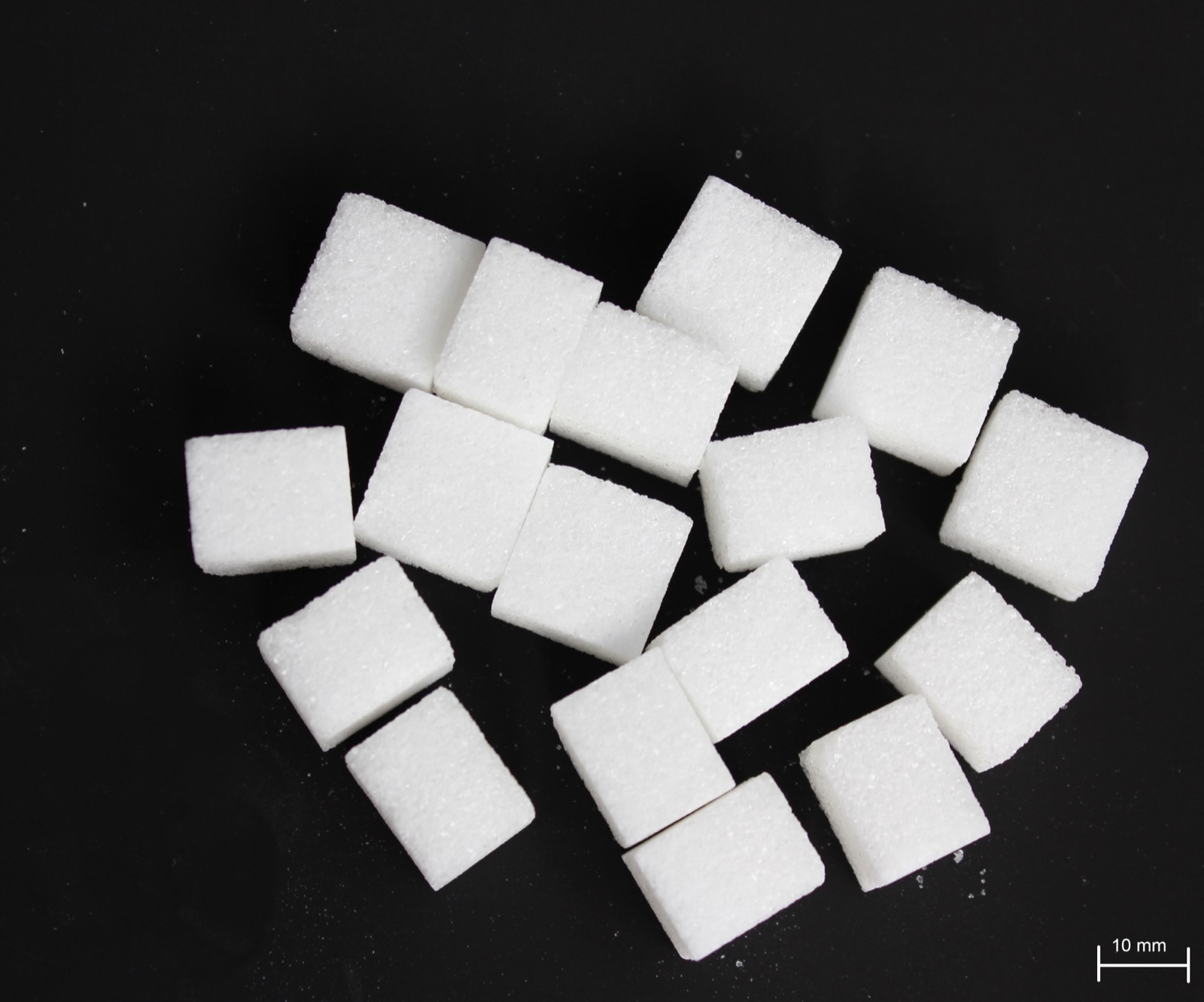
The centrepiece was a confection made specially for the study: a toffee, later remembered as the "Vipeholm toffee," formulated to be as sticky and retentive as possible, so that it would cling to the teeth and keep them bathed in sugar long after it was eaten. Patients in the toffee groups were given several of these a day, between meals — the precise pattern most likely, the researchers suspected, to cause decay. They were right. In the groups fed sticky sugar between meals, cavities multiplied; in some patients the destruction was rapid and severe. The teeth that were sacrificed were real teeth, in real mouths, and the damage — unlike a diet — could not be reversed.
The scale of the sugar involved was extreme by design. Patients in the most intensive toffee groups were given the sticky sweets many times a day, in quantities no one would call a normal treat — the point was to push the variable as hard as possible and watch what happened. The study ran for years, with patients examined repeatedly so that the progress of decay could be charted tooth by tooth across the different dietary groups. Set beside a control group kept on a diet low in sugar, the contrast was stark and unmistakable: the more often the teeth met sticky sugar, the faster and more completely they rotted. It was, as experimental proof, almost brutally clear — and the clarity was a direct function of how far the researchers were willing to push the harm. A gentler experiment would have been a weaker one. The certainty the Vipeholm studies delivered was, quite literally, measured in ruined teeth.
The sugar industry's hand
There is a further complication that has drawn attention in the decades since: the Vipeholm studies were funded, in part, with the cooperation and money of the sugar and chocolate industry. Sweden's sugar producers and confectionery makers had an obvious interest in the question of whether their product caused disease, and they were involved in financing the research into it.

The simplest version of the story — that the industry paid for the research hoping to clear sugar's name, and was undone when the results convicted it — is too neat; historians who have studied the archives describe a more tangled relationship, in which the industry sought influence and scientific cover as much as exoneration. But the essential tension is real and uncomfortable: research that deliberately harmed captive patients to study the dangers of sugar was financed, in part, by the people who sold the sugar. And when the results pointed unambiguously at their product, the public-health conclusions that followed were, for years, applied gently. The finding that sugar caused decay did not lead Sweden to suppress sugar; it led to advice about how to eat it.
This pattern — an industry funding the science on its own product and helping to shape how the findings were framed — is one that recurs across this archive, from tobacco to opioids to leaded petrol. The Vipeholm case is milder than the worst of them: the research was not suppressed or falsified, and its central conclusion, damning to sugar, was published plainly. But the softness of the public-health response that followed — the emphasis on managing consumption rather than reducing it — fit the industry's interests comfortably, and the confectionery makers continued to sell sweets to a nation that had simply been taught to schedule them. A finding that might have been wielded as an indictment of sugar was instead metabolised into a manageable piece of dietary etiquette. Whether by design or drift, the people who funded the proof that their product rotted teeth emerged from the affair with their market intact.
What it proved, and what came of it
For all the unease around them, the Vipeholm studies were scientifically decisive. Published in the early 1950s — most influentially in 1954 — they provided the first rigorous, controlled demonstration that dental caries is a sugar-driven disease, and, crucially, that its severity depends on the frequency and form of sugar consumption rather than simply the total amount. Sticky sweets eaten throughout the day were far more destructive than the same sugar taken with meals. This was a foundational result of modern cariology, and it has held up: the basic picture the Vipeholm work established is still taught and still true.
The public-health legacy followed directly. If the danger lay in frequent, sticky sugar between meals, then the remedy was to confine sweets to a single occasion. Out of this came one of the most distinctive features of Swedish life: lördagsgodis, the custom — actively promoted by dental authorities from the 1950s and 1960s — of eating sweets only on Saturdays, so that children could enjoy candy without grazing on sugar all week. A nation taught its children to save their sweets for one day, and its dental health, over the following decades, improved dramatically. The advice that millions of Swedish families still follow was drawn, at its root, from what was done to the patients of Vipeholm.
There is a quiet irony in how completely that origin has faded. To most Swedes, lördagsgodis is simply a warm childhood custom, a treat to look forward to at the end of the week, with no shadow attached to it at all. The pick-and-mix wall at the supermarket, the paper bag filled on a Saturday afternoon — these are among the gentlest images in Swedish life, and almost no one buying the sweets connects them to a hospital ward full of disabled patients fed toffee until their teeth dissolved. The knowledge has been so thoroughly absorbed, and so far separated from its source, that the tradition feels like common sense rather than the residue of an experiment. That is how most hard-won medical knowledge ends up: detached from the circumstances of its making, taken for granted, its human cost invisible. Vipeholm is a case where that cost is worth keeping in view.
The ethics
By any standard recognised today, the Vipeholm experiments were gravely unethical, and the reasons are not subtle. The subjects were people with severe intellectual disabilities, confined to a state institution, who could not understand the research and could not give informed consent to it. No meaningful consent was sought — not from patients who were incapable of giving it, nor, in any substantive way, from anyone empowered to protect their interests. And the harm was not a risk but a goal: the decisive phase set out deliberately to cause tooth decay, and it succeeded, leaving patients with permanent damage to their teeth for the sake of the data.
The comparison most often drawn is with the Tuskegee syphilis study in the United States, which overlapped Vipeholm in time and shared its essential structure: a vulnerable, disempowered population observed and harmed for medical knowledge without their informed consent. The differences matter — Tuskegee withheld a cure to watch a fatal disease progress, while Vipeholm inflicted a non-fatal one — but the underlying logic is the same, and so is the lesson. Both belong to a mid-century moment, before the Declaration of Helsinki and the modern apparatus of ethics review, when researchers in respectable institutions could treat marginalised people as instruments because nothing in their professional world told them they could not. What the Nuremberg trials had just established about Nazi medical experiments — that consent is not optional, that the subject's welfare comes first — had not yet hardened, in ordinary practice, into rules that bound a dental study in a Swedish hospital or a public-health study in the American South.
What is established, and what we weigh now
Unusually for this archive, there is almost nothing factually contested about Vipeholm. The experiments happened; the design is documented; the findings were published and have stood for seventy years; the harm to the patients was real. There is no cover-up to expose and no hidden truth to recover. What Vipeholm demands instead is a moral reckoning, and that is harder than a factual one, because it refuses an easy verdict.
The temptation is to resolve the discomfort in one direction or the other — to dismiss the science because of how it was obtained, or to excuse the method because of what it produced. Both are evasions. The honest position is to hold both facts at once: that the Vipeholm studies gave the world real and lasting knowledge that has spared enormous suffering, and that they did so by harming people who had no voice and no choice, in a way that was wrong when it was done and is wrong now. The knowledge cannot be un-learned, and pretending it is worthless would dishonour the patients a second time. But neither can the means be laundered by the value of the result — because if they could, then any captive population would be fair game for any sufficiently important question.

In the end, Vipeholm endures as a particular kind of monument: not to a secret, but to a blind spot. The teeth of people who could not speak for themselves taught a nation how to protect its children's, and the lesson was learned so thoroughly that lördagsgodis became a cherished tradition, its origins largely forgotten. Remembering where it came from is not an argument against the knowledge. It is an obligation to the people who paid for it — and a caution that the line between a public good and a private wrong can run straight through the same careful, well-meaning experiment.
Sources
- B. E. Gustafsson et al., "The Vipeholm Dental Caries Study: The Effect of Different Levels of Carbohydrate Intake on Caries Activity in 436 Individuals Observed for Five Years," Acta Odontologica Scandinavica (1954) — primary.
- The published Vipeholm vitamin and carbohydrate study reports (early 1950s) — primary.
- Records and reporting on the Medicinalstyrelsen's commissioning of the studies — primary.
- Elin Bommenel, Sockerförsöket: Kariesexperimenten 1943–1960 på Vipeholms sjukhus för sinnesslöa (2006) — academic, the leading historical study.
- Scholarship on the history of Swedish institutional care and the sterilisation programme of 1934–1976 — academic.
- Histories of cariology crediting the Vipeholm studies as foundational — academic.
- Swedish public-health accounts of the origin of lördagsgodis — secondary.
- Later journalistic and ethical reexaminations of the experiments (Swedish press and broadcasting, 1990s–2000s) — secondary.
- Comparative literature on research ethics and the abuse of captive populations, including the Declaration of Helsinki (1964) — academic.
Inspired this / based on it
Elin Bommenel
The definitive historical study (doctoral thesis) reconstructing the experiments and their ethics from the archives.
Filed under
- #vipeholm
- #sweden
- #dental-caries
- #human-experimentation
- #research-ethics
- #sugar
- #informed-consent
- #lordagsgodis
- #1940s
- #1950s
- #confirmed
Click any tag for every article carrying it.
Continue reading
The Tuskegee Syphilis Study
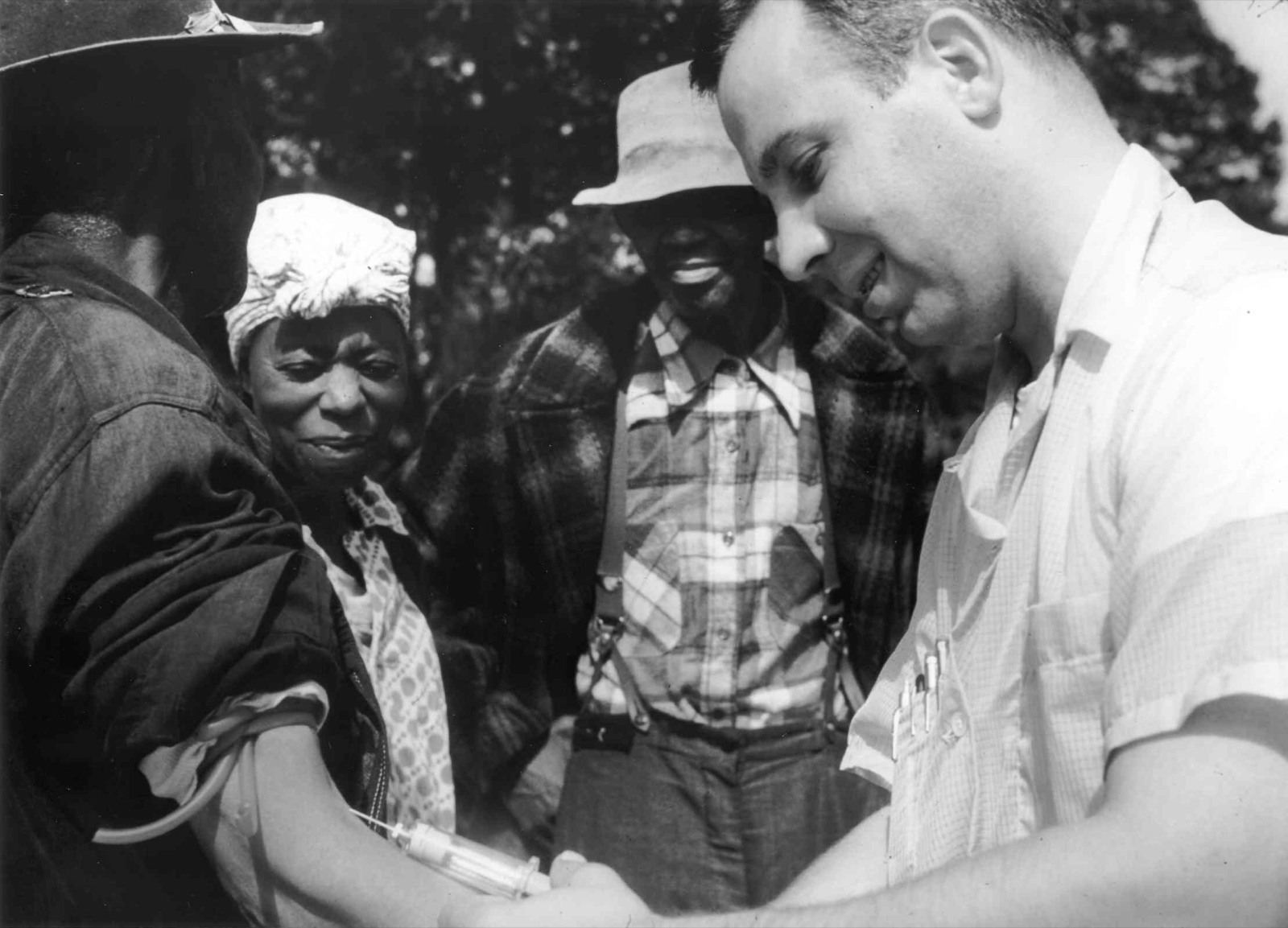
In 1932, the U.S. Public Health Service began a study of 399 Black men in Macon County, Alabama, who had syphilis. They were told they were being treated. They were not. For forty years — including the twenty-five years after penicillin became standard care — the Public Health Service watched the disease take its course. A whistleblower's documents reached the Associated Press on July 25, 1972, and the study ended a few months later. President Clinton apologized on behalf of the United States government in 1997.
Big Tobacco's Cancer Cover-Up
On the morning of January 4, 1954, a full-page advertisement appeared in 448 American newspapers under the headline *A Frank Statement to Cigarette Smokers*. It was signed by the chief executives of the United States' six largest tobacco companies. The advertisement assured the American public that 'there is no proof that cigarette smoking is one of the causes of cancer' and that the industry would underwrite scientific research to find the truth. The advertisement had been drafted by John W. Hill of the Hill & Knowlton public-relations firm, hired by the tobacco industry's chief executives at a meeting at the Plaza Hotel in New York on December 14-15, 1953. The strategy that the meeting produced — manufacture doubt about epidemiological evidence the industry already privately accepted, do this through industry-funded research that produced findings inconsistent with the public-health consensus, and continue to sell cigarettes to American smokers while doing so — would be sustained for forty-four years. It would be ended, in 1998, by the Master Settlement Agreement: the largest civil legal settlement in American history at $206 billion across 25 years, paid by the surviving tobacco companies to 46 states, the District of Columbia, and five U.S. territories. By that point, an estimated 8 million Americans had died from smoking-related cancers, cardiovascular disease, and respiratory illness during the cover-up period.

MK-Ultra
Between 1953 and 1973, the Central Intelligence Agency ran one of the most ambitious — and least restrained — human-experimentation programs in American history. The goal was mind control. The subjects rarely knew they were subjects. By the time the public found out, most of the records had been burned.