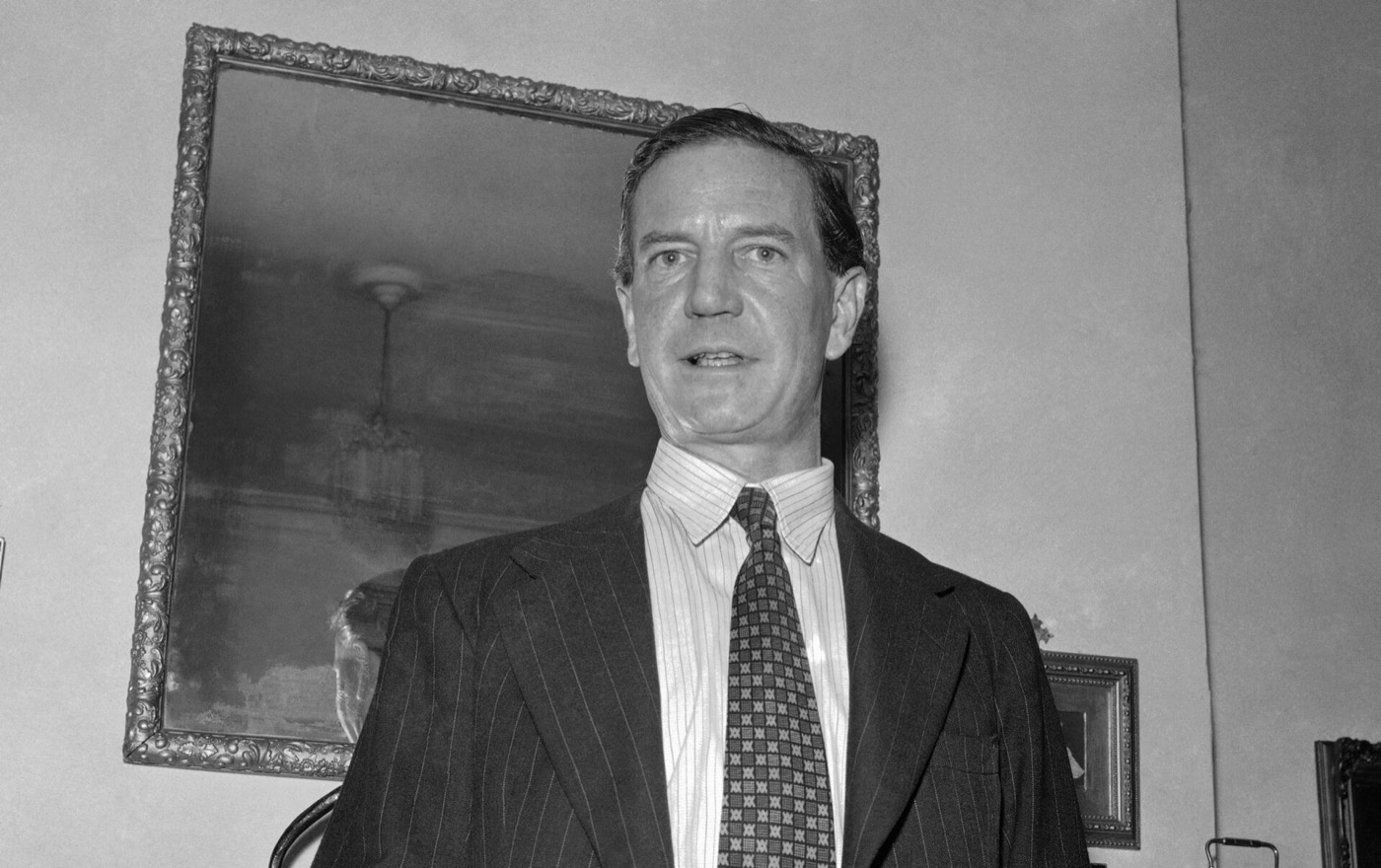
Kim Philby in 1955, calmly facing the press to deny he was a Soviet agent — a performance so convincing it bought him eight more years of freedom. Philby rose to the top of British intelligence while working the entire time for Moscow. Wikimedia Commons / Public domain.
The Cambridge Five and the Spies at the Heart of British Intelligence
United Kingdom and USSR, 1934–1980s — Five brilliant young men recruited at Cambridge passed Britain's deepest secrets to Moscow for decades, rising to the top of its intelligence services. One of them came within reach of running MI6 itself — while working all along for the enemy
- Category
- Cold War Files
- Published
- Length
- 3,900 words · 20 min read
- Author
- The editors
Most spy scandals are stories of weakness — of money owed, of blackmail, of grudges nursed. The Cambridge Five are a more unsettling kind of story, because their treason came not from need but from conviction, and not from the margins of society but from its very centre. They were the golden products of England's elite: Cambridge-educated, well-connected, charming, destined for the heights of public life. And they used every advantage that breeding and brilliance gave them to serve a foreign power, for decades, against their own country. What makes their story endure is not only the scale of the damage they did, but what their long success revealed about the establishment that produced them: that a class so confident of its own loyalty could not imagine the traitor wearing its own face.
This is the story of the spies at the heart of British intelligence.
The recruitment of a generation
To understand the Cambridge Five, one must understand the world that made them. In the early 1930s, with the Great Depression throwing millions out of work, fascism rising across Europe, and the Western democracies seeming paralysed and discredited, many of the brightest young people at Britain's universities turned sharply to the left. To them, the Soviet Union appeared not as the tyranny later generations would recognise but as the one great power willing to stand against fascism and to build, however brutally, a new and fairer kind of society. Communism, in those years, was for a certain kind of idealistic, privileged young Englishman not a betrayal of his values but their fullest expression.
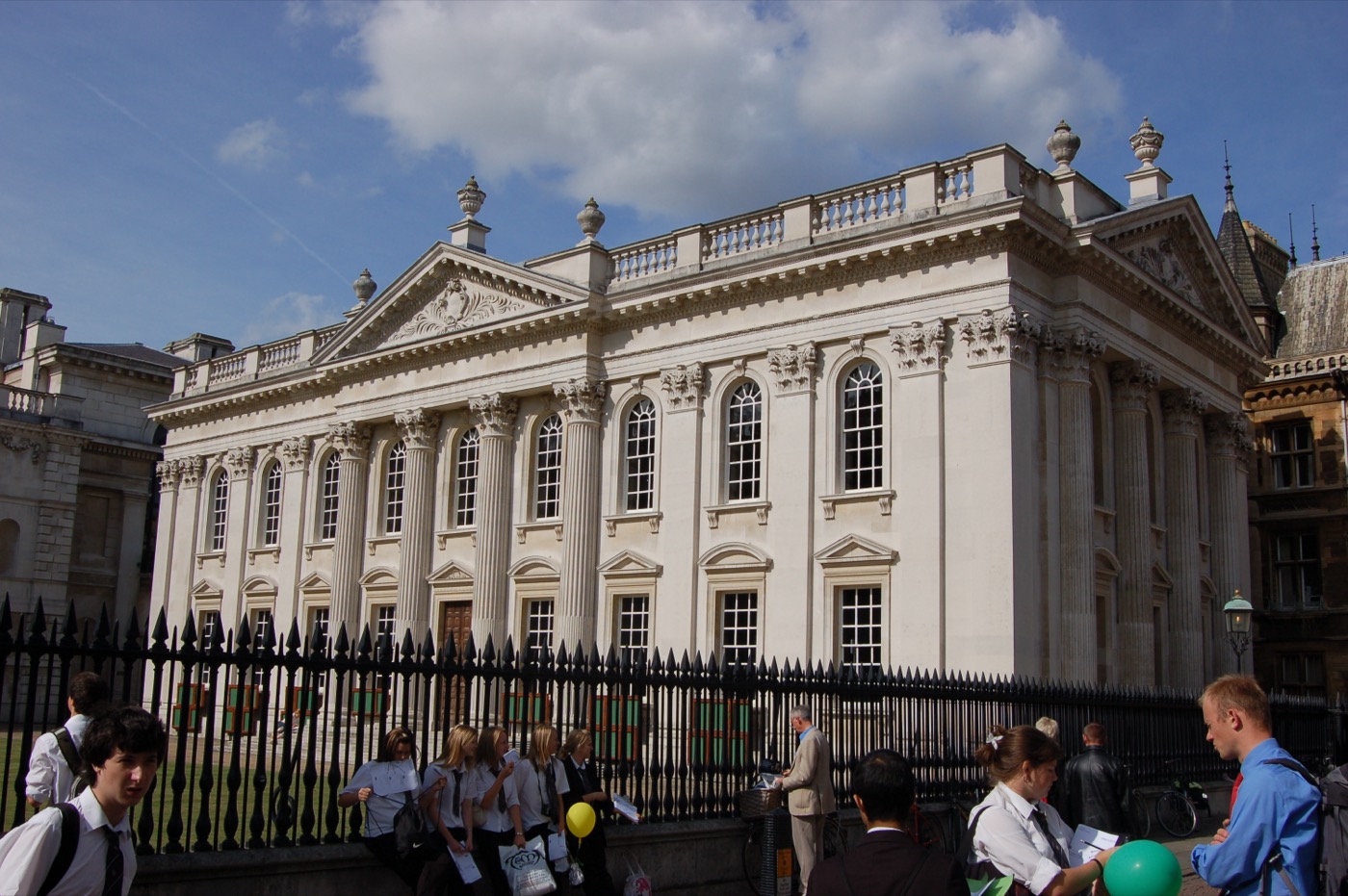
Soviet intelligence understood this current of feeling and saw in it an extraordinary opportunity. Rather than recruit established officials, who might be watched or wavering, it would identify gifted communist-sympathising students at the elite universities, quietly persuade them to hide their politics, and cultivate them over years as they climbed into positions of trust. The plan demanded patience and discipline: the recruits had to renounce open political activity, feign conventional views, and wait, sometimes for a decade, before they were in a position to deliver. It was a long-term investment in penetration, and at Cambridge in the 1930s it paid off spectacularly.
The man who set the trap was a Soviet illegal named Arnold Deutsch, an Austrian-born intellectual of rare gifts who operated in London under cover and who grasped, better than most, the psychology of the young men he was cultivating. Deutsch did not approach them as a recruiter buying a service; he approached them as a kindred spirit offering a secret vocation — a chance to be, beneath their conventional careers, soldiers in a hidden war for a better world. He flattered their idealism and their sense of being exceptional, and he asked of them not immediate betrayal but patience: to break openly with communism, to take respectable jobs, and to wait until they could serve from within. It was a recruitment built on conviction and vanity rather than coercion, and it bound the five to their cause far more durably than money ever could. That is part of what made them so dangerous and so hard to detect: they were not hirelings who might be bought back, but believers who had chosen their treason and would sustain it for decades.
The five men who became its greatest prize were a study in elite British promise. Harold "Kim" Philby, son of a famous Arabist explorer, was magnetic and ambitious. Guy Burgess was a flamboyant, brilliant, dissipated talker who seemed to know everyone. Donald Maclean was a tall, handsome high-flyer marked early for the Foreign Office. Anthony Blunt was a coolly distinguished art historian. John Cairncross was a gifted linguist of more modest background. Recruited and run by talented Soviet handlers, they were instructed to bury their communism and rise — and rise they did, into exactly the institutions Moscow most wanted to read.
Inside the secret state
By the Second World War, the long Soviet investment was maturing. The men of the ring had moved into the very heart of Britain's secret machinery, and from there they handed Moscow a stream of material of incalculable value. Cairncross, working at Bletchley Park — the codebreaking establishment that cracked German ciphers — passed decrypted intelligence to the Soviets, including warning of German plans on the Eastern Front. Blunt, inside MI5, betrayed the security service's operations. Burgess and Maclean fed diplomatic and political secrets from the Foreign Office. And Philby, most damagingly of all, rose inside MI6.
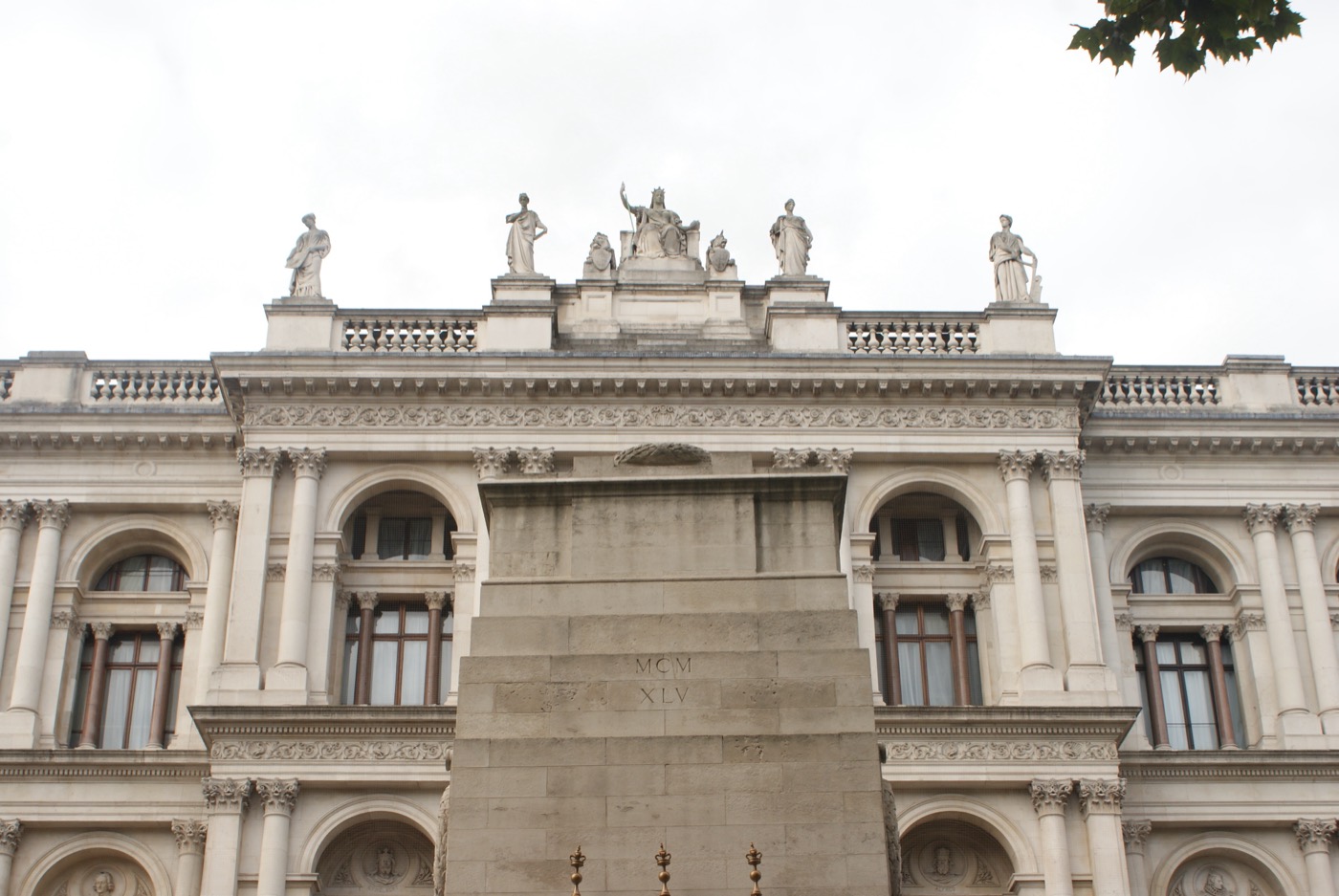
Cairncross's wartime service shows how valuable the ring's product could be. Working at Bletchley Park, where Britain read the enciphered communications of the German military, he passed decrypted material eastward at a moment when the Soviet Union was fighting for survival. According to the accepted account, the intelligence he supplied included German air-force dispositions ahead of the colossal armoured battle at Kursk in 1943 — warning that may have helped the Red Army prepare for one of the decisive clashes of the war. Here was treason of a peculiar kind: secrets stolen from a wartime ally and handed to another, in the service of a cause the spy judged higher than his country's own policy. To Cairncross it was solidarity with the nation bearing the brunt of the fighting; to British intelligence, had it known, it was the betrayal of its most precious secret, the very fact that Germany's ciphers had been broken.
Philby's career was the most breathtaking act of the whole affair. He joined MI6 and proved himself so capable that he was given charge of its work against the Soviet Union — placed, in other words, in command of the very effort he was secretly sabotaging. He was able to warn Moscow of British and American operations against Soviet targets, to betray agents and defectors, and to steer counter-intelligence away from himself and his friends. When a Soviet intelligence officer named Konstantin Volkov offered in 1945 to defect and expose Soviet agents inside British intelligence, the case was handled by none other than Philby — who tipped off Moscow, and Volkov was seized and never heard from again. People died because of Philby's betrayals, among them agents sent into Soviet-controlled territory whose missions he had revealed.
The most concrete measure of the harm came after the war, in the secret operations the West mounted against the Soviet bloc — and which Philby, from his commanding position, betrayed. In the late 1940s and early 1950s, Britain and the United States attempted to roll back communism at its edges by infiltrating armed émigrés into countries like Albania, hoping to spark resistance. Philby, who helped coordinate the Anglo-American effort, passed the details to Moscow. The infiltrators were met as they landed, captured, and in many cases shot; operation after operation failed with a completeness that baffled their planners until the reason became clear. Men went to their deaths because the officer helping to send them was reporting their every move to the enemy. It is one thing to betray documents; it is another to betray the lives of those who trusted you to lead them, and Philby did both without apparent remorse.
Maclean's contribution was quieter but, in its way, just as grave. Posted to the British embassy in Washington in the years when the United States and Britain were jointly developing and guarding the secrets of the atomic bomb, he had access to the most sensitive nuclear and diplomatic material of the early Cold War. As a member of the combined policy machinery governing atomic cooperation, he was positioned to tell Moscow not only technical particulars but something even more valuable — how much the Americans knew, what they feared, and where the Western allies stood with one another. The Soviet Union's rapid progress toward its own bomb owed something to a constellation of spies, and Maclean was among the best placed of them.
The most chilling aspect of this period is how completely the men were trusted. They moved through the clubs and corridors of power as insiders beyond suspicion, their loyalty guaranteed, in the eyes of their colleagues, by their background. The same establishment solidarity that had eased their rise now blinded their service to the danger within it. The traitor, everyone assumed, would be an outsider, a foreigner, a man of the wrong sort. He would not be one of us.
The unravelling
The ring's downfall began not with a defector or a tip but with mathematics. During and after the war, Anglo-American codebreakers had been secretly decrypting fragments of Soviet intelligence cable traffic, in a project later known by the codename Venona. The decrypts were partial and painstaking, but by 1951 they had narrowed in on a Soviet agent, codenamed "Homer," who had operated inside the British embassy in Washington — and the evidence pointed unmistakably toward Donald Maclean.
The net was closing on Maclean in the spring of 1951. But the ring was warned. Kim Philby, then serving as MI6's liaison in Washington, knew of the Venona investigation and understood that Maclean was about to be caught — and that Maclean, under interrogation, might bring the others down with him. Through Burgess, a warning was passed. On 25 May 1951, Donald Maclean and Guy Burgess fled Britain, making their way across the Channel and eventually to Moscow, vanishing just as the authorities prepared to question Maclean. Their sudden disappearance — two senior Foreign Office men gone without a trace — became a sensation.
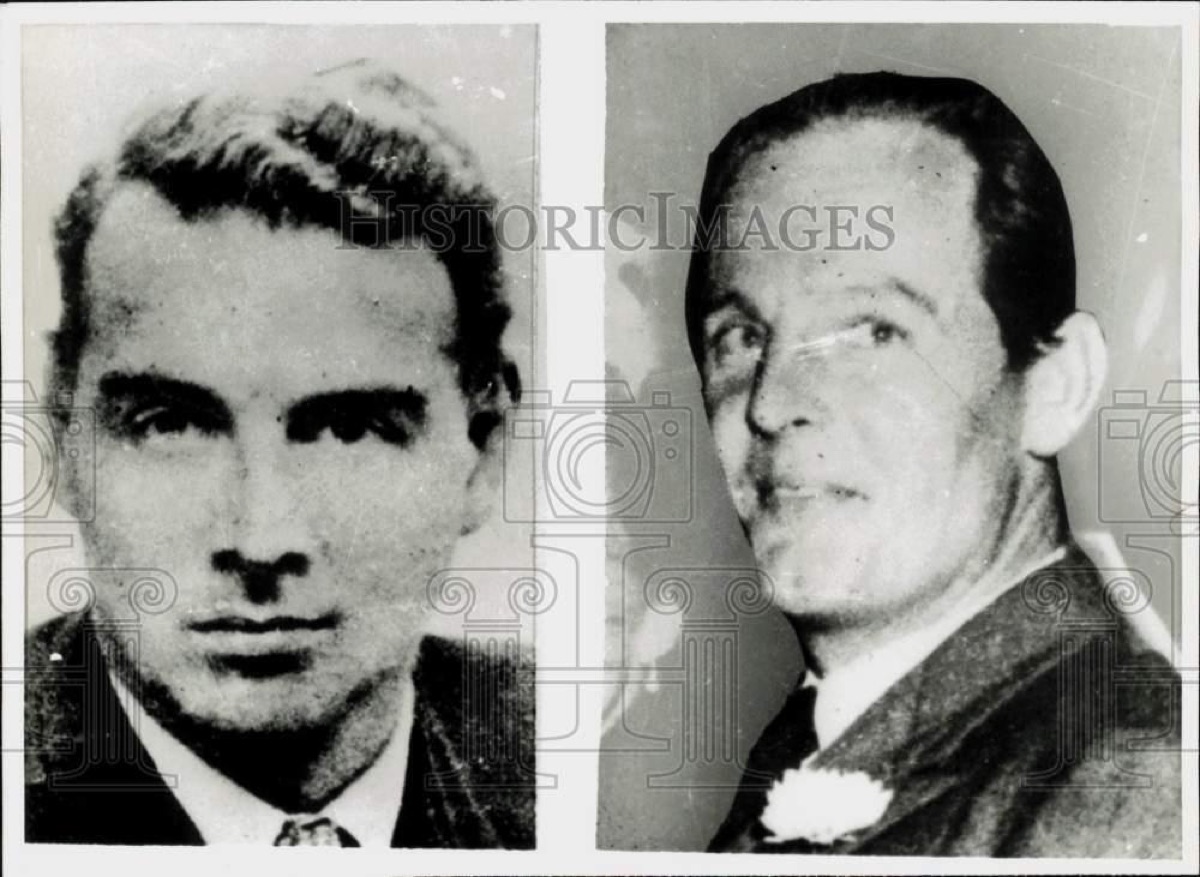
The flight of Burgess and Maclean turned suspicion sharply onto Philby. Burgess had, indiscreetly, been living in Philby's house in Washington, and the connection was glaring: how had the two known to run, if not from a tip inside intelligence? Philby was recalled and interrogated, and many in MI6 and the CIA were convinced of his guilt. Yet there was no proof that would stand up, and the establishment recoiled from the conclusion. Philby was eased out of MI6 but not prosecuted; some colleagues continued to defend him fiercely. In 1955, when a government minister named him in Parliament as the suspected "third man," Philby held a famous press conference at his mother's home and, with perfect upper-class sangfroid, denied everything. "I have never been a communist," he said, and the performance was so assured that he was substantially rehabilitated, even quietly re-engaged by MI6 as an agent and journalist in the Middle East.
Moscow, and the long reckoning
The truth caught up with Philby slowly. In the early 1960s, fresh evidence and a confession from an acquaintance hardened the case against him. In January 1963, confronted in Beirut by an old MI6 colleague who now knew the truth, Philby slipped away and boarded a Soviet ship. He surfaced months later in Moscow, where he would live out the rest of his life as a KGB pensioner — feted in Soviet propaganda, decorated, and quietly disappointed by the grey reality of the workers' paradise he had served. He died in Moscow in 1988 and was given a hero's funeral; the Soviet Union put his face on a postage stamp.
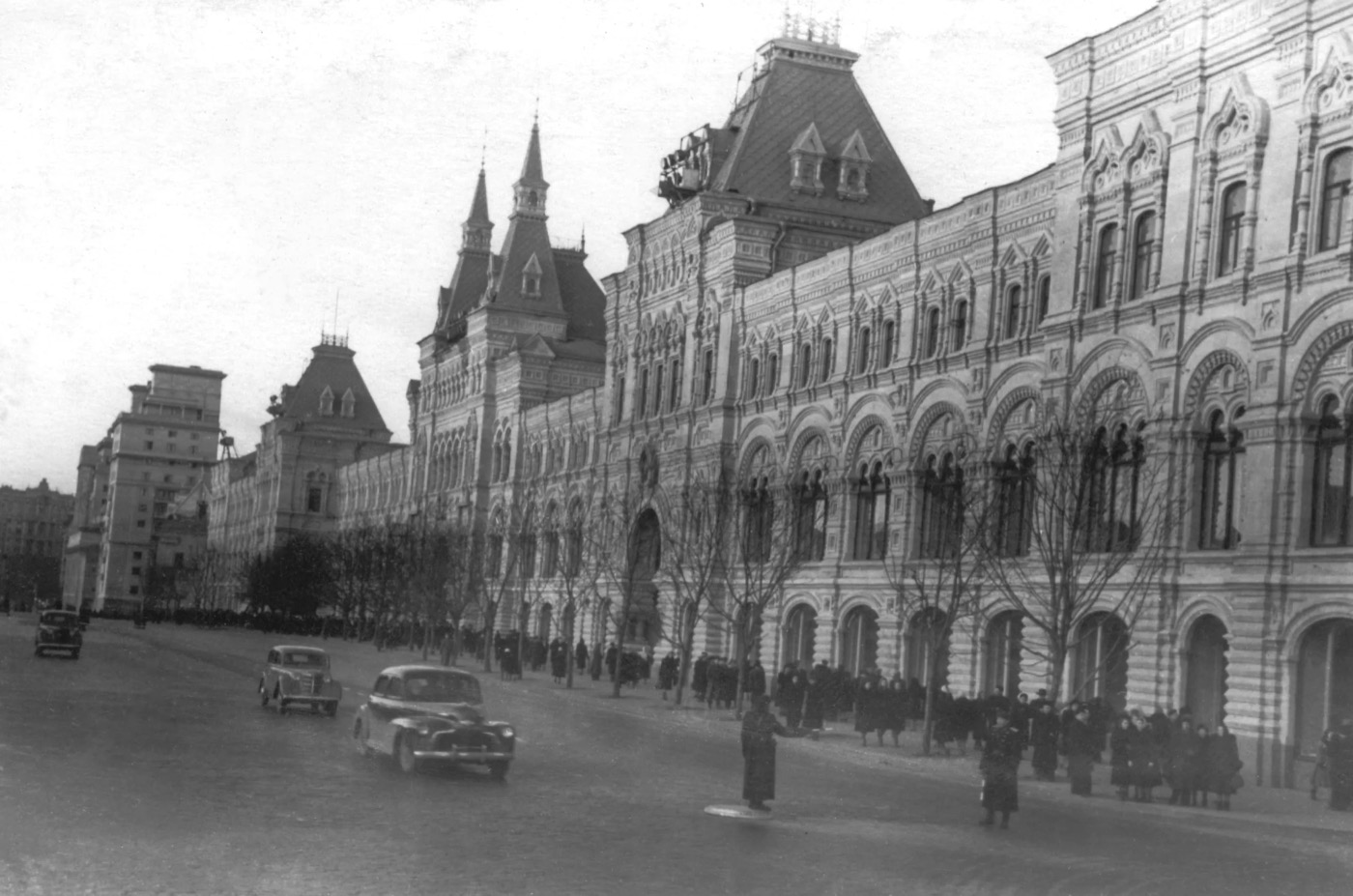
For all the honours, Philby's Moscow exile was not the triumph the propaganda suggested. The reality of Soviet life disappointed the romantic who had imagined it from afar; he was kept at arm's length by the KGB he had served, drank heavily, and grew lonely in a grey city far from the clubs and conversation he had loved. He remained, to the end, defiant about his choice, insisting he had served humanity rather than betrayed his country — the rationalisation of a man who had built his whole life upon a single, unalterable decision made at Cambridge and could not now disown it. Whatever he told himself, the bargain he had struck delivered him not to a better world but to a comfortable, supervised obscurity, mourned by the intelligence service of a state that would itself collapse three years after his death.
The others met varied ends. Maclean and Burgess lived out their lives in the Soviet Union; Burgess, homesick and drinking heavily, died there in 1963, while Maclean adapted more successfully and worked as a Soviet foreign-policy specialist until his death in 1983. Anthony Blunt's fate was the strangest. Having confessed secretly to British authorities in 1964 in exchange for immunity from prosecution, he continued for fifteen years as Sir Anthony Blunt, the distinguished Surveyor of the Queen's Pictures, his treason an official secret. Only in 1979 did the Prime Minister, Margaret Thatcher, name him publicly in Parliament; he was stripped of his knighthood and lived his remaining years in disgrace. John Cairncross, the elusive "fifth man," had also confessed quietly years before his role was publicly confirmed.
The Cambridge Five did damage that went far beyond the documents they handed over. They corroded the trust between British and American intelligence at the dawn of the Cold War; the Americans, appalled that London had harboured such penetration, grew wary of sharing their most sensitive secrets. They forced a wrenching, paranoid hunt for further moles that consumed Western intelligence for years and ruined some innocent careers in the process. And they left a permanent stain on the idea, so dear to the British establishment, that loyalty could be read off a man's school tie.
Why the establishment could not see
The enduring question of the Cambridge Five is not how they were recruited — the ideological currents of the 1930s explain that well enough — but how they survived undetected for so long, and why, even once suspected, men like Philby were protected. The answer lies in the nature of the British establishment itself, and it is the part of the story with the longest reach.
In the end, the Cambridge Five are remembered less for any single secret they stole than for what their long success revealed. Five men of the British elite served a foreign power for decades from within the nation's most trusted institutions, and they were able to do so because the institutions could not conceive that men like themselves might betray them. The secrets they handed over mattered; the agents they exposed died; the alliance they strained took years to mend. But the most lasting damage was to a comfortable illusion — that loyalty announces itself in the right accent and the right connections. The ring proved, at terrible cost, that it does not, and that the question a serious security service must always be willing to ask is the one the establishment of the 1930s could not: not whether a man is the right sort, but simply, and without deference, where his loyalties truly lie.
Inspired this / based on it
Kim Philby
Philby's own memoir, written in Moscow exile.
Ben Macintyre
Bloomsbury. A definitive account of Philby and his friendship with MI6's Nicholas Elliott; adapted as a 2022 TV series.
BBC
Dramatized miniseries following the four principal members of the ring.
Filed under
- #cambridge-five
- #kim-philby
- #guy-burgess
- #donald-maclean
- #anthony-blunt
- #kgb
- #mi6
- #espionage
- #cold-war
- #confirmed
Click any tag for every article carrying it.
Continue reading
Venona: The Secret Code-Break That Exposed the Soviet Spies
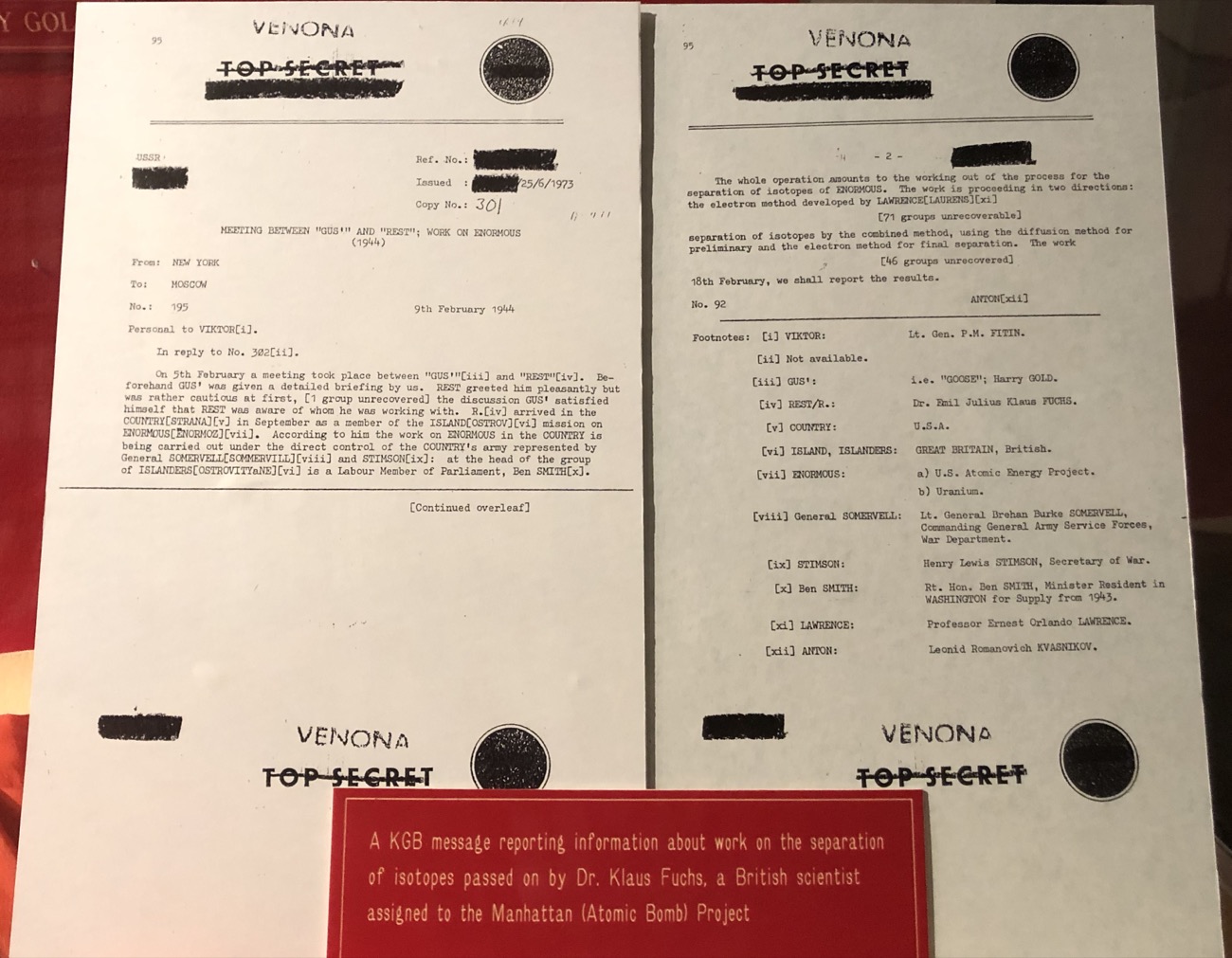
In February 1943, in a converted girls' school outside Washington, a small team of American codebreakers began an attack on a target almost everyone believed was hopeless: the enciphered cable traffic of Soviet intelligence. The Soviets encrypted their most secret messages using a one-time pad, a system that is, in theory, mathematically unbreakable — and the Soviet Union was, at that moment, an ally of the United States in the war against Hitler. Yet the project, later given the codename Venona, would become one of the most consequential intelligence operations of the twentieth century. Exploiting a wartime mistake by Soviet cipher clerks, who had reused pages of supposedly single-use pads, the American cryptanalysts slowly, painstakingly began to read the unreadable. What they found, message by fragmentary message across years of labour, was staggering: the Soviet Union had run a vast espionage campaign inside the United States during the war, with hundreds of sources reaching into the Manhattan Project that built the atomic bomb, the State Department, the Treasury, and the heart of the intelligence services of both America and Britain. Venona helped expose the atomic spy Klaus Fuchs, the ring around Julius and Ethel Rosenberg, and the British traitor Donald Maclean of the Cambridge Five. But the decrypts were guarded with such obsessive secrecy that they could not be used as evidence in open court, and for decades the government knew truths it could not prove and could barely speak. The project remained classified until 1995, when the release of its files rewrote the secret history of the early Cold War. This is the story of the code-break that saw into the heart of Soviet espionage, and of the silence that surrounded it for fifty years.
The Stasi Archives
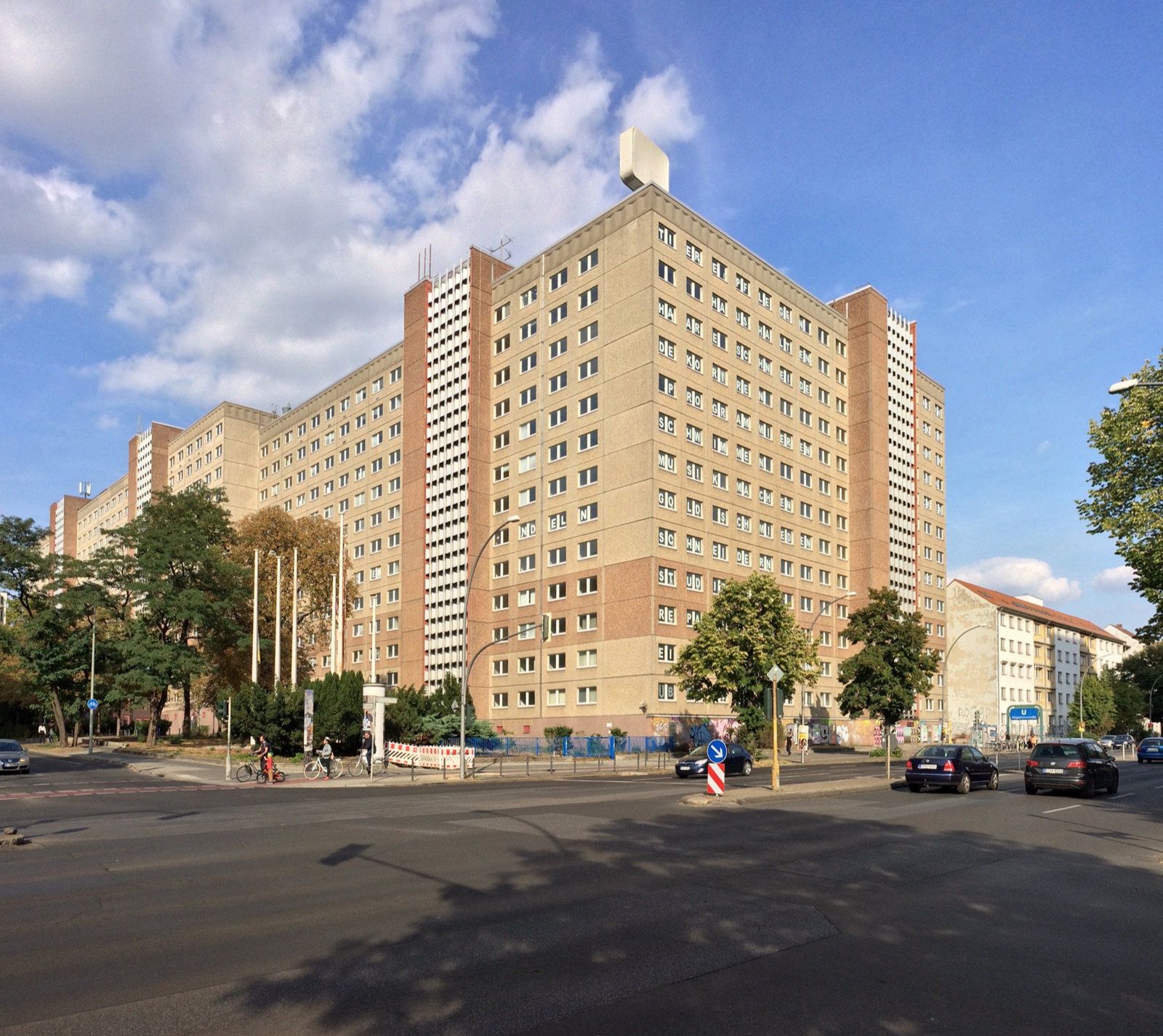
On the evening of Monday, January 15, 1990 — eight weeks after the Berlin Wall opened and four weeks after the Round Table had begun negotiating East Germany's transition — approximately five thousand demonstrators forced their way through the iron gates of the Ministry for State Security headquarters on Normannenstraße in the East Berlin district of Lichtenberg. The Bürgerkomitee 15. Januar (Citizens' Committee of 15 January) had organized the breach in response to evidence that Stasi officers had spent the prior weeks systematically shredding operational files. Inside the headquarters — a complex of 22 connected buildings housing approximately 7,000 of the Ministry's central-office personnel — the demonstrators found Stasi staff still at desks. The shredding stopped that night. Over the following 24 months, the East German interim government, the post-reunification Bundestag, and the citizen committees of fourteen East German cities preserved what would become the most extensive corpus of state-surveillance operational records in modern human history: approximately 111 kilometers of paper files in the central Berlin archive, approximately 47 kilometers in regional offices, 1.7 million photographs, 30,000 video and audio tapes, 15,500 bags of pre-shredded fragments awaiting reconstruction, and the operational, biographical, and personal-network files of an estimated 5.6 million individuals. The Stasi-Unterlagen-Gesetz (Stasi Records Act) of December 20, 1991 established the Federal Commissioner for the Records of the State Security Service (BStU), with East German pastor and civil-rights activist Joachim Gauck as its founding director. The Records Act authorized any individual to request their personal Stasi file. By the end of 2024, the BStU had processed approximately 7.4 million such requests. The aggregate human record of what those requesters read — who had informed on them, what had been documented, what had been done in consequence — constitutes the most comprehensive case study of institutional state surveillance against a domestic civilian population that the historical record contains.
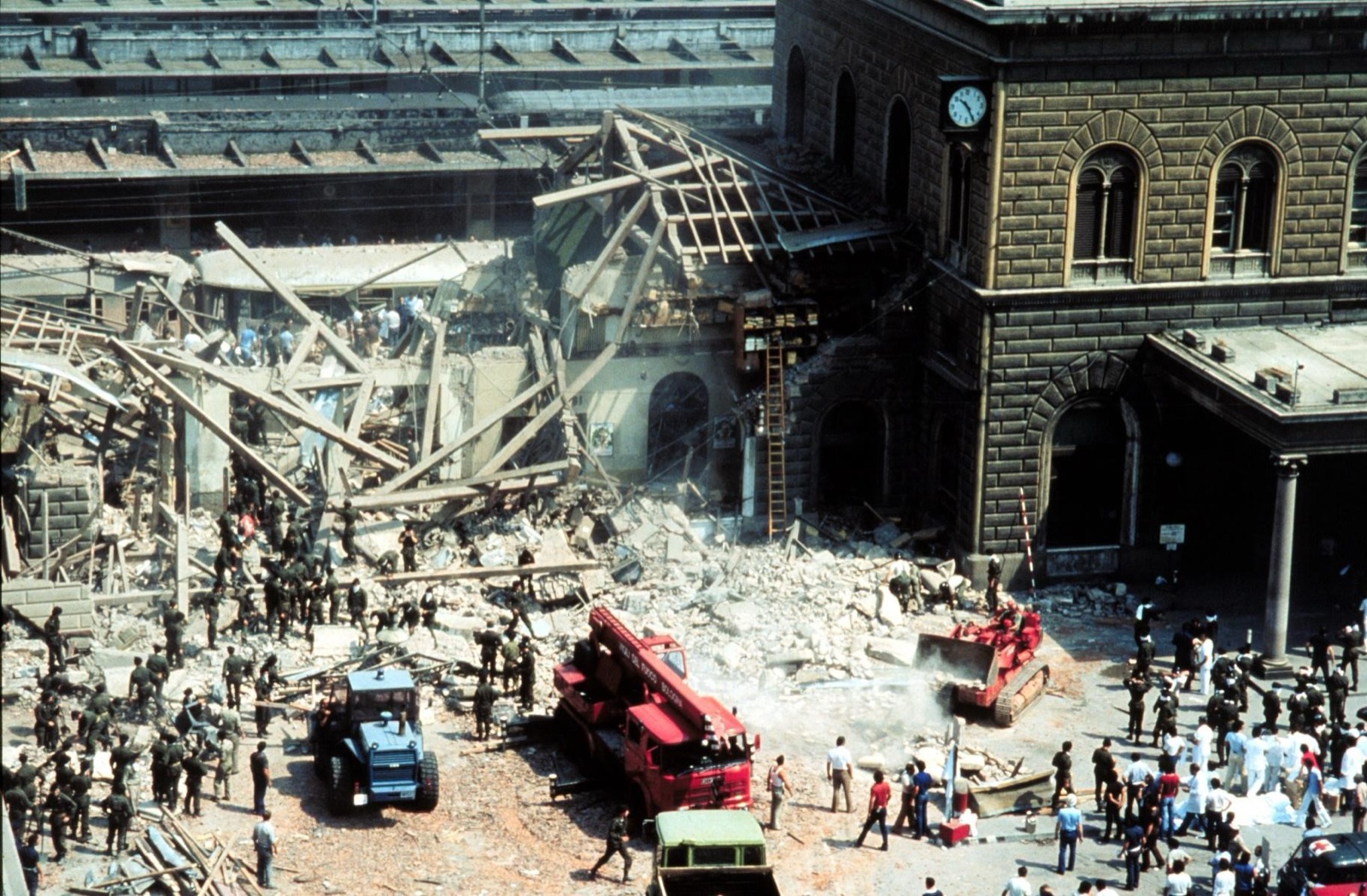
Operation Gladio
From 1956 onward, NATO and the CIA helped build clandestine paramilitary networks across Western Europe — Italy, Belgium, West Germany, France, the Netherlands, Greece, Turkey, Spain, Portugal — designed to wage guerrilla war if the Red Army crossed the Iron Curtain. The Red Army never crossed. The networks did not disband. In Italy, where the operation was codenamed Gladio, the same structures became entangled with right-wing terror that killed hundreds of civilians between 1969 and 1984. The network's existence was confirmed by the Italian Prime Minister, in Parliament, on October 24, 1990.