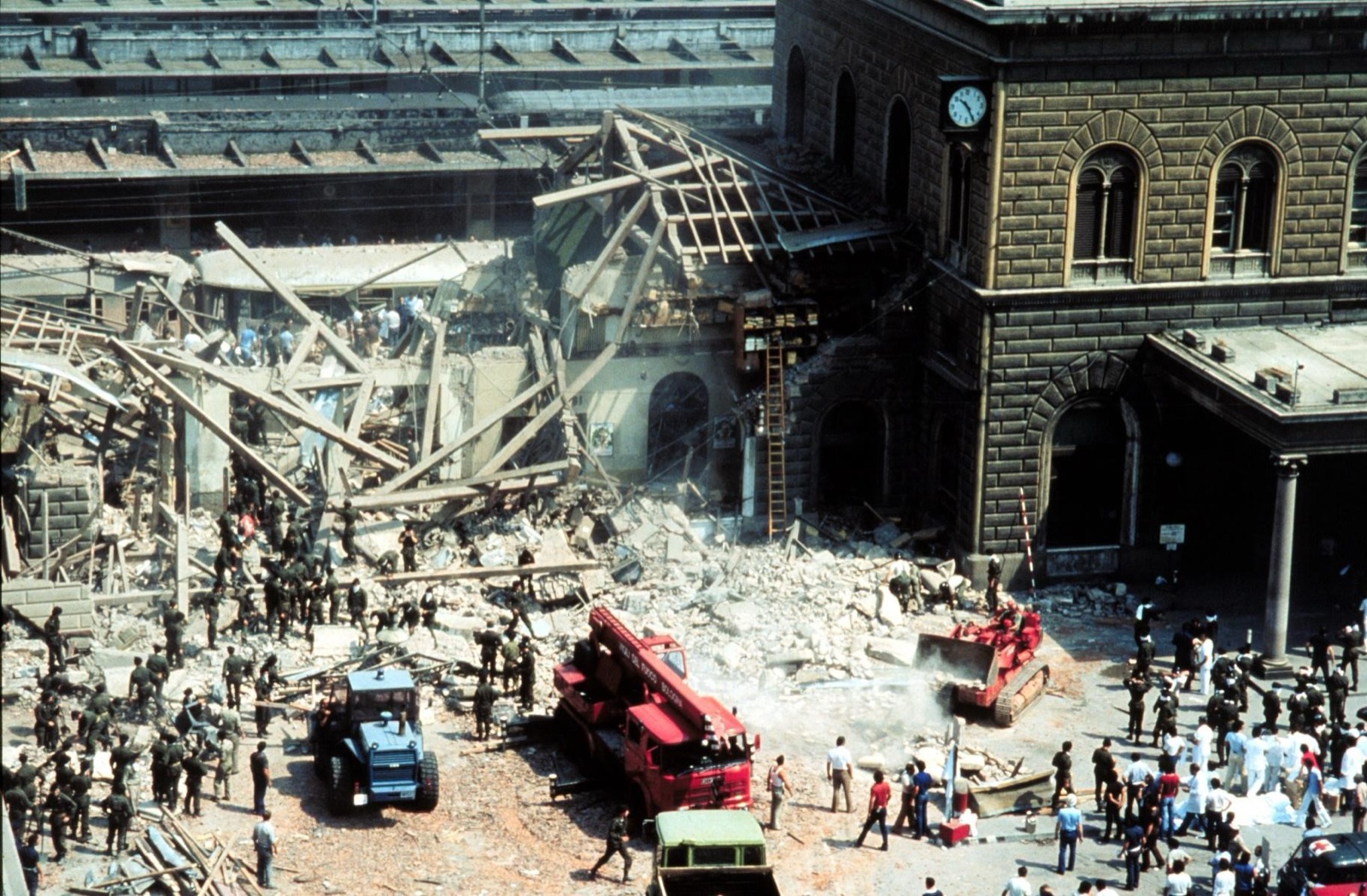
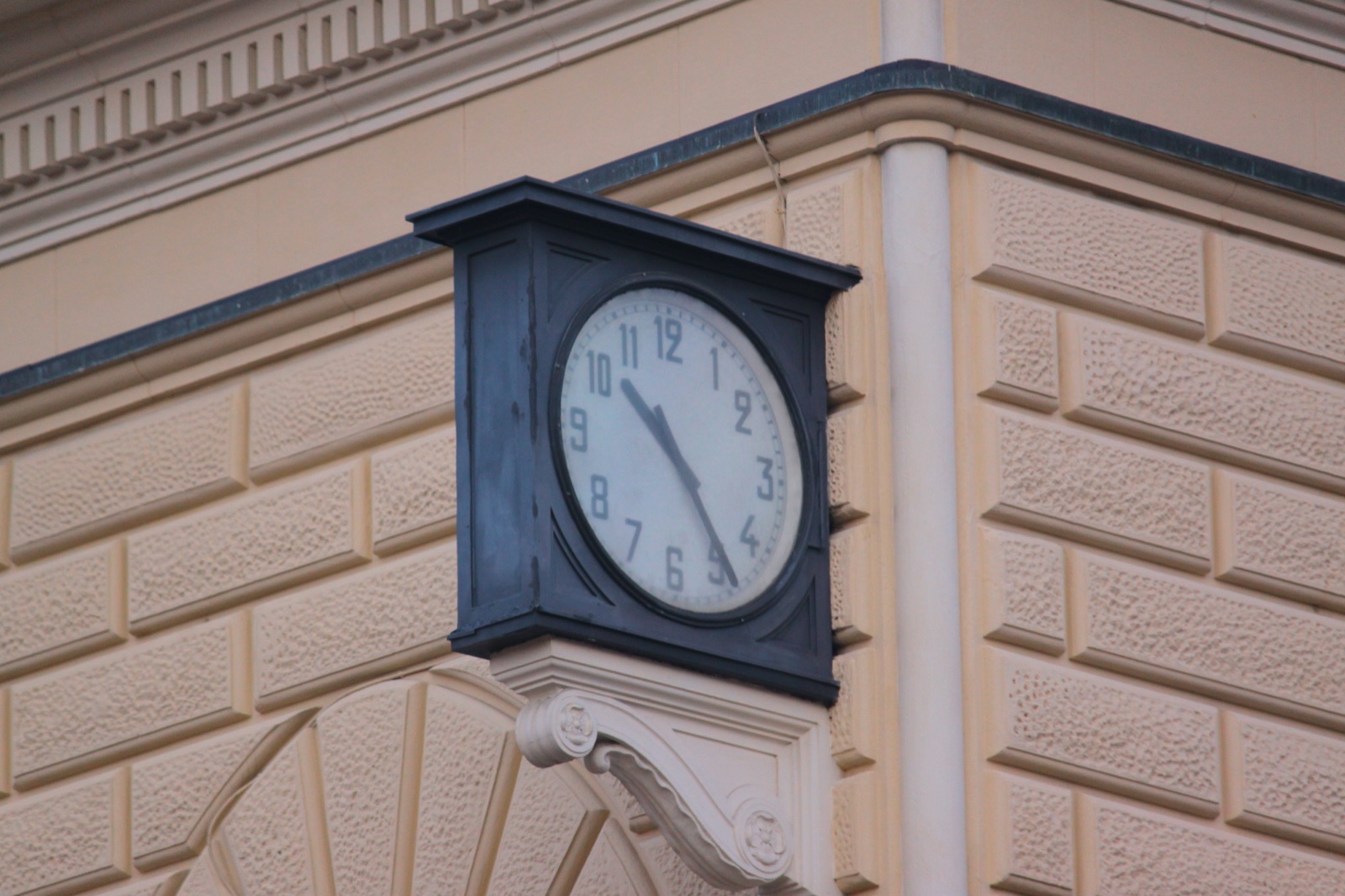
Ruins of Bologna Centrale railway station after the August 2, 1980 bombing. 85 dead, 200+ wounded. Wikimedia Commons, public domain.
Operation Gladio
The secret army that outlived its enemy
- Category
- State & Intelligence Operations
- Published
- Length
- 3,700 words · 18 min read
- Author
- The editors
Operation Gladio
The secret army that outlived its enemy.
The fear of 1947
By the spring of 1947, the political situation in Italy and France was the urgent question of Western strategy. In Italy the Communist Party (PCI) had polled close to 20 percent in the 1946 elections and was expected to do better in 1948. In France the Communist Party (PCF) had 28 percent. In both countries, the parties had played significant roles in the wartime resistance and retained both operational competence and weapons. The prospect of a Communist electoral victory — followed, in Washington's nightmare scenarios, by a Soviet invitation to enter the Cominform alliance — was the most acute Cold War anxiety of the postwar period.
In Washington, the response was two-track. The first track, public, was the Marshall Plan. The second track, covert, was a network of parallel programs run by the newly established Central Intelligence Group (the CIA's predecessor, formed in 1946 from the wreckage of the wartime Office of Strategic Services). One of those programs was stay-behind.
The stay-behind concept was simple in design. If a Soviet invasion succeeded militarily, occupying forces would face an underground resistance trained and equipped before the invasion. Stay-behind operatives would not fight in uniform; they would not surface for months. They would have buried caches of weapons, radios, and operational funds in pre-arranged locations across the territory. When the time was right, they would coordinate sabotage, intelligence collection, and eventual liberation via SOE-style methods that had worked against the Wehrmacht.
By 1947, the CIA had begun establishing such networks in Italy and France. By 1949, parallel structures existed in West Germany, the Netherlands, Belgium, Norway, Denmark, and Greece. By 1956, the Italian network had been formally renamed Gladio and brought under the Italian military intelligence service SIFAR. By 1959, NATO had established the Clandestine Planning Committee to coordinate them.1
The Years of Lead
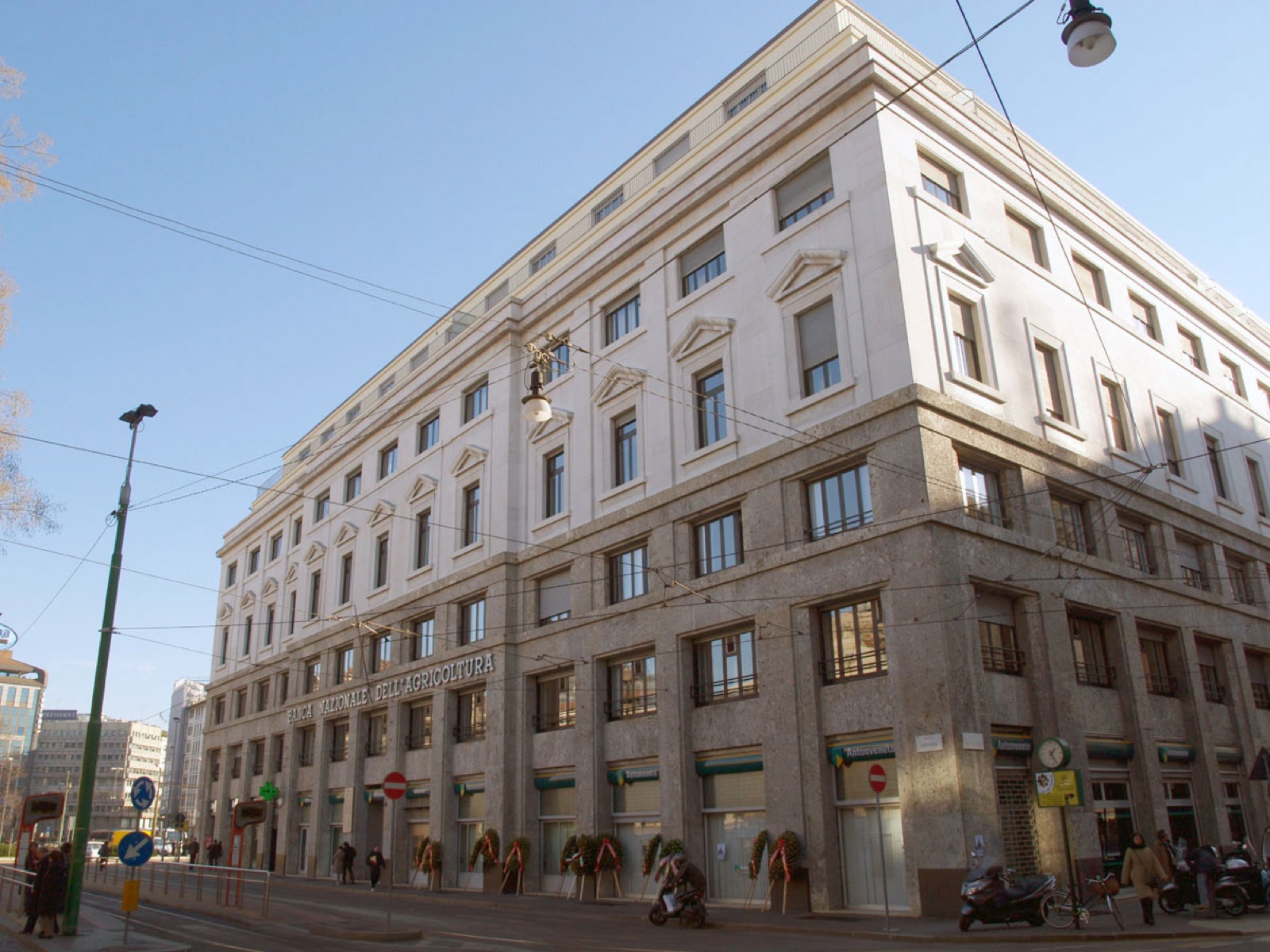
On the afternoon of Friday, December 12, 1969, at 4:37 p.m., a bomb hidden in a leather satchel exploded under a table at the headquarters of the Banca Nazionale dell'Agricoltura at Piazza Fontana in central Milan. The blast killed 17 people and wounded 88. Three additional bombs went off the same day at the Banca Commerciale Italiana in Milan, the Banca Nazionale del Lavoro in Rome, and the Altare della Patria in Rome. Together they constituted the most coordinated terror attack on European soil since the Second World War.
The initial Italian government response was to arrest anarchist suspects. One of them, the railroad worker Giuseppe Pinelli, died on the night of December 15 after falling — or being pushed — from a fourth-floor window of the Milan police headquarters during interrogation. (The official ruling was suicide; the case has remained controversial.)
The actual perpetrators were not anarchists. Over the following twenty years, through a succession of trials and reversals, the Piazza Fontana bombing was traced to a cell of the Italian neo-fascist group Ordine Nuovo, operating under the supervision of two individuals — Franco Freda and Giovanni Ventura — whose own contacts within Italian military intelligence (the Servizio Informazioni Difesa, or SID) became increasingly difficult to deny as the documentary record emerged.
The strategy was not random. It had a name.
Strategy of tension
The term strategia della tensione — strategy of tension — was used in a May 1969 The Observer article that anticipated, with what now reads as remarkable specificity, what would happen at Piazza Fontana seven months later. The concept: a campaign of terror attacks attributed to the political left would generate sufficient public demand for "order" that anti-democratic emergency measures would become politically possible — measures that would crush the left electorally without needing to suspend democracy in any visible way.
The strategy was operationalised by neo-fascist organizations (Ordine Nuovo, Avanguardia Nazionale) with documented assistance from individuals inside Italian military intelligence. The bombings that followed Piazza Fontana — Peteano (1972), Brescia (1974), Italicus train (1974), Bologna station (1980), Rapido 904 (1984) — killed in total approximately 200 civilians. None was claimed by its actual perpetrators at the time; most were initially attributed by the Italian state to left-wing groups.
The 1984 testimony of former Ordine Nuovo militant Vincenzo Vinciguerra to Venetian magistrate Felice Casson was the moment the attribution shifted publicly. Vinciguerra, in exchange for nothing — he had no immunity deal and had nothing to gain — described in detail how Italian military intelligence had operated as the operational umbrella under which neo-fascist terror cells had functioned during the 1969-1980 period. He named names. He described weapons supply chains. He gave his own account of receiving operational direction from individuals he understood to be inside SID/SISMI.2
October 1990
In the summer of 1990, the Venetian magistrate Felice Casson — who had been investigating the unresolved 1972 Peteano bombing (which killed three carabinieri) since 1984 — requested from Italian Prime Minister Giulio Andreotti the personnel records of a previously unknown organization mentioned by Vinciguerra in his testimony six years earlier: "Gladio."
Andreotti, then 71 years old, in his seventh term as Italian Prime Minister, had been a fixture in Italian politics for forty years. He had been Defense Minister, Foreign Minister, Treasury Minister, and Prime Minister so many times that he was known in the Italian press as "Il Divo" — the Divine One. He had also, his critics insisted, been the principal political beneficiary of the strategy of tension that had kept the Communist Party out of power for forty years.
On October 24, 1990, Andreotti rose in the Chamber of Deputies and read a prepared statement. He acknowledged the existence of Gladio. He described it as a NATO-coordinated stay-behind network of approximately 622 trained operatives across 40 cells. He confirmed that it had been established under SIFAR in 1956, that it had been modernized in subsequent decades, and that — by his account — it had never been activated for "internal" purposes.
The statement was deliberately limited. Andreotti did not address the strategy-of-tension allegations directly. He insisted that Gladio's mandate had been strictly external (Soviet invasion response) and that any neo-fascist terror activity by individuals "linked" to Gladio was the work of bad apples beyond the network's operational control.
That official Italian position has been the official Italian position for thirty-five years. The European Parliament, in a resolution passed November 22, 1990, called for a comprehensive investigation across NATO countries. Most NATO countries declined to investigate. Belgium, France, and the Netherlands conducted limited parliamentary inquiries. The United States, asked repeatedly by Italian magistrates and by the European Parliament whether Gladio had been a CIA operation, declined to confirm or deny.
P2 — the parallel structure
In March 1981, during an unrelated investigation into the collapse of Banco Ambrosiano, Italian Treasury police raided the villa of a 74-year-old former Mussolini-era functionary turned mattress manufacturer named Licio Gelli. In Gelli's office safe they found the membership list of a previously unknown Masonic lodge called Propaganda Due — P2.
The list contained 962 names. They included three serving cabinet ministers, more than forty members of the Italian parliament, the heads of all three Italian intelligence services (SISDE, SISMI, and CESIS), 195 senior military officers (including 22 generals), the chiefs of the Carabinieri intelligence and the Guardia di Finanza intelligence, dozens of senior journalists, the editor of Il Corriere della Sera, multiple ambassadors, the founder of Banca Privata Italiana, and — at the top of the financial roster — Roberto Calvi, chairman of the about-to-collapse Banco Ambrosiano.
Also on the list, the investigators noted, were a striking number of names that appeared in the Gladio organizational chart.
This was the moment that the relationship between the formal stay-behind network and the parallel structure of right-wing political influence became, in the Italian documentary record, no longer deniable. P2 was not Gladio. But the personnel overlap, the financial overlap, and the operational overlap between the two organizations was sufficient that the Italian parliamentary commission of inquiry into P2 concluded, in its 1984 final report, that P2 had been "an illegal, occult and subversive organization that pursued anti-constitutional objectives by methods including infiltration of state organs and use of violent and terrorist means."
Roberto Calvi fled Italy in June 1982 after Banco Ambrosiano collapsed with $1.2 billion in unaccounted liabilities. He was found on June 17, 1982, hanging from scaffolding under Blackfriars Bridge in London with bricks in his pockets. The original British inquest ruled suicide. An Italian investigation in 1992 reclassified the death as murder. No one has been convicted of his killing.
What proponents and critics still argue
The factual record of Gladio's existence as a Cold War stay-behind network is closed. The interpretive questions that remain:
Was Gladio operationally responsible for the strategy of tension? The Italian parliamentary commission of inquiry concluded that Gladio as an organization was not responsible — that the terror activity had been the work of right-wing extremist groups "individually linked" to Gladio members but operating outside Gladio's official mandate. Daniele Ganser and the more critical school argue this is a distinction without a difference: the same people, using the same weapons caches, with the same intelligence- service contacts, conducted the operations. The difference between the two readings depends on what one believes about how senior Italian intelligence officers understood and tolerated the activities of subordinates they had personally recruited.
What did the CIA know? The CIA has never officially commented. Documents released through FOIA in 2007 confirm CIA awareness of the Italian stay-behind structure and CIA financial support for it. Whether CIA officers were operationally aware of, or complicit in, the strategy of tension activities is documented in some Italian sources (notably Vinciguerra's testimony) but not in any CIA documentation that has been released.
Are similar structures still operating? The European Parliament resolution of November 22, 1990 called for the dismantlement of all stay-behind networks. Several countries (Italy, Belgium, France) have asserted that their networks were dismantled. Other countries have either declined to comment or asserted that what existed was non-operational by 1990 in any case. Independent verification has not been possible.
How we read the evidence
Operation Gladio is, of the major Cold War conspiracies we have written about, the one with the most asymmetric documentation: very strong evidence of the formal stay-behind structure (confirmed by the Italian Prime Minister, documented in the parliamentary commission reports, corroborated by Belgian and Dutch parallel inquiries), combined with substantially weaker — but real — evidence of operational spillover into domestic terror.
That asymmetry is the case's most difficult feature. The strategy of tension is, by any reasonable evidentiary standard, no longer in serious doubt. The connection between specific terror events (Piazza Fontana, Bologna) and specific Gladio operatives is documented in court testimony, magistrate findings, and the work of historians like Ganser. The institutional connection between the formal Gladio structure and the underlying network of right-wing political influence — through P2, through SISMI, through the Italian Christian Democratic security apparatus — is documented in the records of the Italian parliamentary inquiries.
What we cannot document, because the records have not been released, is the upper-level operational link: the chain of authorization that permitted, encouraged, or tolerated the spillover. That gap in the evidence is not because the gap doesn't exist; it is because the documentary record of the early Cold War's most sensitive operations remains, in 2026, classified in every NATO country that ran one.
Until those records are released — and they may never be — Gladio is the closest the Cold War got to a documented example of an intelligence-community structure that was authorized for one purpose, used for another, and held to account for neither.
Key figures
Further reading
Books:
- Daniele Ganser, NATO's Secret Armies: Operation Gladio and Terrorism in Western Europe (Frank Cass, 2005). The definitive scholarly history.
- Philip Willan, Puppetmasters: The Political Use of Terrorism in Italy (Constable, 1991).
- Allan Francovich (director), Gladio (BBC Timewatch, 1992). Three-part documentary, still the most comprehensive video treatment.
- Richard Cottrell, Gladio: NATO's Dagger at the Heart of Europe (Progressive Press, 2012).
Films and documentaries:
- Gladio (1992, BBC Timewatch, dir. Allan Francovich). Three episodes.
- Romanzo di una strage (2012, dir. Marco Tullio Giordana). Italian dramatization of Piazza Fontana.
- Il Divo (2008, dir. Paolo Sorrentino). Andreotti biopic; alludes to Gladio context.
Primary archives:
- European Parliament Resolution of November 22, 1990
- Italian Parliamentary Commission on Terrorism, multiple reports 1992–2001
- CIA records on Italian operations declassified 2007 via FOIA
Sources
Primary sources
- Andreotti, G. Statement to the Italian Chamber of Deputies, October 24, 1990. Reproduced in La Repubblica, October 25, 1990.
- Italian Parliament, Commission of Inquiry on Terrorism in Italy. Final Report, 1995 (and subsequent volumes through 2001).
- European Parliament. Resolution on the Gladio Affair, November 22, 1990.
- Vinciguerra, V. Testimony to magistrate Felice Casson, 1984. Excerpts reproduced in Ganser (2005).
Secondary sources
- Ganser, D. (2005). NATO's Secret Armies. Frank Cass.
- Willan, P. (1991). Puppetmasters. Constable.
- Cottrell, R. (2012). Gladio: NATO's Dagger at the Heart of Europe. Progressive Press.
- Stinnett, R. B. (2009). The Italian Job: How Gladio Killed Italy. Random House.
- The Observer, May 7, 1969 — the "strategy of tension" article.
- La Repubblica, October 25, 1990 onward — contemporaneous Italian press.
- Le Monde, October–November 1990 — French coverage.
- The Times, June 18, 1982 — Calvi death.
- BBC Timewatch. "Gladio" documentary series, 1992.
Academic sources
- Drake, R. (1989). The Revolutionary Mystique and Terrorism in Contemporary Italy. Indiana University Press.
- Pisetta, U. (2008). "Italian Stay-Behind: The Origins of Operation Gladio." International Journal of Intelligence and CounterIntelligence, 21(4), 691–712.
Corrections & updates
(None yet.)
Footnotes
-
Daniele Ganser, NATO's Secret Armies: Operation Gladio and Terrorism in Western Europe (Frank Cass, 2005) is the foundational scholarly account. The CPC's existence was formally confirmed by the European Parliament Resolution of November 22, 1990. ↩
-
Vinciguerra's interrogation transcripts are reproduced in substantial extracts in Ganser (2005), chapter 1. His 1992 book Ergastolo per la libertà (Life imprisonment for freedom) provides his own account. ↩
Inspired this / based on it
Allan Francovich (BBC Timewatch)
Three-part documentary — still the definitive video treatment
Marco Tullio Giordana · ★ 6.9
Italian dramatization of the Piazza Fontana case
Daniele Ganser
The definitive scholarly history
Philip Willan
British journalist; classic study of P2 and Italian state terror
Richard Cottrell
Broader European overview
Filed under
- #operation-gladio
- #nato
- #cia
- #stay-behind
- #italy
- #piazza-fontana
- #bologna-station
- #strategy-of-tension
- #p2-lodge
- #andreotti
- #1956
- #1990
- #cold-war
- #europe
- #declassified
Click any tag for every article carrying it.
Continue reading
Iran-Contra
Between August 1985 and October 1986, the Reagan administration secretly sold anti-tank and anti-aircraft missiles to the Islamic Republic of Iran — an officially designated state sponsor of terrorism, in the middle of a war with Iraq. The cash went into Swiss bank accounts. From there a portion was diverted, in defiance of two congressional bans, to the Contra rebels fighting the Sandinista government in Nicaragua. The scheme was exposed by a Lebanese magazine, dismantled by a special commission, and partly prosecuted before President George H. W. Bush issued the pardons that ended the cases.
Operation Northwoods
In March 1962, the Joint Chiefs of Staff put a document on Robert McNamara's desk. It proposed a series of false-flag attacks against the United States — sunk ships, civilian terror campaigns in Miami and Washington, a faked civilian airliner shoot-down — to manufacture public support for invading Cuba. Every member of the Joint Chiefs signed it. Kennedy rejected it within days. The document stayed buried for thirty-five years.
Operation Paperclip
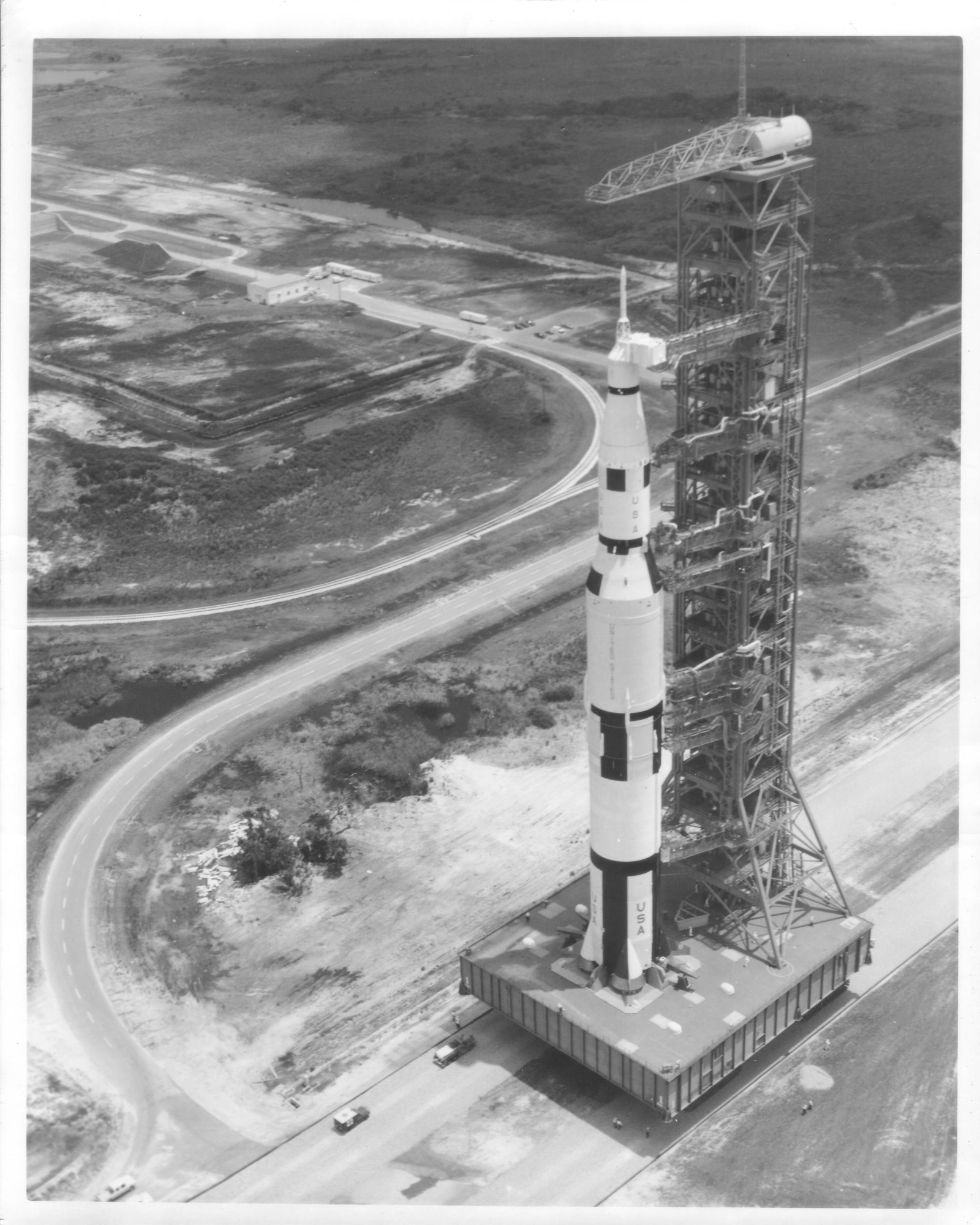
Between 1945 and 1959, the U.S. Army Ordnance Corps and the Joint Intelligence Objectives Agency secretly transported more than 1,600 German scientists, engineers, and technicians from defeated Nazi Germany to the United States — together with files that had been quietly stripped of references to Nazi Party membership, SS rank, and slave-labour exploitation. The clip on the folder was where the program got its name. The most prominent of the imported men was Wernher von Braun, designer of the V-2 ballistic missile, who twenty-four years later watched the Saturn V — a rocket built by his Huntsville team — lift Apollo 11 toward the Moon.