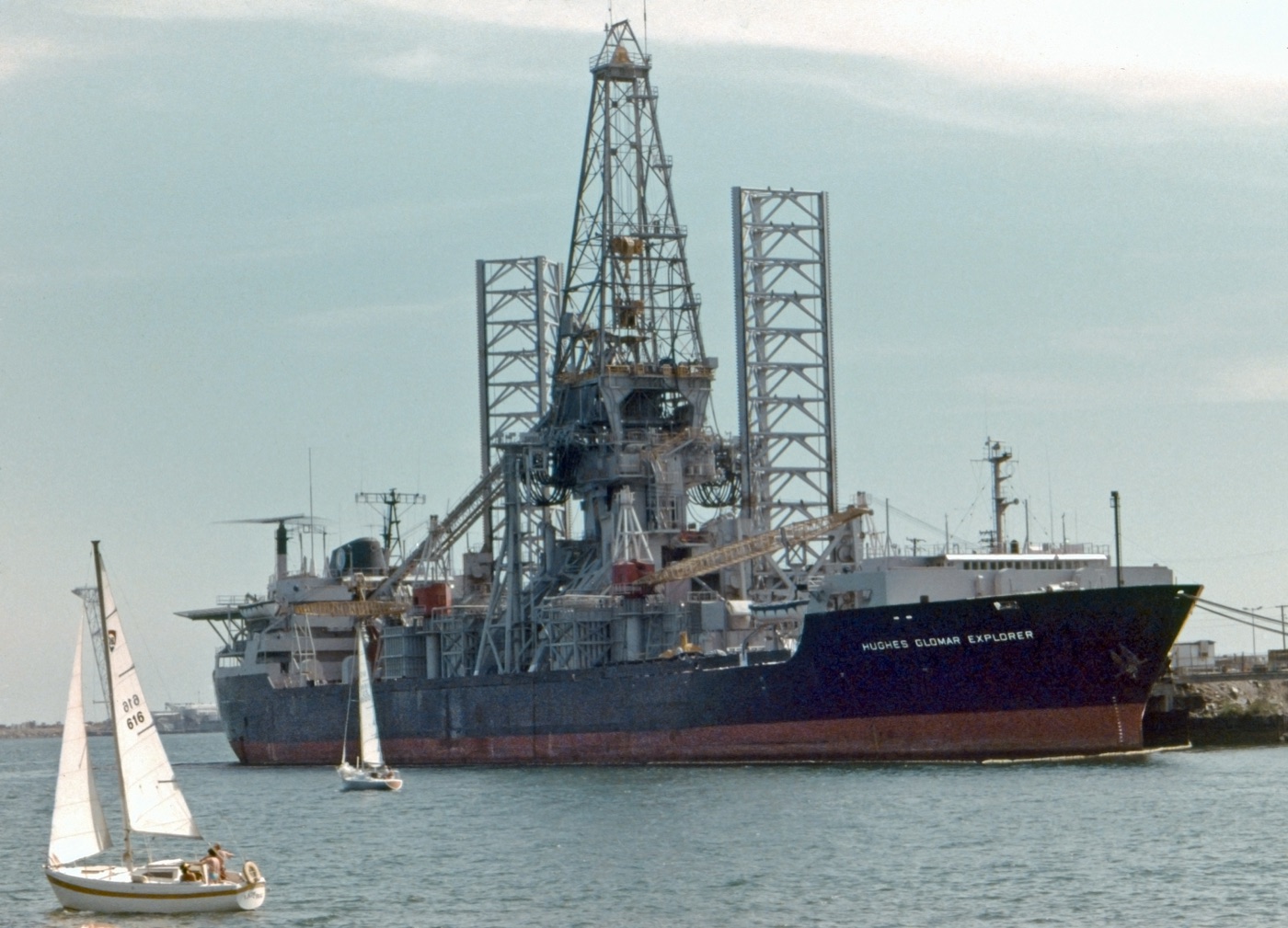
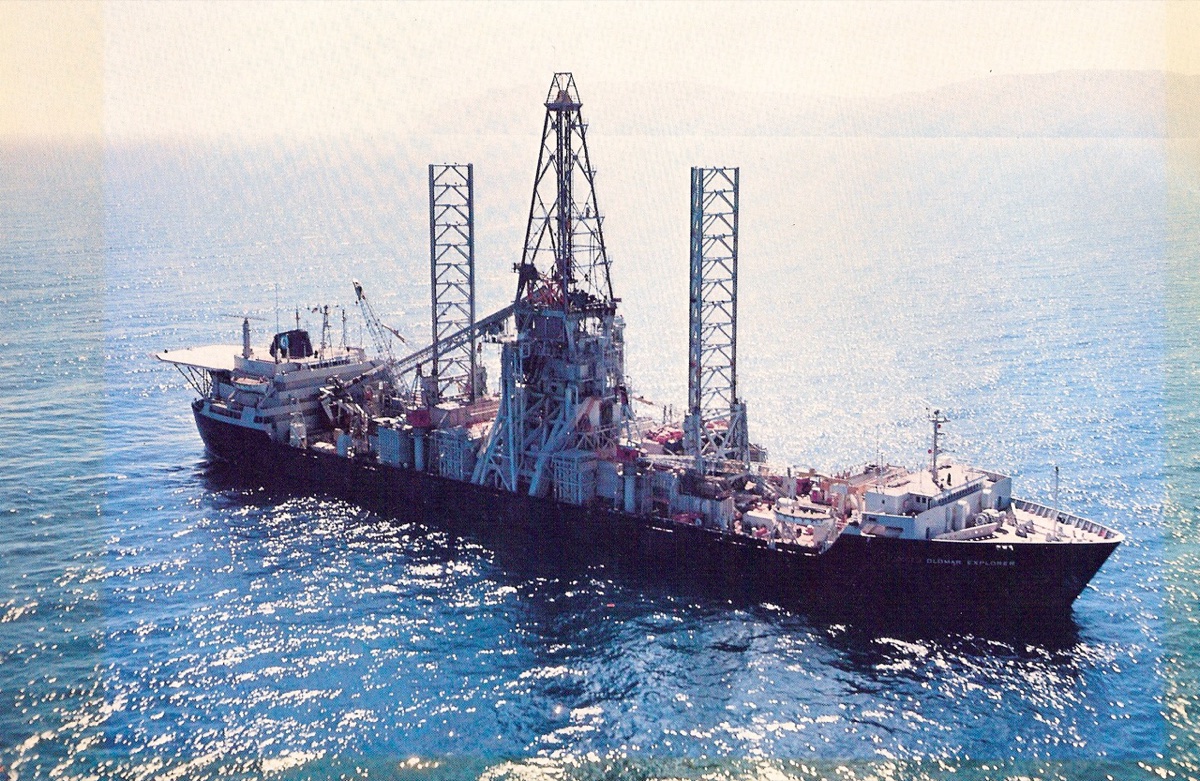
The Hughes Glomar Explorer, the ship the CIA built to raise a Soviet submarine from the deep Pacific, disguised as a Howard Hughes deep-sea mining vessel. Wikimedia Commons / CC BY-SA 3.0.
Project Azorian: The CIA's Secret Salvage of a Soviet Submarine
Pacific Ocean, 1974 — A Soviet nuclear submarine lay three miles down on the ocean floor, and the CIA resolved to raise it — in total secrecy, using a giant claw and a purpose-built ship disguised as a billionaire's mining vessel. It was one of the most audacious intelligence operations ever attempted, and it gave the world the phrase 'neither confirm nor deny'
- Category
- Cold War Files
- Published
- Length
- 3,550 words · 18 min read
- Author
- The editors
Project Azorian is the kind of true story that sounds like the plot of a spy novel too far-fetched to publish. A nuclear submarine lost on the ocean floor; a secret plan to raise it from a depth no salvage operation had ever reached; a gigantic claw on a string of pipe more than three miles long; a cover story involving a reclusive billionaire and an imaginary undersea mining industry — and, at the end, a partial success, a partial failure, and a mystery about what was actually recovered that endures to this day. Unlike many Cold War secrets, Azorian is not, in the main, a moral scandal; it is a feat of astonishing engineering and audacity, and its story, declassified only in fragments and after decades, retains a genuine air of the incredible. It also left a lasting mark on the language of secrecy itself: the CIA's response when the operation was exposed — that it could "neither confirm nor deny" the existence of the records — became the "Glomar response," a doctrine still invoked whenever a government wishes to keep a secret without lying about it. To tell the story of Azorian is to recover one of the most extraordinary operations of the Cold War, and to sit, as with all the best secrets, with the parts of it that are still not fully known.
This is the story of the submarine the CIA tried to raise.
The lost submarine
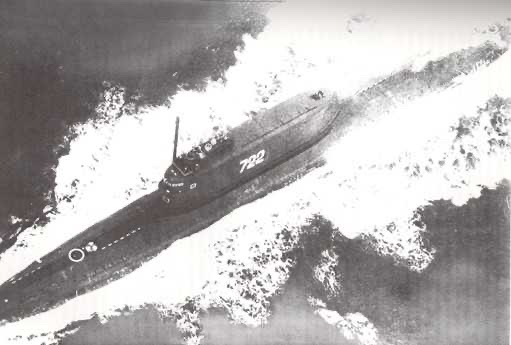
The story begins with a disaster at sea. In March 1968, the Soviet submarine K-129 — a diesel-electric boat of the Golf class, armed with nuclear ballistic missiles and torpedoes — sank in the Pacific Ocean, north of Hawaii, with the loss of all aboard. The exact cause was never established with certainty; theories have ranged from an explosion of the batteries or a buildup of hydrogen gas to a possible accident during a missile-related operation. The Soviet Navy launched a large but fruitless search, unable to locate the wreck in the vast expanse of the deep Pacific, and eventually gave up, the loss a painful and unexplained blow. But while the Soviets searched in vain, the United States had an advantage they did not know about.
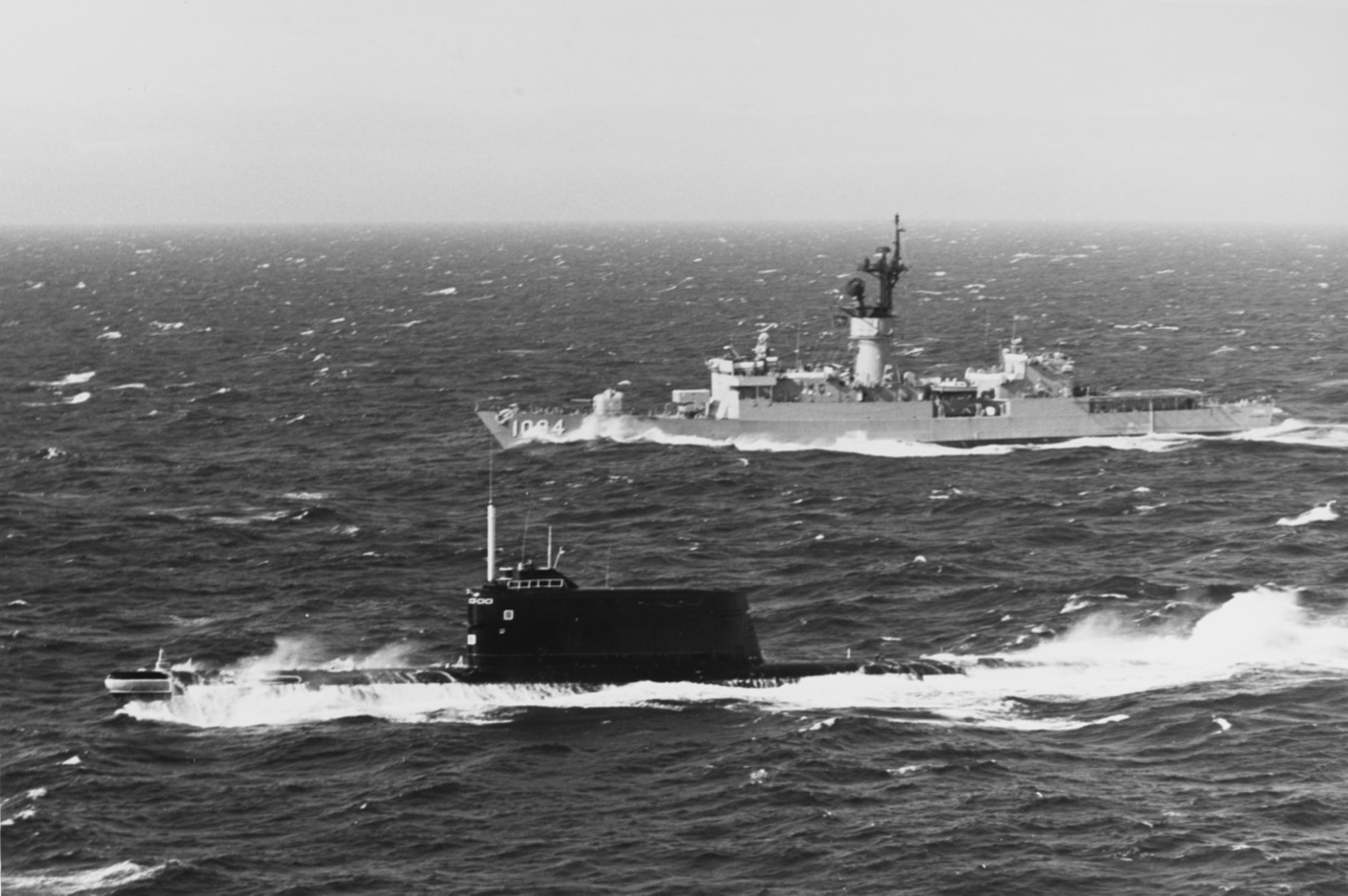
The Americans had SOSUS — the Sound Surveillance System, a network of underwater hydrophones the US Navy had deployed across the oceans to track Soviet submarines by their noise. From the acoustic records of the time of K-129's loss, American analysts were able to work out roughly where the submarine had gone down, and subsequent searches by a specialized US submarine pinpointed the wreck on the ocean floor. The United States thus found itself in an extraordinary position: it knew the location of a sunken Soviet nuclear submarine that the Soviets themselves could not find, lying largely intact on the seabed, filled with secrets. The question was what to do with that knowledge.
The prize and the plan
To the American intelligence community, the intact wreck of K-129 represented a prize almost beyond price. A Soviet ballistic-missile submarine carried nuclear warheads and missiles whose examination could reveal much about Soviet weapons design; but the greatest treasure was the cryptographic material — the code books, cipher machines, and communications equipment — which, if recovered, might allow American intelligence to read Soviet naval communications. The temptation was enormous. But so was the obstacle: the submarine lay nearly three miles beneath the surface, at a depth where the water pressure is crushing and where no salvage operation had ever recovered anything remotely so large. Simply reaching the wreck was hard; raising a submarine weighing well over a thousand tons from that depth, intact enough to be useful, was a challenge that pushed at the very limits of what engineering could do.
The CIA's plan was breathtaking in its ambition. Rather than attempt to work at the wreck with submersibles, the agency would build a ship capable of lowering an enormous mechanical grabber — a claw, formally the "capture vehicle" and nicknamed "Clementine" — on a string of steel pipe more than three miles long, close it around the submarine on the seabed, and haul the entire assembly back up into a huge enclosed chamber, the "moon pool," in the bottom of the ship, all without the Soviets ever knowing it had happened. It was, in effect, a scheme to reach down three miles into the ocean, pick up a lost submarine, and lift it into a ship's belly in secret. That the CIA seriously pursued such a plan — and largely built the machinery to do it — is a measure of both the value it placed on the prize and the extraordinary confidence of American technology in the era.
The Hughes Glomar Explorer
The centerpiece of the operation was the ship, and the ship required a cover story as audacious as the mission. The CIA had built for it the Hughes Glomar Explorer, a massive, purpose-designed vessel with the derrick, pipe-handling systems, and internal moon pool needed to raise the submarine. But a ship of such unusual design, operating in a remote patch of ocean, would inevitably attract attention — from the Soviets above all. The solution was to hide it in plain sight, by giving it a plausible commercial purpose. The vessel was presented to the world as belonging to Howard Hughes, the reclusive billionaire industrialist, and as being engaged in a pioneering new industry: mining manganese nodules — metal-rich lumps that litter parts of the deep-sea floor — from the ocean bottom.
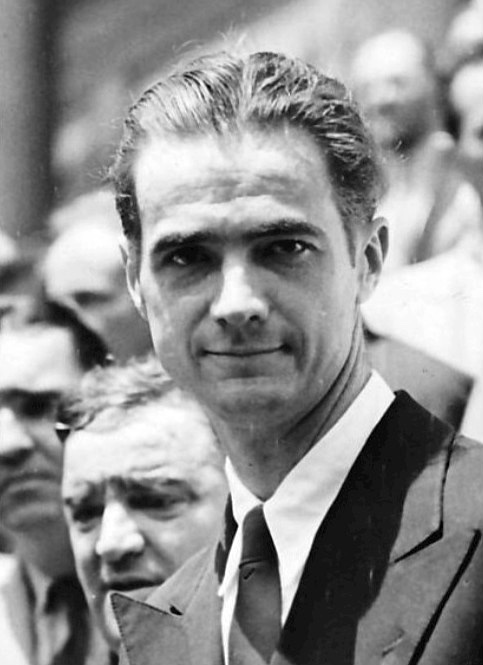
The choice of Howard Hughes as cover was inspired. Hughes was famous for his vast wealth, his ventures into aviation and technology, and above all his intense secrecy and reclusiveness; a mysterious, expensive, and secretive project bearing his name raised far fewer suspicions than it otherwise might have, because that was exactly the sort of thing Hughes was known to do. The manganese-nodule cover story had the further advantage of being just plausible enough to spark genuine commercial interest, and it even helped launch real speculation about deep-sea mining. Behind this elaborate façade, the CIA assembled its ship, its claw, and its crew, and in the summer of 1974 the Hughes Glomar Explorer sailed to the site of the wreck and began the most ambitious salvage operation ever attempted.
What was recovered
The question of exactly what Project Azorian recovered is the enduring mystery at its heart, and it remains, decades later, only partly answered. The official CIA history, declassified in redacted form in 2010, and the accounts of those involved establish the broad outline: that the operation raised a portion of the submarine but lost a larger part when the vessel broke apart during the lift. Beyond that, precise details of what was retrieved — how much of the sub, which weapons, whether any cryptographic material — remain classified or contested. The most common assessment is that the loss of the main sections meant the operation fell well short of its greatest goals, recovering some material of value but not the code room and missiles that had been the ultimate prize. But because so much remains secret, a degree of genuine uncertainty persists, and the full ledger of Azorian's intelligence haul has never been publicly closed.
One thing that is known, and that deserves to be recorded with respect, is the fate of the Soviet sailors whose remains were recovered. Among what the claw brought up were the bodies of several members of K-129's crew. The United States gave them a formal burial at sea, conducted with military honors and filmed; the ceremony treated the dead adversaries with dignity. Decades later, after the Cold War, the film of the burial was handed over to Russia — a gesture of some grace amid the long secrecy, allowing the sailors' countrymen and families to know, at last, how their lost men had been laid to rest. In the midst of an operation defined by deception and Cold War rivalry, it was a moment of humanity, and it is a part of the story worth remembering alongside the engineering marvels and the intrigue.
Exposure and the "Glomar response"
For all its secrecy, Project Azorian did not stay hidden. In 1975, journalists began to piece the story together — the columnist Jack Anderson broke it on the air, and major newspapers, which had in some cases known of the operation and held the story at the government's request, published their accounts. The exposure was aided by an unrelated burglary at a Hughes office that had turned up documents referring to the project. Suddenly the extraordinary secret was out: the world learned that the United States had built a ship to raise a Soviet submarine from the ocean floor under cover of a mining venture. When journalists sought official confirmation of the operation and its records, they ran into a novel and now-famous wall.
Faced with a request under the Freedom of Information Act for records about the operation, the CIA replied that it could "neither confirm nor deny the existence or nonexistence" of the requested records — reasoning that even acknowledging whether such records existed would itself reveal classified information. This response, born of the Glomar Explorer affair, entered legal history as the "Glomar response," and it has been used ever since by American agencies (and adopted elsewhere) as a way to protect a secret without either confirming it or telling an outright lie. It is one of the more unexpected legacies of the operation: that an audacious attempt to raise a submarine from the sea floor should have bequeathed to the law a durable formula for official silence, so that "to Glomar" a question is now recognized terminology in the world of government secrecy.
Assessment
How should Project Azorian be judged? By the measure of its ultimate goal — recovering the Soviet submarine's most valuable secrets, above all its codes — it appears to have fallen short, the breaking apart of the sub during the lift costing the operation its greatest prizes, and its enormous expense (running to hundreds of millions of dollars) buying an intelligence return that many have judged disappointing. By that accounting, Azorian was a costly and only partial success, a gamble that did not quite pay off. But by other measures it was extraordinary. As a feat of engineering, it pushed deep-sea salvage far beyond anything previously achieved and demonstrated capabilities that were genuinely unprecedented. As an exercise in secrecy and cover, it was remarkably sophisticated, hiding a vast operation behind a plausible commercial façade. And it acquired the wreck's remains and gave the dead sailors an honorable rest. The honest verdict is mixed: a strategic near-miss and a technical triumph, an operation that failed to fully achieve its aims while succeeding at things no one had done before.
What it means
Project Azorian endures as one of the most remarkable operations of the Cold War, and its significance is as much cultural and legal as it is strategic. As a story, it has an almost mythic quality — the lost submarine, the giant claw, the billionaire's cover, the partial triumph in the deep — that has kept it fascinating long after its intelligence value faded, and that makes it a favorite illustration of the sheer audacity of Cold War espionage. As a matter of law and language, it bequeathed the "Glomar response," a phrase and a doctrine now woven into the practice of government secrecy around the world, so that the operation's most lasting effect may be on how states decline to answer questions. And as a piece of history, it stands, once declassified, as a testament both to extraordinary human ingenuity and to the persistent secrecy of the intelligence world, a secret so well kept that essential parts of it remain sealed even now.
In the end, Project Azorian is a story that hovers permanently between triumph and failure, and between the known and the hidden. The CIA set out to do something that should have been impossible — to raise a sunken nuclear submarine from three miles down in the Pacific, in total secrecy, and strip it of the Soviet Union's naval secrets — and it built, at vast expense and in remarkable secrecy, the means to try. It came astonishingly close, lifting the submarine partway to the surface before a portion tore loose and fell back into the dark, taking with it, most likely, the greatest prizes. What exactly was recovered, and what was lost, remains partly sealed behind the classification that has always defined the operation, so that even now the full story cannot be told. And when the secret finally slipped out, the agency met the world's questions with a formula that has outlasted the operation itself: that it could neither confirm nor deny. There is no more fitting epitaph for Project Azorian — an operation of breathtaking daring, incomplete success, and enduring secrecy — than that phrase, born in the deep Pacific, which has come to stand for the whole shadowed world of the secrets that governments keep.
In the end, Project Azorian remains one of the Cold War's most spectacular and enigmatic undertakings — a secret so bold that its bare description strains belief, and so well kept that it is not fully told even today. It was an attempt to reach into the crushing dark of the deep ocean and lift out a lost submarine, undertaken by a nation confident enough in its ingenuity to believe the impossible could be done, and executed with a secrecy so complete that the world learned of it only by accident. It ended in the ambiguous space between success and failure that so often marks the boundary of what is achievable, raising part of its prize and losing the rest to the sea. Its true intelligence value is still argued over behind the veil of classification, and may never be fully known. But its place in history is secure: as a feat of engineering audacity without real precedent, as a masterpiece of cover and deception, and as the origin of the phrase with which governments have declined to answer ever since. Project Azorian reached for the impossible, half-grasped it, and left behind, in the deep and in the language, a mystery that has never entirely surfaced.
Inspired this / based on it
Josh Dean
A detailed account of Project Azorian and the Glomar Explorer.
Michael White
A documentary on the operation, released as the CIA declassified its history.
Filed under
Click any tag for every article carrying it.
Continue reading
Corona: The Secret Spy Satellites That Watched the Cold War
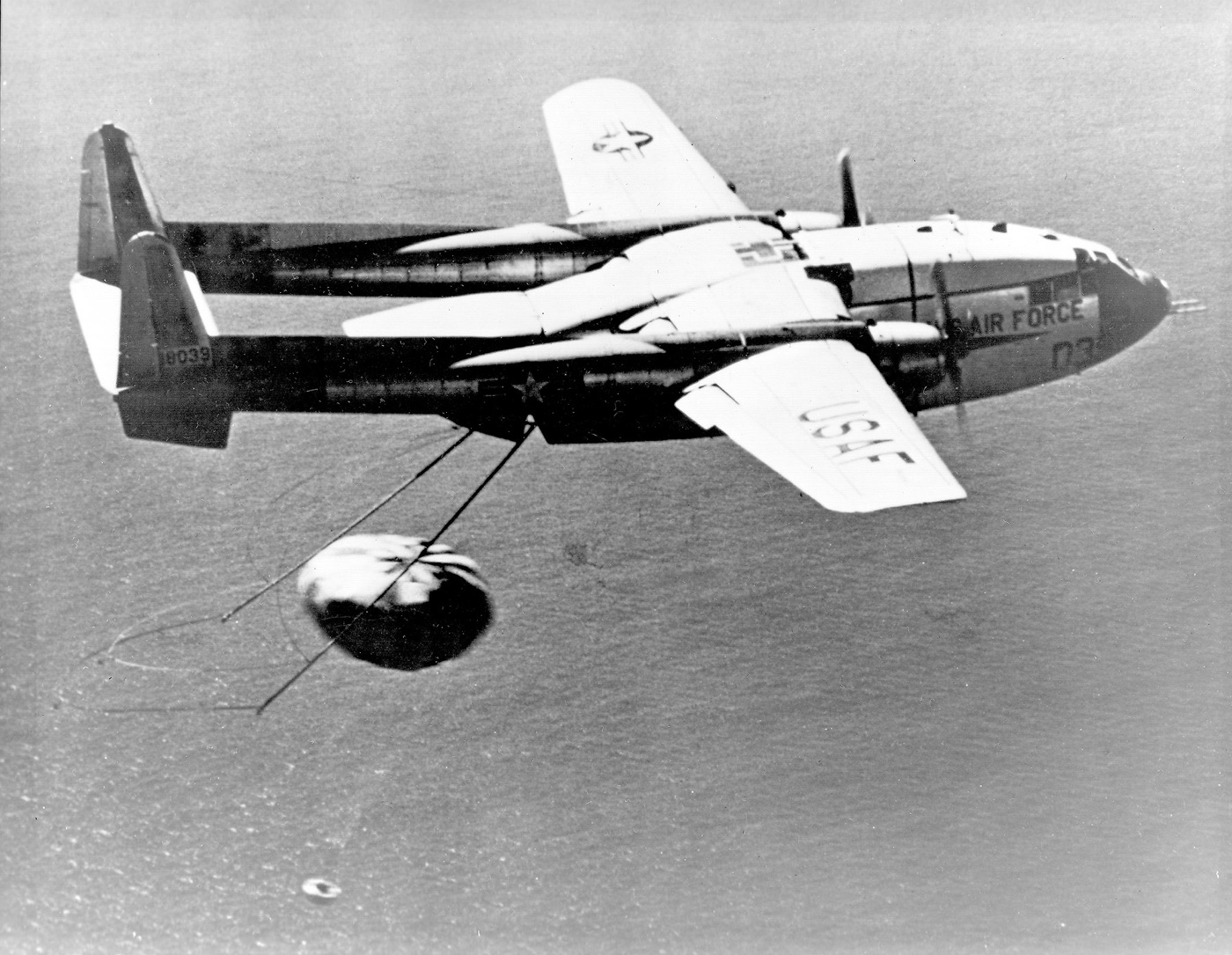
In August 1960, months after a Soviet missile brought down an American U-2 spy plane and ended the era of manned overflights of the USSR, the United States achieved something that would prove far more important: it retrieved, from a capsule that had been ejected from a satellite in orbit and parachuted down over the Pacific to be snatched from the air by a passing aircraft, a roll of film containing photographs of the Soviet Union. That single mission photographed more Soviet territory than all the U-2 flights combined. It was the first success of Corona, a top-secret American reconnaissance-satellite program run jointly by the CIA and the Air Force and hidden behind a cover story about a scientific satellite called Discoverer. Over the following twelve years, Corona satellites would photograph the Soviet Union, China, and other closed societies from orbit, returning their film to Earth in a series of astonishing mid-air recoveries, and would transform the ability of the United States to see inside its adversaries. In doing so, Corona did more than gather secrets: by letting each superpower verify the true size of the other's forces, it punctured dangerous myths, made arms-control treaties possible, and, in its quiet way, helped stabilize the terrifying balance of the nuclear age. Classified for decades, its existence was revealed only in 1995. This is the story of Corona — the secret eyes that America put in the sky, and how they changed the Cold War.
The U-2 Incident: The Spy Plane That Wrecked a Summit
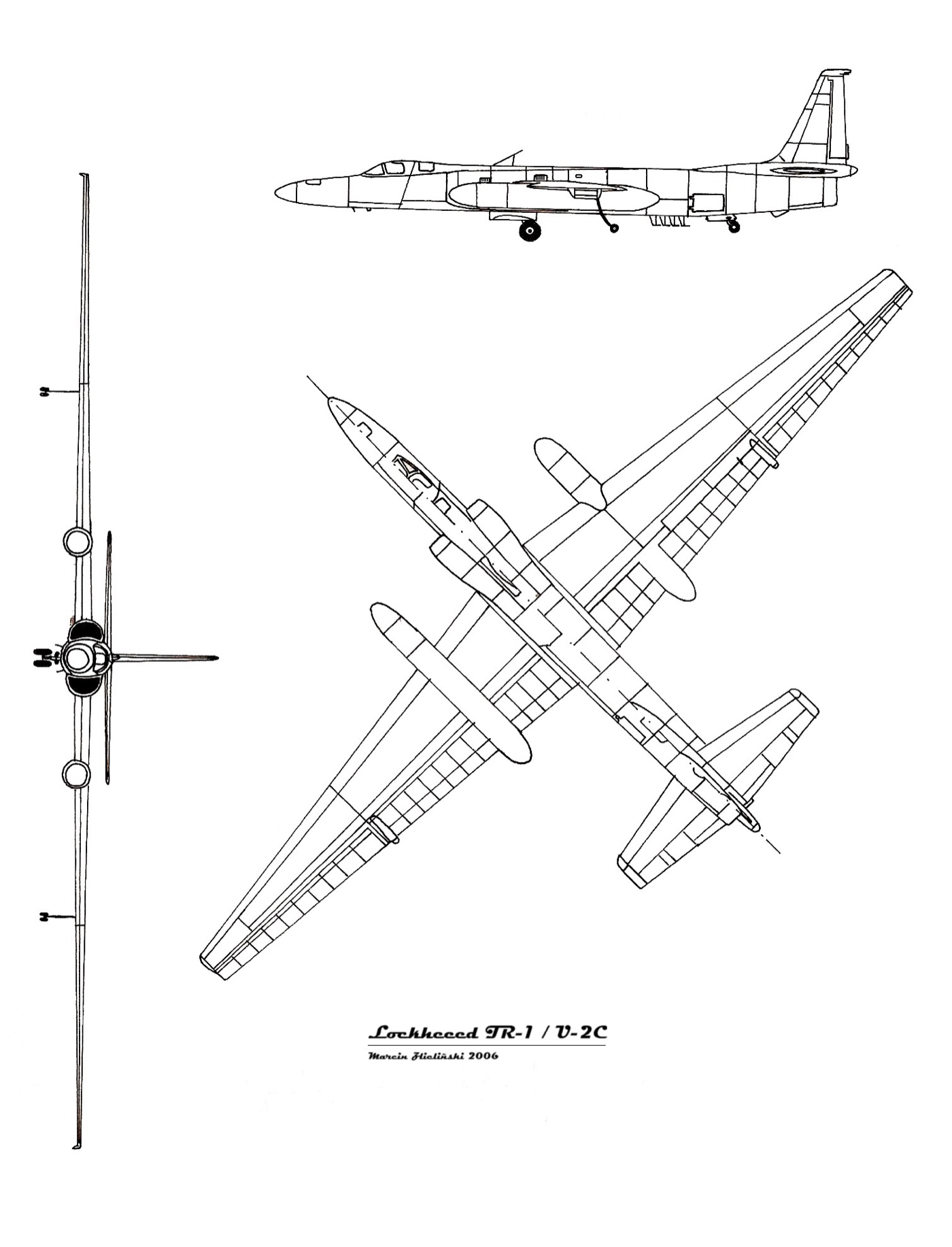
On the morning of 1 May 1960, an American U-2 reconnaissance aircraft — a strange, glider-winged spy plane built to fly higher than any fighter could reach — was cruising at some 70,000 feet over the heart of the Soviet Union, its cameras photographing military installations, when a Soviet surface-to-air missile exploded near it and sent it spinning out of the sky. The pilot, a CIA contract flyer named Francis Gary Powers, parachuted to earth and was captured alive near the city of Sverdlovsk. What followed was one of the most humiliating episodes in the history of American Cold War diplomacy. Believing the pilot dead and the plane destroyed, the United States put out a cover story: that a NASA 'weather research' plane had strayed off course after its pilot reported oxygen trouble. Then the Soviet leader Nikita Khrushchev sprang his trap, revealing that the pilot was alive, had confessed, and that the wreckage — cameras, film, and all — was in Soviet hands. President Eisenhower was exposed in a lie before the world, and, breaking with precedent, ultimately acknowledged that the United States had been conducting espionage overflights. The incident detonated days before a long-planned summit in Paris, which it duly destroyed, ending a fragile thaw and plunging the Cold War back into deep freeze. This is the story of the U-2 incident — the secret program, the shootdown, the collapsing lie, and the summit it took down with it.
The Cuban Missile Crisis: Thirteen Days on the Nuclear Brink
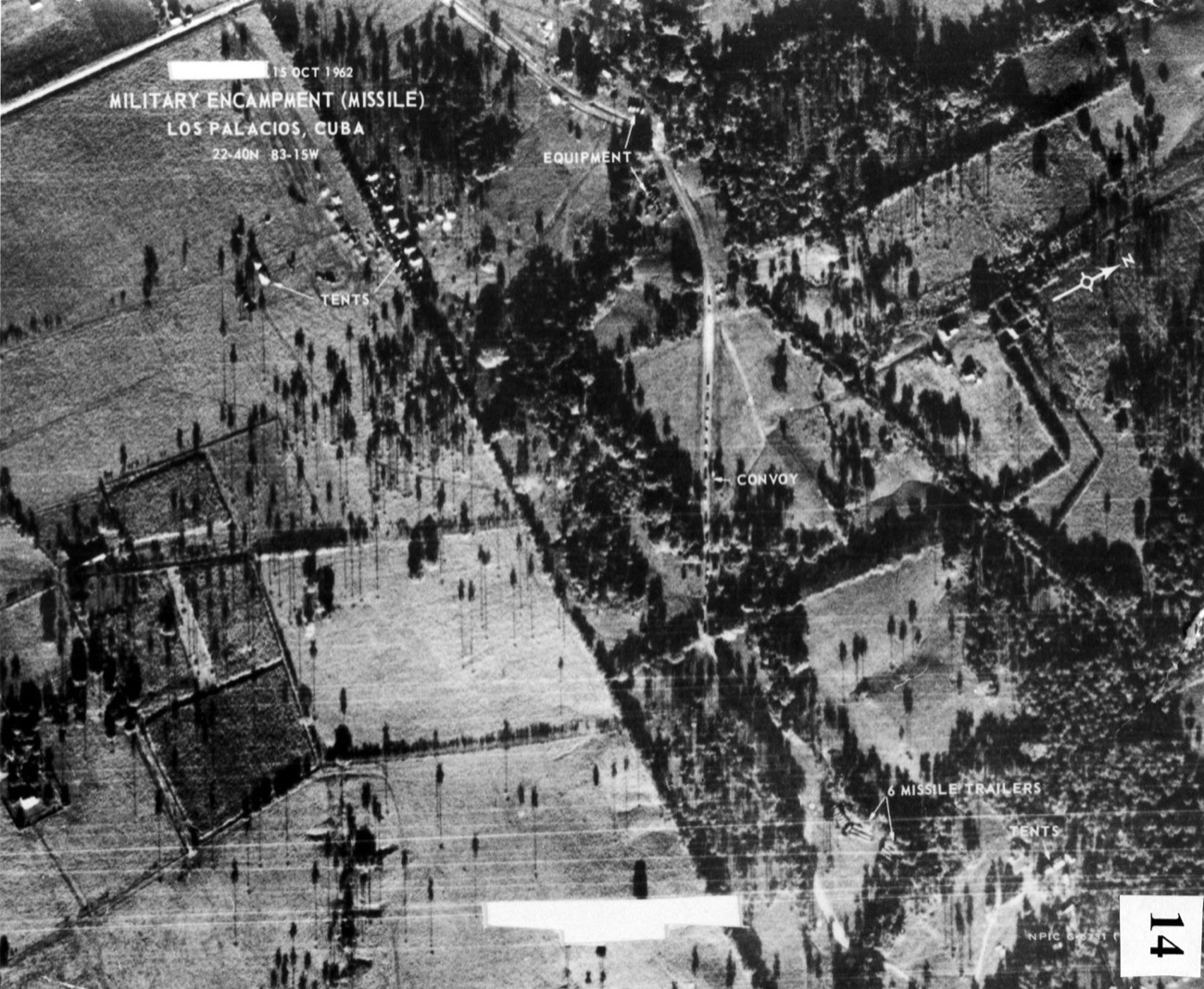
In October 1962, the Cold War came within a hair's breadth of becoming a nuclear one. For thirteen days that month, the United States and the Soviet Union confronted each other over the discovery that the Soviets had secretly installed nuclear missiles in Cuba, ninety miles from the American coast, capable of striking much of the United States within minutes. American reconnaissance had caught the deployment while the missile sites were still being built; President John F. Kennedy imposed a naval blockade of the island and demanded the missiles' removal; and for the better part of two weeks the world held its breath as the two superpowers, each armed with the power to destroy the other and much of humanity, edged toward the abyss. It was, and remains, the closest the world has ever come to full-scale nuclear war — closer, it later emerged, than even the participants understood at the time, with more than one moment in which a single decision, or a single frightened officer, might have triggered catastrophe. That it ended not in annihilation but in a negotiated settlement was the product of nerve, restraint, back-channel diplomacy, a secret deal, and no small amount of luck. This is the story of the Cuban Missile Crisis — the secret deployment, the discovery, the standoff, the near-catastrophes, and the fragile bargain that saved the world.