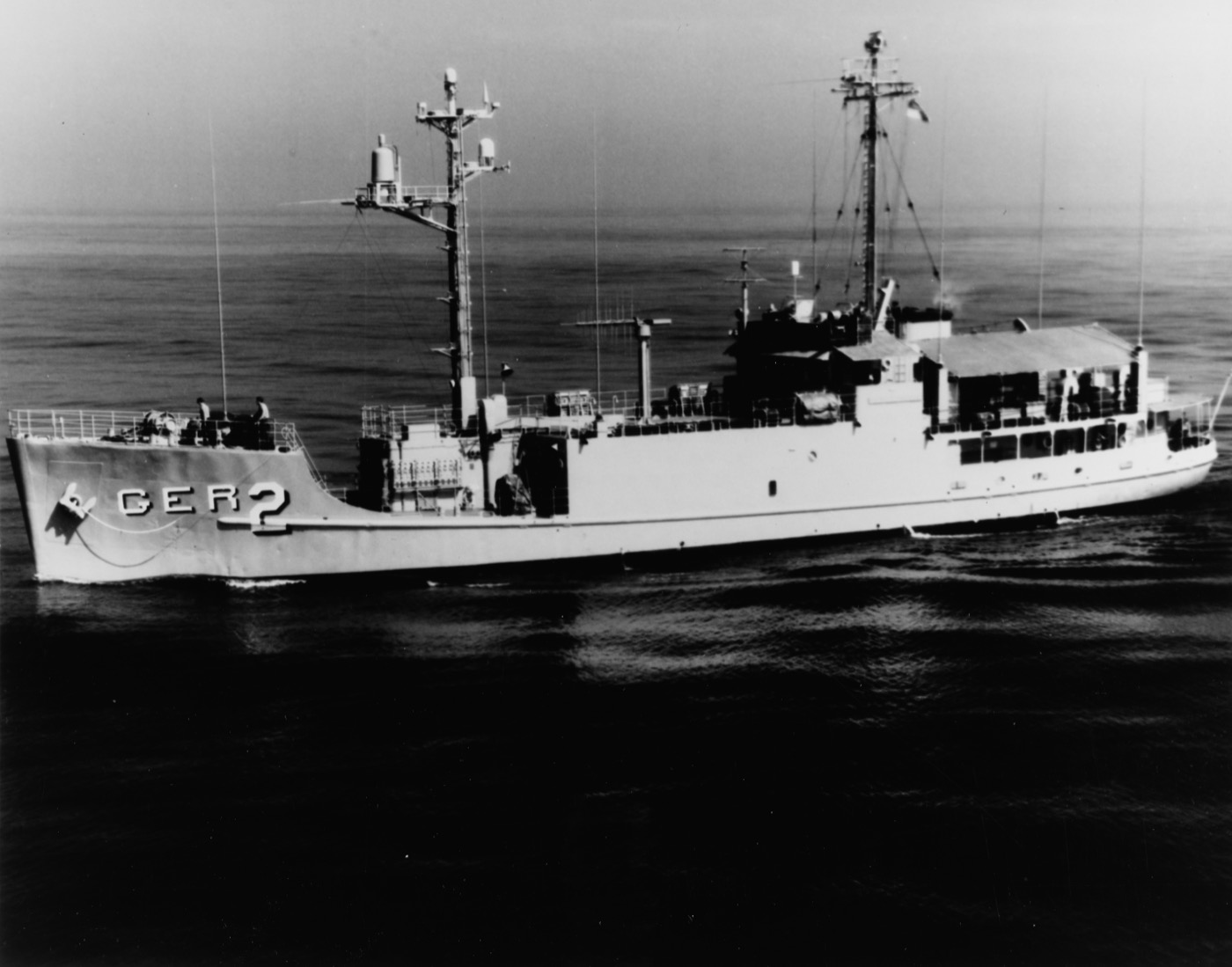
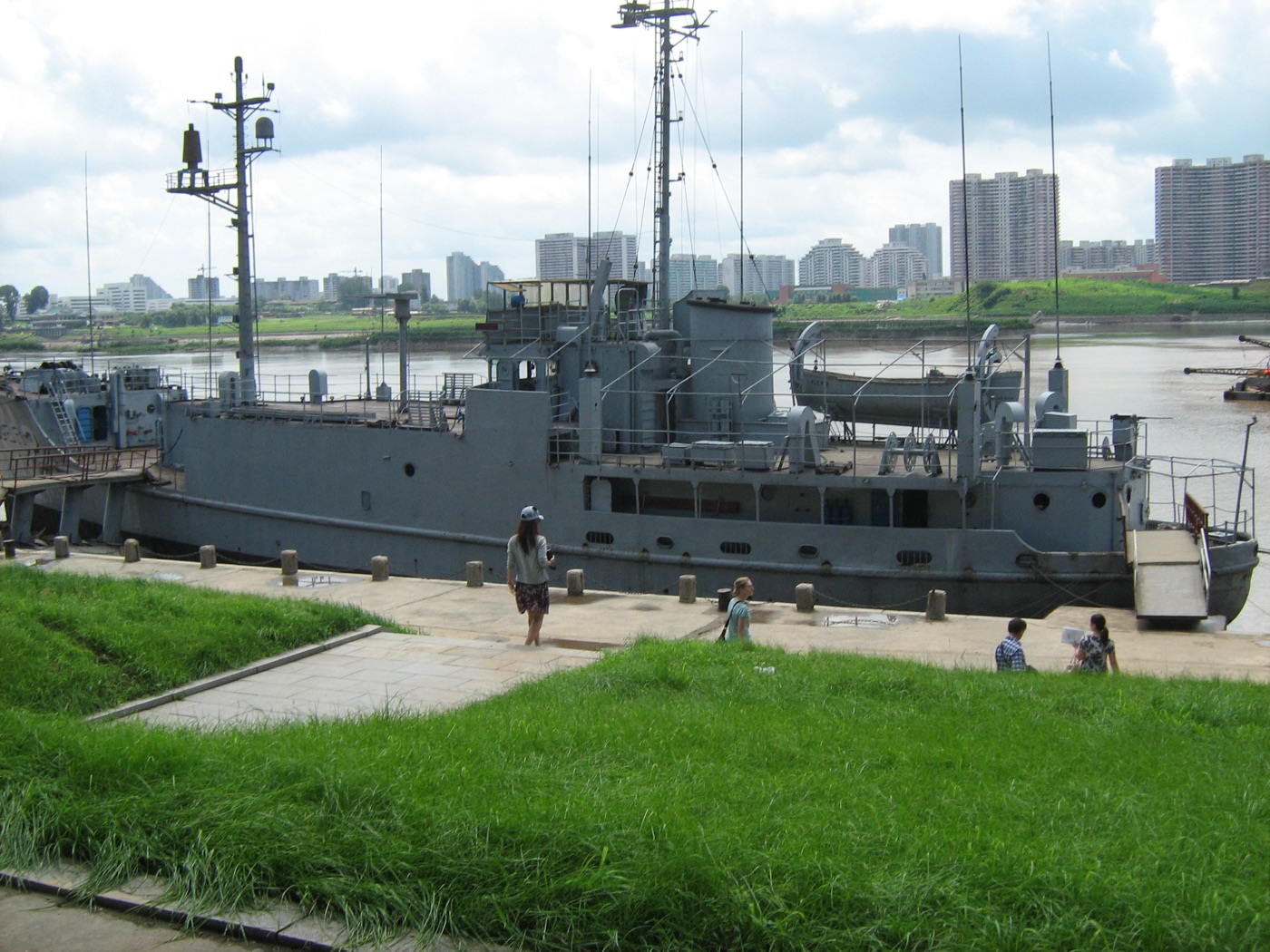
The USS Pueblo, a lightly armed U.S. Navy intelligence ship. On 23 January 1968 North Korean forces seized it on the high seas off Wonsan, killing one sailor and taking eighty-two prisoner — and the ship has never been returned. Wikimedia Commons / U.S. Navy, Public domain.
The USS Pueblo: The Spy Ship North Korea Captured
North Korea and United States, 1968 — North Korean forces seized an American intelligence ship in the open sea, killed a sailor, and held its crew of eighty-two for eleven months. The United States, mired in Vietnam, could not get them back by force — and the ship has never been returned
- Category
- Cold War Files
- Published
- Length
- 3,800 words · 19 min read
- Author
- The editors
The capture of the USS Pueblo is one of the strangest and most humiliating episodes in the history of the Cold War — a moment when the limits of American power were exposed not by a great battle but by a single small ship and a regime willing to do what more cautious adversaries would not. North Korea seized a United States naval vessel on the open sea, held its crew for the better part of a year, extracted from them whatever propaganda value it could, kept the ship, and suffered essentially no consequences for any of it. The episode is remembered partly as a hostage drama and partly as an intelligence disaster, but its deepest lesson is about the constraints that bound even a superpower — about how the war in Vietnam and the fear of a wider conflict left the United States, for all its might, with no good way to get its men or its ship back except to negotiate and to swallow a lie.
This is the story of the spy ship that North Korea took.
The mission
The USS Pueblo was a small, lightly armed vessel with a specialised and secret purpose. Officially designated an environmental research ship, she was in fact a floating listening post — a signals-intelligence platform packed with electronic equipment and a detachment of communications technicians and Korean and Russian linguists, whose job was to monitor North Korean and Soviet radio and radar emissions from just off the coast. Such missions were a routine and important part of Cold War intelligence-gathering, with both superpowers and their allies operating ships that loitered in international waters near hostile coasts, hoovering up electronic signals. The work was considered relatively safe, on the assumption that no one would dare attack a warship of the United States on the open sea.
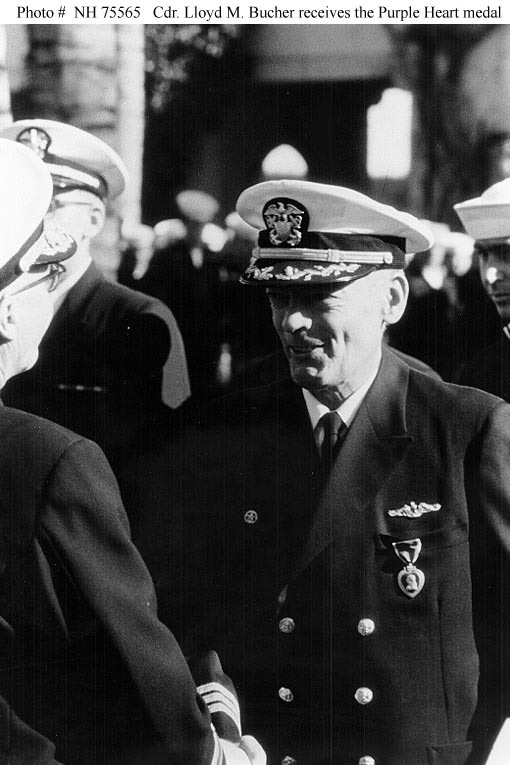
In January 1968, the Pueblo, under the command of Commander Lloyd "Pete" Bucher, was deployed off the eastern coast of North Korea to monitor its naval activity and electronic signals. The ship carried a crew of just over eighty, a quantity of classified cryptographic machines and code material, and only light armament — a couple of machine guns, inadequately positioned and, in the freezing weather, covered and difficult to bring into action. She was a spy, not a fighting ship, and her safety depended entirely on the presumption that her nationality made her untouchable.
That presumption was about to be shattered. The North Korea of 1968, under Kim Il-sung, was in an especially aggressive and confident phase, probing and provoking along the tense frontier with South Korea and willing to take risks that more cautious states avoided. Only days before the Pueblo's seizure, North Korean commandos had infiltrated Seoul in an audacious attempt to assassinate the South Korean president, Park Chung-hee, reaching close to his residence, the Blue House, before being stopped. The peninsula was a tinderbox, and the Pueblo was about to provide the spark.
North Korea's boldness was not a one-off, either, but part of a sustained campaign of provocation in this period, sometimes called the "Second Korean War" or the Korean DMZ Conflict, in which clashes along the border and infiltration raids killed hundreds over several years. The seizure of the Pueblo fit this pattern of calculated aggression — testing American and South Korean resolve, generating propaganda, and asserting North Korean defiance — and the regime would push again the following year, when its fighters shot down an unarmed U.S. Navy reconnaissance aircraft, the EC-121, over the Sea of Japan, killing all thirty-one men aboard. The pattern revealed a state that had discovered it could attack American forces and absorb the consequences, precisely because Washington's attention and resources were fixed elsewhere.
The seizure
On 23 January 1968, North Korean vessels approached the Pueblo as she operated off the port of Wonsan. A submarine chaser challenged her, demanding she identify herself and threatening to open fire; torpedo boats closed in, and a MiG fighter appeared overhead. The Pueblo, hopelessly outgunned, attempted to maneuver away and signalled that she was in international waters, but the North Koreans opened fire, raking the ship and wounding several men, including Bucher. One sailor, Duane Hodges, was mortally wounded as the crew tried desperately to destroy classified material.
The crew faced an impossible situation. The Pueblo carried a large quantity of secret material — cryptographic equipment, code lists, intelligence documents — and the standard duty in such a crisis was to destroy all of it before capture. But there was far too much to destroy quickly; the ship's destruction equipment was inadequate, amounting to little more than a few small incinerators, hammers, and the sea. As the North Koreans closed in and boarded, the crew frantically burned and smashed what they could, throwing material overboard, but they could not destroy it all in the time they had. A great deal of sensitive equipment and paper fell into North Korean hands intact.
Faced with a boarding party, a wounded crew, no realistic means of escape or defence, and the certainty that resistance would get his men slaughtered to no purpose, Bucher surrendered the ship. It was a decision that would haunt him and provoke controversy for years — the first such surrender of a U.S. Navy vessel in living memory — but in the moment it was a choice between submission and the pointless death of his entire crew. The Pueblo was taken into Wonsan, and her men became prisoners of one of the world's most closed and brutal regimes.
Eleven months
What followed was an eleven-month ordeal. The crew were transported to facilities in North Korea and subjected to a sustained campaign of mistreatment designed to break them and to extract propaganda. They were beaten, kept in harsh conditions, poorly fed, and pressured relentlessly to confess that the Pueblo had been spying inside North Korean territorial waters — an admission the North Koreans wanted both to justify the seizure and to humiliate the United States. Bucher was subjected to particularly severe coercion, including, by his account, mock execution, until he agreed to sign a confession.
But the crew also resisted, in ways both brave and ingenious. Knowing that the confessions and propaganda photographs were meant for international consumption, they sought to sabotage them with hidden signals that their captors, unfamiliar with American idiom, would not catch. In staged photographs intended to show the crew content and well-treated, the men repeatedly raised their middle fingers, telling their puzzled captors that the gesture was a "Hawaiian good luck sign." For a time it worked, and the doctored images of smiling prisoners flashing an obscene gesture circulated as North Korean propaganda. When the North Koreans eventually learned the truth — reportedly after the meaning was explained in a Western magazine — they retaliated with a period of especially savage beatings that the crew remembered as "Hell Week." Their confessions, too, were laced with subtle absurdities and double meanings intended to signal to knowing readers that they were coerced and false.
Through the long months, the men sustained themselves on small solidarities and the discipline of collective resistance. They kept faith with one another, supported the weaker and the injured, and held to a shared resolve not to give their captors the clean propaganda victory they wanted. Back in the United States, meanwhile, their families lived through an agonising uncertainty, knowing only that their husbands and sons were held somewhere in North Korea, their fate hostage to negotiations conducted in secret and a regime that revealed nothing. The affair became a national preoccupation and a political embarrassment, a running sore through the turbulent year of 1968, even as it competed for attention with the far larger traumas of Vietnam, assassinations, and upheaval at home. For eleven months the crew existed in a kind of limbo, their country aware of them, unable to reach them, and unwilling to fight for them.
Why America could not respond
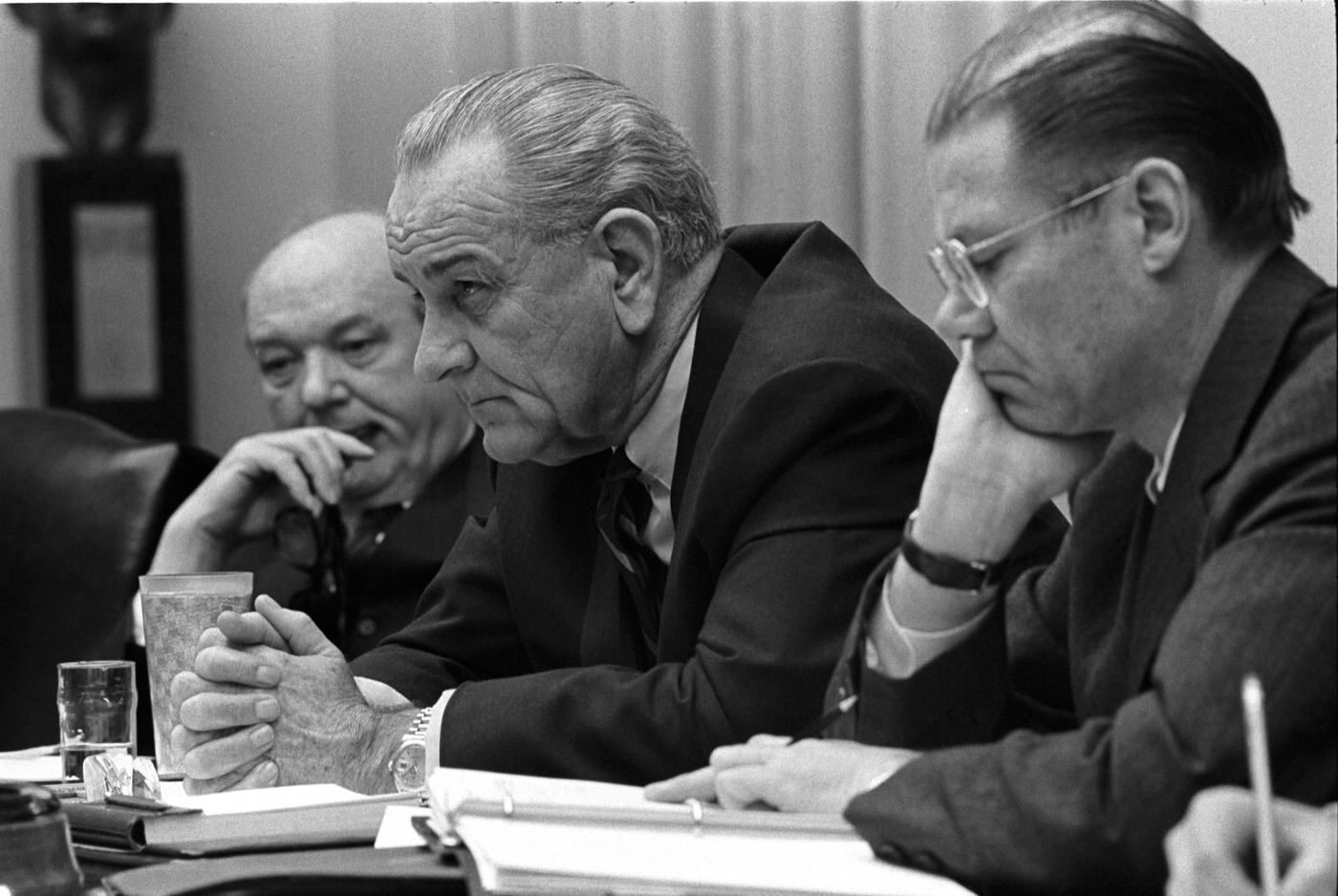
The most revealing aspect of the Pueblo affair is what the United States did not do. The seizure of a commissioned warship and the capture of its crew was an act that, in another era, might have meant war, or at least a forceful military response. President Lyndon Johnson's administration considered military options — strikes, blockades, shows of force — but rejected them, and the reason was Vietnam. The United States was in early 1968 utterly consumed by the war in Southeast Asia; within days of the Pueblo's capture, the Tet Offensive erupted across South Vietnam, throwing the American war effort and American politics into crisis. Washington had neither the appetite nor the capacity to open a second major conflict on the Korean peninsula over one ship, especially when any escalation risked the lives of the eighty-two captured men and a far larger war with North Korea and possibly China.
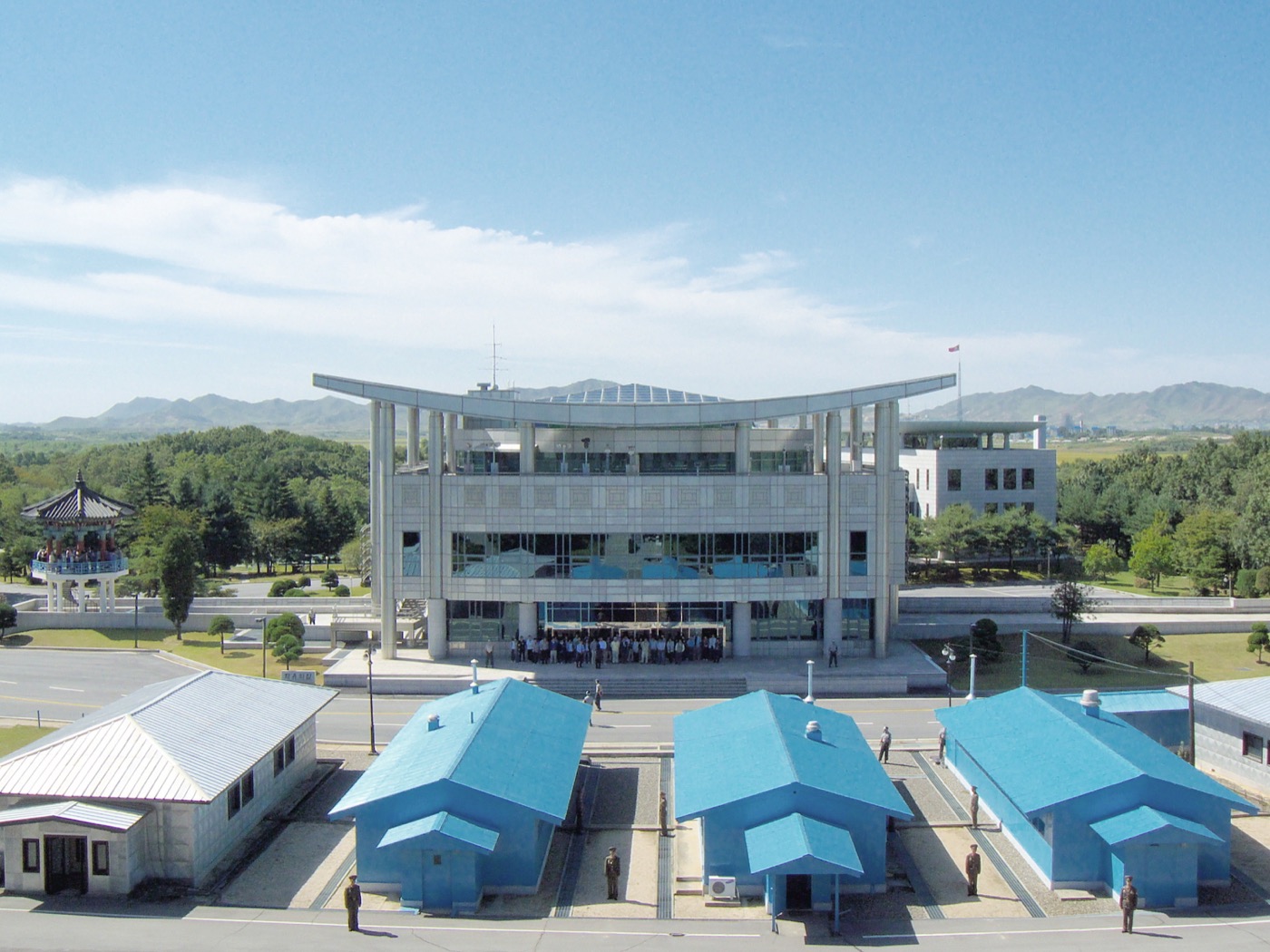
So the superpower was, in effect, checkmated by a small adversary that had correctly judged it would not fight. The United States fell back on diplomacy, opening negotiations with North Korea through the channel at Panmunjom, the truce village on the inter-Korean border, where talks dragged on for month after month while the crew suffered. It was a galling demonstration of impotence: the mightiest military on earth reduced to bargaining for the return of its own sailors with a state it could have obliterated, precisely because the costs of using that power were too high to bear.
The lie that freed them
The deadlock was broken at the end of 1968 by a peculiar piece of diplomatic theatre. North Korea insisted, as the price of releasing the crew, that the United States sign a document admitting the Pueblo had intruded into North Korean waters to spy, apologising for it, and pledging it would not happen again. To the United States this was both false — it maintained the ship had been in international waters — and humiliating. The solution was an extraordinary compromise: an American negotiator, Major General Gilbert Woodward, would sign the confession, but only after publicly stating that he was signing solely to free the men and that the United States repudiated the contents of the document as untrue.
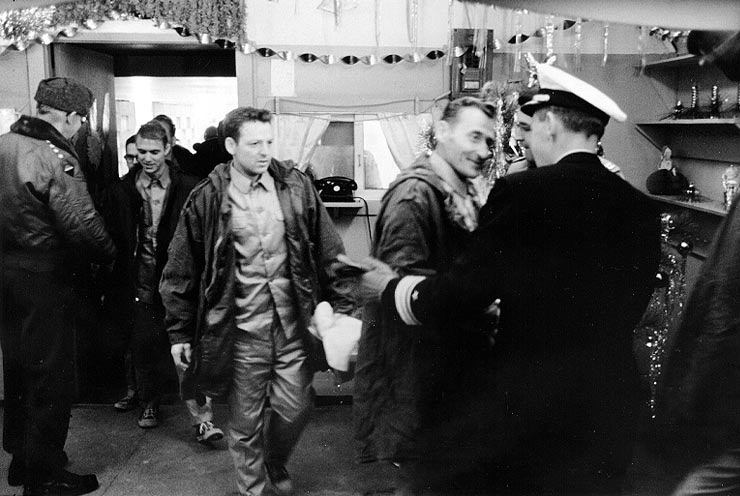
It was, in effect, an officially acknowledged lie — a confession signed and disavowed in the same breath, a fiction both sides understood to be a face-saving device. North Korea got its signed paper for domestic propaganda; the United States got its men back and the public record that the confession was meaningless. On 23 December 1968, after 335 days in captivity, the eighty-two surviving crew members and the body of Duane Hodges were brought to the bridge at Panmunjom and walked, one by one, across the line into South Korea and freedom.
The aftermath
The return of the crew was a relief, but the affair left lasting wounds. Back home, the Navy convened a court of inquiry into the loss of the ship, and it recommended that Commander Bucher and another officer face court-martial — for surrendering without a fight and for failing to destroy the classified material. The recommendation provoked public sympathy for the men who had endured so much, and the Secretary of the Navy ultimately dismissed the charges, declaring that the crew "have suffered enough." Bucher was never punished, but neither was he fully vindicated in the eyes of all his service, and he carried the controversy for the rest of his life. The deeper verdict of history has been kinder, recognising the impossibility of his position and the dignity with which he and his crew survived their captivity.
The intelligence damage was real and serious. The cryptographic equipment and documents the crew could not destroy were a windfall for North Korea and, through it, the Soviet Union. Combined a few years later with the betrayals of the John Walker spy ring, which gave Moscow the key settings for U.S. Navy cipher machines, the Pueblo's captured gear is believed to have helped the Soviets read significant volumes of American naval communications — one of the most damaging compromises of the Cold War. A small spy ship's failure to scuttle its secrets in time had consequences that rippled out for years.
The meaning of the Pueblo
In the end, the story of the USS Pueblo is a Cold War parable about power and its limits. A small, nearly defenceless spy ship was taken on the open sea by a state the United States could have crushed, and the United States — for all its arsenals and all its fury — found it could do nothing but talk, and wait, and finally sign a lie to bring its men home. The eighty-two who came back across the bridge at Panmunjom had endured eleven months of brutality with a resilience that shamed their captors' propaganda, and they returned to a country that scarcely knew what to make of their ordeal. The ship they had served stayed behind, and stays there still, a rusting trophy on a Pyongyang river and a standing reminder that the mightiest nation on earth could be defied by one of the weakest, and made to swallow the humiliation, because the cost of refusing was a war it would not fight.
Inspired this / based on it
Lloyd Bucher
The captain's own account of the seizure and captivity.
Jack Cheevers
NAL. A detailed history of the affair.
Filed under
- #pueblo-1968
- #uss-pueblo
- #north-korea
- #cold-war
- #signals-intelligence
- #lloyd-bucher
- #hostage-crisis
- #us-navy
- #1960s
- #confirmed
Click any tag for every article carrying it.
Continue reading
The Building of the Berlin Wall, 1961
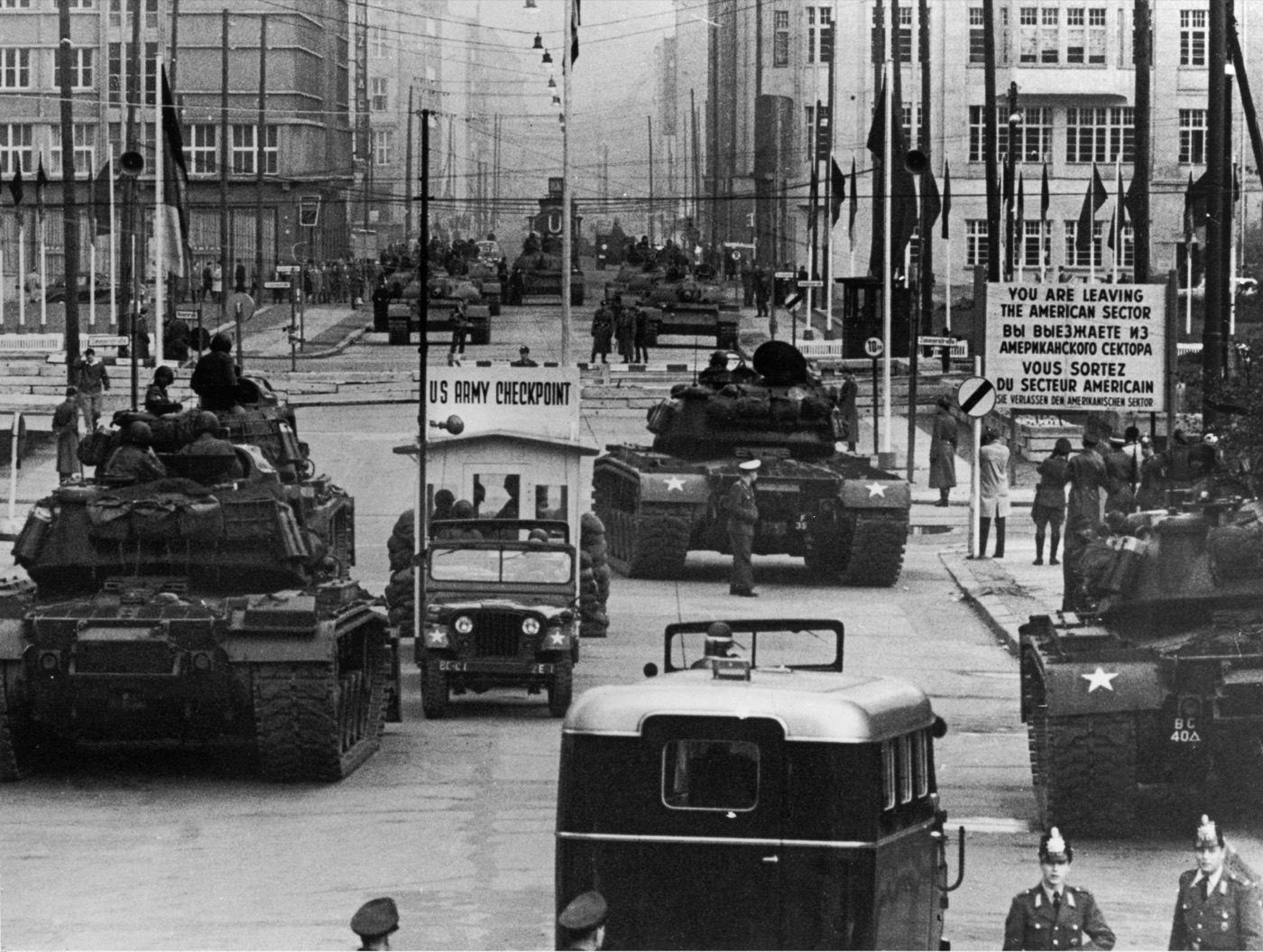
For more than a decade after the Second World War, Berlin was the great open wound of the Cold War and its most dangerous flashpoint. The city lay deep inside communist East Germany, yet it was itself divided into a Soviet-controlled east and a Western-controlled west, and the border that ran through it remained, almost uniquely, open. Through that gap, across the 1950s, millions of East Germans simply walked to freedom — boarding a train or a tram in the east and stepping off in the west, and from there flying out to a new life. They were disproportionately the young, the skilled, the educated: doctors, engineers, teachers, the very people a struggling socialist state could least afford to lose. By 1961 this haemorrhage threatened the survival of East Germany itself, and its leaders, with the backing of the Soviet Union, resolved to stop it the only way they could — by closing the door. In the early hours of Sunday 13 August 1961, East German troops and police moved into position along the sector boundary and began to seal it with barbed wire, tearing the city in two while most of its people slept. Within days the wire was giving way to concrete, and a permanent wall was rising through streets and squares, separating families, neighbours, and workplaces with a suddenness that stunned the world. The Western powers protested furiously but did not intervene, for they understood that the wall, monstrous as it was, did not threaten their own position in West Berlin — and that to challenge it by force risked a war that might go nuclear. The Berlin Wall would stand for twenty-eight years as the physical embodiment of a divided world. This is the story of the weekend it went up.
Venona: The Secret Code-Break That Exposed the Soviet Spies
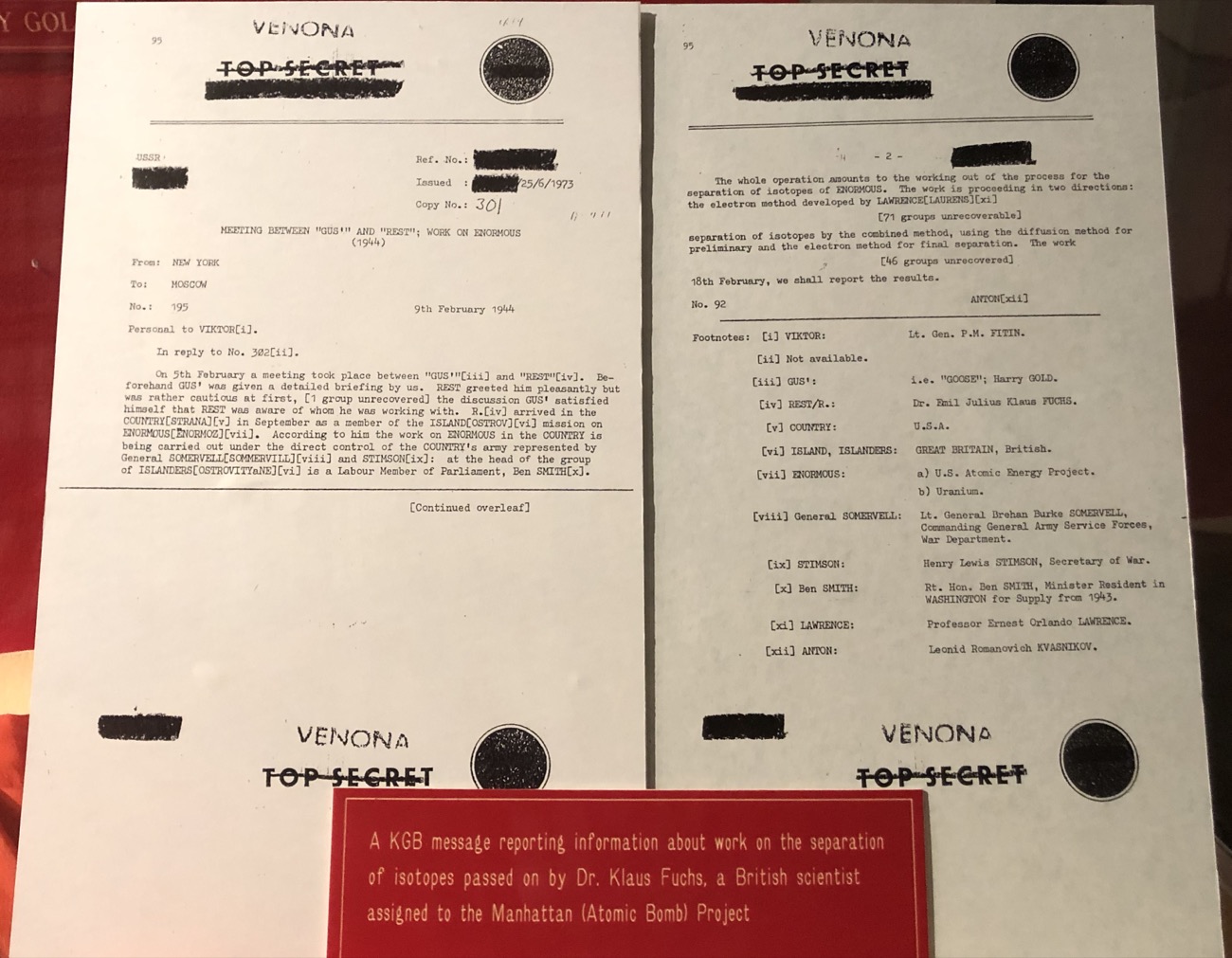
In February 1943, in a converted girls' school outside Washington, a small team of American codebreakers began an attack on a target almost everyone believed was hopeless: the enciphered cable traffic of Soviet intelligence. The Soviets encrypted their most secret messages using a one-time pad, a system that is, in theory, mathematically unbreakable — and the Soviet Union was, at that moment, an ally of the United States in the war against Hitler. Yet the project, later given the codename Venona, would become one of the most consequential intelligence operations of the twentieth century. Exploiting a wartime mistake by Soviet cipher clerks, who had reused pages of supposedly single-use pads, the American cryptanalysts slowly, painstakingly began to read the unreadable. What they found, message by fragmentary message across years of labour, was staggering: the Soviet Union had run a vast espionage campaign inside the United States during the war, with hundreds of sources reaching into the Manhattan Project that built the atomic bomb, the State Department, the Treasury, and the heart of the intelligence services of both America and Britain. Venona helped expose the atomic spy Klaus Fuchs, the ring around Julius and Ethel Rosenberg, and the British traitor Donald Maclean of the Cambridge Five. But the decrypts were guarded with such obsessive secrecy that they could not be used as evidence in open court, and for decades the government knew truths it could not prove and could barely speak. The project remained classified until 1995, when the release of its files rewrote the secret history of the early Cold War. This is the story of the code-break that saw into the heart of Soviet espionage, and of the silence that surrounded it for fifty years.
The Cambridge Five and the Spies at the Heart of British Intelligence
In the 1930s, Soviet intelligence undertook one of the most ambitious recruitment operations in the history of espionage: rather than buying secrets from disgruntled clerks, it would cultivate brilliant young Britons at the start of their careers, men of the right schools and the right accents who could be guided, over decades, into the very heart of the British establishment. The most famous of these recruits were five Cambridge University men — Kim Philby, Guy Burgess, Donald Maclean, Anthony Blunt, and John Cairncross — who became known as the Cambridge Five. They were not desperate or marginal figures but charming, talented members of the elite, and that was precisely the point. Over the following decades they penetrated the Foreign Office, the security service MI5, the secret intelligence service MI6, and the wartime codebreaking establishment, passing a torrent of British and American secrets to Moscow. Philby rose so high within MI6 that he was considered a future chief of the service — while serving the entire time as a Soviet agent, even as he was nominally in charge of countering the Soviet threat. The ring began to unravel in 1951, when Burgess and Maclean vanished to Moscow one step ahead of exposure; Philby fell under suspicion but was protected by an establishment unable to believe one of its own could be a traitor, and he did not flee to Moscow until 1963. Blunt, by then a knighted royal art adviser, secretly confessed but was not publicly named until 1979. The damage they did — to operations, to agents, to trust between Britain and its allies — was immense and, in places, fatal. This is the story of how five men of the establishment betrayed it from within, and how the establishment's own blindness let them.