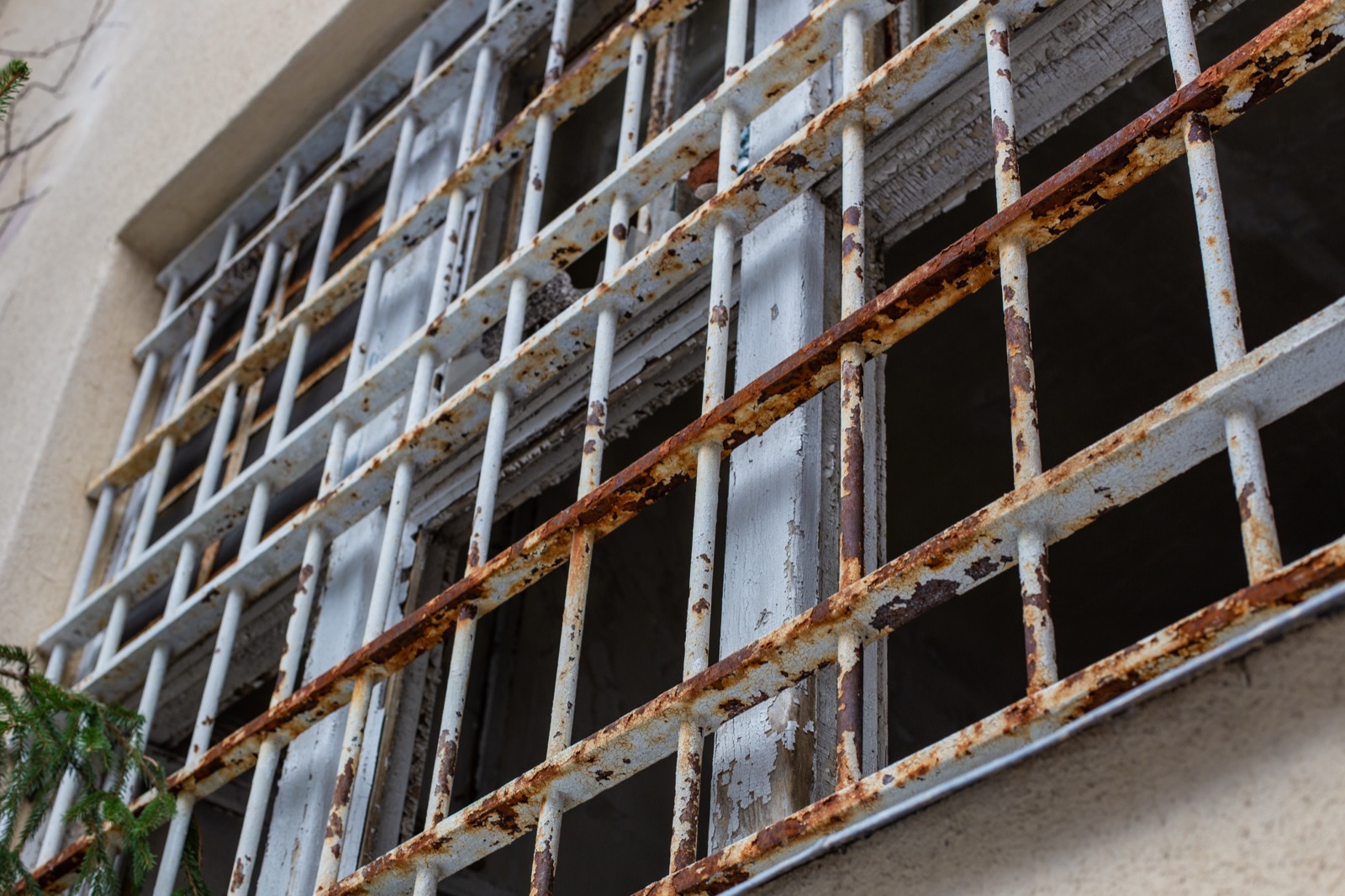
The barred windows of the secure forensic-psychiatric pavilion at Säter, in central Sweden, where Sture Bergwall was confined and where, through years of therapy and powerful drugs, the fictional serial killer 'Thomas Quick' was constructed. Not one of his eight murder convictions rested on any forensic evidence. Wikimedia Commons / Calle Eklund, CC BY-SA 4.0.
Thomas Quick and the Serial Killer Who Never Was
Sweden, 1991–2013 — a man in a secure psychiatric hospital confessed to more than thirty murders and was convicted of eight, with no forensic evidence in a single case. Then he took it all back. He had invented everything — and a therapy, a court system, and a country had helped him do it
- Category
- State & Intelligence Operations
- Published
- Length
- 4,560 words · 20 min read
- Author
- The editors
The Thomas Quick case is unsettling in a way that ordinary crime stories are not, because there is no killer at its centre — only a void that an entire system filled with a fiction. It is not a whodunit but an unmaking: the slow revelation that the monster everyone had agreed upon did not exist, and that the machinery of justice, medicine, and memory had together manufactured him. To understand it is to confront an uncomfortable truth about how confessions, expertise, and the desire to believe can override the complete absence of evidence.
This is the story of a serial killer who never was, and of the people who built him.
Sture Bergwall
The man at the centre was born Sture Bergwall in 1950 in Korsnäs, near Falun in central Sweden, one of seven children. His life before Säter was troubled but not monstrous: he struggled with his sexuality and his mental health, developed serious problems with drugs, and committed a string of offences, including the sexual abuse of boys and, in 1990, a clumsy, violent robbery of a bank in Uppsala. It was that robbery that sent him, in 1991, to the secure forensic-psychiatric clinic at Säter, where he would spend more than two decades and where the fiction of Thomas Quick would be born.

At Säter, Bergwall was a difficult, attention-seeking patient with a deep need to be seen, and he entered a psychiatric culture then in thrall to a particular set of ideas. In the early 1990s, a strand of psychotherapy held that many psychological problems stemmed from traumatic memories — especially of childhood abuse — that had been "repressed," buried in the unconscious, and that could be "recovered" through intensive therapy. It was in this framework that Bergwall's therapists set out to excavate his past, and it was within it that he began, tentatively at first and then in a flood, to "remember" not being abused but committing murders.
Why a man would falsely confess to thirty murders is, understandably, the question most people find hardest to accept, and the answer is bound up in who Bergwall was. He was, by his own later account and by those who studied him, a deeply troubled and lonely man with a profound hunger for significance and attention, who had spent his life on the margins and who found, in the role of Thomas Quick, something he had never had: importance. As Quick he was no longer a forgotten patient and petty criminal but the centre of a vast investigation, the focus of psychiatrists and police and the nation's press, a figure of dark fascination whose every word was attended to. The therapy that prized his "memories" rewarded him with attention each time he produced a more terrible one; the more he confessed, the more important he became. For a man built as he was, that was an intoxication more powerful than any drug — and the drugs only loosened whatever restraint might have held the invention back. He was not a master manipulator coldly deceiving the system; he was a damaged person being given, for the first time, a reason to be looked at, and a method by which to keep the looking going.
Recovered-memory therapy
The theory of repressed and recovered memory, which drove the Quick case, has since been largely discredited by memory science, and understanding why is essential to understanding what happened. Decades of research have shown that human memory does not work like a buried tape that can be recovered intact; it is reconstructive, suggestible, and capable of generating vivid, detailed, sincerely believed "memories" of events that never occurred — especially under the influence of leading questions, authority figures, repetition, and the expectation that such memories exist to be found. The therapeutic techniques used to "recover" memories are, it turned out, almost perfectly designed to create false ones.
Into this volatile process came a second ingredient: drugs. Bergwall was prescribed large quantities of benzodiazepines and other psychoactive medications during the years he was producing his confessions — drugs that can cloud judgment, distort perception, and increase suggestibility. He later described being heavily medicated and, in effect, willing to say whatever was wanted of him, in a state where the line between invention and memory had dissolved. The combination — a damaged, attention-hungry man, a therapy committed to finding buried horrors, and a haze of mind-altering drugs — was a machine for producing exactly what it produced: detailed, confident, entirely false confessions to murder.

The role of the drugs cannot be overstated, and it is one of the few parts of the story with an almost chemical clarity. For the entire period in which Thomas Quick existed — confessing, being convicted, performing his memories — Bergwall was under the influence of heavy, sustained benzodiazepine medication. When, years later, he was weaned off it, Quick simply stopped. The man who emerged, sober, was not a repentant killer but someone who looked back at the whole performance with a kind of appalled detachment and said plainly that none of it had been real. The correlation is stark enough to function almost as a controlled experiment: drugs in, serial killer; drugs out, no serial killer. That a Swedish hospital was supplying the very chemicals that fuelled the false confessions, while the justice system treated those confessions as sober truth, is among the case's grimmest ironies.
Building a murderer
The way the confessions were handled turned a troubled man's fantasies into prosecutable cases. Bergwall would "remember" a murder, often vaguely and with many wrong details; through repeated interviews, therapy sessions, and reconstructions, the account would be refined, the errors discarded, the hits emphasised. In the notorious reconstructions — the vallningar, in which he was taken out to point out crime scenes and where bodies had supposedly been — he frequently pointed to the wrong places, hesitated, or got it plainly wrong, only for the searches and the narrative to be adjusted until something seemed to fit. Information about the real, unsolved murders he was confessing to could reach him through the investigation itself, so that his "memories" improved suspiciously over time.
What was almost entirely absent, throughout, was independent corroboration. In case after case, there was no forensic evidence linking Bergwall to the crime: no DNA, no fingerprints, no weapon, no witness, no remains located through information only the killer could have known. The cases were built on the confessions alone — on the premise that no one would confess in such detail to murders they had not committed, a premise that the whole affair would ultimately demolish.
The errors in the confessions, viewed honestly, should have been fatal to them. Quick repeatedly got fundamental details wrong: the appearance and characteristics of victims, the manner of death, the geography of where bodies were found, the very facts a real killer could not forget. At various points he confessed to crimes in ways that contradicted the known evidence, named the wrong injuries, described the wrong locations, and "remembered" events that could not have happened as he said. In an ordinary investigation, such a parade of misses would have discredited a confession entirely. In the Quick investigation, they were treated as the expected distortions of a traumatised memory slowly clearing — so that being wrong became, in the logic of the case, almost a sign of authenticity, a hurdle the "recovering" killer was bravely working through. It was a closed loop: getting it right proved he was the killer, and getting it wrong proved how deeply he had repressed the trauma. No answer he could give could break the conviction that he was guilty.
The convictions
Between 1994 and 2001, Swedish courts convicted Thomas Quick of eight murders. The victims were real people whose deaths or disappearances were real tragedies — among them Charles Zelmanovits, the Norwegian girl Therese Johannessen, and the Israeli student Yenon Levi, along with others spread across Sweden and Norway. In each case, the court accepted Quick's confession as sufficient, despite the absence of technical proof, and despite the often glaring weaknesses in his accounts. The convictions accumulated, and with each one the edifice grew more solid in the public mind: a man convicted of eight murders must surely be the monster he claimed to be.
The legal process that produced these convictions was, in retrospect, catastrophically one-sided. The prosecution, led by Christer van der Kwast, pursued the cases with conviction; the therapists and a memory expert lent psychological authority to the confessions; and the defence, rather than mounting a vigorous challenge, was strikingly passive — Bergwall's own lawyer often did little to contest a client who wanted to be found guilty. A criminal trial is supposed to be an adversarial test in which the evidence is attacked from both sides; in the Quick trials, almost everyone in the courtroom was, in effect, working toward the same conclusion. There was no one whose job it was to insist on the obvious question: where is the evidence?
The believers
To understand how this lasted, you have to understand the circle of people who believed, or needed to believe, in Thomas Quick. At its centre were the Säter therapists committed to the recovered-memory framework, for whom Quick's confessions were a vindication of their methods. There was the psychologist and memory researcher Sven Å. Christianson, who became closely involved and lent academic weight to the idea that Quick's memories were genuine. There was the prosecutor, van der Kwast, whose career became bound up with the case. And there was a media and public ready to be gripped by the story of Sweden's worst serial killer.
For all of them, Quick's guilt was not just a belief but an investment. The therapists' professional worldview, the prosecutor's record, the experts' reputations, the narrative the public had embraced — all depended on Quick being real. This is the same dynamic of institutional and personal commitment that recurs across these cases: once enough people have staked themselves on a conclusion, the evidence is read to support it, and the doubts are explained away. The wrong places Quick pointed to, the details he got wrong, the total absence of forensic proof — each was reinterpreted as consistent with guilt rather than admitted as evidence of its absence. Belief, once established, defended itself.
The unravelling
The fiction held as long as Thomas Quick kept talking — and it began to dissolve when he stopped. Around 2001, Bergwall ceased confessing to new murders, and the prosecutions paused. More importantly, in the years that followed he was gradually taken off the heavy benzodiazepine medication he had been on throughout his Quick years. As his mind cleared, the compulsion that had driven the performance faded. He fell silent, and in that silence the case had no fuel.

The decisive intervention came from journalism. The investigative reporter Hannes Råstam began, around 2008, to examine the Quick case in depth, and what he found was an abyss where the evidence should have been. Going back through the case files, the interview transcripts, and the reconstructions, Råstam documented how the confessions had been shaped, how the errors had been buried, and how nothing solid underlay any of it. He interviewed Bergwall, who — lucid, off the drugs — told him the truth: he had made it all up. He was not Thomas Quick; he had killed no one; the memories had never been real. Råstam's documentaries and his book laid the case bare, and the edifice that had stood for nearly two decades collapsed.
It is worth noting how much resistance that exposure met. The people who had built the Quick case did not welcome its unravelling; the prosecutor, the experts, and the believers defended their work, and the suggestion that Sweden's worst serial killer was a fiction was, at first, met with disbelief and hostility from some quarters. It is far easier for an institution to accept that it caught a monster than that it manufactured one, and the admission required here was total: that eight convictions, years of investigation, expert careers, and a national narrative had all been built on nothing. That the truth prevailed at all owed much to the sheer documentary weight of what Råstam assembled and to Bergwall's own steady, sober insistence that he had killed no one — a recantation he had every reason to expect would not be believed, since the system had spent two decades insisting he was lying whenever he told the truth.
The exonerations
Once Bergwall recanted and the investigation reopened, the legal unwinding was swift and total. Between 2010 and 2013, Swedish courts granted retrials and, one after another, quashed all eight of his murder convictions. In each case, when the confessions were set aside and the courts looked for what else there was, they found nothing — no evidence on which any conviction could stand. By 2013, Sture Bergwall had been cleared of every murder, and in time he was released from Säter, a free man. The serial killer Thomas Quick was formally erased: he had never existed, and the law now said so.
The exonerations left a wreckage of hard questions. Eight murders for which a man had been convicted were now, once more, officially unsolved — and in some of the cases, the renewed doubt extended even to whether a murder had occurred at all, or whether a death had been natural or accidental, since the "solution" had been pure invention. The real victims' families, who had been told the killer was caught, now had to absorb that the man imprisoned for their loss had had nothing to do with it, and that the actual circumstances might never be known.
This is the cruelest dimension of the Quick affair, and the one most easily lost in the fascination with the fraud. Every murder Quick falsely confessed to had a real victim and a real bereaved family, and for years those families lived with an answer that was no answer at all. They had been told that the person responsible for their loss was known, named, and convicted — and then, decades on, that it had all been a fiction, that the man imprisoned had never touched their loved one, and that the truth was once again lost, the trail long cold. For some, the wrongful "solution" had foreclosed any genuine investigation while one might still have borne fruit. The Quick case did not only imprison an innocent man; it stole from the victims' families the one thing the justice system owed them — the truth — and replaced it, for a generation, with a comforting lie.
What went wrong
A government-commissioned review, led by Daniel Bergström and reporting in 2015, examined how the justice system had failed so completely, and its findings were damning across the board: the investigations had been biased toward confirming guilt, the reconstructions had been mishandled, exculpatory information had been neglected, the courts had accepted confessions uncritically, and the adversarial safeguards had broken down. No single villain was responsible; the failure was collective and systemic, distributed across therapy, policing, prosecution, expert testimony, and the courts.
In the end, the Thomas Quick affair is less a story about a liar than about the people and institutions who needed his lie to be true. Sture Bergwall, damaged and drugged and desperate to be someone, offered Sweden a monster, and Sweden — its therapists, its experts, its prosecutors, its courts, its press — took the offer and built the monster real, conviction by conviction, until a journalist and a sober man dismantled it. No DNA, no weapon, no body found by the killer's hand: there was never anything there, and for nearly two decades almost no one with the power to stop it was willing to say so. The case is taught now as the worst miscarriage of justice in modern Swedish history, and its warning is permanent — that the most dangerous evidence of all may be the confession everyone wants to believe.
Sources
- The Swedish courts' resning (retrial) judgments overturning all eight Thomas Quick murder convictions (2010–2013) — primary.
- The Bergström review (Statens offentliga utredningar / government- commissioned inquiry) into the handling of the Quick cases (2015) — primary.
- Hannes Råstam, Thomas Quick: The Making of a Serial Killer (2012, Eng. trans. 2013) — secondary.
- Hannes Råstam's SVT documentaries on the Quick case (2008–2009) — secondary.
- Dan Josefsson, Mannen som slutade ljuga (The Man Who Stopped Lying) (2013) — secondary.
- Sture Bergwall's own accounts and interviews following his recantation — primary.
- Academic literature on false confessions and on the discrediting of recovered-memory therapy — academic.
- Reporting by Swedish and international media on the convictions, the recantation, and the exonerations (1994–2013) — secondary.
Inspired this / based on it
Hannes Råstam
The investigative book that dismantled the case; by the journalist who obtained Bergwall's recantation.
Hannes Råstam / SVT
The documentaries that first exposed the case as a fabrication.
Mikael Håfström
Swedish dramatization based on Dan Josefsson's book about the case.
Filed under
- #quick-bergwall
- #sweden
- #thomas-quick
- #sture-bergwall
- #false-memory
- #false-confession
- #miscarriage-of-justice
- #recovered-memory-therapy
- #1990s
- #confirmed
Click any tag for every article carrying it.
Continue reading
The Olof Palme Assassination
At 11:21 p.m. on Friday, February 28, 1986, the Prime Minister of Sweden, Olof Palme, was shot in the back at point-blank range on Sveavägen, Stockholm, while walking home from a cinema with his wife Lisbet. Lisbet Palme was grazed by a second shot. Olof Palme was 59 years old. He had been the Prime Minister of Sweden from 1969 to 1976 and again from 1982. He had no bodyguards that night. The killer ran east up Tunnelgatan and disappeared. He has never been positively identified. Sweden's Palme Commission and its successor police investigation ran for 34 years. On June 10, 2020, Chief Prosecutor Krister Petersson publicly named the most likely perpetrator — a Swedish graphic designer named Stig Engström, the so-called "Skandiamannen" — and simultaneously closed the case because Engström had died in 2000 and could not be tried. The 40-year-old investigation produced 22 binders of investigative material, dozens of failed theories, one wrongful conviction, and no court ruling. It is the largest unsolved political assassination in modern European history.
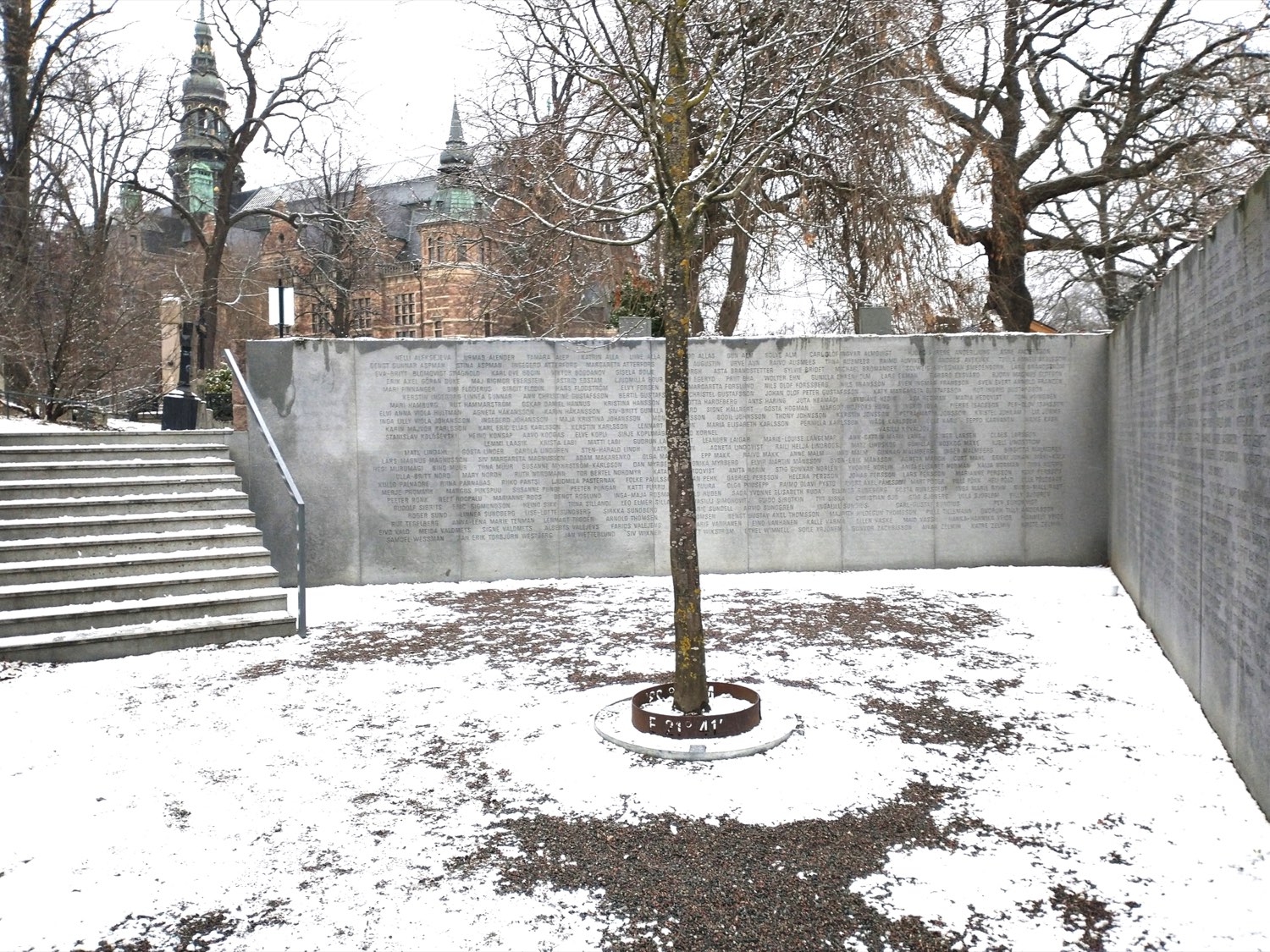
The Sinking of MS Estonia and the Wreck Sweden Would Not Raise
Shortly after one o'clock in the morning on 28 September 1994, the passenger ferry MS Estonia was midway across the Baltic Sea, sailing from Tallinn to Stockholm through a strong autumn gale, when the great clamshell visor at her bow — the hinged structure that lifted to let cars drive on and off — wrenched free of its locks under the pounding of the waves. As it fell away it dragged open the ramp behind it, and the sea poured onto the car deck. A ship like the Estonia could not survive water loose on that long, open deck: it sloshed to one side, the ferry took on a heavy list, and within minutes she was rolling over. From the first violent heel to the moment she vanished beneath the surface, perhaps fifty minutes passed — barely time for those near the upper decks to scramble out into the freezing water, and no time at all for the hundreds asleep in cabins below. Of the 989 people aboard, 852 died. It was the deadliest peacetime shipwreck in European waters of the twentieth century, and a wound that has never fully closed in Sweden, Estonia, and Finland, the three nations that lost the most. An official investigation concluded in 1997 that the visor's failure had doomed the ship. But what turned a catastrophe into an enduring controversy was what came after: Sweden's decision not to raise the bodies or the wreck, to leave the dead in the hull and seal it as a grave; the persistent theories of explosions and secret military cargo; and, in 2020, documentary footage of a large hole in the hull that forced the case to be reopened. This article sets out what happened that night, what is firmly established, and what remains genuinely contested.
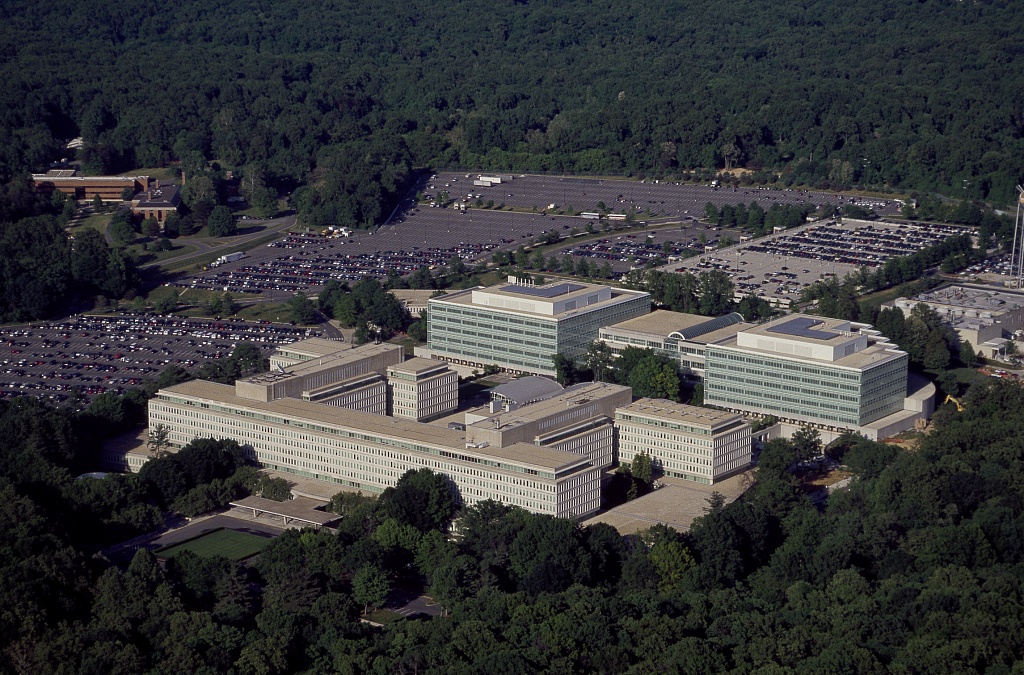
MK-Ultra
Between 1953 and 1973, the Central Intelligence Agency ran one of the most ambitious — and least restrained — human-experimentation programs in American history. The goal was mind control. The subjects rarely knew they were subjects. By the time the public found out, most of the records had been burned.