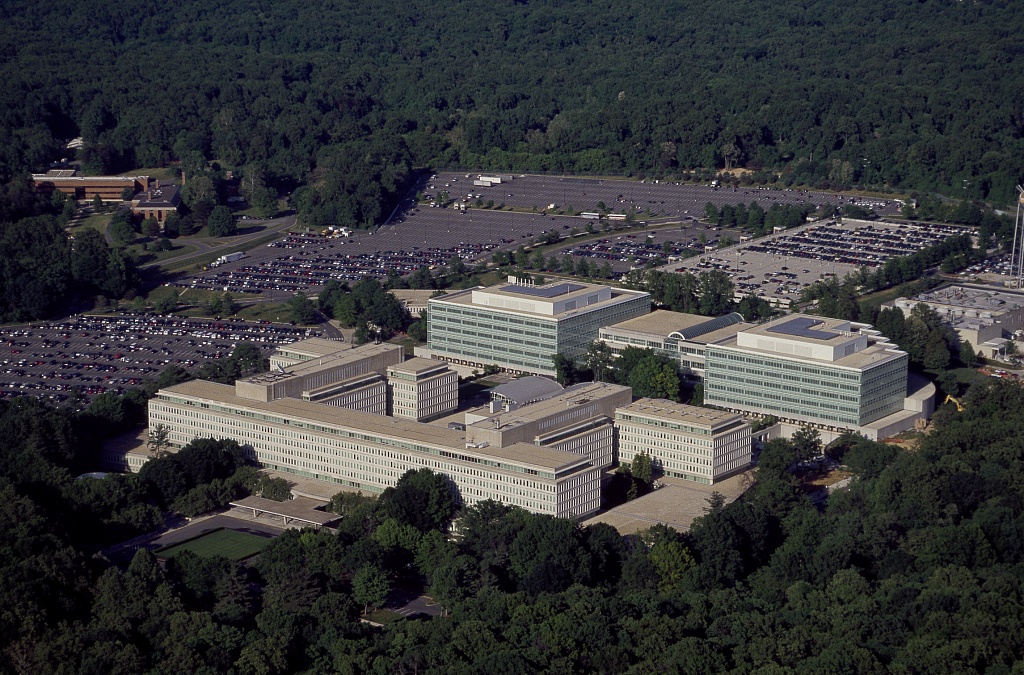
CIA headquarters, Langley, Virginia. The Technical Services Staff that ran MK-Ultra was housed in the original building. Photo: Carol M. Highsmith for the Library of Congress. Public domain.
MK-Ultra
The CIA's twenty-year experiment with the mind
- Category
- State & Intelligence Operations
- Published
- Length
- 4,200 words · 22 min read
- Author
- The editors
MK-Ultra
The CIA's twenty-year experiment with the mind.
CONFIRMED · 4,200 words · 22 min read
A chemist at Langley
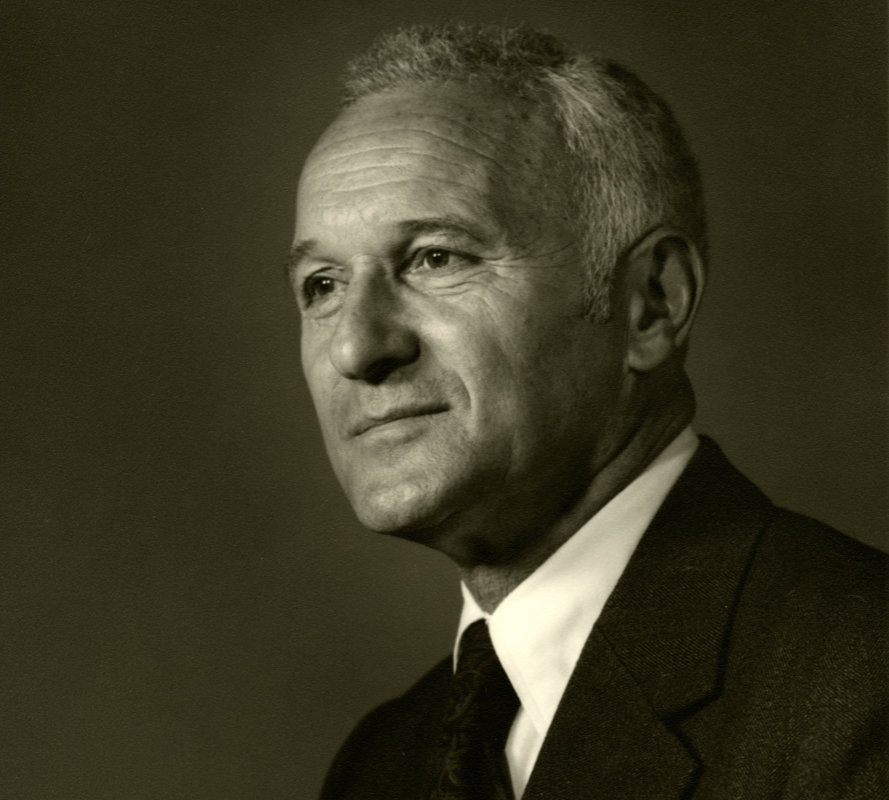
Sidney Gottlieb was thirty-four years old in the spring of 1953, walked with a slight limp from a childhood case of clubfoot, and worked out of a small office in the Technical Services Staff at the brand-new Central Intelligence Agency. He had a chemistry doctorate from Caltech, a wife, two children, and an interest in folk dancing. He had grown up Jewish in the Bronx, the son of immigrants from Hungary. His name, before he changed it, was Joseph Scheider.
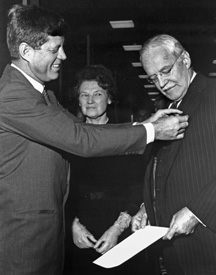
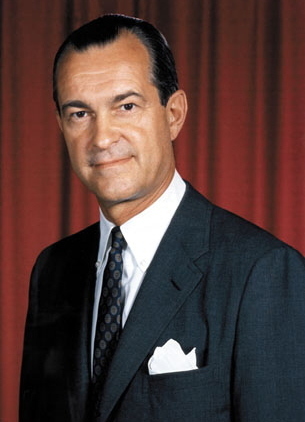
On April 13, that spring, the Director of Central Intelligence — Allen Welsh Dulles, brother of the Secretary of State, lawyer's lawyer, sixty years old — signed a memorandum approving a program codenamed MK-Ultra. The "MK" prefix was an internal designator for the agency's Technical Services Staff. "Ultra" was unexceptional spy nomenclature.
The memorandum allocated funds outside the CIA's normal accounting controls. It approved a program of research into the chemical and biological control of human behavior. It named Gottlieb as the chief.1
Twenty years later, on his last day in the office in early 1973, Gottlieb walked through the agency's records storage and signed off on the destruction of every file the program had generated. The man who had overseen it, and the man who had ordered the burn — outgoing DCI Richard Helms — both retired the same week. The files, with a few exceptions we will get to, are gone.
The story of what the program did, and what it did not do, is built out of those exceptions.
Why 1953
Three things were happening in American public life in the early 1950s that made a program like MK-Ultra possible to authorize and difficult to question.
The first was the Korean War. American prisoners of war held by the Chinese and the North Koreans had begun returning to the United States, and a number of them had — under interrogation, on film — confessed to participating in a biological-warfare program against North Korean civilians. The confessions were false. The Air Force later concluded the prisoners had been pressed by sleep deprivation, isolation, and calculated humiliation rather than chemistry, but at the time the word that attached to the technique was brainwashing. The journalist Edward Hunter had coined the English term in a 1950 Miami News column and a 1951 book, and by 1953 it was a panic.2
The second was the Cardinal Mindszenty trial. In February 1949, the Hungarian Roman Catholic prelate József Mindszenty had appeared in a Budapest courtroom and, with what Western observers described as a glassy passivity, confessed to treason. He had been drugged, or so the West concluded — perhaps with something the Soviets had and the Americans did not.
The third thing that was happening, in the agency itself, was a predecessor program called Artichoke. Authorized in August 1951, Artichoke had explored hypnosis, electroshock, and the use of barbiturates and amphetamines in interrogation. It had been jointly run with the Army and the Navy and the FBI, and by 1953 the CIA wanted to consolidate the work under its own chemistry division, with money it did not have to account for.
The memo on April 13 did that. It also did something else: it instructed the program to test materials operationally — that is, on subjects who did not know they were being tested. Earlier programs had tested materials in clinical, witting settings. MK-Ultra was authorized to move that work into the field.3
A hundred and forty-nine subprojects
The program's structure was decentralized to the point of opacity. There was no single MK-Ultra laboratory. Instead, the Technical Services Staff issued contracts, often through cutouts — the Geschickter Fund for Medical Research, the Josiah Macy Jr. Foundation, and most prominently the Society for the Investigation of Human Ecology, renamed the Human Ecology Fund in 1961 — to researchers at universities, hospitals, prisons, and pharmaceutical companies. The receiving institutions were often unaware that the CIA was the ultimate funder. Sometimes the individual researcher was unaware. The contracts arrived from foundations the researcher had heard of.
By the time the program was paused in the mid-1960s, there were 149 documented subprojects, contracted to more than eighty institutions in the United States and Canada. Some involved the chemistry of LSD. Some involved hypnosis. Some involved sensory deprivation tanks, electrical shocks to the brain, induced sleep for weeks at a time, the surgical implantation of electrodes. Some involved attempts to develop slow-acting poisons, materials that could be used in field assassinations, or bacteriological agents — that last line of work running in parallel through the CIA-Army joint program MKNAOMI, headquartered at the Army's Fort Detrick biological warfare laboratories.
The most documented subproject, and the one that has been the most written about, was Subproject 3.
Operation Midnight Climax

In 1953, a federal narcotics agent named George Hunter White — a former OSS officer, six-foot, two-hundred-pound, partial to bow ties and prostitutes, with a long professional history of unaccountable behavior — was contracted to set up a safe house in a Greenwich Village brownstone. The house was wired for sound and equipped with a one-way mirror. White paid prostitutes to bring clients to the house. When the clients arrived, White or a CIA observer behind the mirror would introduce a dose of LSD into the client's drink. The observers — usually Gottlieb's deputy Robert Lashbrook or other agency officers — would then watch the resulting hours through the mirror, with the prostitute sometimes coached to ask specific questions or take specific actions.
The Greenwich Village house ran until 1955. White was then transferred to San Francisco, where two further safe houses were established, one at 225 Chestnut Street on Telegraph Hill and one in Marin County. They operated until 1965.
The point of all this — what George Hunter White was doing for the agency that paid him via the Bureau of Narcotics — was to study how LSD affected unwitting subjects in operational settings. In a 1971 letter to Gottlieb, recovered as part of the 1977 release, White wrote:
The line is much-quoted because it is the only document in which one of the program's operatives, in his own words, describes the operational ethos. White retired to Stinson Beach in 1965, where he wrote a memoir, Big White, that no publisher would touch and that has survived in manuscript.
What happened to Frank Olson
Frank Olson was an Army biochemist at Fort Detrick's Special Operations Division — the biological-warfare laboratory that overlapped with the CIA's MKNAOMI work. He was forty-three years old in November 1953, with a wife and three young children at a home in Frederick, Maryland. He had a clearance that gave him access to most of the biological-weapons research the United States was conducting. By late 1953 he had been expressing reservations about the program's direction.
On November 19, 1953, Olson and several SOD and CIA colleagues drove out to a CIA retreat at Deep Creek Lake in western Maryland for a working weekend. After dinner, Sidney Gottlieb dosed the Cointreau they were drinking with LSD. He told the group what he had done about twenty minutes later, after they had drunk it.
For the next nine days, Olson was, according to his colleagues, unable to function. He told his wife he wanted to leave his job. He told his colleagues he wanted to leave the country. Gottlieb's deputy Robert Lashbrook took him to New York to see Dr. Harold Abramson, an allergist and one of Gottlieb's MK-Ultra-funded LSD researchers, in the hope that talking with Abramson might calm him.
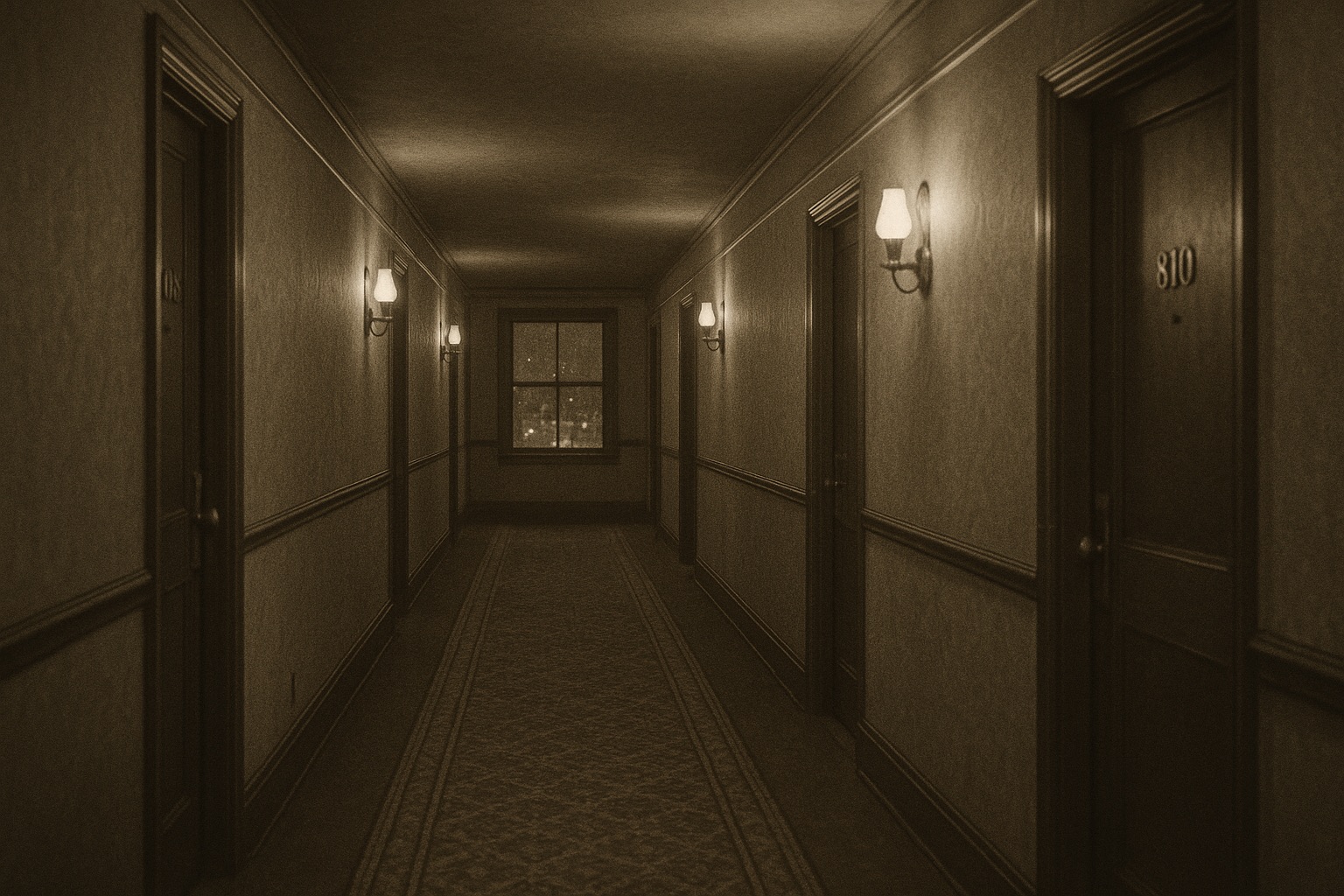
On the night of November 28, in Room 1018A of the Hotel Statler — the ten-floor commercial hotel across from Penn Station, now the Hotel Pennsylvania — Olson went through a window. He died on impact on the sidewalk along Seventh Avenue. Robert Lashbrook was in the room with him. The official cause of death recorded by the New York coroner was "jumped or fell."
Olson's family was told he had died after a job-related nervous breakdown. The role of the CIA, of LSD, of Deep Creek Lake, of Lashbrook in the room — none of that was disclosed. They learned it in 1975, in a paragraph of the Rockefeller Commission report describing "an Army scientist" who had jumped from a hotel window after being dosed with LSD by the CIA. Eric Olson, then Frank's eldest son and a psychologist, recognized his father.
President Gerald Ford apologized to the Olson family in the Oval Office on July 21, 1975. Congress passed a private compensation bill the following year for $750,000.
In June 1994, at Eric Olson's instigation, Frank Olson's body was exhumed. The forensic pathologist James E. Starrs of George Washington University led the analysis. Starrs reported a hematoma on the left side of Olson's skull that did not match a fall through a hotel window. He described his findings, in a press conference and a peer- reviewed publication, as "rankly and starkly suggestive of homicide." The Manhattan District Attorney's office opened a homicide investigation in 1996. No charges were filed.
In 2012, the Olson family filed a federal civil suit. It was dismissed in 2013 on the grounds that the 1976 settlement had released the government from further claims. The 2017 Netflix documentary Wormwood, directed by Errol Morris, reopened the case for a public audience. It did not resolve it.4
Cameron's sleep rooms
The most ethically catastrophic subproject of MK-Ultra was not run in the United States. It was run at the Allan Memorial Institute, the psychiatric clinic attached to McGill University in Montreal, between 1957 and roughly 1964.
The chief there was Donald Ewen Cameron, a Scottish-born psychiatrist who in those years was the president of the American Psychiatric Association, the Canadian Psychiatric Association, and the World Psychiatric Association — every body whose imprimatur he might have needed. Funded by the Society for the Investigation of Human Ecology under Subproject 68, Cameron developed two techniques he called "depatterning" and "psychic driving."
Depatterning was the systematic erasure of a patient's existing personality. It was administered with electroconvulsive therapy at doses twenty to forty times higher than standard clinical use, combined with barbiturate-induced sleep that lasted, in some cases, sixty-five consecutive days. By the end of depatterning, patients could not remember their names, their children, or how to use a fork.
Psychic driving was the attempted reconstruction. Cameron would place a depatterned patient in a sensory deprivation environment, fitted with headphones, and play a recorded message — usually a short phrase he had selected — on a continuous loop. In one documented case the message was repeated more than a quarter of a million times.
The patients were not volunteers. They were Canadians who had come to the Allan Memorial for treatment of ordinary conditions: anxiety, depression, postpartum mood disorders. Many were never given any kind of consent form. Several were never told they had received electroshock or LSD. The most extensively-documented patient, Velma Orlikow — the wife of the Canadian Member of Parliament David Orlikow — had come to Cameron for depression after the birth of her daughter. She was given LSD without being told it was LSD. The drug was administered fourteen times.
In 1980, Velma Orlikow and eight other former patients filed suit in U.S. federal court against the U.S. government for funding Cameron's experiments. On October 4, 1988, the case settled out of court for $750,000 total, less than $100,000 per plaintiff after legal fees. In 1992, under Justice Minister Kim Campbell, the Canadian government offered ex gratia payments of $100,000 per claimant to Canadian victims of Cameron's depatterning who had not been part of the U.S. settlement.
Cameron himself died of a heart attack while climbing a mountain in 1967, never having been investigated by any professional body.5
The order to burn
By the late 1960s, the CIA's enthusiasm for MK-Ultra had cooled. Internal reviews — including a sharp 1963 audit by Inspector General John Earman — had concluded that the program had not produced anything operationally useful. There was no reliable way to make someone tell the truth. There was no reliable way to make someone forget. There was no Manchurian Candidate. The successor program MKSEARCH, beginning in 1964, was a smaller effort that ran on for several more years before winding down entirely.
In December 1972, Richard Helms — who had been at the agency since the beginning of the OSS, who as a young Deputy Director had helped draft the original MK-Ultra memorandum, and who had spent his last years as DCI watching the Nixon White House drag the agency through Watergate — was being eased out of his job by the incoming Nixon. He had two months to clean up his desk.
In January 1973, Helms gave the order. Sidney Gottlieb, also retiring, carried it out. Most of the operational MK-Ultra files — the correspondence with Gottlieb's subprojects, the witting and unwitting subjects, the experimental records — were destroyed.
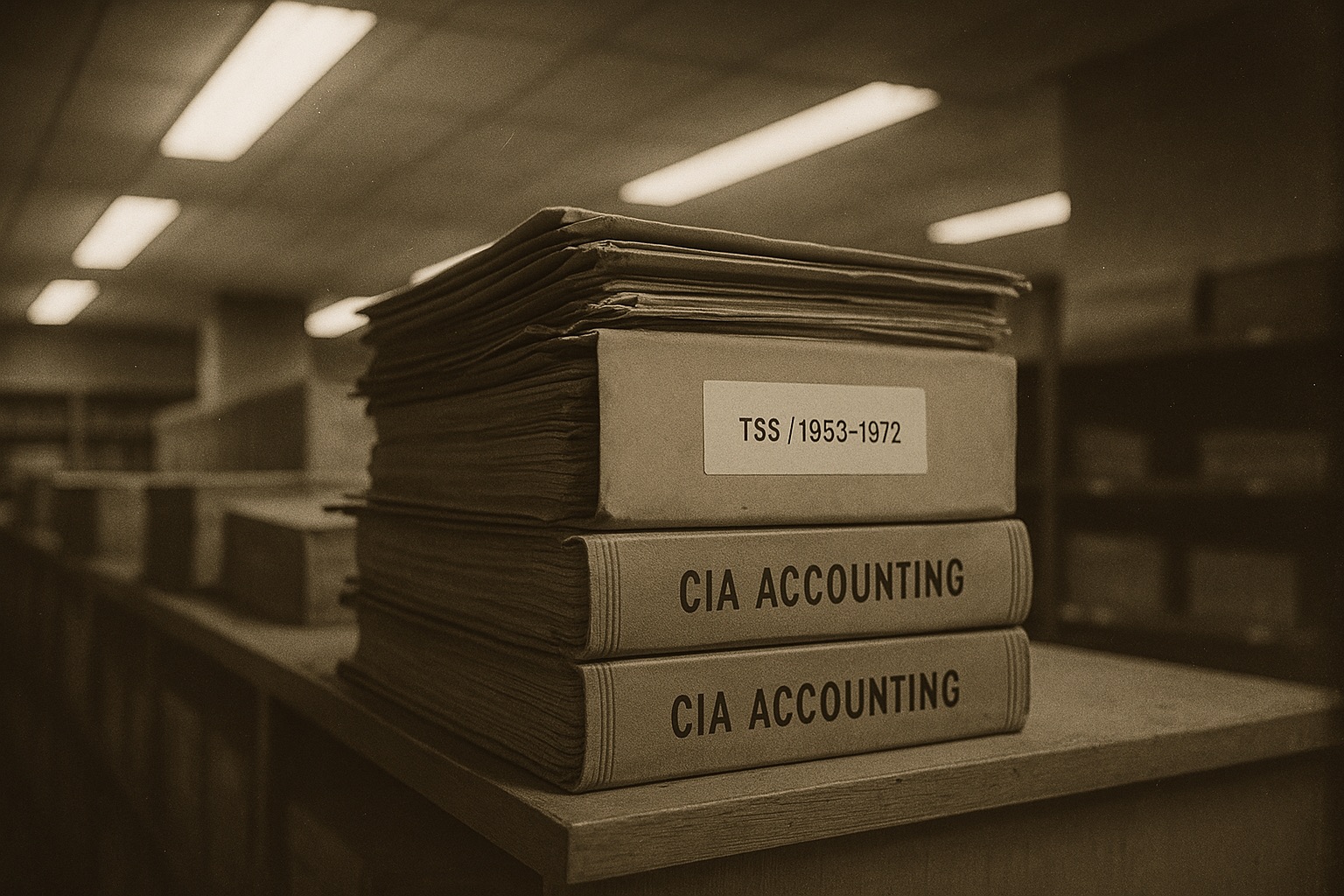
The financial records were not. The accounting paperwork for the program was held in a different storage facility than the operational records, by the CIA's budget office, and was missed. Roughly twenty thousand pages of expense reports, contract amendments, and invoices survived the burn.
It is on those twenty thousand pages of receipts that virtually everything the public knows about MK-Ultra is built.6
How the program came out
The financial records were found in 1977 by a CIA archivist responding to a Freedom of Information Act request from a former State Department analyst named John Marks. The archivist's name was Frank Laubinger. He found the files in a financial vault where they had been mistakenly stored under a different classification number. He notified Marks. He notified the new DCI, Stansfield Turner. The records were prepared for release.
What the records showed could not be denied. By the time Marks's The Search for the Manchurian Candidate was published in 1979 — the founding work of every subsequent treatment — Senate hearings had already exposed Operation Midnight Climax, the Olson case, the Cameron experiments, and the basic shape of the program.
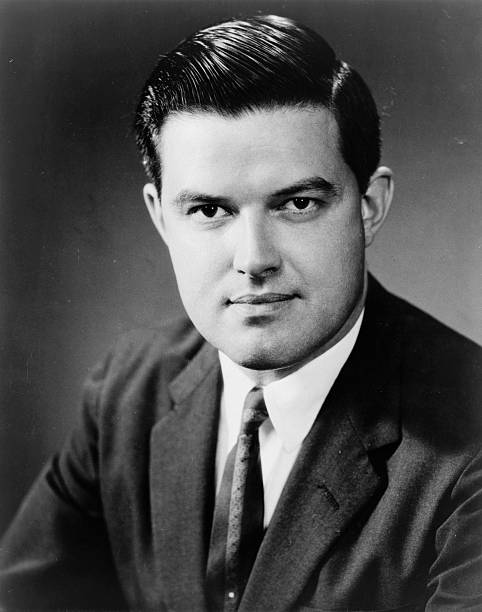
The defining public reckoning came on August 3, 1977, in a joint hearing of the Senate Select Committee on Intelligence and Senator Edward Kennedy's Subcommittee on Health and Scientific Research. Stansfield Turner was the lead witness. He confirmed the existence of the 149 subprojects, the unwitting subjects, the work at hospitals and universities, and the destruction of records.
He could not answer most of the senators' questions about what specifically had been done to whom. He did not have the records.
The hearing transcript was published. It runs to roughly 170 pages and includes, as appendices, several of the surviving authorization memos. It remains the single most important public document on MK-Ultra.7
Key figures
What proponents and critics say
A lot of conspiracy literature has fastened onto MK-Ultra in the decades since the 1977 hearing, and several of the longest-running claims deserve specific treatment.
Sirhan Sirhan as a programmed assassin. In the popular literature on the 1968 Robert F. Kennedy assassination, Sirhan is sometimes described as the operational success of an MK-Ultra-style hypnotic- assassination protocol. There is no documentary support for this in the surviving MK-Ultra files. Defense attorneys have raised hypnotic- programming theories at parole hearings; courts have declined to accept them. The CIA's own internal reviews concluded the agency's attempts to develop hypnotic assassins did not produce a reliable result.
The Manson family. Tom O'Neill's 2019 book Chaos: Charles Manson, the CIA, and the Secret History of the Sixties documents that researchers funded indirectly through MK-Ultra cutouts treated patients at the Haight-Ashbury Free Medical Clinic during a period when several of Manson's followers received services there. O'Neill is careful to present the connections as circumstantial. Nothing in the surviving financial records names Manson or his followers as MK-Ultra subjects.
Ted Kaczynski. The future Unabomber participated in a psychological experiment at Harvard between 1959 and 1962, while an undergraduate. The experiment, run by the psychologist Henry Murray, involved hostile interrogation of subjects' personal beliefs. Murray had previously worked for the OSS during the Second World War. The experiment was not funded by MK-Ultra. The two programs are often conflated; the documentary record does not support the connection.8
How we read the evidence
What is confirmed about MK-Ultra is so disturbing, and so well- documented, that the program has become a kind of vessel for unsupported claims that any covert mind-control operation could be attached to it. The vessel is large enough to hold a lot. Most of what the public believes about MK-Ultra is more elaborate than what the surviving record shows.
What the surviving record shows is bad enough. The CIA dosed unknowing Americans with LSD in safe houses behind one-way mirrors. It funded a Canadian psychiatrist who reduced women with postpartum depression to infantile incoherence and then attempted to reconstruct their personalities with looped tape. It oversaw, and almost certainly caused, the death of one of its own colleagues, and it lied to that man's family about how he died for twenty-two years.
What the surviving record also shows is that the program failed at the thing it was designed to do. There is no Manchurian Candidate. There is no reliable truth drug. Sidney Gottlieb, in his retirement, told John Marks plainly that none of the chemicals had worked as the program had hoped. The agency spent twenty years and an unrecoverable budget on a search that ended in nothing operational and immense human cost.
The most important sentence ever written about MK-Ultra was Helms's order to destroy the files. It is the sentence that ensures we will never know the full count.
Further reading
Books:
- John Marks, The Search for the Manchurian Candidate: The CIA and Mind Control (W.W. Norton, 1979). The foundational work.
- Stephen Kinzer, Poisoner in Chief: Sidney Gottlieb and the CIA Search for Mind Control (Henry Holt, 2019). The definitive Gottlieb biography.
- Anne Collins, In the Sleep Room (Lester & Orpen Dennys, 1988). The Cameron experiments in Canada.
- Martin A. Lee and Bruce Shlain, Acid Dreams (Grove, 1985). LSD's cultural arc, with substantial MK-Ultra context.
- Colin A. Ross, The CIA Doctors (Manitou, 2006). Psychiatrist's review of the subprojects.
Documentaries:
- Wormwood (2017, dir. Errol Morris) — Frank Olson case, six-part Netflix series.
Primary archives:
- CIA Reading Room — MK-Ultra collection
- National Security Archive — Mind Control documents
- Mary Ferrell Foundation — MK-Ultra archive
Sources
Primary sources
- CIA. (1953). Memorandum on the establishment of MK-Ultra. Authorized by DCI Allen Dulles, April 13, 1953. Reproduced in Senate Hearing 95-1 appendix (1977).
- U.S. Senate. (1977). Project MKULTRA, The CIA's Program of Research in Behavioral Modification. Joint Hearing Before the Select Committee on Intelligence and the Subcommittee on Health and Scientific Research, 95th Congress, 1st Session, August 3, 1977.
- U.S. Senate. (1976). Final Report of the Select Committee to Study Governmental Operations with Respect to Intelligence Activities (the Church Committee Final Report), Senate Report 94-755, six books. April 26, 1976.
- Rockefeller Commission. (1975). Report to the President by the Commission on CIA Activities Within the United States. June 6, 1975.
- CIA. (2007 declassification). "Family Jewels" compilation (1973). Internal CIA inventory of potentially illegal activities, declassified June 25, 2007.
Secondary sources
- Marks, J. (1979). The Search for the Manchurian Candidate: The CIA and Mind Control. New York: W.W. Norton.
- Kinzer, S. (2019). Poisoner in Chief: Sidney Gottlieb and the CIA Search for Mind Control. Henry Holt.
- Collins, A. (1988). In the Sleep Room: The Story of the CIA Brainwashing Experiments in Canada. Lester & Orpen Dennys.
- Lee, M. A. & Shlain, B. (1985). Acid Dreams: The Complete Social History of LSD. Grove Press.
- Ross, C. A. (2006). The CIA Doctors: Human Rights Violations by American Psychiatrists. Manitou Communications.
- Albarelli, H. P. Jr. (2009). A Terrible Mistake: The Murder of Frank Olson. TrineDay.
- Weiner, T. (2007). Legacy of Ashes: The History of the CIA. Doubleday.
- The New York Times, December 22, 1974. "Huge C.I.A. Operation Reported in U.S. Against Antiwar Forces, Other Dissidents in Nixon Years." Seymour Hersh's exposé that triggered the Church Committee.
- The Washington Post, July 21, 1975. "Ford Apologizes to Family of CIA Drug-Test Victim."
Academic sources
- Cameron, D. E. (1956). "Psychic Driving." American Journal of Psychiatry 112, 502–509.
- Lemov, R. (2011). "Brainwashing's avatar: The curious career of Dr. Ewen Cameron." Grey Room 45, 60–87.
- McCoy, A. W. (2007). "Science in Dachau's shadow: Hebb, Beecher, and the development of CIA psychological torture and modern medical ethics." Journal of the History of the Behavioral Sciences 43(4), 401–417.
Corrections & updates
(None yet.)
Footnotes
-
The memorandum is reproduced in Project MKULTRA, the CIA's Program of Research in Behavioral Modification, Joint Hearing Before the Select Committee on Intelligence and the Subcommittee on Health and Scientific Research, U.S. Senate, 95th Congress, 1st Session, August 3, 1977. The authorization document was among the records that survived the 1973 destruction order. ↩
-
Edward Hunter, Brain-Washing in Red China: The Calculated Destruction of Men's Minds (Vanguard Press, 1951). For the counter-history, see Robert J. Lifton, Thought Reform and the Psychology of Totalism (Norton, 1961), and more recently, Tim Weiner, Legacy of Ashes: The History of the CIA (Doubleday, 2007), chapter 6. ↩
-
John Marks, The Search for the Manchurian Candidate: The CIA and Mind Control (W.W. Norton, 1979), pp. 53–60. Marks's book is built directly on the financial records released by the CIA in 1977 in response to his FOIA suit, and on his interviews with retired officers including Gottlieb. It is the foundational secondary source. ↩
-
H.P. Albarelli Jr., A Terrible Mistake: The Murder of Frank Olson and the CIA's Secret Cold War Experiments (TrineDay, 2009). Eric Olson's documentary materials are archived at frankolsonproject.org. Some of Albarelli's specific claims have been disputed; the core chronology is well-supported. ↩
-
Anne Collins, In the Sleep Room: The Story of the CIA Brainwashing Experiments in Canada (Lester & Orpen Dennys, 1988). The Canadian journalist's account remains the most detailed treatment of Cameron's subjects. ↩
-
Helms's destruction order is referenced in his own 1975 testimony to the Church Committee (released 2025 under MDR review per the National Security Archive's October 2025 publication). See also Marks (1979), pp. 7–9. ↩
-
Project MKULTRA, The CIA's Program of Research in Behavioral Modification, Joint Hearing Before the Select Committee on Intelligence and the Subcommittee on Health and Scientific Research of the Committee on Human Resources, U.S. Senate, 95th Congress, 1st Session, August 3, 1977. Available via the Senate Intelligence Committee site. ↩
-
On Sirhan: Mel Ayton, The Forgotten Terrorist (Potomac, 2007). On Manson: Tom O'Neill with Dan Piepenbring, Chaos (Little, Brown, 2019). On Kaczynski and Murray: Alston Chase, Harvard and the Unabomber (Norton, 2003). ↩
Inspired this / based on it
Stephen Kinzer
Definitive Sidney Gottlieb biography
John Marks
The original investigative book
Filed under
- #cia
- #mk-ultra
- #sidney-gottlieb
- #allen-dulles
- #richard-helms
- #lsd
- #cold-war
- #1950s
- #1960s
- #1970s
- #usa
- #declassified
- #church-committee
- #frank-olson
- #mind-control
Click any tag for every article carrying it.
Continue reading
Kodak and the Trinity Test
In January 1946, X-ray film from Eastman Kodak began coming back damaged with unexplained spots. When the company's chemists finally traced the source, they were forced to confront the U.S. government. What they were given went further than anyone expected — and stayed secret for fifty years.
Operation Northwoods
In March 1962, the Joint Chiefs of Staff put a document on Robert McNamara's desk. It proposed a series of false-flag attacks against the United States — sunk ships, civilian terror campaigns in Miami and Washington, a faked civilian airliner shoot-down — to manufacture public support for invading Cuba. Every member of the Joint Chiefs signed it. Kennedy rejected it within days. The document stayed buried for thirty-five years.
The Tuskegee Syphilis Study
In 1932, the U.S. Public Health Service began a study of 399 Black men in Macon County, Alabama, who had syphilis. They were told they were being treated. They were not. For forty years — including the twenty-five years after penicillin became standard care — the Public Health Service watched the disease take its course. A whistleblower's documents reached the Associated Press on July 25, 1972, and the study ended a few months later. President Clinton apologized on behalf of the United States government in 1997.