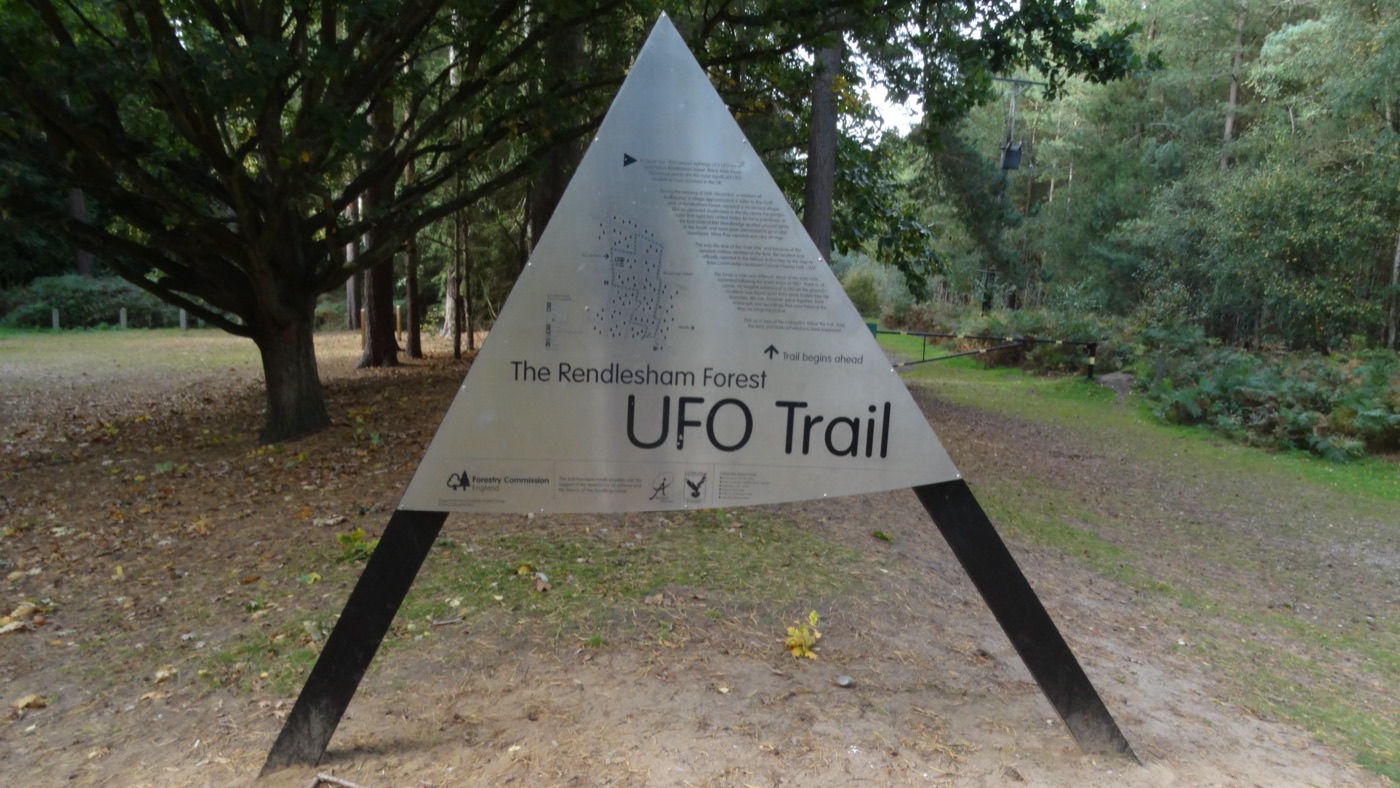
Rendlesham Forest in Suffolk, near the former RAF Woodbridge and Bentwaters airbases. Over three nights in December 1980, US servicemen reported strange lights and a craft here, in what became Britain's most famous UFO case. Wikimedia Commons / CC BY-SA 2.0.
The Rendlesham Forest Incident: Britain's Most Famous UFO Case
United Kingdom, 1980 — Over three nights near two US airbases in Suffolk, American servicemen reported strange lights and a metallic craft in the forest. A senior officer recorded it as it happened and put it in an official memo. Skeptics point to a lighthouse; the witnesses insist on more
- Category
- Space & UFOlogy
- Published
- Length
- 3,550 words · 19 min read
- Author
- The editors
The Rendlesham Forest incident occupies a peculiar and instructive place among UFO cases. It is unusually well documented, with military witnesses of apparent credibility, a real-time audio recording, and an official memorandum — the kind of evidence that most such stories entirely lack. And yet it also has an unusually strong and specific mundane explanation, one that accounts for much of what was reported through ordinary phenomena. This combination is exactly what makes it so enduring and so contested: it is neither easily dismissed nor easily believed. Approaching it honestly means taking seriously both the witnesses and the skeptics — resisting the temptation to wave the case away as obvious nonsense, and equally the temptation to leap from "unexplained in some details" to "alien spacecraft." The truth, as with so many of these cases, lives in the difficult, unsatisfying middle.
This is the story of Rendlesham Forest.
The setting
The context of Rendlesham matters, because it shaped both what the witnesses were primed to see and why the case carried such weight. In December 1980, the twin bases of RAF Woodbridge and RAF Bentwaters, in the Suffolk countryside near the coast, were operated by the United States Air Force as part of NATO's Cold War posture, and they were believed to store nuclear weapons — making them among the most sensitive military sites in Britain. The men stationed there were American security and air personnel, trained and alert, in a tense era, on high-value installations surrounded by dark forest and coastline.
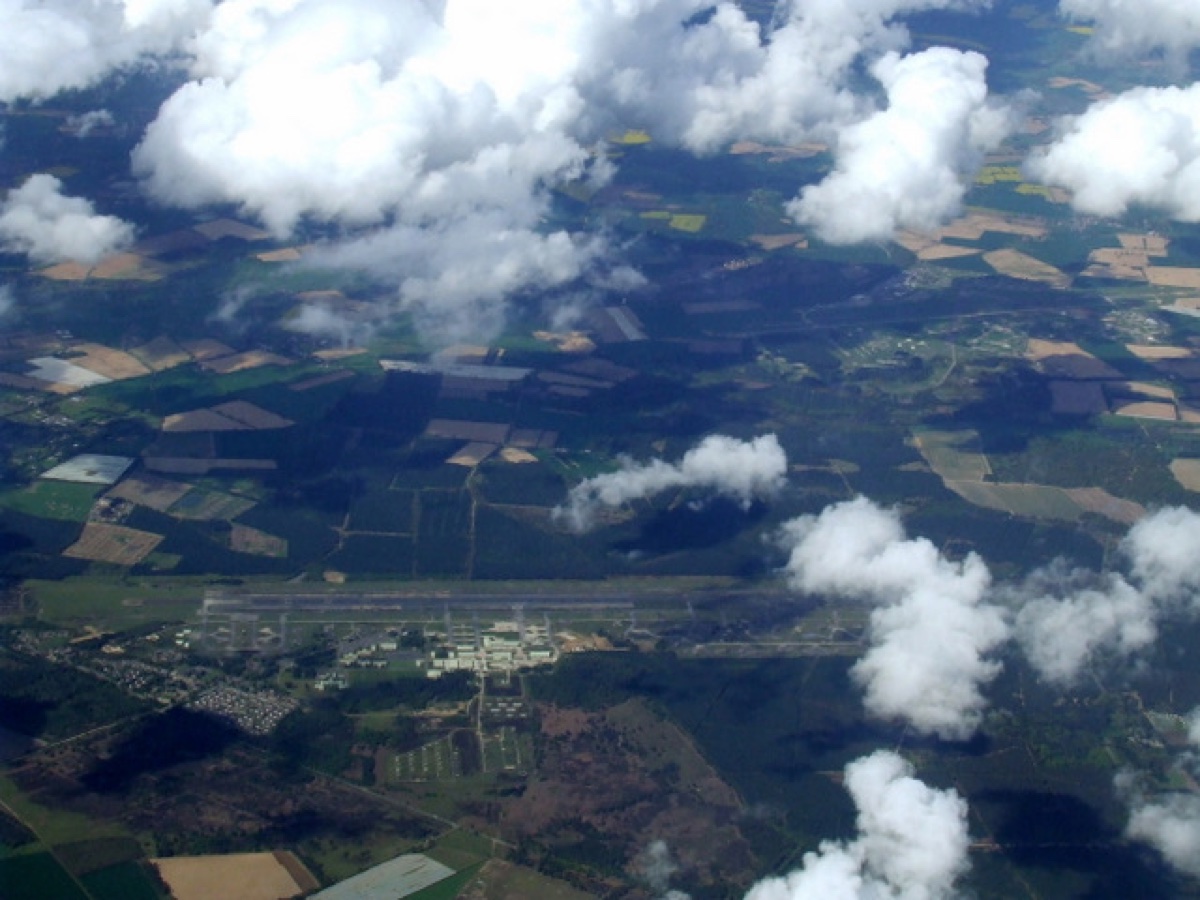
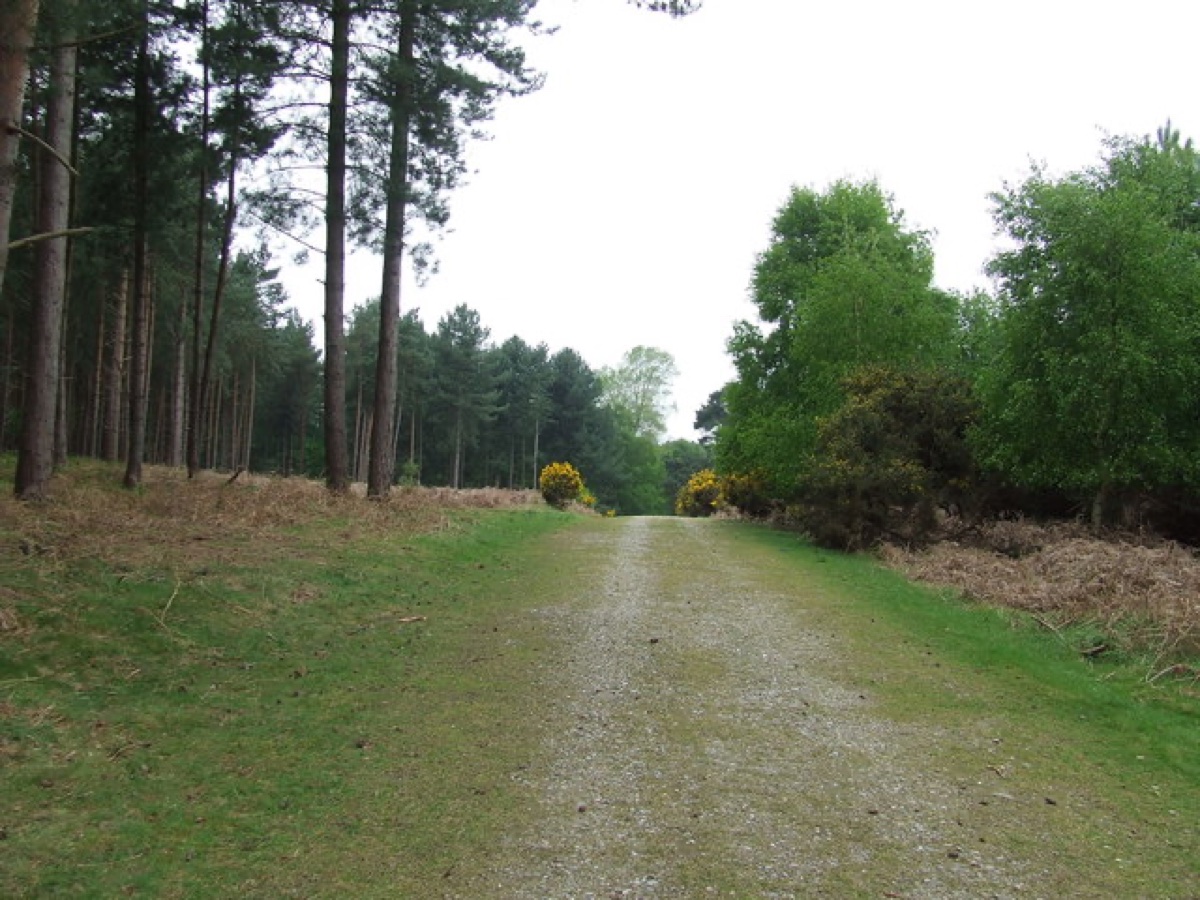
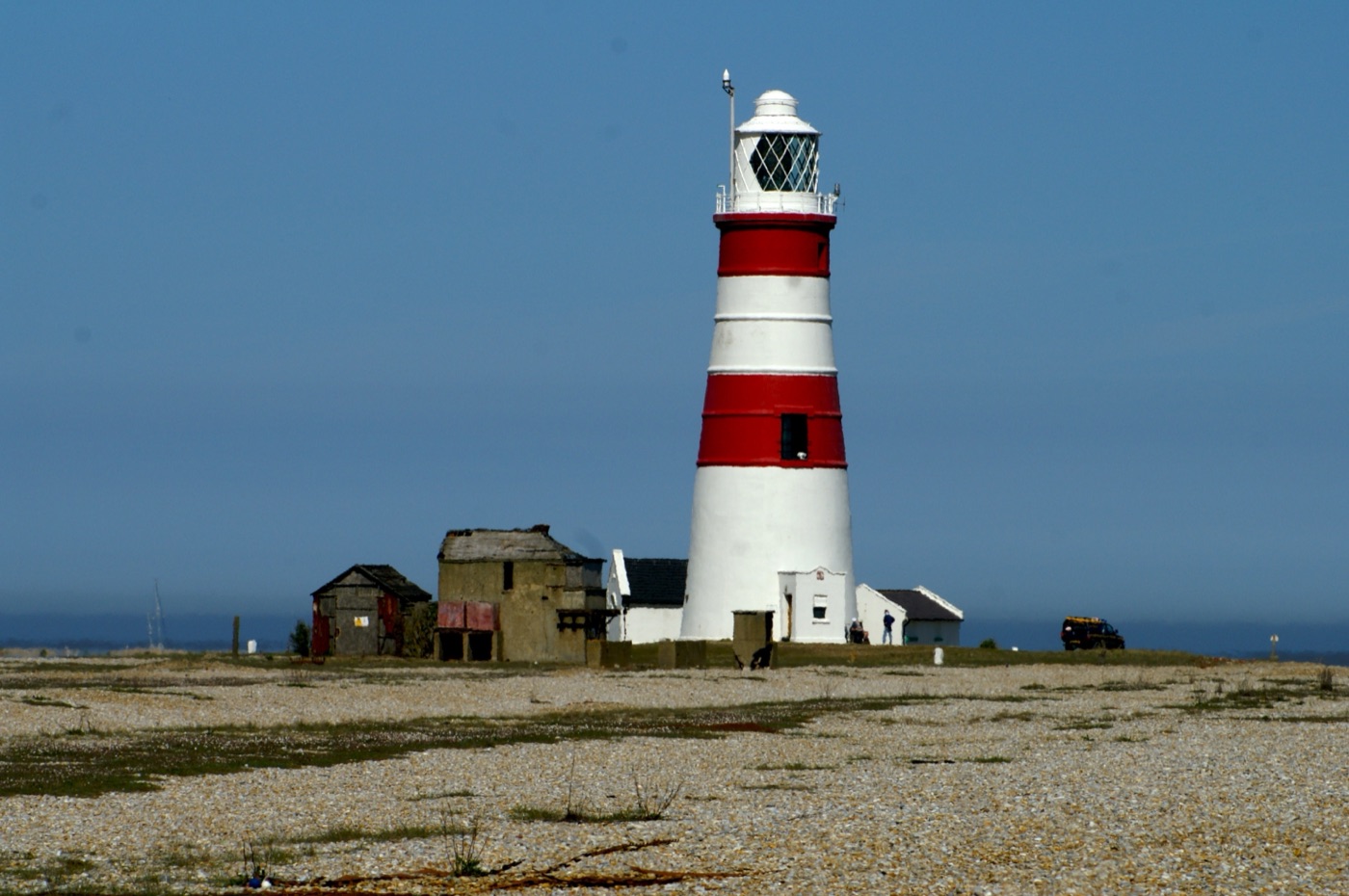
Rendlesham Forest itself is a working pine forest, dense and dark at night, laced with tracks and firebreaks, running down toward the coast near Orford Ness, a spit of land carrying a lighthouse. This geography — the forest, the sensitive bases, the coastal lighthouse — would become central to every subsequent attempt to explain what happened.
The first night
The events began in the early hours of 26 December 1980. Security personnel at the east gate of RAF Woodbridge saw lights descending into Rendlesham Forest beyond the perimeter. The initial thought was practical and alarming: that an aircraft might have crashed. A small party of servicemen was dispatched into the forest to investigate, among them Sergeant Jim Penniston and Airman First Class John Burroughs.
What they reported encountering became the heart of the legend. According to their accounts, they came upon a strange object in a clearing — a craft, metallic and structured, triangular or conical, bathed in colored lights, either hovering just above the ground or resting on it. Penniston would later claim that he approached the object closely, that he was able to touch its surface, which he described as warm and glassy or metallic, and that he saw strange symbols or glyphs upon it, which he recorded in his notebook and sketched. After some minutes, the object was said to have moved, risen, and departed through the trees at speed. In the area, the men reported finding three small depressions in the ground, arranged in a triangle, which were taken to be landing marks, and later investigation recorded slightly elevated radiation readings at the site.
The men returned to base shaken, and their reports set in motion the investigation that would follow over the next nights, as well as the long controversy over what they had actually seen. It is worth noting how the accounts of that first night have varied and grown over the decades — a feature of the case that cuts both ways. At the time, the contemporaneous reports were relatively restrained; the most elaborate details, including Penniston's account of touching the craft and reading its symbols, became fuller and more vivid in later years, as the men told and retold their stories and as the case became famous. To skeptics, this evolution is a red flag, the familiar way in which memory embellishes under the pressure of attention and belief. To supporters, it reflects men gradually feeling free to disclose what they had held back. The divergence between the sparse early record and the rich later testimony is one of the genuine difficulties in assessing what happened.
The Halt memo
The most weighty evidence came from the events of a subsequent night, 28 December, and from the involvement of a senior officer. The deputy base commander, Lieutenant Colonel Charles Halt, led a team into the forest to investigate continuing reports, and — crucially — he carried a portable tape recorder and narrated the investigation as it happened. The resulting "Halt tape" captures the officer and his men in real time, their voices tense and puzzled, describing a pulsing red light moving among the trees, and later, objects in the sky that seemed to send down beams of light toward the ground and the base.
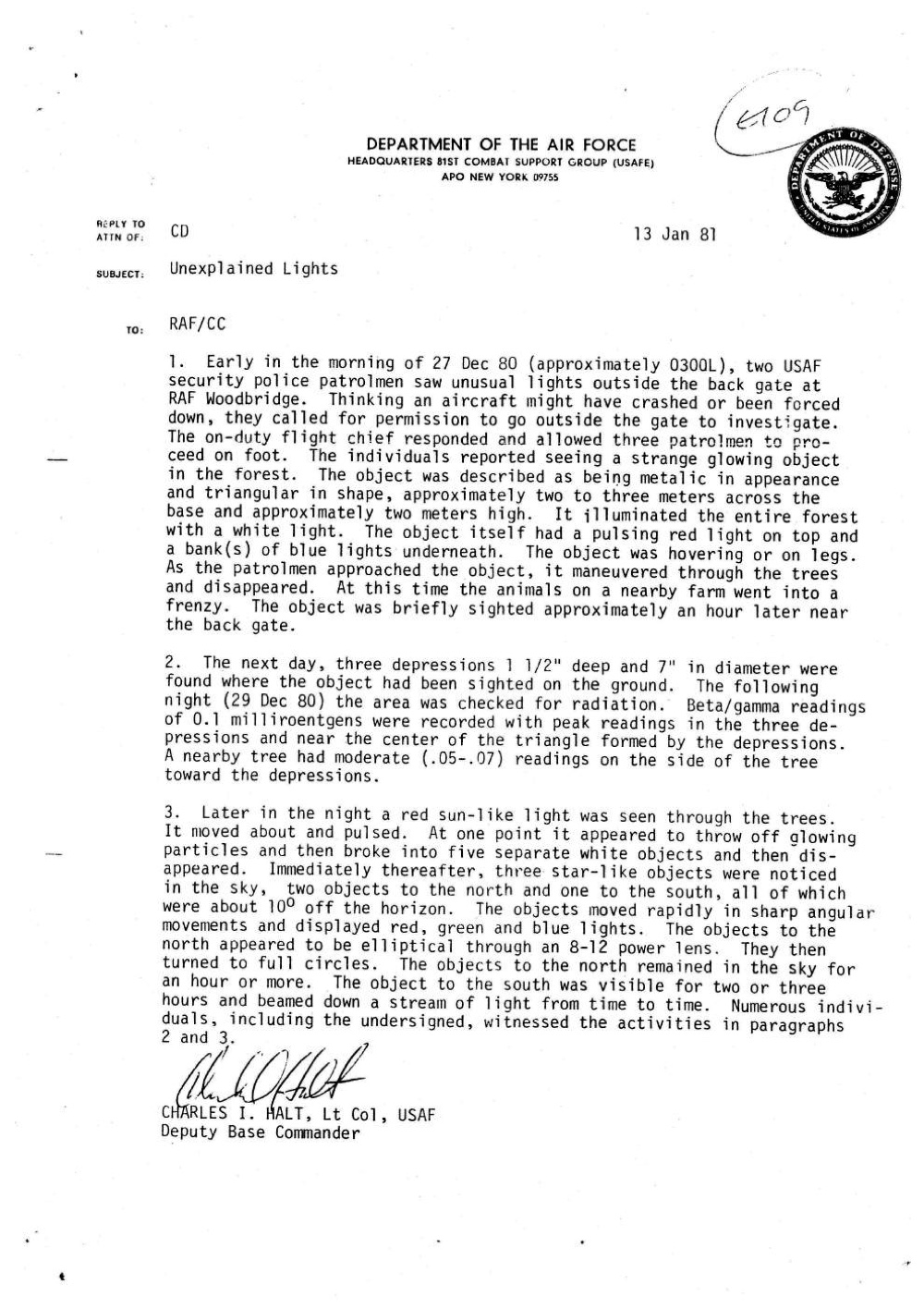
On 13 January 1981, Halt set down his account in an official memorandum — titled, with bureaucratic dryness, "Unexplained Lights" — addressed to the British Ministry of Defence, summarizing the sightings of the "unidentified" object and the strange lights. This document, when it was released under the U.S. Freedom of Information Act in 1983, became the cornerstone of the case: an official military record, written by a senior officer, describing an unexplained aerial phenomenon in sober, matter-of-fact terms. It is the Halt memo, more than anything, that lifts Rendlesham above the mass of anonymous UFO tales and gives it its peculiar authority.
The official response to the case has itself become part of the story. The British Ministry of Defence, to which Halt's memo was addressed, investigated and concluded that the events were of "no defence significance" — bureaucratic language meaning that whatever had happened, it posed no threat to national security and warranted no further action. Decades later, when the MoD released its files on UFO reports, including material on Rendlesham, the documents showed an official apparatus that had noted the case, assessed it as no threat, and largely set it aside — neither the dramatic cover-up of UFO lore nor a serious investigation that reached a firm conclusion. To believers, the "no defence significance" verdict looks like a brush-off concealing deeper knowledge; to skeptics, it reflects an unremarkable event not worth pursuing. The files themselves reveal an officialdom more baffled and indifferent than either sinister or enlightened.
The lighthouse and the meteor
Against the dramatic accounts stands a detailed and, to many, persuasive mundane explanation, assembled principally by the British astronomer and science writer Ian Ridpath and others. It does not require dismissing the witnesses as liars; it proposes that highly alert men, in a dark forest at night, misperceived a combination of ordinary phenomena.
The strength of this explanation is that it is concrete and testable: the lighthouse exists and flashes on a known cycle, the meteor was independently recorded, the stars are where they are. When the Halt tape is examined against the position and timing of the Orford Ness beam, the correspondence is striking, and the flashing "light in the forest" that so gripped the investigators aligns with the lighthouse seen through moving trees. For many analysts, this is decisive, and Rendlesham is, essentially, the story of trained but keyed-up men who talked themselves, in the dark, into seeing a lighthouse and some stars as a spacecraft.
What the witnesses say
And yet the witnesses have never accepted this. This is the other half of the case, and it cannot be honestly ignored. Charles Halt — a senior, career military officer with much to lose and little obvious to gain — has consistently maintained that what he and his men experienced was not a lighthouse. He has said explicitly that he was familiar with the Orford Ness lighthouse, that it was visible separately at the same time as the phenomenon he was describing, and that the objects he saw behaved in ways no lighthouse could. He has stood by his account for decades, and has gone further in later years, stating his belief that the phenomenon was not of this world and suggesting that information was withheld. Penniston and Burroughs, too, have maintained that they saw and, in Penniston's case, touched a structured craft, not a distant beam.
The witnesses' steadfastness is a genuine problem for the tidiest skeptical account, and it is why the case will not die. It is possible that trained observers were profoundly mistaken; memory is malleable, suggestion is powerful, and a group in a dark forest can reinforce one another's misperceptions. It is also true that some witness accounts, particularly Penniston's, grew more elaborate over the years — the touching of the craft, the glyphs, later claims of a "binary code" received telepathically — in ways that strain credulity and that even many UFO researchers regard skeptically. But it remains the case that credible people, including a senior officer, reported something they insist was structured and real, and that the mundane explanation, for all its strength, rests on the assumption that all of them were mistaken about the central fact of what they saw.
The meaning of Rendlesham
In the end, the Rendlesham Forest incident endures as the most credible and the most contested of British UFO cases, a story that resists both the believer's certainty and the skeptic's. Over three winter nights in 1980, American servicemen at two Cold War airbases reported strange lights and a structured craft in a dark Suffolk forest, and one of them, a senior officer, recorded it as it happened and set it down in an official memo that gave the case a weight few such stories carry. Against those accounts stands a detailed and powerful explanation — a lighthouse whose beam matches the tape, a meteor that fell that night, stars misperceived on the horizon — that very probably accounts for most of what was seen, and that asks us only to accept that alert men in the dark made an understandable mistake. Rendlesham's fame, meanwhile, has only grown, and it has become a fixture of British culture in a way few UFO cases achieve. The forest now has a marked "UFO Trail" for visitors, and the incident is endlessly revisited in books, documentaries, and debates. This cultural afterlife is a double-edged thing: it keeps the case alive and the evidence under examination, but it also feeds the very process of embellishment and mythmaking that makes the truth harder to recover, as each retelling layers new drama over the original, ambiguous events. The Rendlesham of popular imagination — the definite alien craft, the touched hull, the coded message — has drifted well beyond the Rendlesham of the contemporaneous record, and disentangling the two is part of the work of honest assessment.
The witnesses reject it still. There is no wreckage, no craft, no physical proof of the extraordinary; there is a strong mundane case and a stubborn residue of credible testimony that the mundane case does not fully settle. And so Rendlesham remains what it has been for more than forty years: not proof of visitors from elsewhere, and not quite a closed case either, but a standing lesson in the hard discipline of believing neither more nor less than the evidence allows.
Inspired this / based on it
Nick Pope, John Burroughs & Jim Penniston
St. Martin's Press. An account co-written by two of the witnesses.
Richard Dolan
Various treatments; the case is also examined skeptically by Ian Ridpath and others online.
Filed under
- #rendlesham-forest
- #ufo
- #uap
- #charles-halt
- #raf-woodbridge
- #suffolk
- #cold-war
- #unsolved-mystery
- #1980s
- #mystery
Click any tag for every article carrying it.
Continue reading
The Phoenix Lights: The Mass Sighting Over Arizona
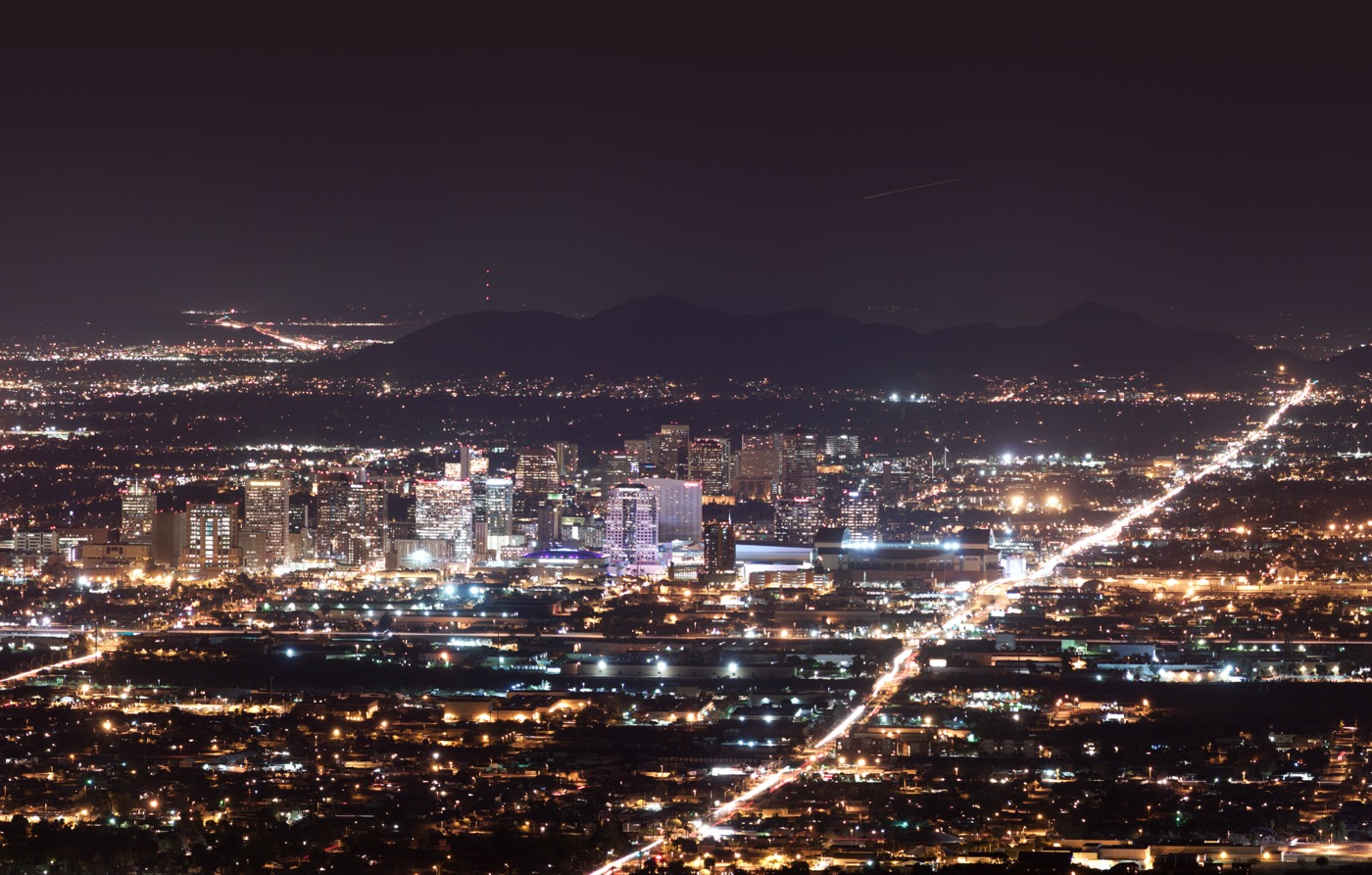
On the evening of 13 March 1997, thousands of people across the American state of Arizona looked up and saw something they could not explain. Reports poured in from a corridor hundreds of kilometers long, from near the Nevada border down through the city of Phoenix and on toward Tucson, and they described, in fact, two distinct phenomena. The first, earlier in the evening, was a huge V-shaped or triangular formation of lights that moved slowly and silently southward across the sky; many witnesses insisted it was not a group of separate lights at all but a single, enormous solid craft, so large it blotted out the stars as it passed overhead. The second, later that night, was a row of brilliant lights that appeared to hover over the Phoenix area and then winked out one by one. Together these became known as the Phoenix Lights, one of the largest mass UFO sightings in modern history. In the years since, the two events have followed very different paths. The later lights over Phoenix have a firm and well-supported explanation. The earlier V-formation does not, and remains genuinely debated to this day. And the story gained a strange twist when the state's governor, Fife Symington, who had at first responded to the sightings with a mocking joke, publicly reversed himself a decade later and admitted that he, too, had seen the craft that night — and believed it was something not of this world. This is the story of the Phoenix Lights, of what can be explained and what cannot, and of a governor's change of heart.
The Pentagon UAP Report
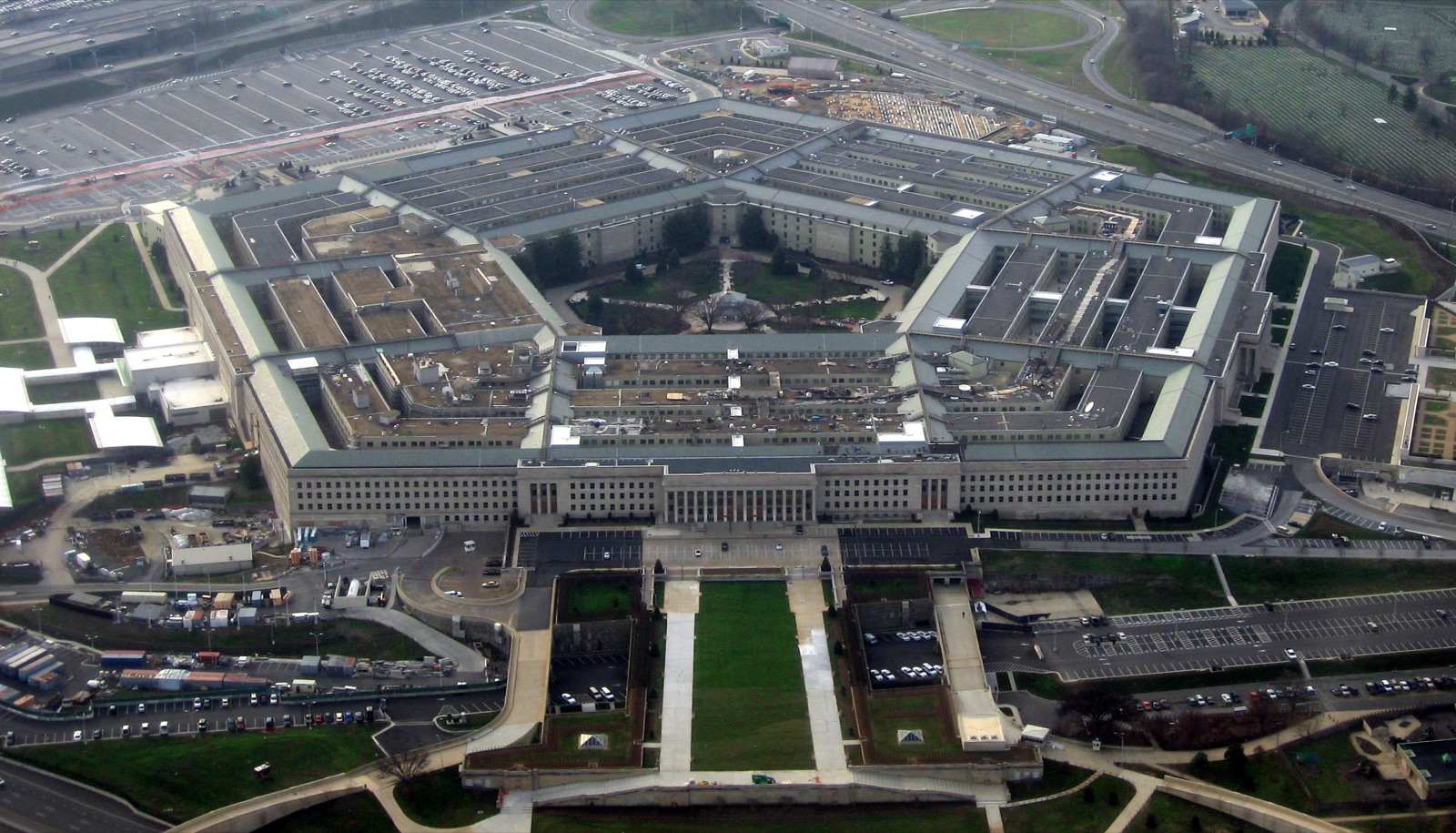
On December 16, 2017, *The New York Times* published a front-page article disclosing that a small, classified program inside the Pentagon — formally the Advanced Aerospace Threat Identification Program, informally AATIP — had been studying military encounters with Unidentified Aerial Phenomena since 2007. The article was accompanied by previously-classified U.S. Navy gun-camera footage of an oval-shaped object filmed off the coast of San Diego by an F/A-18F Super Hornet of the USS Nimitz Carrier Strike Group in November 2004 — the so-called 'Tic-Tac' footage. Over the following seven years, the U.S. Department of Defense has progressively renamed its UAP investigation office (AATIP → UAPTF → AOIMSG → AARO), held three Congressional hearings on UAP, issued one Office of the Director of National Intelligence preliminary report (June 2021), one All-domain Anomaly Resolution Office Historical Record Report Volume I (March 2024), and received Senator Chuck Schumer's UAP Disclosure Act amendment to the 2024 National Defense Authorization Act in substantially diluted form. In July 2023 a former Air Force intelligence officer, David Grusch, testified under oath to the House Oversight Subcommittee on National Security that the U.S. government holds 'non-human biologics' recovered from crashed craft — testimony the Pentagon has denied. The substantive evidentiary picture has not changed since 2017. What has changed is what governments are willing to say in public about it. The case file is open.
Kenneth Arnold: The Sighting That Invented the Flying Saucer
On the afternoon of 24 June 1947, a businessman and private pilot named Kenneth Arnold was flying his small aircraft near Mount Rainier, in the Cascade Range of Washington state, when he saw something that would change the world's imagination. Nine bright objects were streaking through the sky, flying in a chain formation at tremendous speed, weaving between the mountain peaks — moving, by his estimate, far faster than any aircraft of the era could manage. When he landed and described what he had seen to reporters, he reached for an analogy for the way the objects moved: they flew, he said, erratically, dipping and skimming, 'like a saucer would if you skipped it across water.' A reporter distilled this into a memorable phrase, and within days the newspapers of America were full of the term 'flying saucers.' It was, in a sense, a misunderstanding: Arnold had been describing the motion of the objects, not their shape, and the objects themselves he described as more crescent- or heel-shaped than round. But the phrase 'flying saucer' had entered the language, and with it came the idea of the round, disc-shaped craft that would become the iconic image of the UFO for generations. Within weeks, reports of 'flying saucers' were pouring in from across the country, and the crash near Roswell followed in early July. The modern age of UFOs had begun. This is the story of Kenneth Arnold's sighting — of what he saw, of how a phrase was born from a description of motion, and of how a single ambiguous encounter launched a global phenomenon.