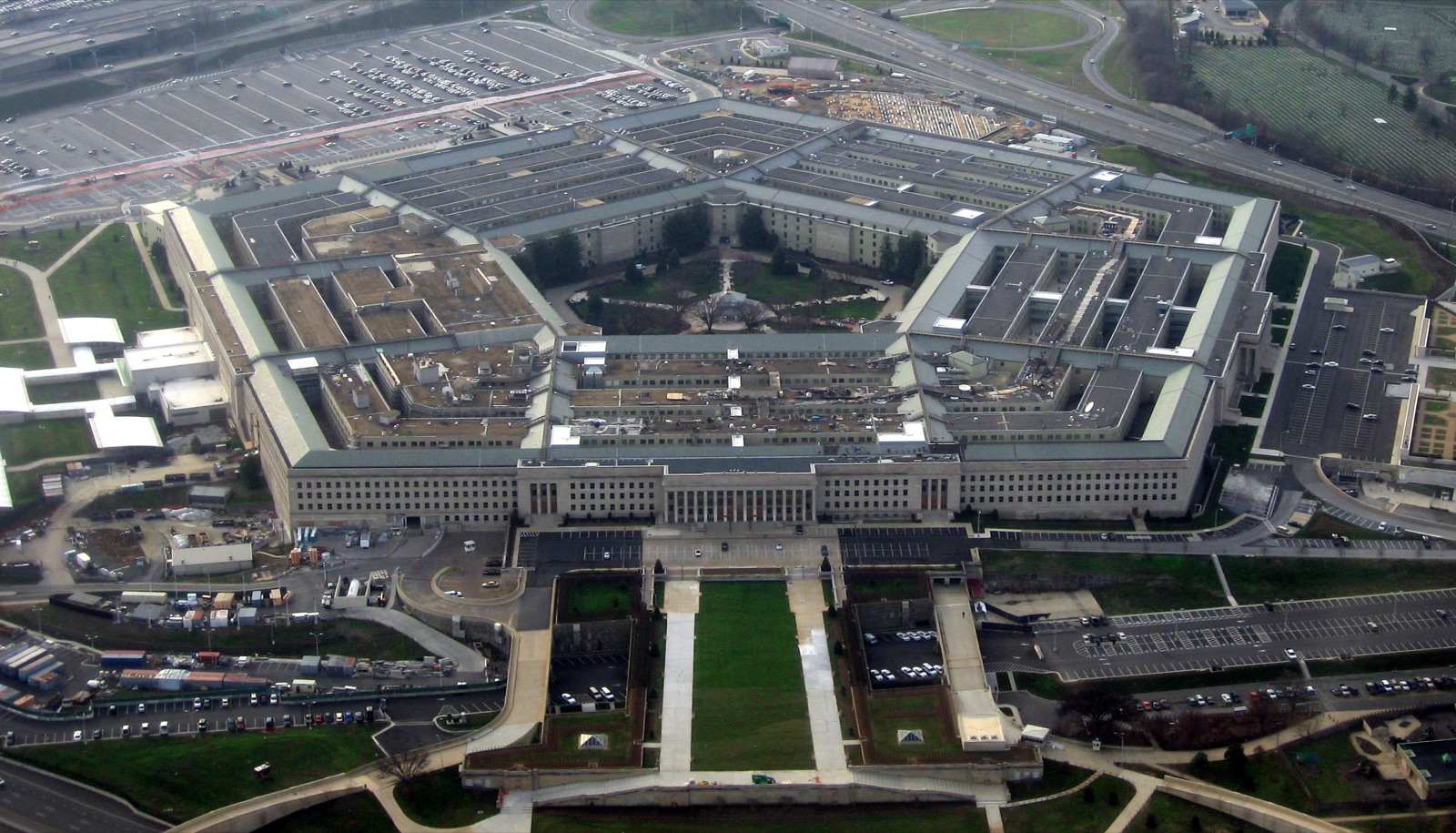
The Pentagon, Arlington, Virginia. Headquarters of the U.S. Department of Defense and home, since 2022, to the All-domain Anomaly Resolution Office (AARO) — the latest in a sequence of UAP investigation programs that began in 2007 with the Advanced Aerospace Threat Identification Program (AATIP). Wikimedia Commons, CC BY-SA 2.0 / David B. Gleason.
The Pentagon UAP Report
The Tic-Tac, the testimony, the disclosure that wasn't
- Category
- Space & UFOlogy
- Published
- Length
- 3,700 words · 17 min read
- Author
- The editors
The Pentagon UAP Report
The Tic-Tac, the testimony, the disclosure that wasn't.
December 16, 2017
The disclosure was simultaneous. The New York Times and Politico had been working independently on overlapping reporting about a small Pentagon program studying UAP encounters by U.S. military personnel. Both publications agreed to publish on December 16, 2017.
The Times article — by Helene Cooper, Ralph Blumenthal, and Leslie Kean — was headlined "Glowing Auras and 'Black Money': The Pentagon's Mysterious U.F.O. Program." It opened by describing the Advanced Aerospace Threat Identification Program: a $22 million, five-year program inside the Defense Intelligence Agency, initiated at the urging of Senate Majority Leader Harry Reid (D-NV) in 2007, formally ended in 2012, allegedly continued informally for years afterward. The program's director from 2010 to 2017 had been a senior counterintelligence official named Luis Elizondo. Elizondo had resigned from the Pentagon in October 2017 in protest at what he described as institutional resistance to the program's findings. He was the Times's primary on-the-record source.
The Politico article — by Bryan Bender — covered the same ground. Both articles were accompanied by previously-classified Navy gun-camera footage. The first video to circulate widely showed an oval-shaped object filmed by an F/A-18F Super Hornet of Strike Fighter Squadron 41 (the "Black Aces") off the coast of San Diego in November 2004. The shape was widely characterized as resembling a breath mint — and "Tic-Tac" became the case's vernacular name within hours.
The Tic-Tac, November 2004
On November 14, 2004, the USS Nimitz Carrier Strike Group was conducting a workup exercise approximately 100 nautical miles southwest of San Diego, California. The strike group's air-defense radar — the Aegis system aboard the USS Princeton, a guided-missile cruiser — had been tracking anomalous contacts for approximately two weeks. The contacts appeared at altitudes of 60,000 to 80,000 feet, descended to near sea level over a period of seconds, and then disappeared. Senior Chief Operations Specialist Kevin Day, the Princeton's air-tracking supervisor, has subsequently stated that he believed the Aegis was malfunctioning until he had confirmed the contacts on multiple independent sensors.

On the morning of November 14, two F/A-18F Super Hornets were vectored from the Nimitz to intercept a contact. The lead aircraft was flown by Commander David Fravor — at the time the commanding officer of Strike Fighter Squadron 41 — with his weapons systems officer in the rear seat. The wing aircraft was flown by Lieutenant Commander Jim Slaight with his own weapons officer.
What Fravor described observing — repeatedly, in subsequent on-the-record interviews and in his June 2019 Joe Rogan Experience appearance — was an object approximately 40 feet long, white in color, oval in shape, with no visible wings, exhaust, intakes, or control surfaces. The object was hovering over a patch of disturbed water, then ascended rapidly toward Fravor's aircraft as he attempted to approach. Fravor estimated the object's acceleration as instantaneous — from hover to several thousand miles per hour without visible transit through intermediate speeds.
The encounter lasted approximately five minutes. The object then disappeared. A second F/A-18F from a follow-on flight — flown by Lieutenant Commander Chad Underwood — was subsequently vectored to the same area, observed an object on his ATFLIR pod, and recorded the approximately one-minute video that became, thirteen years later, the "Tic-Tac" footage of December 16, 2017.
The Nimitz incident was reviewed at the time by Carrier Air Wing 11 leadership and was the subject of an after-action report. The report — the existence of which the Department of Defense has since acknowledged — has not been declassified.
The Gimbal and the Go-Fast, 2015
The 2017 disclosure included two additional Navy gun-camera videos: the "Gimbal" and the "Go-Fast," both filmed in January 2015 by F/A-18F Super Hornets of the USS Theodore Roosevelt Carrier Strike Group operating off the East Coast of the United States.
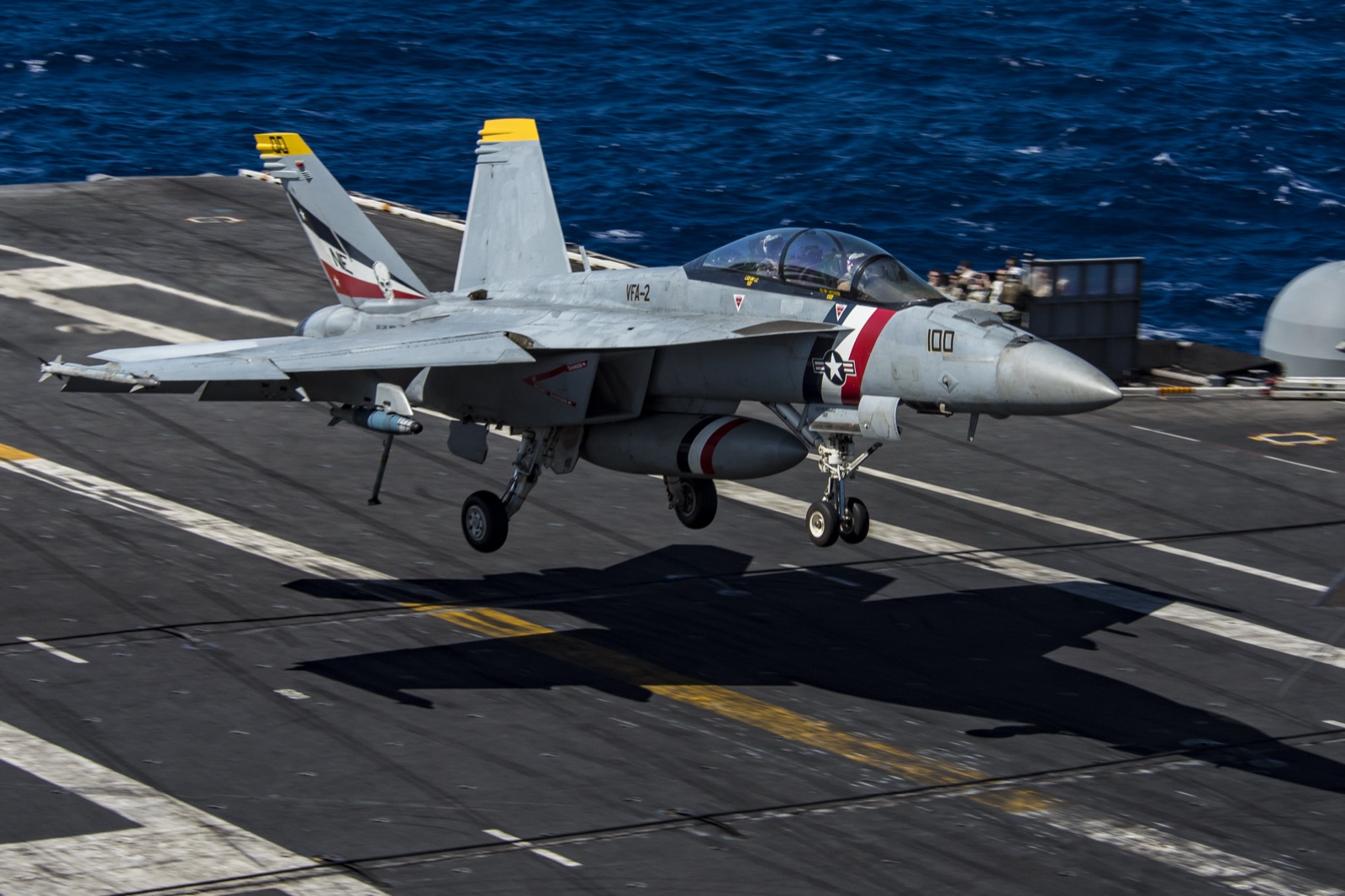
The Gimbal footage shows an object at altitude — described by the cockpit voices in the audio track as "rotating" or "spinning" against the wind. The Go-Fast footage shows an object low over the ocean surface, apparently moving at high speed against the wind. The pilots involved — including Lieutenant Ryan Graves, who has subsequently testified to Congress — have stated that they encountered similar objects routinely during the East Coast 2014-2015 deployment cycle.
The Gimbal and Go-Fast videos have been the subject of subsequent technical reanalysis. The American skeptic Mick West has argued that the Gimbal footage is consistent with a distant aircraft and a sensor artifact (the apparent rotation explained by the gimbal mechanism of the ATFLIR pod itself), and that the Go-Fast object — when its angular motion is corrected for the aircraft's own motion — is moving slowly, not quickly, against the water. West's analyses are technically careful and have been broadly accepted by aerospace engineers who reviewed them; they do not, however, address the eyewitness accounts of repeated multi-sensor encounters during the 2014-2015 deployment.
AATIP, the program that may or may not have existed
The Advanced Aerospace Threat Identification Program was authorized at the request of Senator Harry Reid (D-NV), then-Majority Leader of the U.S. Senate, in 2007. Reid had been approached by Robert Bigelow — the Las Vegas-based aerospace entrepreneur, owner of Bigelow Aerospace, and a longtime UFO enthusiast — about funding government UAP research. Reid arranged for the funding to be appropriated through the Defense Intelligence Agency.
The program was awarded to Bigelow Aerospace's subsidiary Bigelow Aerospace Advanced Space Studies (BAASS) on a sole-source contract. The funding period was 2008-2010 with extensions through 2012. Total funding was approximately $22 million. The contract deliverables included a series of "Defense Intelligence Reference Documents" — DIRDs — covering subjects including warp drives, invisibility cloaking, gravitational propulsion, and biological effects of human exposure to anomalous aerial vehicles. The DIRDs were authored by external academic and aerospace researchers under contract; they were marketed as authoritative U.S. government research products. Several DIRDs were subsequently leaked and made publicly available.
The DIA's formal involvement ended in 2012 when the funding was not renewed. Whether — and in what form — UAP-related work continued at the Pentagon between 2012 and 2017 is the central historiographic question. Elizondo asserts that an informal program continued. The Pentagon's official position, articulated in 2018 and reaffirmed in 2024, is that AATIP ended in 2012 and that any subsequent activity was not authorized.
The 2021 ODNI Preliminary Assessment
In June 2020, the FY21 Intelligence Authorization Act directed the Office of the Director of National Intelligence to deliver an unclassified report on UAP within 180 days of the law's enactment. The deadline was June 25, 2021.
The resulting Preliminary Assessment: Unidentified Aerial Phenomena — nine pages, unclassified, with a classified annex — was delivered to the Congressional intelligence committees on June 25, 2021. The report documented 144 UAP reports between 2004 and 2021. Of these, one — a large deflating balloon — was identified with high confidence. The remaining 143 were not identified.
The report grouped the unexplained reports into five categories: airborne clutter (birds, balloons, debris), natural atmospheric phenomena, U.S. government or industry development programs, foreign adversary systems, and "other." The first four categories had explanatory potential; the fifth — "other" — was a category for reports that did not fit any of the prior four. The report did not assign a numerical breakdown of how many of the 143 unexplained reports fell into which category. Eighteen reports, the assessment noted, "appeared to demonstrate advanced technology" — though the report stopped short of describing what technology, or whose.
The Grusch testimony, July 2023
On June 5, 2023, the investigative news outlet The Debrief published an article by Leslie Kean and Ralph Blumenthal — the same reporters who had broken the 2017 NYT story — based on the on-the-record testimony of a former Air Force intelligence officer named David Charles Grusch.
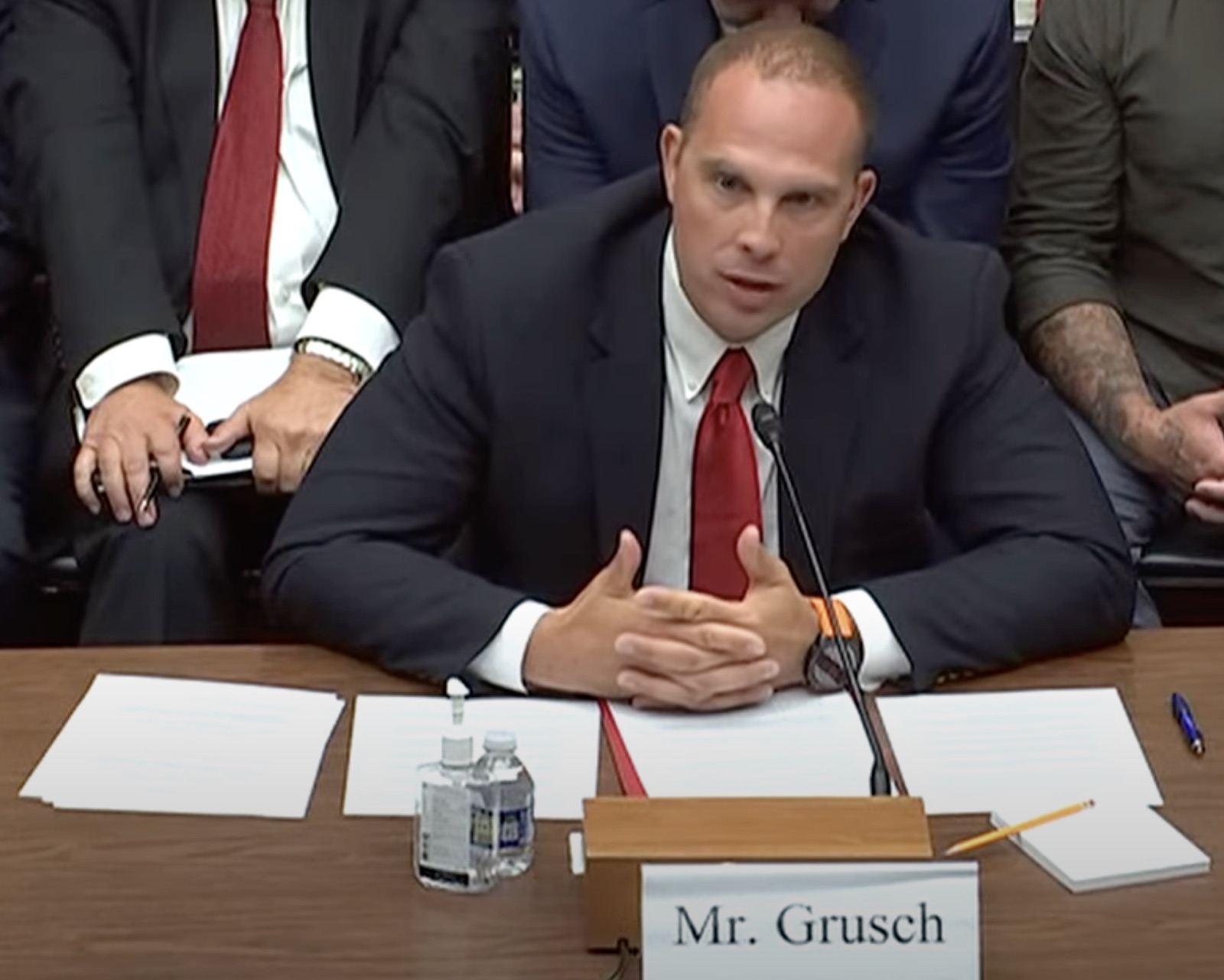
Grusch had served as the National Reconnaissance Office's representative to the UAP Task Force from 2019 to 2021 and as the National Geospatial-Intelligence Agency's representative from 2021 to 2023. He had filed a formal whistleblower complaint with the Intelligence Community Inspector General in July 2022. The Inspector General had determined the complaint to be "credible and urgent."
In sworn testimony before the House Oversight Subcommittee on July 26, 2023, Grusch made several specific claims:
- That the U.S. government has, for decades, operated a multi-decade compartmented program to recover and analyze materials from "non-human intelligence" craft.
- That the program has recovered "non-human biologics" associated with these craft.
- That the program is concealed within a structure of Special Access Programs not reported, as required by law, to the Senate and House Intelligence Committees.
- That his information came from extensive interviews with named individuals who he had been required to identify to the Intelligence Community Inspector General; he was prohibited by classification restrictions from naming them in open testimony.
The Pentagon's response was unambiguous. In a written statement issued July 26, 2023 and reaffirmed in subsequent AARO communications: "AARO has not discovered any verifiable information to substantiate claims that any programs regarding the possession or reverse-engineering of extraterrestrial materials have existed in the past or exist currently." Grusch has not retracted his testimony. The standoff is unresolved.
The Schumer Amendment
In July 2023 — three weeks before the Grusch hearing — Senate Majority Leader Chuck Schumer (D-NY), in partnership with Senator Mike Rounds (R-SD), introduced the UAP Disclosure Act of 2023 as an amendment to the FY24 National Defense Authorization Act.
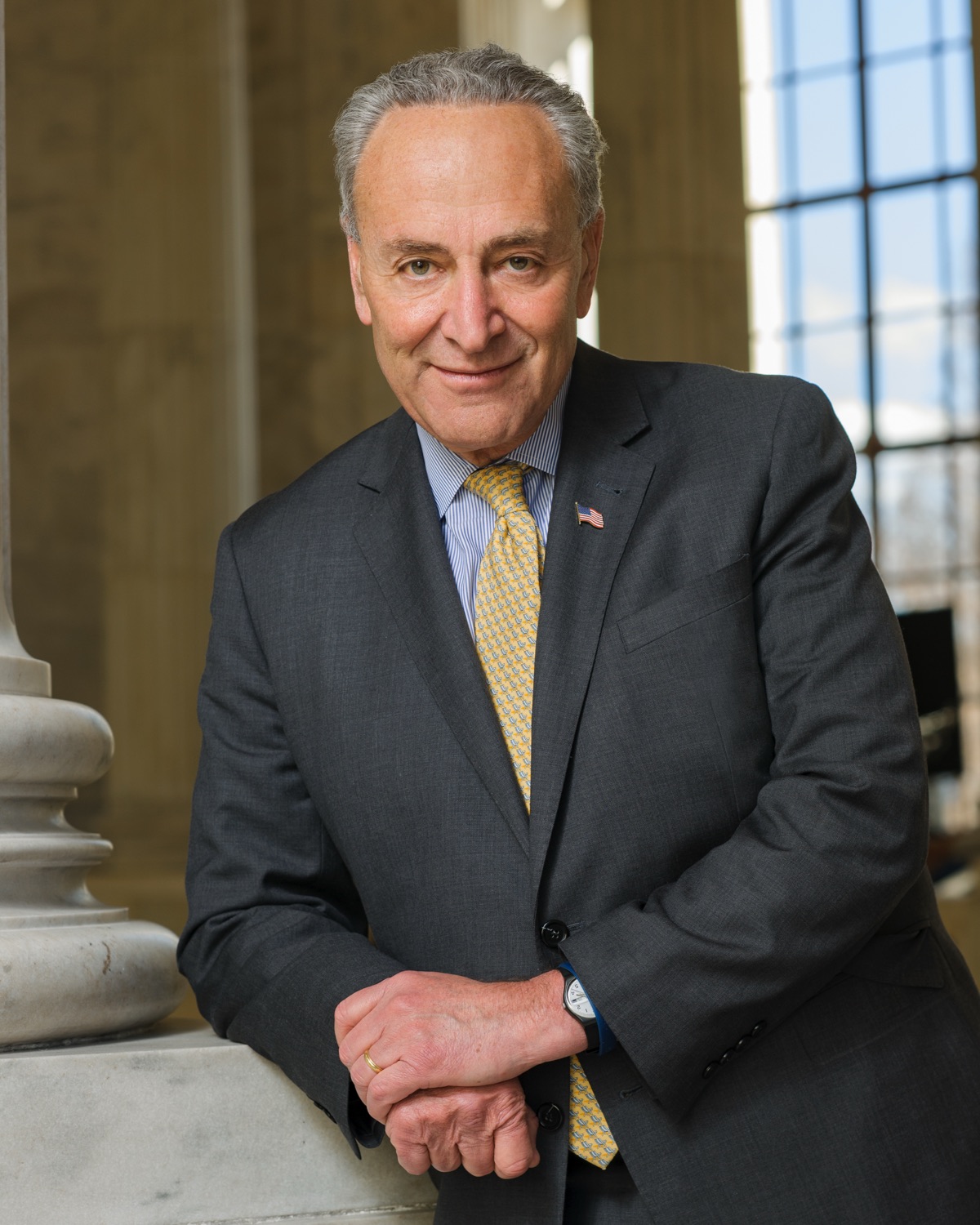
The amendment — 64 pages of bill text — would have established a federal UAP Records Review Board modeled on the 1992 JFK Records Act, with subpoena power, declassification authority, and the legal mandate to determine the historical record. The amendment passed the Senate in July 2023 as part of the NDAA.
In House-Senate conference negotiations during the fall of 2023, the amendment was substantially narrowed. The version that became law in December 2023 retained the principle of UAP records declassification but removed the Review Board's subpoena power and exempted critical Special Access Programs from the disclosure obligation. Schumer publicly criticized the dilution.
Whether the Schumer amendment would have surfaced material that would resolve the substantive question — what the Navy pilots saw — is unknowable. What can be observed is that the U.S. Congress in 2023 demonstrated bipartisan agreement that the executive branch had not, to that point, adequately accounted for UAP-related compartmented programs.
The AARO Historical Record, March 2024
On March 8, 2024, the All-domain Anomaly Resolution Office — the Pentagon's UAP investigation office since July 2022, directed by Dr. Sean Kirkpatrick (2022-2023) and Acting Director Tim Phillips (2024-) — published its Report on the Historical Record of U.S. Government Involvement with Unidentified Anomalous Phenomena (UAP) Volume I.
The report's conclusion: "AARO has found no empirical evidence for claims that the USG and private companies have been reverse-engineering extraterrestrial technology. AARO determined, based on all information provided to date, that claims involving specific people, known locations, technological tests, and documents allegedly involved in or related to the reverse-engineering of extraterrestrial technology, are inaccurate."
The AARO report explicitly addressed Grusch's testimony. It identified — without naming — the named programs Grusch had referenced and concluded that each named program either (a) did not involve UAP material, (b) was a misidentification of a conventional program, or (c) was a public-facing description of a defense industrial program with no UAP connection. Grusch and his attorney have disputed the AARO findings; they have not retracted his testimony.
The report's Volume II — which was to address contemporary 2014-2025 UAP reports — has not, as of May 2026, been published.
The cast
Sources
Primary documents:
- Office of the Director of National Intelligence, Preliminary Assessment: Unidentified Aerial Phenomena, June 25, 2021. 9 pages.
- Office of the Director of National Intelligence, 2022 Annual Report on UAP, January 12, 2023.
- All-domain Anomaly Resolution Office, Report on the Historical Record of U.S. Government Involvement with UAP, Volume I, March 8, 2024.
- U.S. House Committee on Oversight and Accountability, Subcommittee on National Security, the Border, and Foreign Affairs, Hearing on UAP: Implications on National Security, Public Safety, and Government Transparency, July 26, 2023. Sworn testimony of David Grusch, Ryan Graves, David Fravor.
- U.S. Senate, UAP Disclosure Act of 2023 — original text introduced by Schumer-Rounds, July 13, 2023.
- FY24 National Defense Authorization Act (P.L. 118-31), December 22, 2023 — final UAP records provisions as enacted.
- U.S. Navy gun-camera footage authenticated by Department of Defense April 27, 2020 (Tic-Tac, Gimbal, Go-Fast).
- Intelligence Community Inspector General determination of "credible and urgent," David Grusch whistleblower complaint, July 2022.
Secondary investigative reporting: 9. Helene Cooper, Ralph Blumenthal, Leslie Kean, "Glowing Auras and 'Black Money': The Pentagon's Mysterious U.F.O. Program," The New York Times, December 16, 2017. 10. Bryan Bender, "The Pentagon's Secret Search for UFOs," Politico, December 16, 2017. 11. Leslie Kean, Ralph Blumenthal, "Intelligence Officials Say U.S. Has Retrieved Craft of Non-Human Origin," The Debrief, June 5, 2023. 12. Tim McMillan, The Debrief, multi-year UAP coverage 2020-2025. 13. 60 Minutes, "UFOs Detected in Restricted Airspace by US Navy Pilots," May 16, 2021. 14. The Joe Rogan Experience, episode 1361 with David Fravor, June 6, 2019. 15. Lue Elizondo, Imminent: Inside the Pentagon's Hunt for UFOs (William Morrow, 2024). 16. Christopher Mellon, The Mellon Family: An American Saga, and subsequent UAP advocacy writings 2018-2025. 17. Mick West, Metabunk forum, multi-year technical analyses of Gimbal and Go-Fast (2018-present). 18. NewsNation and Coulthart's Reality Check, ongoing UAP coverage 2021-2025.
Academic / specialist scholarship: 19. Kevin D. Knuth, "Estimating Flight Characteristics of Anomalous Unidentified Aerial Vehicles," Entropy 21(10):939, 2019 (peer-reviewed kinematic analysis of public UAP footage). 20. Diana Walsh Pasulka, American Cosmic: UFOs, Religion, Technology (Oxford University Press, 2019). 21. Greg Eghigian, After the Flying Saucers Came: A Global History of the UFO Phenomenon (Oxford University Press, 2024).
Corrections & updates
2026-05-30: First publication.
Inspired this / based on it
James Fox · ★ 6.7
Pre-AATIP synthesis of U.S. military UAP history. Released ahead of the June 2021 ODNI report.
CBS / Bill Whitaker
May 16, 2021 segment with Lt. Ryan Graves and Commander David Fravor.
Joe Rogan
First long-form Fravor interview after the 2017 NYT disclosure.
Lue Elizondo
William Morrow. Elizondo's on-the-record memoir of AATIP and the 2017 disclosure.
Diana Walsh Pasulka
Oxford University Press. The most cited contemporary academic treatment.
Greg Eghigian
Oxford University Press. Definitive academic history through 2023.
Filed under
- #uap
- #ufo
- #pentagon
- #aatip
- #uaptf
- #aaro
- #navy
- #tic-tac
- #gimbal
- #go-fast
- #david-grusch
- #david-fravor
- #luis-elizondo
- #chuck-schumer
- #harry-reid
- #ndaa
- #odni
- #north-america
- #usa
- #declassified
Click any tag for every article carrying it.
Continue reading
Roswell 1947 & Area 51
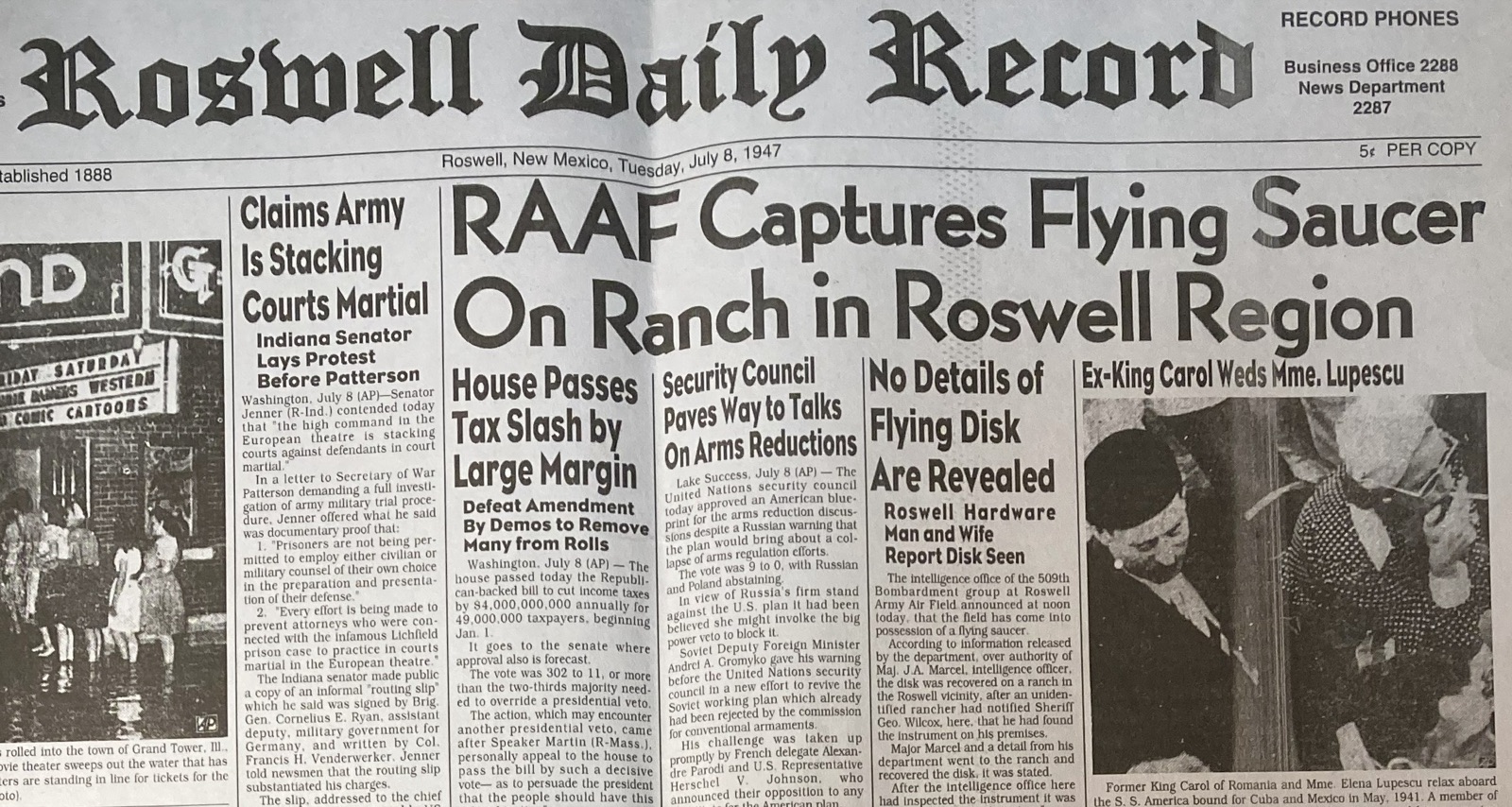
On July 8, 1947, the public information office of the Roswell Army Air Field issued a press release stating that the 509th Bomb Group had recovered the remains of a 'flying disc' from a ranch in Lincoln County, New Mexico. The release was carried on the front page of the *Roswell Daily Record* that afternoon under the headline 'RAAF Captures Flying Saucer On Ranch in Roswell Region.' Four hours later, General Roger Ramey at Fort Worth held a counter-press conference identifying the debris as a weather balloon. The story disappeared from the national press within a day. It stayed disappeared for thirty-one years. In 1978, the UFO researcher Stanton Friedman tracked down a retired Army officer named Jesse Marcel — the intelligence officer who had originally examined the ranch debris in 1947 — and recorded an interview in which Marcel said the material had not been a weather balloon. From that single interview emerged what is now the most-told American conspiracy story of the postwar period. In 1994 and 1997, after a Congressional inquiry, the U.S. Air Force published two reports identifying the 1947 debris as part of the classified Project Mogul — high-altitude acoustic balloons designed to detect Soviet atomic tests — and the supposed alien bodies of later witness accounts as anthropomorphic test dummies used in high-altitude parachute experiments between 1953 and 1959. Separately, in August 2013, the CIA's declassification of the U-2 spy plane history formally acknowledged the existence of Area 51 — the remote Nevada testing facility at Groom Lake — by name, for the first time.
The Belgian UFO Wave: The Triangles Over Wallonia
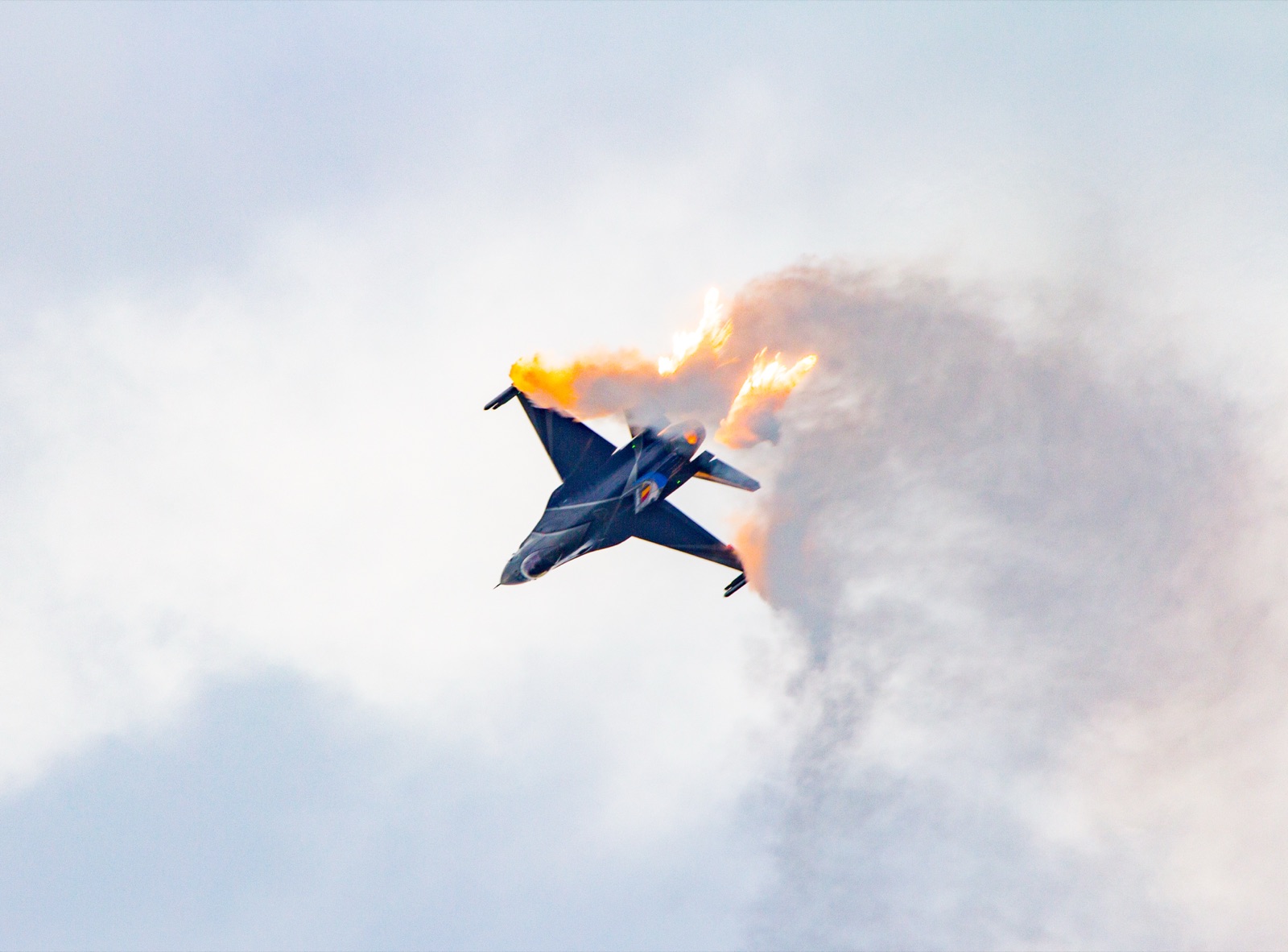
It began on the evening of 29 November 1989 in the hills near Eupen, in the German-speaking east of Belgium, where two gendarmes on patrol reported a large, silent object hanging low in the sky — a dark triangle marked by three bright lights at its corners and a pulsing red beacon at its centre. Over the following months, the sightings multiplied into one of the largest and most concentrated waves in the history of the subject: thousands of reports, most describing the same slow-moving triangle, gathered across the Walloon countryside through the winter and spring of 1989–1990. What made the Belgian wave unlike almost any other was not the reports themselves but the response to them. The Belgian Air Force, instead of dismissing the affair, engaged with it openly, scrambled F-16 fighters on the night of 30–31 March 1990 to chase radar contacts, and afterwards conceded, in public, that it had no explanation for what its instruments had recorded. A single striking photograph of a black triangle became the icon of the whole episode. Two decades later, the man who took it confessed that he had made it with a piece of painted polystyrene. This is the story of the triangles over Wallonia — of a genuine mystery, a genuine hoax, and the difficulty of telling, at this distance, exactly where one ends and the other begins.
Betty and Barney Hill: The First Alien Abduction
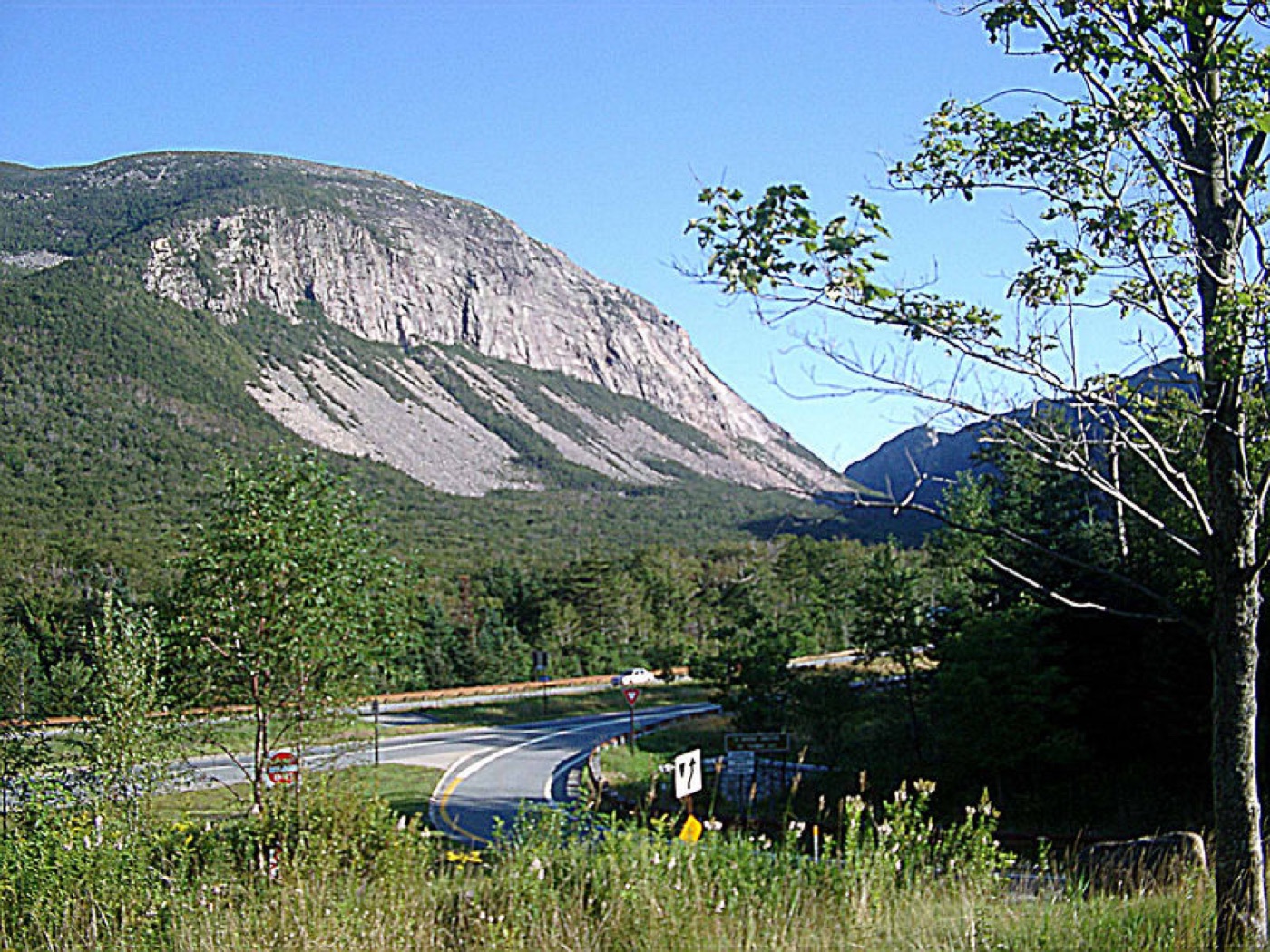
On the night of 19 September 1961, Betty and Barney Hill were driving home to Portsmouth, New Hampshire, from a vacation, taking the winding roads through the White Mountains late at night, when they noticed a bright light in the sky that seemed to be following their car. As it drew closer, Barney stopped and looked at it through binoculars, and reported seeing a structured craft with figures visible inside; frightened, the couple drove on. When they reached home, they found that the journey had taken about two hours longer than it should have — two hours they could not account for. In the days that followed, Betty was troubled by vivid nightmares of being taken aboard a craft and examined by strange beings, and Barney developed acute anxiety. Two years later, seeking relief, the Hills underwent hypnosis with a psychiatrist, and under hypnosis both recounted, separately, a detailed story of abduction: of being taken aboard the object by small humanoid beings, subjected to a medical examination, and, in Betty's case, shown a 'star map' of the visitors' travels among the stars. Their account, made public and then widely published, became the first famous case of alien abduction — and it established the entire template that countless later abduction stories would follow: the light on a lonely road, the missing time, the medical examination, the grey humanoid beings, and the memories recovered under hypnosis. The Hills were, by all accounts, sincere. What their sincere experience actually was — a genuine encounter, or something the mind constructs — is the real question. This is the story of Betty and Barney Hill.