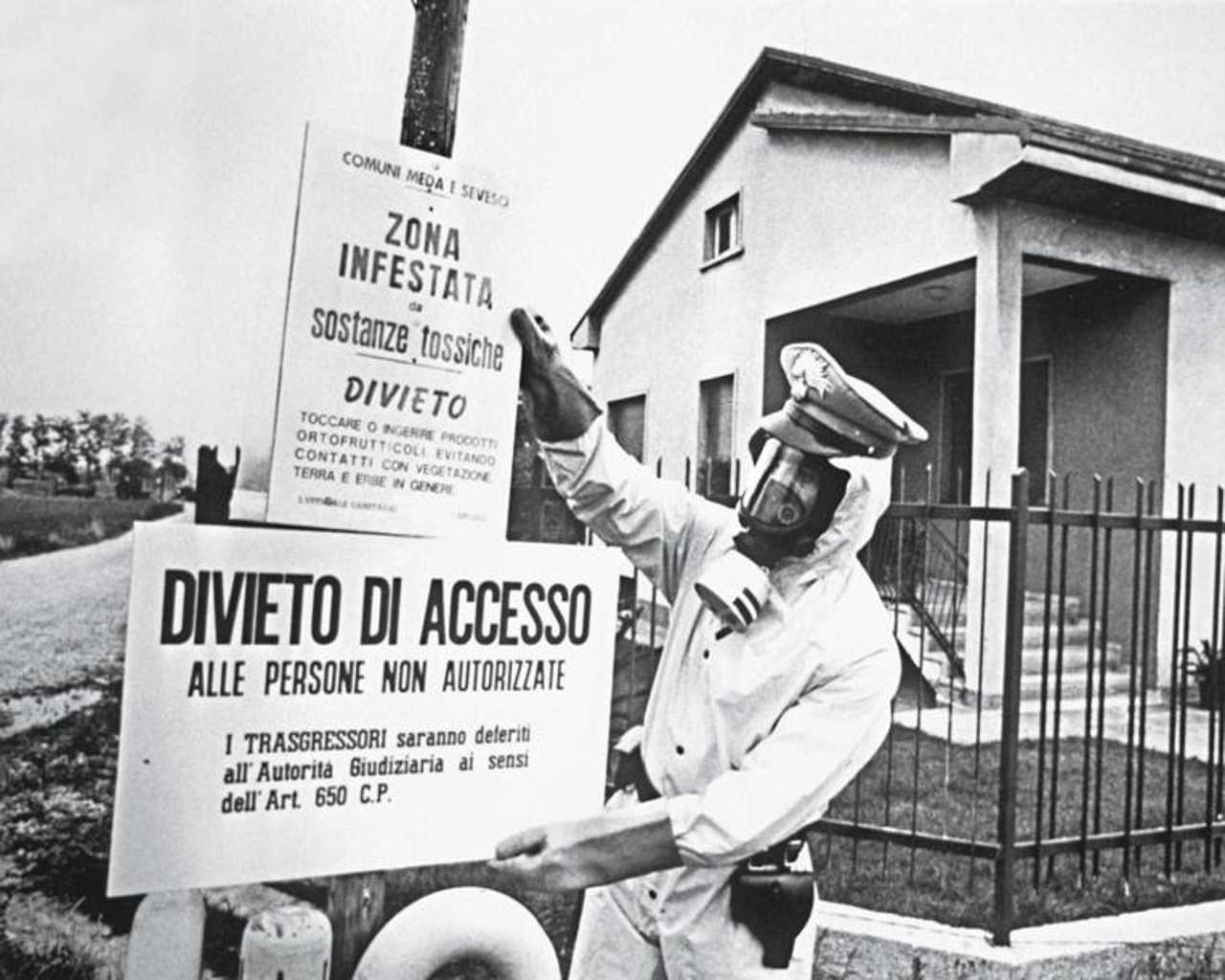
A carabiniere in a gas mask posts warning signs — 'Contaminated zone — toxic substances — No entry' — outside a home in the Seveso area, 1976. By the time the cordon went up, the dioxin cloud had already settled on the town. Wikimedia Commons / Public domain.
Seveso: The Toxic Cloud That Changed European Safety Law
Italy, 1976 — A chemical reactor near Milan overheated and released a cloud of dioxin, one of the most toxic substances ever made, over a populated area. The company was slow to say what had escaped — and by the time anyone understood, the poison had already settled on the town
- Category
- Corporate Cover-ups
- Published
- Length
- 3,500 words · 19 min read
- Author
- The editors
Seveso gave its name to two things: a catastrophe and the law that answered it. The disaster of 1976 was, in the immediate human toll, less deadly than some of the great industrial accidents — no one was killed outright by the cloud — but it became one of the most important of them all, because of what it released, how badly it was handled, and what it forced Europe to do in response. A invisible poison of extraordinary potency was scattered over a populated area by a runaway reaction in a poorly safeguarded plant, and then compounded by a company slow to admit what had happened and authorities unprepared to respond. The result was a slow-motion emergency that exposed how little anyone — industry or government — was ready for the hazards that modern chemical production had created. Seveso is remembered as the disaster that taught Europe it needed a system for the catastrophes it had not yet imagined.
This is the story of the cloud over Seveso.
The plant and the poison
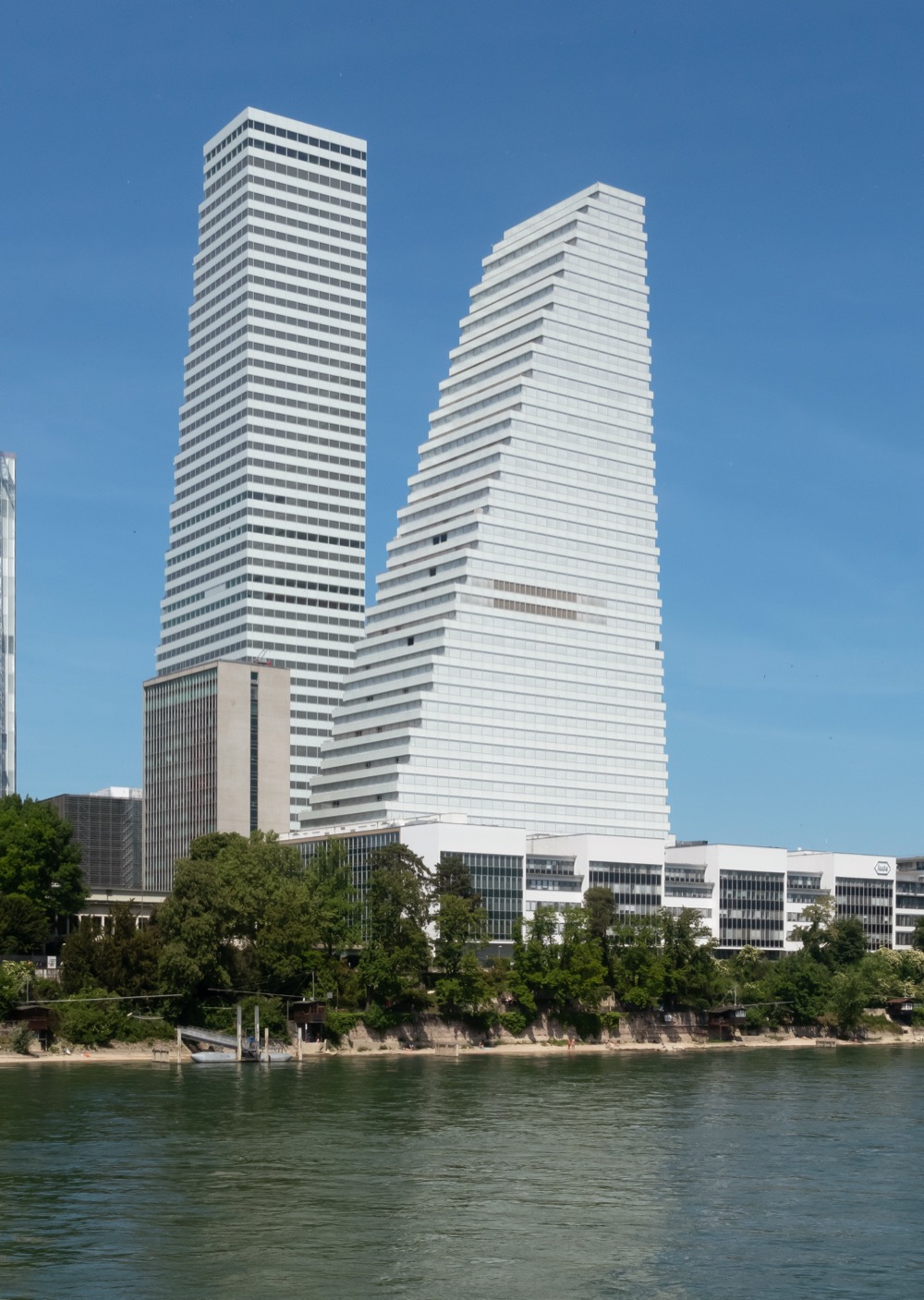
The ICMESA factory sat in the town of Meda, just beside Seveso, in the prosperous, densely populated industrial belt north of Milan. It was a subsidiary of Givaudan, itself part of the major Swiss pharmaceutical group Hoffmann-La Roche, and it manufactured trichlorophenol, a chemical used to make the disinfectant hexachlorophene. The production process involved heating chemicals in a large reactor, and it carried a known but poorly guarded risk: under certain conditions the reaction could run away, overheating uncontrollably and producing, as an unwanted byproduct, the dioxin TCDD.
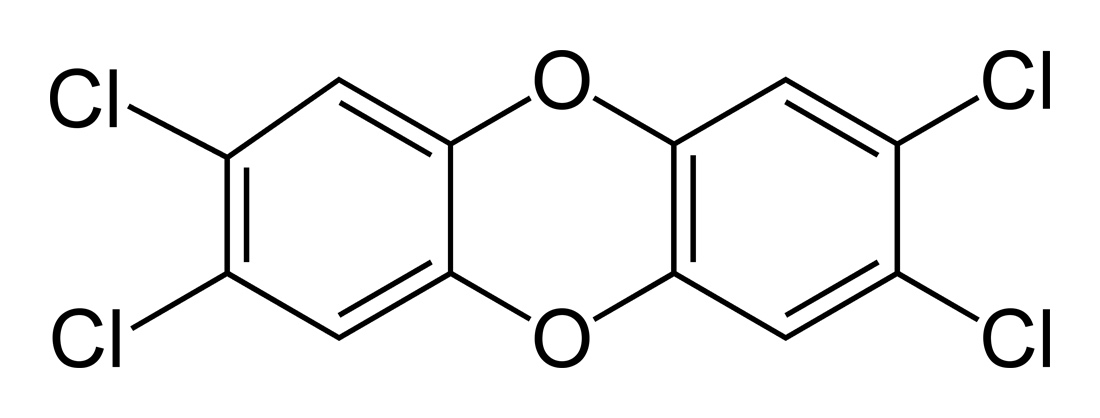
TCDD is a substance of almost uniquely concentrated toxicity. It is acutely poisonous in tiny quantities, persists in the environment and in the body, accumulates in living tissue, and is associated with a range of severe health effects, from the skin disease chloracne to cancers and developmental harm. It was, and remains, one of the most toxic man-made chemicals known. The ICMESA process produced it only in trace amounts under normal operation — but a runaway reaction could generate far more, and send it out of the plant. That is precisely what happened.
The same dioxin gave Seveso a grim kinship with another notorious chapter of the era. TCDD was the toxic contaminant in Agent Orange, the defoliant the United States had sprayed over Vietnam, and the mounting concern in the 1970s about the health effects suffered by those exposed to it there had begun to establish dioxin's fearsome reputation. Seveso brought that abstract dread home to a European suburb: the same substance that had become a byword for chemical harm in a distant war was now scattered over Italian gardens and playgrounds. This connection sharpened both the fear among the exposed population and the scientific urgency of studying what dioxin did to human beings — making Seveso, for all its horror, one of the most closely studied dioxin-exposure events in history, and a source of hard-won knowledge about the chemical's effects.
The cloud
On the morning of Saturday 10 July 1976, the reactor at ICMESA, which had been left in a vulnerable state as the plant shut down for the weekend, overheated. The reaction ran away, temperature and pressure climbed, and a safety valve opened, venting the reactor's contents directly into the atmosphere — there was no system to contain or scrub what came out. A cloud of chemicals, including an estimated few kilograms of TCDD along with the trichlorophenol and other compounds, was carried up and out over the surrounding towns, drifting on the breeze and settling across an area of several square kilometers downwind of the plant.
The children's suffering gave the disaster its human face. Chloracne, the dioxin-induced skin disease, is not life-threatening, but in its severe forms it is painful and disfiguring, erupting across the face and body in cysts and lesions, and it can persist for a long time. To see it appear on the faces of young children — the most visible, undeniable mark of an invisible poison — was deeply distressing to families and to a watching nation, and it became the emblematic image of Seveso's harm. Behind the statistics of zones and tonnages were children whose skin bore the sign of what the cloud had carried, and parents left to wonder what else the dioxin might be doing inside their bodies that could not yet be seen.
To the people of Seveso, nothing seemed wrong at first beyond an acrid smell and some irritation. There was no fire, no explosion, nothing that announced a catastrophe. But within days the signs began to appear. Small animals — chickens, rabbits, birds, family pets — in the affected area began to sicken and die. And children who had been playing outside when the cloud passed, or in the days afterward, began to develop chloracne: an angry, disfiguring eruption of the skin that is one of the characteristic signs of dioxin exposure. Something invisible had poisoned the town, and only slowly did anyone grasp what it was.
The slow reckoning
The most damaging feature of the Seveso disaster, beyond the release itself, was the failure to respond quickly and openly to it. The company was slow to disclose the full nature and gravity of what had escaped from its reactor. In the crucial early days, the specific danger — that the cloud contained TCDD, an extraordinarily toxic dioxin — was not communicated with the urgency it demanded, and the local authorities, unprepared for such an event and lacking information, did not immediately understand the scale of the threat or take decisive action. Days passed. The contaminated zone was not sealed off and evacuated until roughly two weeks after the release, by which time residents, and especially children, had already been exposed, had touched the contaminated soil, and in some cases had eaten produce from contaminated gardens.
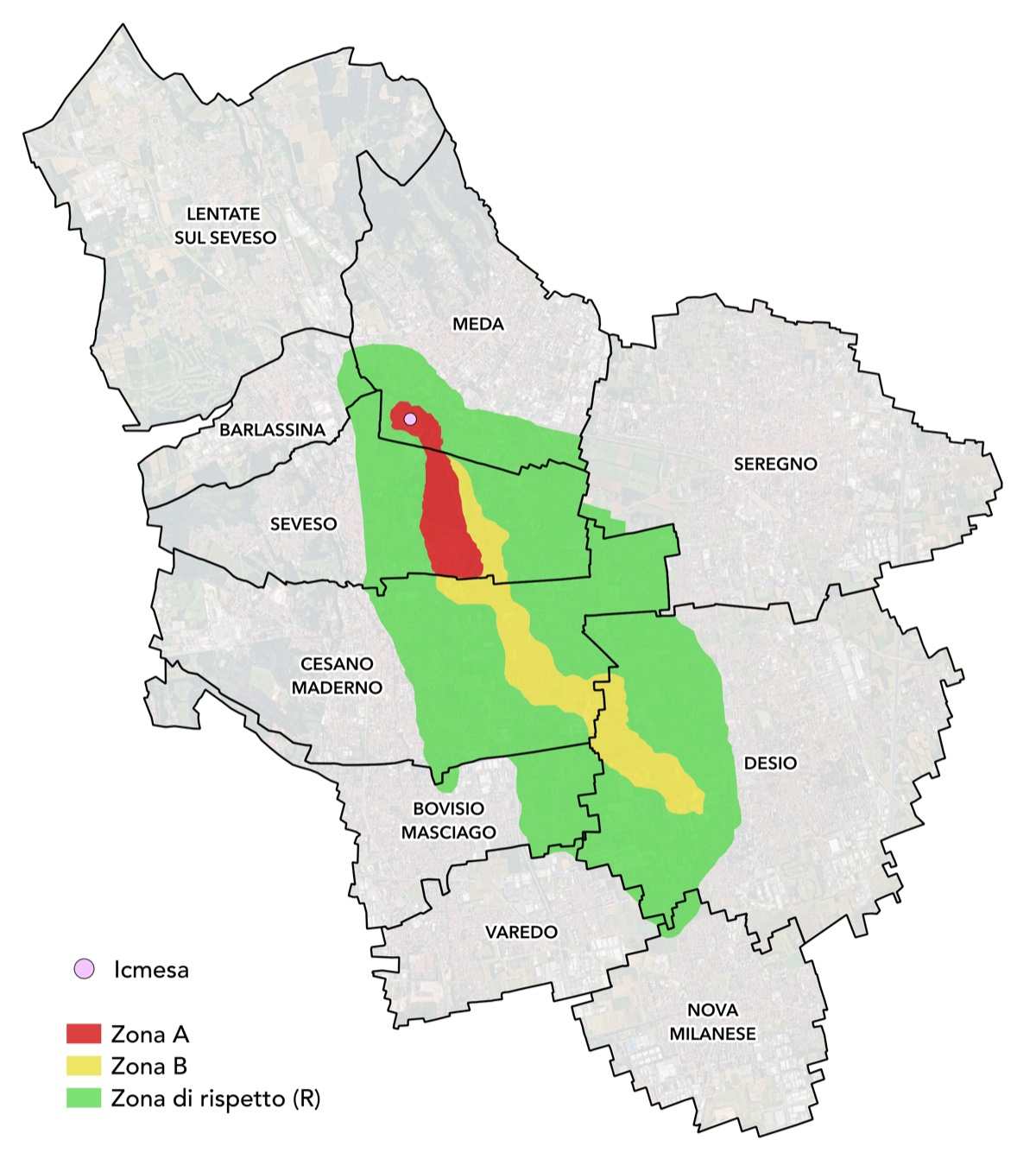
When the gravity of the situation finally became clear, the response turned drastic. The most contaminated land, Zone A, was cordoned off and its residents evacuated; warning signs went up declaring the area a contaminated zone, forbidden to entry. Tens of thousands of animals across the affected area were slaughtered to prevent the dioxin from entering the human food chain through meat, eggs, and milk. Gardens were destroyed and produce condemned. The most contaminated homes would eventually be demolished, and the poisoned topsoil removed. A prosperous suburban community had become, almost overnight, a contaminated exclusion zone.
The agony of uncertainty
For the people of Seveso, the worst burden was uncertainty. Dioxin's long-term effects — its links to cancer and, it was feared, to birth defects — meant that the exposed population faced not a single identifiable injury but a shadow of risk hanging over their futures and their children's. Nowhere was this agony sharper than among pregnant women. Fearing that the dioxin might have caused grave malformations in their unborn children, some sought abortions — at a time when abortion was still illegal in overwhelmingly Catholic Italy. The disaster forced the question into the open and intensified a fierce national debate; special provisions were made, and the Seveso crisis became part of the context in which Italy moved, in 1978, to legalize abortion. In the event, studies of the pregnancies and of fetuses from the area did not establish the feared epidemic of dioxin-caused malformations — but the women had been made to face that terror without clear answers, in the chaos of a poorly managed emergency.
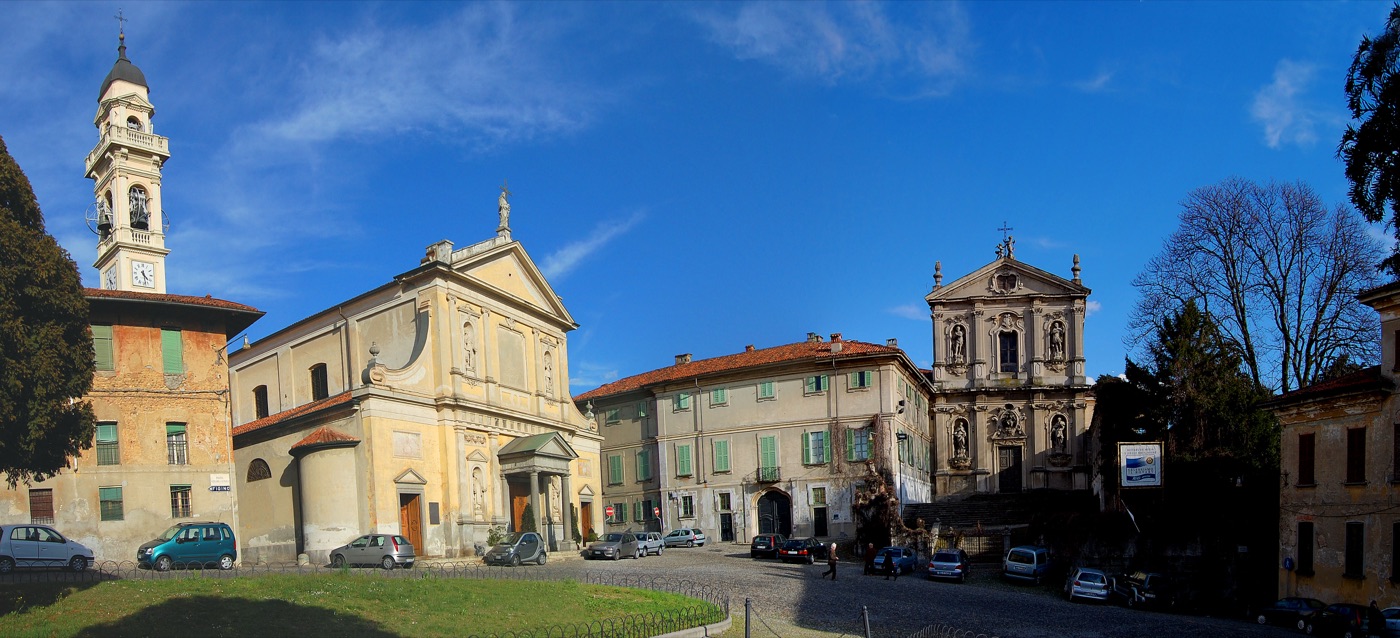
The long-term health story of Seveso would be studied for decades. The exposed population was monitored in extended epidemiological studies, and over time these found evidence of elevated risks of certain cancers and other health effects among the most heavily exposed, confirming that the dioxin had done real and lasting harm even though it had killed no one outright. The chloracne, distressing as it was, healed in most cases; the deeper biological legacy of the exposure unfolded slowly, across years, in the bodies of those who had been under the cloud.
The missing barrels
The disaster produced a strange and notorious coda that captured its mismanagement. The cleanup generated highly contaminated waste, including the dismantled reactor and drums of dioxin-laden material that had to be disposed of safely. In 1982, forty-one barrels of this toxic waste were removed from Seveso for disposal — and then vanished. The barrels disappeared into the murky world of international waste disposal, their whereabouts unknown for months, provoking an international scandal and a frantic search across Europe before they were eventually located in France and properly destroyed. The episode of the missing barrels became a symbol of how poorly the hazards of toxic waste were controlled, and it underscored the lesson the whole disaster was teaching: that the chemicals industry had created dangers that existing systems were utterly unprepared to manage.
The decontamination of Seveso itself was a vast and unprecedented undertaking. In the most contaminated zone, there was no way simply to clean the dioxin away; the poisoned topsoil had to be physically stripped off and removed, contaminated buildings demolished, and the debris and earth treated as hazardous waste. Specialists worked for years to measure the contamination, define the zones, and reduce the dioxin in the soil to levels deemed safe, in one of the first major environmental remediation projects of its kind. The sheer difficulty and expense of cleaning up after the cloud drove home a point that would echo through later disasters: that some industrial poisons, once released into the environment, cannot really be undone, only laboriously contained and managed at enormous cost — which is why preventing their release in the first place matters so much more than any cleanup that can follow.
The Seveso Directive
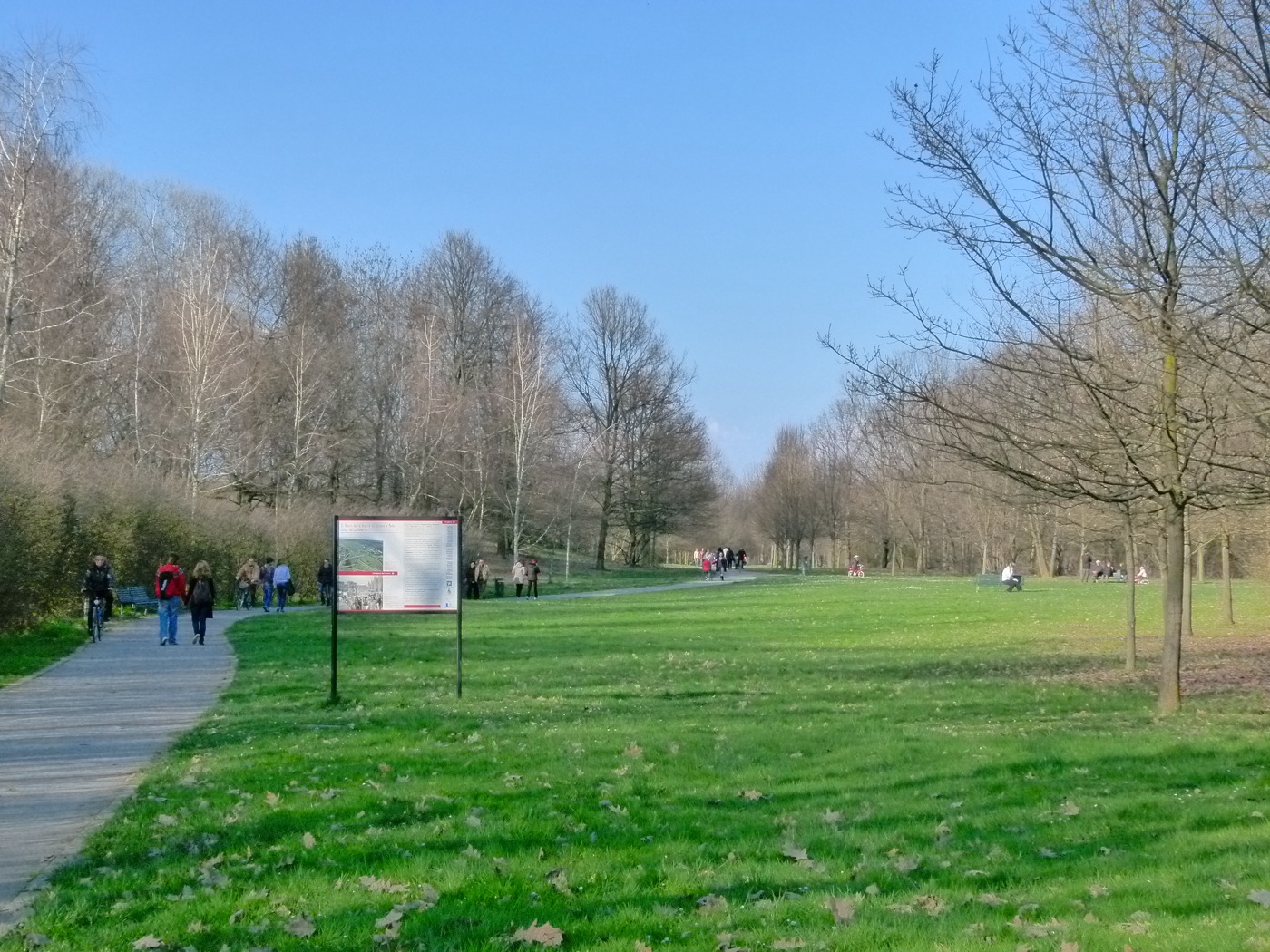
The contaminated land itself was, over the following years, decontaminated and reclaimed. The most poisoned ground of Zone A, where homes had been demolished and topsoil stripped away, was eventually transformed into a park, the Bosco delle Querce — the "Oak Wood" — planted over the remediated land as both a recovery of the poisoned earth and a quiet memorial to what had happened there. Where a contaminated exclusion zone had stood, trees were planted and a green space made, a deliberate act of healing the landscape.
The meaning of Seveso
The accountability for Seveso was pursued through the Italian courts, and several ICMESA and Givaudan officials were prosecuted in connection with the disaster, though the legal outcomes were partial and the sense of justice incomplete, as is so often the case with industrial catastrophes. The parent companies paid compensation to the affected communities and bore the costs of the cleanup. But the deepest reckoning was not in the courtroom; it was in the recognition, across Europe and beyond, that the disaster had revealed a systemic unpreparedness for the hazards that modern industry had created.
In the end, Seveso stands as the disaster that taught Europe to fear what it could not see and to plan for what it had not imagined. A reactor overheated on a quiet Saturday, a valve opened, and a cloud carrying one of the most toxic substances ever made drifted over an ordinary suburban town — and then a company's slowness and a system's unreadiness turned an accident into a prolonged ordeal of uncertainty, evacuation, and fear. No one was killed by the cloud, but the land was poisoned, the animals destroyed, the children scarred, and a community made to live under the long shadow of dioxin. Out of that ordeal came something durable: the understanding that the hazards of modern industry must be anticipated and governed before they strike, written into a law that still carries the town's name across the whole of Europe. Seveso is the rare disaster whose deepest legacy is not the harm it did, but the harm it has since helped to prevent.
Inspired this / based on it
Various
The accident generated extensive scientific and journalistic literature and shaped EU chemical-safety law.
Various
Italian documentaries and dramatizations have revisited the disaster on its anniversaries.
Filed under
- #seveso-1976
- #icmesa
- #dioxin
- #tcdd
- #industrial-accident
- #italy
- #seveso-directive
- #environmental-disaster
- #1970s
- #confirmed
Click any tag for every article carrying it.
Continue reading
Bhopal
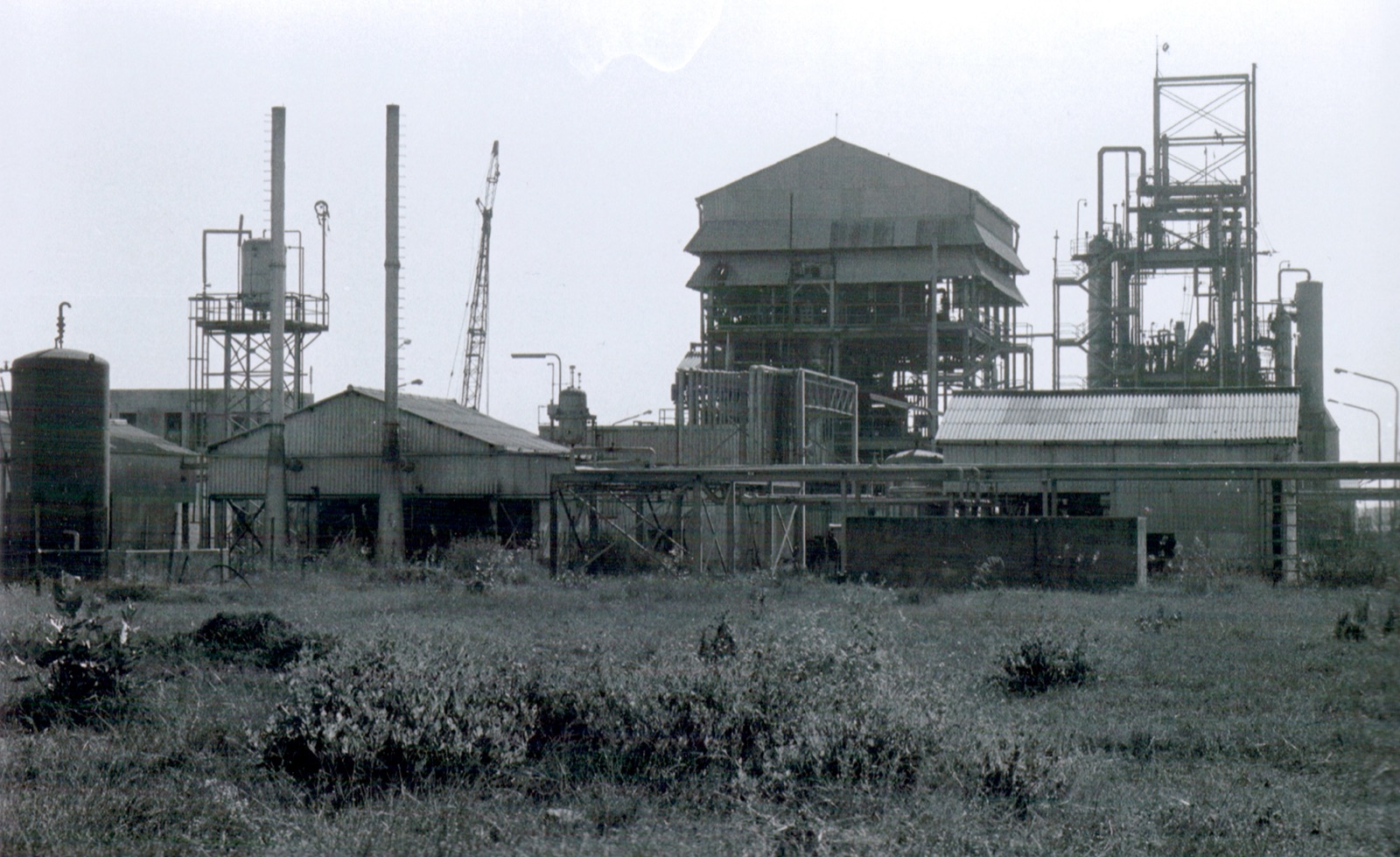
At approximately 11:30 p.m. on Sunday, December 2, 1984, water entered Tank 610 at the Union Carbide India Limited (UCIL) pesticide plant in Bhopal, Madhya Pradesh. The tank contained 42 tonnes of liquefied methyl isocyanate, an intermediate chemical used in the production of the pesticide Sevin. The water-MIC reaction was exothermic. The tank's pressure rose, then its temperature, then both ran away. The refrigeration system that should have kept the tank below 5°C had been disabled to save electricity. The vent gas scrubber that should have neutralized any escaping MIC was offline for maintenance. The flare tower that should have burned residual gas was disconnected. At approximately 12:30 a.m. on December 3, the tank's emergency relief valve opened and approximately 30 tonnes of methyl isocyanate vapor was released into the air above central Bhopal. The wind carried it south-east, across the slum districts of Jaiprakash Nagar, Kazi Camp, and Chola. By dawn, between 3,800 and 8,000 people were dead. The Indian government's final official count was eventually placed at 3,787 directly killed in the first 72 hours and a further ~15,000-25,000 over the following decades from exposure-attributable illness. Approximately 558,125 people received compensation as gas-exposure victims under the 1989 settlement. It remains the worst industrial disaster in history.
Minamata: The Mercury Poisoning a Company Hid for Years
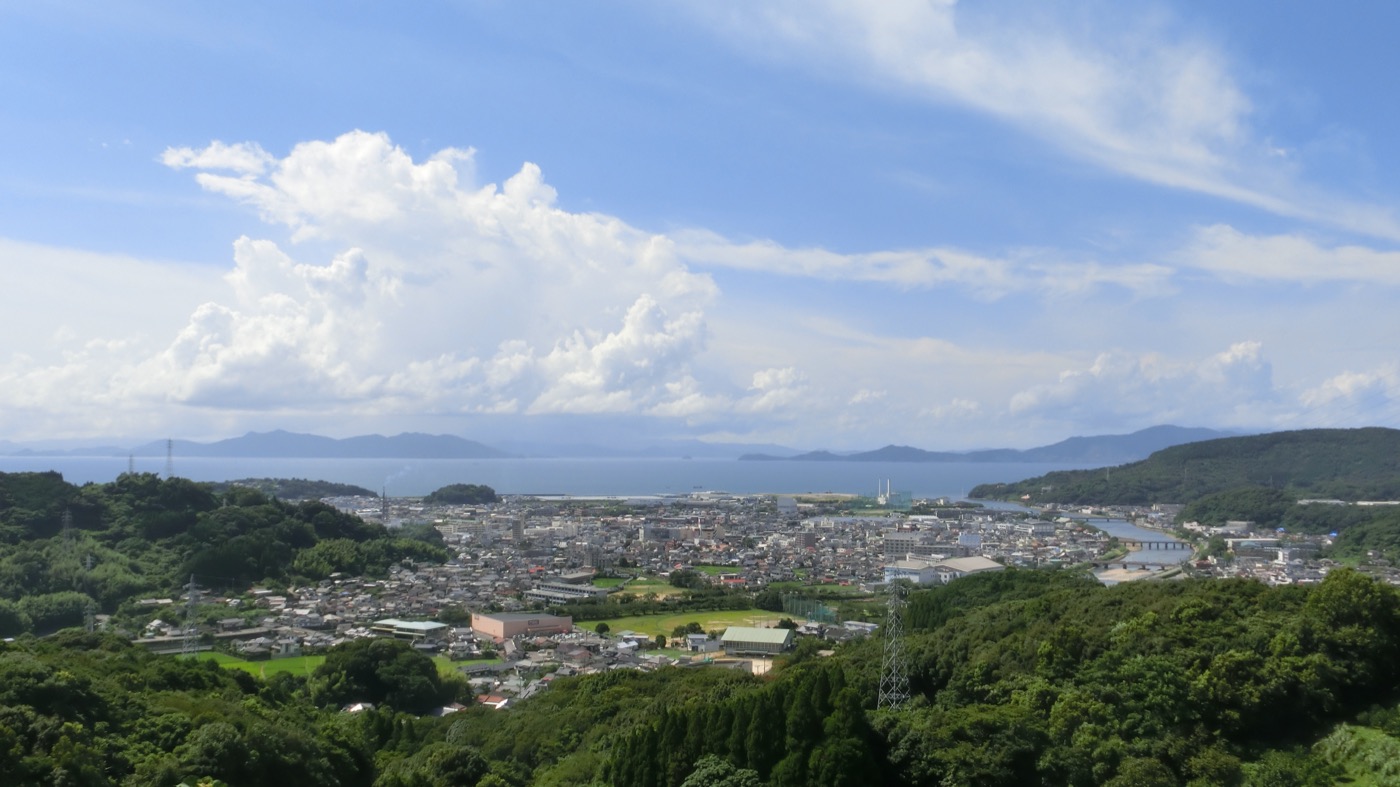
For more than three decades, a chemical factory in the small Japanese coastal town of Minamata discharged mercury into the sea, and for years the company that owned it knew, or had every reason to know, what that mercury was doing to the people who lived there. The Chisso Corporation made acetaldehyde using a process that produced methylmercury as a by-product, and from the 1930s it released that poison, in its untreated wastewater, into Minamata Bay and the surrounding Shiranui Sea. The mercury accumulated in the fish and shellfish that were the daily food of the local fishing families, and it destroyed their nervous systems. By the 1950s the town was witnessing terrible scenes: cats convulsing and hurling themselves into the sea, birds dropping from the sky, and then people — fishermen and their wives and their children — struck down by a mysterious illness that robbed them of control over their bodies, their senses, and sometimes their lives. Children were born already poisoned, having absorbed the mercury in the womb. When researchers traced the cause to the Chisso factory's effluent, the company disputed the science, funded doubt, and kept discharging mercury for years more. Most damning of all, Chisso's own company doctor had proved, in a quiet experiment with cats, that the factory's wastewater caused the disease — and the company suppressed his findings and ordered him to stop. The poisoning continued until 1968. The victims would spend decades fighting for recognition, compensation, and the simple acknowledgement of what had been done to them. This is the story of Minamata disease, one of the defining environmental catastrophes of the twentieth century, and of the long concealment at its heart.
Love Canal: The Neighborhood Built on a Toxic Dump
Love Canal was an ordinary working-class neighborhood in Niagara Falls, New York — streets of modest homes, an elementary school, families raising children. It was also built directly on top of one of the worst chemical waste dumps in American history. Beneath the lawns and the playground lay some 21,000 tons of toxic chemical waste — pesticides, solvents, dioxins, and dozens of other hazardous compounds — that the Hooker Chemical Company had buried in an abandoned canal through the 1940s and early 1950s. When the dump was full, Hooker capped it, and in 1953 sold the land to the local Board of Education for a single dollar, including in the deed a warning about the buried chemicals and a clause disclaiming all liability for what might happen. The school board built an elementary school on the site anyway, and homes rose all around it. For two decades the buried chemicals were largely out of sight. Then, in the 1970s, after years of construction had breached the clay cap and unusually wet weather raised the water table, the poison began to come back up — oozing into basements, surfacing in yards, pooling on the school playground, burning children's skin, and killing gardens. Residents who had noticed for years the strange odors and the unexplained illnesses — the miscarriages, the birth defects, the cancers — finally began to connect them to the ground beneath their feet. Led by a young mother named Lois Gibbs, the residents organized and fought, and in 1978 their crisis forced a presidential emergency declaration, the evacuation of hundreds of families, and the creation of the law that still governs the cleanup of toxic sites across America. This is the story of the neighborhood built on a poison, and the people who refused to be ignored.