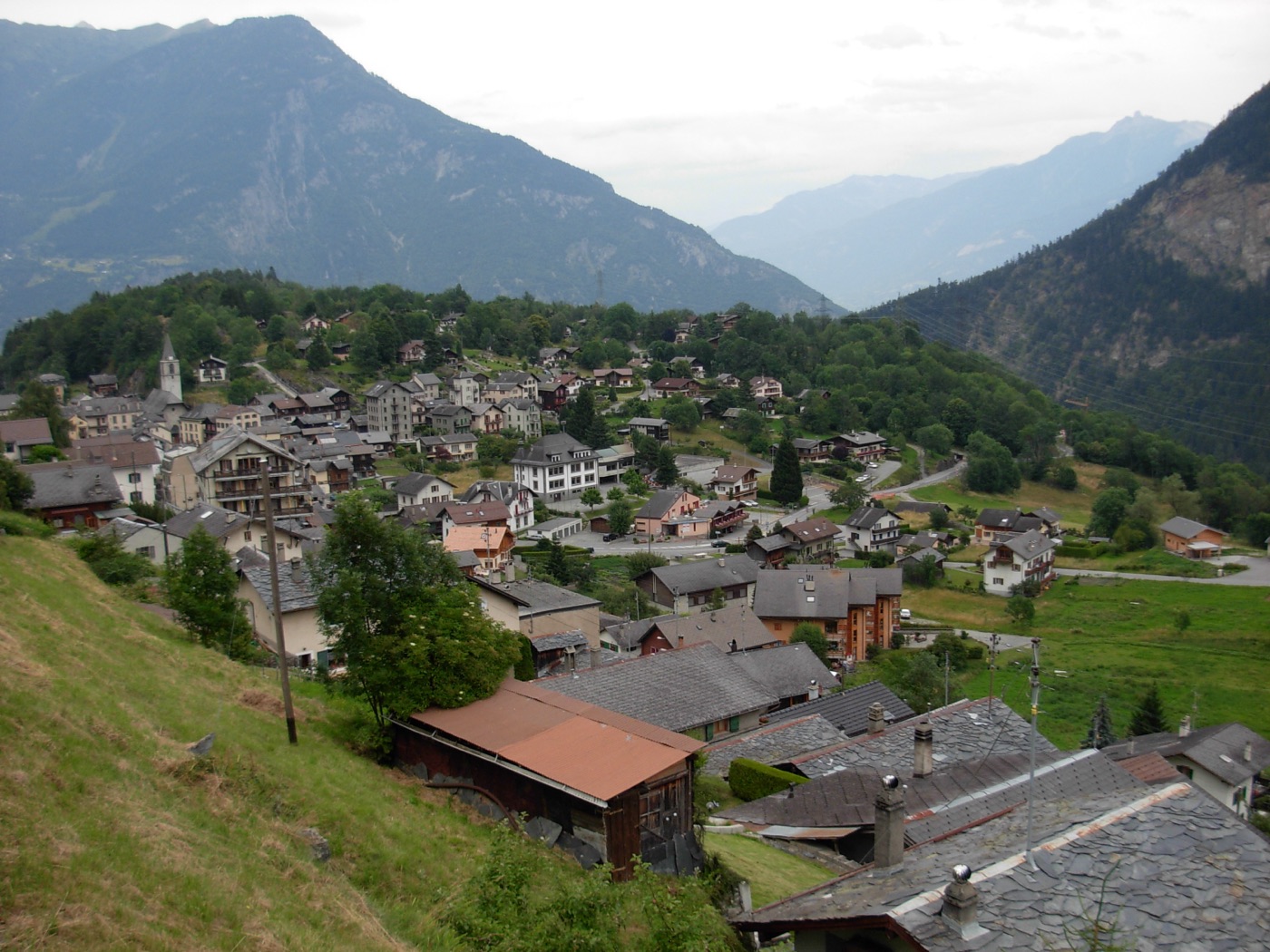
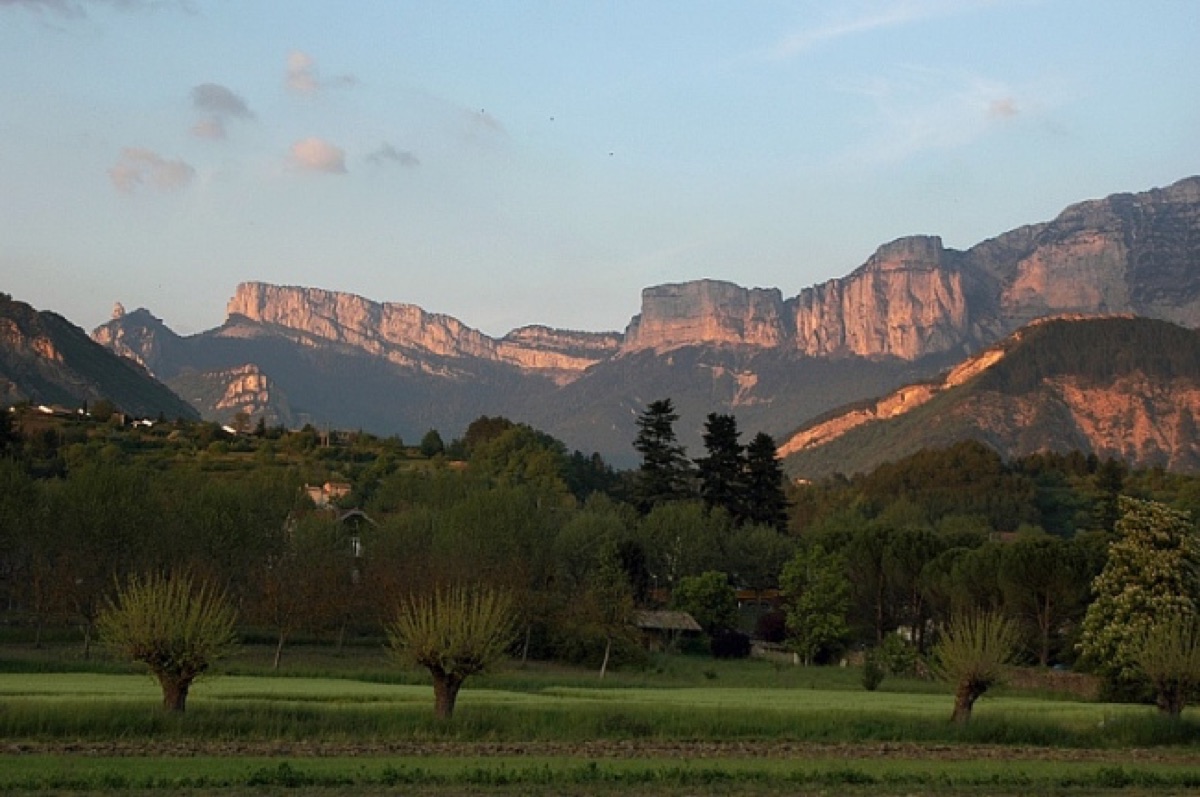
The village of Salvan in the Swiss canton of Valais, one of the sites where members of the Order of the Solar Temple died in October 1994. The order's tragedies unfolded in quiet, picturesque settings across three countries. Wikimedia Commons / CC BY-SA 2.0.
The Order of the Solar Temple: Death as a 'Transit' to the Stars
Switzerland, France, and Canada, 1994–1997 — A secretive apocalyptic order that claimed descent from the Knights Templar taught that death was a journey to a higher world. Across three countries and three years, some 74 of its members died in a series of murders and suicides — including children who could not choose
- Category
- Religion, Cults & Spirituality
- Published
- Length
- 3,550 words · 19 min read
- Author
- The editors
The Order of the Solar Temple belongs in the grim company of Jonestown and Heaven's Gate, but it has its own distinct and disturbing character. Like them, it centered on a charismatic leadership, an apocalyptic worldview, and the fatal reframing of death as transcendence. But the Solar Temple was, in some ways, darker still: its deaths were spread across three countries and three years, they mixed genuine suicide with outright murder — including the killing of dissenters and of children, even an infant — and they were orchestrated by a leadership that sustained the whole edifice through calculated deception. Understanding it requires holding together the sincere apocalyptic belief of many of its members and the cynical manipulation at its core, and remembering, above all, that among the dead were people who were murdered and children who had no choice at all.
This is the story of the order that called death a transit.
The order and its leaders
The Order of the Solar Temple emerged in the 1980s from the fertile ground of European esotericism, one of many groups that claimed a spiritual lineage from the medieval Knights Templar, the crusading order suppressed in the fourteenth century and ever since a magnet for occult and conspiratorial imagination. The Solar Temple wove this neo-Templar romance together with Rosicrucian and New Age ideas and a strong apocalyptic strain, presenting itself as a secret order preserving ancient wisdom and preparing its initiates for a coming transformation of the world.
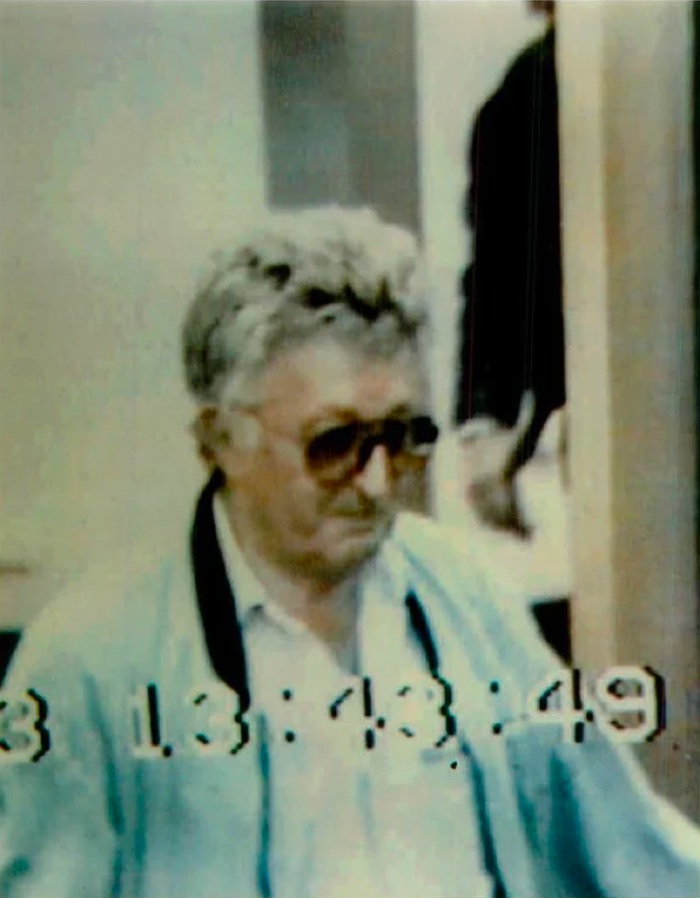
It was led by two very different men. Joseph Di Mambro was the order's true controller — an organizer and manipulator who managed its finances, its structure, and its illusions, and who exercised a guru's authority over the membership. Luc Jouret, a Belgian-born homeopathic doctor, was the charismatic public face: an eloquent, magnetic speaker who lectured on health, spirituality, and the coming apocalypse, and who drew people into the order's orbit through his charm and apparent wisdom. Between them they built a movement that attracted a notably educated and affluent membership — professionals, business people, and others of means and standing — across the French-speaking world, people who found in the order's blend of ancient mystery and cosmic purpose something that answered a deep longing.
The profile of the membership is worth dwelling on, because it demolishes a comforting assumption. The people drawn to the Solar Temple were not, for the most part, the vulnerable and the destitute of the popular imagination of cults; they included doctors, civil servants, business executives, and other successful, educated people, some of them prominent in their communities. This is a pattern that recurs across the most disturbing cult cases — from Heaven's Gate to NXIVM — and it carries an unsettling implication: that the longing for meaning, transcendence, and belonging which such groups exploit is a universal human need, not a weakness of the foolish, and that intelligence and success offer no immunity. The order's members were, in a sense, seekers rather than dupes, and it was the depth of their search that made them vulnerable to a movement that promised to answer it completely.
The belief
The theology at the order's core, like that of Heaven's Gate, made death not a terror but a promise. The Solar Temple taught that the world was approaching an apocalyptic end — an environmental and spiritual catastrophe that would destroy the corrupt Earth. Its members, initiated into the order's secret wisdom, were a spiritual elite who need not perish in that ruin. Instead, they could accomplish a "transit": a voluntary departure from earthly life to a higher plane of existence, often associated with the star Sirius, where they would continue their spiritual evolution in a realm beyond the doomed material world. Death, properly undertaken, was not annihilation but ascent — a passage the faithful could make together to escape the coming destruction and reach a higher home.
This cosmology was embedded in an elaborate structure of secrecy and ritual that deepened members' commitment and their dependence on the leadership. The order was organized into grades and inner circles, with initiations, ceremonies, and regalia drawn from the Templar and esoteric traditions it claimed to inherit, so that advancement through the order felt like progress toward hidden truth and higher spiritual status. Members were bound by oaths of secrecy and drawn into a world apart, with its own rituals, its own hierarchy, and its own sense of being a chosen remnant set against a doomed and uncomprehending outside world. This ceremonial richness was not incidental; it was part of the machinery of capture, giving members a powerful sense of belonging and significance while binding them ever more tightly to the order and its teachings, and making the ultimate teaching — that death was the highest initiation of all — feel like the natural summit of a journey they had been ascending all along.
The unraveling
By the early 1990s, the order was under growing strain, and the pressures that would turn its apocalyptic theology lethal were accumulating. There were financial difficulties and suspicions of exploitation. There were defections, as members grew disillusioned — some having glimpsed the deceptions behind Di Mambro's illusions — and departed, taking with them dangerous knowledge of the order's secrets. There was legal and police scrutiny in more than one country, including attention to the order's activities and to allegations involving weapons. And there was internal paranoia and conflict, as Di Mambro's control frayed and the leadership came to see enemies within and without.

A particular crisis crystallized the leadership's turn toward death. A member of the order, Tony Dutoit, and his wife Nicky had a child against Di Mambro's wishes, and Di Mambro, whose authority rested on his control of who might be spiritually born within the order, came to regard the Dutoit infant as a kind of antichrist — a spiritual threat. This poisonous conviction, combined with the Dutoits' status as defectors who knew too much, marked them for death and helped set the machinery of the October 1994 killings in motion. The apocalyptic theology and the paranoid, murderous logic of a cornered leadership were converging.
October 1994
The horror began in Canada and culminated in Switzerland. In Morin-Heights, Quebec, the Dutoit family — Tony, Nicky, and their infant son — were murdered, the killing of the child reflecting Di Mambro's grotesque conviction about the "antichrist." Then, on the night of 4–5 October 1994, at two sites in Switzerland — a farmhouse at Cheiry and a group of chalets at Salvan — dozens of members of the order died. The deaths were a mixture: some members appear to have died willingly, in the belief that they were undertaking the transit to a higher world; others were killed, shot or drugged; and the scenes were set ablaze, the fires meant, in the order's symbolism, to accompany the departing souls. Among the dead were Joseph Di Mambro and Luc Jouret themselves.
That the October deaths mixed suicide with murder is essential to understanding what the Solar Temple was. This was not a case of a community uniformly choosing to die together. Investigators found evidence that a number of the dead had been killed — shot or subdued — rather than having taken their own lives, and the murdered included dissenters and, most unbearably, children. The transit that the order's theology framed as a voluntary ascent was, for some of the victims, a killing carried out by others, and for the youngest, an act to which no consent was even conceivable.
Vercors and after
The deaths did not end in 1994. Just over a year later, in December 1995, sixteen more members of the order died in the Vercors mountains of southeastern France. Their bodies were discovered in a remote clearing, arranged in a star formation and, again, burned — a grim tableau consistent with the order's cosmology of transit and the star Sirius. Among these dead were three children. And in March 1997, in Saint-Casimir, Quebec, five more members died in a further echo of the same apocalyptic pattern. The Solar Temple's death toll accumulated in these waves across the years, as surviving believers, drawn by the same convictions, followed those who had gone before.
The transnational, drawn-out character of the Solar Temple's deaths set it apart from the single catastrophic events of Jonestown or Heaven's Gate. This was not one moment of collective death but a series, spread over years and borders, which made it in some ways more baffling and more frightening: the conviction that drove it did not exhaust itself in a single night but persisted, drawing new victims across time, even after the founders themselves were dead.
The reckoning and the meaning
The persistence of the deaths across years raises one of the case's most haunting questions: why did later members die even after the founders were gone and the deceptions might have been exposed? The answer lies in the depth of the belief the order had instilled. For those who had genuinely internalized the theology of transit, the deaths of 1994 were not a scandal to be fled but a summons to follow — proof that the elect had begun their departure, and an invitation to complete one's own journey to join them. The Vercors deaths of 1995 and the Quebec deaths of 1997 were, in this sense, the tragic afterlife of a conviction that had outlived its architects, drawing believers onward toward a destination the order had taught them to desire. It is a chilling demonstration that a belief, once truly implanted, can propagate its lethal logic without the continued presence of the manipulator who planted it.
The Solar Temple's deaths shocked Europe and Canada and prompted extensive investigation, but the full truth was hard to reconstruct, because so many of the principals — including the leaders who could have explained it — were themselves among the dead. Investigators pieced together the mixture of suicide and murder, the manipulations of Di Mambro, and the apocalyptic theology that had framed it all, but the case left enduring questions and a lingering horror, especially at the killing of children.
In the end, the Order of the Solar Temple stands as one of the darkest of the modern cult tragedies — a movement that clothed itself in the mystique of the Knights Templar and the promise of a higher world, and that led, across three countries and three years, to the deaths of some 74 people. Its members were not the marginal or the foolish but often the educated and the comfortable, drawn by a longing for meaning into an order whose leaders sustained their devotion with staged miracles and whose theology taught that death was merely a transit to the stars. When the pressures of exposure and decline closed in, that theology turned lethal, and the order's end mixed the suicide of the willing with the murder of the doubting and the innocent — dissenters killed, children slain, an infant destroyed as a phantom antichrist. It was not a single act of collective despair but a drawn-out horror that reached across borders and years, drawing new victims even after its founders were gone. The Solar Temple is the starkest warning of what can happen when an apocalyptic contempt for earthly life meets a manipulative power that claims to hold the door to eternity — and of how, in that terrible alchemy, the promise of transcendence can become a license to kill.
Inspired this / based on it
Various
The case has been examined in numerous European and Canadian documentaries and books.
James R. Lewis (ed.)
Ashgate. A scholarly collection on the movement and its deaths.
Filed under
- #solar-temple
- #joseph-di-mambro
- #luc-jouret
- #cult
- #switzerland
- #quebec
- #apocalyptic
- #religious-movements
- #1990s
- #confirmed
Click any tag for every article carrying it.
Continue reading
Heaven's Gate: The UFO Cult That Died to Reach the Comet
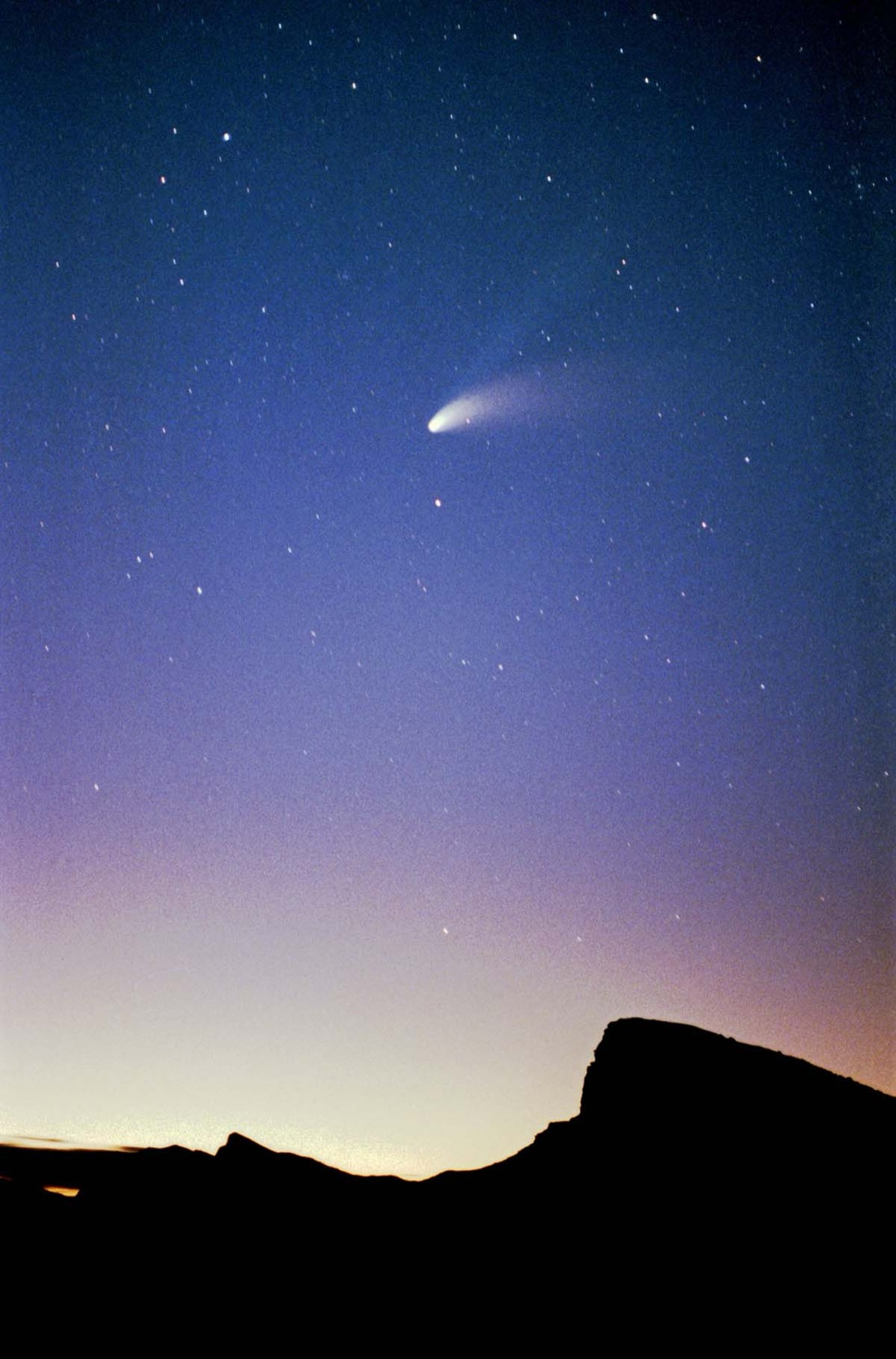
In late March 1997, in a quiet, affluent suburb north of San Diego, thirty-nine members of a group called Heaven's Gate died together in a rented mansion, in one of the most methodical mass deaths in modern history. They were not coerced at gunpoint, and there were no children among them; they were adults, aged from their twenties to their seventies, who shared a belief so complete that they went to their deaths calmly and by their own choice. That belief, strange as it was, had an internal logic. Heaven's Gate held that the human body was merely a temporary 'vehicle' or 'container' for the soul, and that a higher extraterrestrial realm — the 'Next Level,' the 'Evolutionary Level Above Human' — awaited those who were ready to graduate to it. When the bright comet Hale-Bopp appeared in the skies of early 1997, amid rumors that a spacecraft was following hidden in its tail, the group's leader, Marshall Applewhite, concluded that the sign they had awaited for two decades had finally come: a craft had arrived to carry them home. To board it, they believed, they had to shed their earthly bodies. Over three days, in carefully organized shifts, the thirty-nine ended their lives, each dressed identically, each with a small bag packed as if for a journey. They left behind videos and a website explaining, serenely, that they were simply 'exiting their vehicles.' The deaths shocked the world and became a defining case of what a totalizing belief can lead rational people to do. This is the story of Heaven's Gate — not a mockery of the dead, but an attempt to understand how thirty-nine human beings came to believe that dying was the way home.
Jonestown: How a Dream of Justice Became a Massacre
The Peoples Temple did not begin as a death cult. It began, in the 1950s and 1960s, as a church that preached racial integration and social justice at a time when both were radical, that fed the poor and cared for the addicted and the elderly, and that drew to it thousands of idealistic people — many of them Black, many of them poor, many of them sincere seekers of a better and fairer world. At its head was Jim Jones, a charismatic preacher who could speak movingly of equality and who built real influence in California, courted by politicians and admired by progressives. But behind the movement's humane public face, Jones was constructing something else: a system of total control, sustained by manipulation, humiliation, sexual and physical abuse, financial exploitation, and a deepening, drug-fueled paranoia. As scrutiny closed in, he moved his followers to a remote agricultural settlement carved out of the Guyanese jungle — Jonestown — where, cut off from the outside world and utterly under his power, some thousand people lived in isolation and fear. When a United States congressman flew in to investigate reports of abuse, Jones had him murdered at a nearby airstrip. And that same day, 18 November 1978, he set in motion the final act he had long rehearsed: the deaths of everyone in Jonestown. More than nine hundred people died, poisoned with cyanide — many of them forced, many coerced, and more than three hundred of them children who could not consent at all. It was not, for most of the victims, a suicide. It was a massacre. This is the story of how a dream of justice became one of the worst atrocities of its kind in modern history — and of the people who died in it.
Aum Shinrikyo and the Tokyo Subway Attack
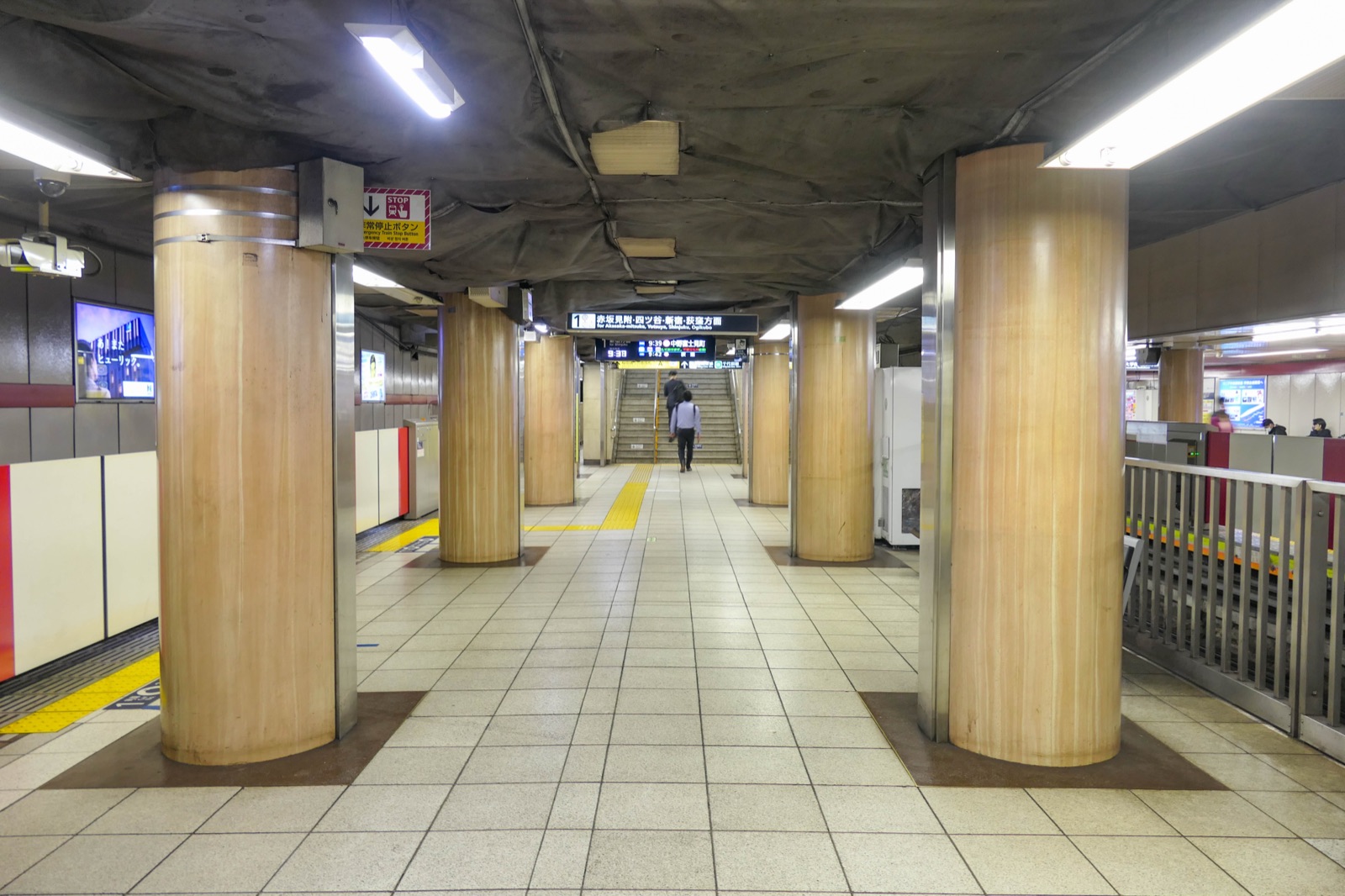
At 7:48 a.m. on Monday, March 20, 1995, five members of the Japanese new-religious-movement *Aum Shinrikyo* boarded five different trains on three converging Tokyo subway lines. Each carried two or three plastic bags wrapped in newspaper, each bag containing approximately 600 milliliters of impure liquid sarin. As the trains approached Kasumigaseki station — the station at the political heart of Tokyo, beneath the National Diet, the Supreme Court, and the major ministries — each man set down his package, pierced the bags with the sharpened tip of an umbrella, and stepped off at the next station. The released sarin evaporated through the morning commute. The first 911 call came at 8:09 a.m. By the time the trains had been cleared, hospitals across Tokyo were processing the largest mass-casualty event in Japanese postwar history: 13 dead (a 14th died of injuries 14 years later), approximately 5,800 injured, of whom approximately 1,000 required hospitalization. The attackers belonged to a cult that, in 1989, had been registered as a recognized religious organization with Japanese authorities, and by 1995 claimed approximately 40,000 members worldwide. Its founder, Shoko Asahara — a half-blind acupuncturist and yoga instructor — had ordered the attack as part of a planned millenarian apocalypse that would establish Aum theocratic rule in Japan. Asahara was executed by hanging on July 6, 2018, together with six other Aum senior figures. The attack remains the single most consequential act of chemical-weapon terrorism by a non-state actor in modern history.