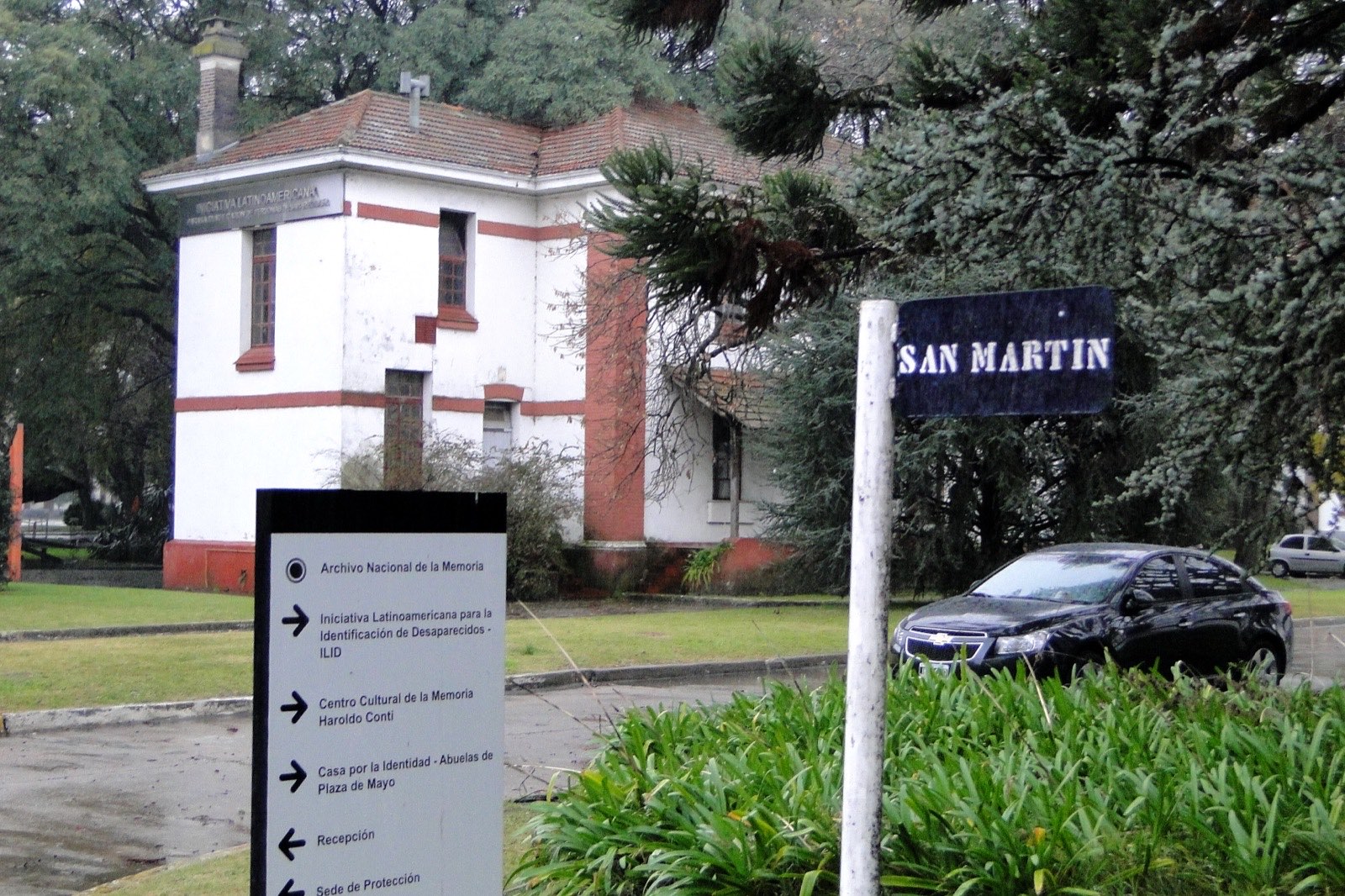
The Escuela de Mecánica de la Armada (ESMA) in Buenos Aires. Roughly 5,000 detainees passed through this building between 1976 and 1983; an estimated 90% were killed. Today it is the Espacio Memoria y Derechos Humanos. Wikimedia Commons, CC BY-SA 3.0.
Argentina's Dirty War
The disappearance state, 1976-1983
- Category
- State & Intelligence Operations
- Published
- Length
- 3,650 words · 17 min read
- Author
- The editors
Argentina's Dirty War
The disappearance state, 1976-1983.
The coup that everyone knew was coming
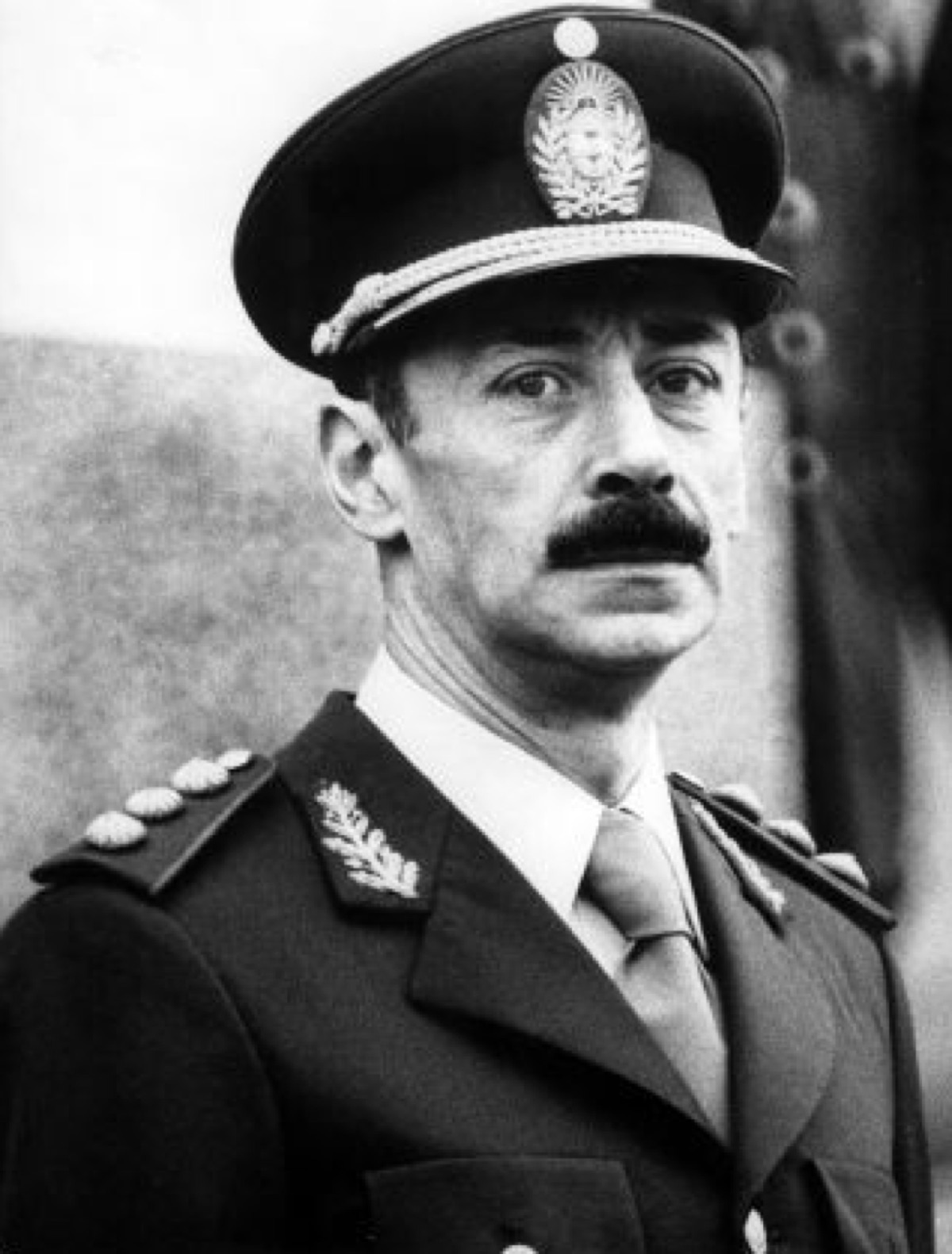
By early 1976, the government of Isabel Perón was in collapse. The third wife of Juan Perón had taken office on July 1, 1974, after her husband's death — the first woman to lead Argentina. She was 43 years old, a former cabaret dancer who had married Perón in 1961, with no political experience of her own. The Peronist movement she nominally led was at war with itself.
Inflation was approaching 600%. Left-wing guerrilla groups — primarily the Montoneros (Peronist left) and the ERP (Trotskyist) — were conducting kidnappings, assassinations, and bombings. Right-wing death squads connected to Peronism's social welfare minister José López Rega — the Alianza Anticomunista Argentina, known as the Triple A — had been killing leftist intellectuals, students, and trade unionists since 1973. Between 1974 and the coup of March 1976, the Triple A killed approximately 1,500 people. This violence preceded the junta; the junta institutionalized it.
The military coup itself, when it came on March 24, 1976, was practically anticlimactic. Tanks rolled into Plaza de Mayo before dawn. Isabel Perón was taken from the Casa Rosada by helicopter and flown to a residence in San Carlos de Bariloche where she would remain under house arrest for five years. By 6:00 a.m., the three- man junta — Videla, Massera, Agosti — had assumed all executive, legislative, and judicial authority. Congress was dissolved. The Supreme Court was dissolved. Political parties were suspended. The 1853 Constitution was suspended.
The U.S. State Department had been notified in advance. A March 16, 1976 cable from Ambassador Robert Hill in Buenos Aires reported that "the coup is now seen as inevitable" and that the junta-to-be had "made it clear that they want to maintain the best possible relations with the United States." The cable is declassified.
The Argentine population was largely relieved. Argentina was, by March 1976, in such disorder that a substantial fraction of the middle class welcomed the military takeover. The polls did not exist to measure this with precision, but contemporary press accounts and subsequent oral histories agree on the shape: the coup was popular in its first months.
The Process
The junta's program had a name: Proceso de Reorganización Nacional ("National Reorganization Process"). It was, in its own framing, not a coup but a restoration — of Christian-Western values, of discipline, of the supposed Argentine national essence that Peronism's mass-politics, the guerrilla violence, and the cultural permissiveness of the early 1970s had supposedly degraded.
The operational instrument was the grupo de tareas, or "task group" — a unit of typically 20-40 plainclothes military or police, operating under a specific service-branch command, that conducted nighttime abductions in unmarked Ford Falcon sedans. The Ford Falcon became, through repetition, a folk symbol of the disappearance: green, white, or grey, no plates, four or five men in plainclothes, brief identification as security services, no warrant, no charge.
The targets were defined broadly. Videla himself, in a 1978 interview with Spanish journalist Pedro Olivera, defined a "subversive" as "anyone who opposes the Argentine way of life." In practice, the grupos de tareas abducted:
- university students with leftist political associations
- journalists who had reported on military abuse
- trade unionists, particularly in the auto, oil, and steel sectors
- psychoanalysts and other mental-health professionals (psychoanalysis was suspected as inherently subversive)
- priests and nuns engaged in teología de la liberación work
- lawyers who had represented detainees of the Triple A or the early junta
- the husbands, wives, parents, and children of people in the above categories — what was termed cargo familiar
The detainees were taken to one of approximately 340 clandestine detention centers (Centros Clandestinos de Detención, or CCDs) that operated across Argentina. The CONADEP report's annex mapped these in detail. They were not, in the strict sense, secret — neighbors knew, local police knew, often national authorities knew. The word "clandestine" referred to their legal status: they were not acknowledged in official records, their detainees were not entered into any registry, the families could not formally inquire about them.
The largest of the 340 was ESMA.
ESMA
The Escuela de Mecánica de la Armada is a long pale-yellow neoclassical building set back from Avenida del Libertador in the wealthy Núñez neighborhood of Buenos Aires. It was, before 1976, a Naval Officer training school. From March 24, 1976 to December 10, 1983, it operated simultaneously as a training school and as the largest single clandestine detention center in Argentina.
The detention operation was concentrated in the building's basement, attic, and a small wing called the Capucha ("Hood"). Approximately 5,000 detainees passed through ESMA over the seven-year period. The survival rate was approximately 10% — meaning roughly 4,500 of those 5,000 detainees were killed.
The killings followed a routine. Detainees were brought to ESMA in unmarked vehicles, hooded, and held in conditions that included permanent shackling, sleep deprivation, daily torture sessions (including electric prods to the genitals, mouth, and eyes), and controlled food deprivation. Torture sessions were conducted in the basement. After a period of detention — typically a few weeks but sometimes months — detainees who had been classified as "irrecuperable" were prepared for "transfer" (traslado).
The word traslado was the institutional euphemism for execution. Detainees were told they were being transferred to a regular prison. They were given an injection of a barbiturate or other sedative, typically pentothal sodium, told it was a vaccination. They were loaded onto a Navy aircraft — a Lockheed Electra or a Skyvan — flown out over the Río de la Plata or the South Atlantic, and dropped from the cargo hold.
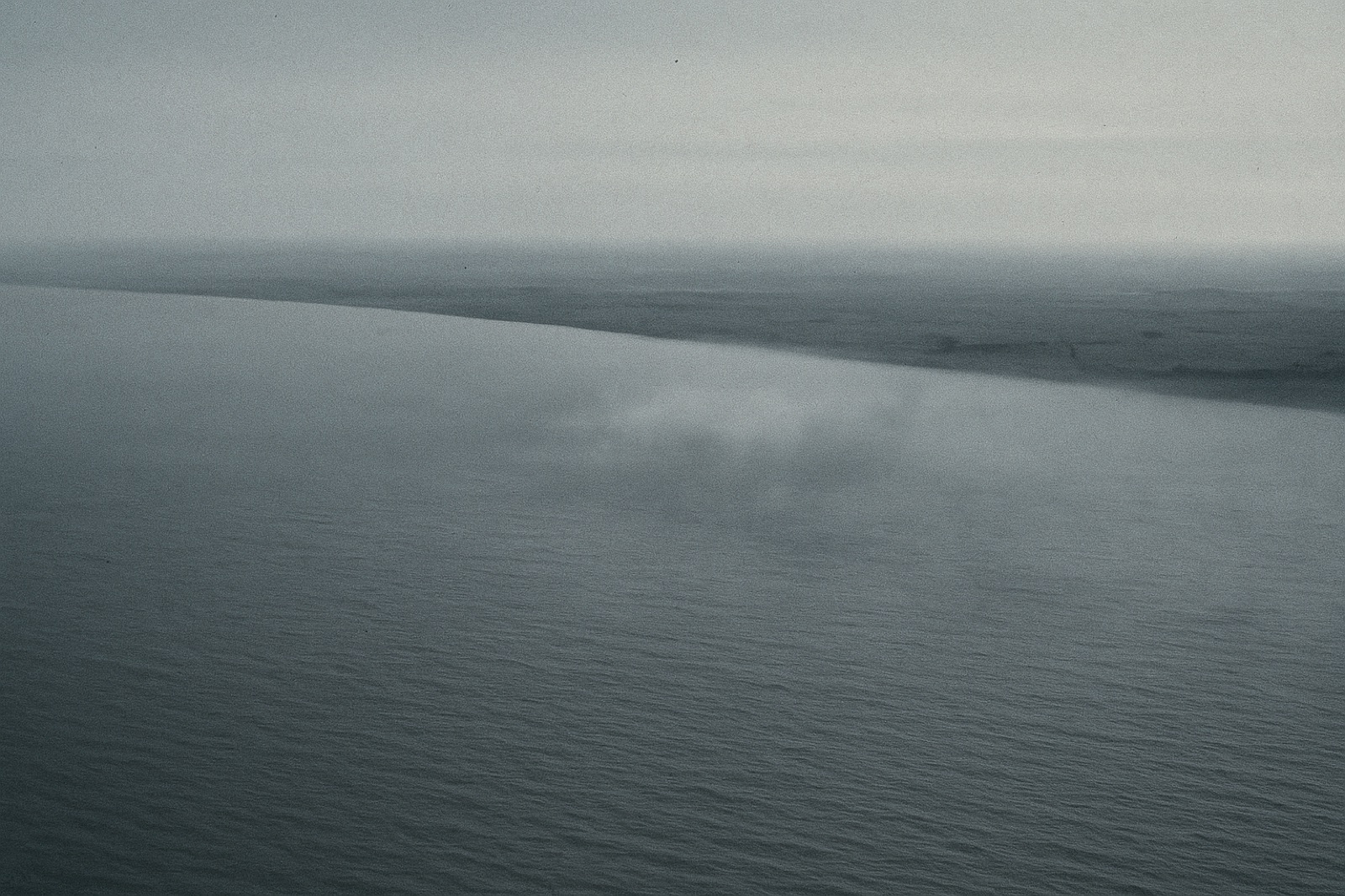
The flights of death — vuelos de la muerte — were not confirmed publicly until March 1995, when former Navy officer Adolfo Scilingo gave a videotaped confession to journalist Horacio Verbitsky for the book El Vuelo. Scilingo described participating in two flights, in 1977, each of which dropped approximately 15-20 detainees. He estimated, based on the operational schedule he had witnessed, that between 1976 and 1978 the Navy conducted approximately 100 such flights, with roughly 1,500-2,000 total victims. Subsequent testimony and document recovery have raised the estimate to between 2,000 and 3,000.
The stolen children
Beyond the killings, the regime ran a systematic program of child appropriation. Pregnant women who were detained — and there were many, since pregnancy did not exempt women from abduction — were typically kept alive long enough to give birth. They were then killed via traslado. The newborns were given, through a network of sympathetic obstetricians and military families, to childless military couples or to families who had assisted the regime.
In addition to babies born in captivity, infants and toddlers who had been detained alongside their parents were also appropriated.
The Abuelas de Plaza de Mayo — the grandmothers organization, distinct from the Madres — was founded in 1977 specifically to locate these children. Their methodology was painstaking: matching DNA from grandparents and other relatives, since the children's own parents were dead and could not be tested; investigating tips about specific families; pursuing court orders for DNA tests when families refused to cooperate.
The total appropriated, by Abuelas estimates, was approximately 500. By 2024, the Abuelas had located 133 of these children, now adults in their forties and fifties. Some chose to maintain their relationships with their adoptive families. Some sought prosecution of the appropriating couples. All faced an identity crisis the specific texture of which the Argentine literature on the case has spent forty years trying to describe.
The Madres
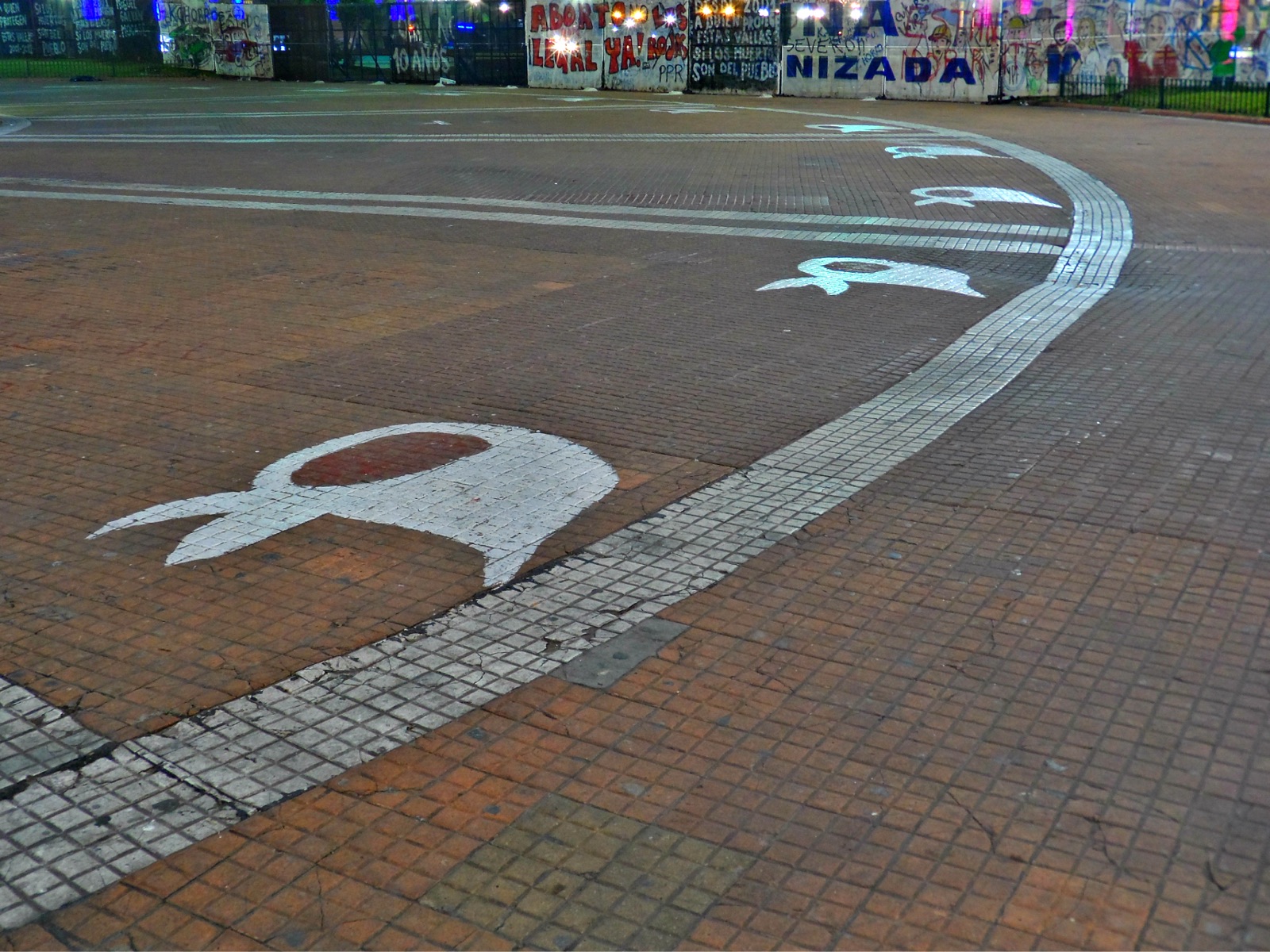
On April 30, 1977 — thirteen months into the junta — fourteen women gathered on the Plaza de Mayo in front of the Casa Rosada. They were mothers and grandmothers of disappeared children. They had been moving through the official channels — police stations, military barracks, court filings — for months. The channels were closed. The police would not register their complaints. The military denied that their children had been detained.
The women had decided, at the suggestion of Azucena Villaflor de De Vincenti — herself the mother of a disappeared 24-year-old son — to gather in the most public place in Argentina, the central plaza facing the presidential palace, and refuse to leave.
The junta had banned public assembly. Groups of more than three were illegal. So the women did something practical: they walked. In small groups of two or three, they circled the central obelisk of the Plaza. They did this slowly. They did this in white headscarves — adopted in 1979 as their public symbol, embroidered with the names of their missing children.
They came every Thursday. They came in winter. They came when the junta arrested three of their founders — Azucena Villaflor, Esther Ballestrino, and María Ponce de Bianco — in December 1977 along with two French nuns, Léonie Duquet and Alice Domon, who had been helping them. The three founders and the two nuns were all disappeared. Their bodies washed up on the Atlantic coast in 1978; they were not identified until 2005.
The Madres came every Thursday anyway.
They became the international face of opposition to the junta. By 1979, the Madres had Amnesty International support; by 1980, they had brought their case to the Inter-American Commission on Human Rights; by 1982, they were a recurring image on European and North American television.
They are still circling the Plaza on Thursdays, today.
What broke the regime
The junta's collapse came not from internal opposition but from a miscalculation of foreign policy: the April 2, 1982 invasion of the Falkland Islands (the Islas Malvinas, in Argentine usage), under Junta Three — the Galtieri junta. The Argentine military had expected that Britain, under a Conservative government with limited military resources, would not contest the invasion. Britain, under Margaret Thatcher, contested it.
The Falklands War lasted ten weeks. 649 Argentine and 255 British soldiers were killed. The Argentine military surrendered on June 14, 1982. Galtieri resigned three days later. The junta lost what little remaining popular support it had retained on the basis of nationalism.
The successor junta, under Reynaldo Bignone, transitioned to elected civilian government. Raúl Alfonsín, of the Radical Civic Union, was elected on October 30, 1983, with 51.7% of the vote. He took office on December 10, 1983.
Within ten days, Alfonsín had signed Decree 187/83 establishing the National Commission on the Disappearance of Persons (CONADEP). He appointed Argentine novelist Ernesto Sábato to chair it.
Nunca Más
CONADEP worked for nine months, taking testimony from 7,000 survivors, exiles, and relatives. The commission documented 8,961 specific cases by name. It identified 365 commanders, officers, and enlisted personnel who had operated detention centers. It mapped approximately 340 CCDs.
The commission's report, titled Nunca Más ("Never Again"), was published on September 20, 1984. It was 50,000 copies in its first print run; by 1985 it was Argentina's best-selling book of non-fiction in any year. It has since gone through more than 30 printings.
The 8,961 figure was, the commission emphasized, a minimum. It represented only those cases for which CONADEP had specific documentary or testimonial evidence. The commission estimated the true figure as several multiples of that. The 30,000 figure widely used by human rights organizations is derived from extrapolation across underreporting estimates plus mass-grave forensic work that has continued for forty years.
Trial of the Juntas
The Trial of the Juntas (Juicio a las Juntas) opened on April 22, 1985 — the largest war-crimes trial in Latin American history. Five of the nine junta members across the three sequential juntas were indicted: Videla, Massera, Agosti, Viola, and Lambruschini.
The trial lasted six months. Prosecutors used the CONADEP report as their evidentiary base. Survivors testified — hundreds of them. The prosecution closed with a phrase from prosecutor Julio César Strassera that became one of the most-quoted sentences in modern Argentine political life: "Señores jueces, nunca más" — "Your Honors, never again."
The verdicts were handed down on December 9, 1985:
- Videla and Massera: life imprisonment
- Viola: 17 years
- Lambruschini: 8 years
- Agosti: 4½ years
- Graffigna, Galtieri, Anaya, Lami Dozo: acquitted
The five convicted were stripped of their military ranks.
The pause and the reversal
The trials did not end with the Junta verdicts. Lower-level prosecutions continued through 1986. They became, for the Alfonsín government, politically destabilizing — the military rebelled three times against ongoing prosecutions, in 1987, 1988, and 1990. Each rebellion forced political concessions.
In December 1986, Alfonsín signed the Ley de Punto Final ("Full Stop Law") — a 60-day deadline for filing new prosecutions, after which no further cases could be brought. In June 1987, after the first military rebellion, Alfonsín signed the Ley de Obediencia Debida ("Due Obedience Law") — which provided that subordinate officers could not be prosecuted because they had been following orders. The two laws together effectively ended prosecutions for all but the most senior commanders.
In October 1989, the newly elected Peronist president Carlos Menem pardoned the remaining military defendants awaiting trial. In December 1990, he pardoned the convicted Junta members. Videla and Massera went home.
This was the situation for thirteen years.
The reversal
In 2003, newly elected president Néstor Kirchner — a Peronist of the left, husband of future president Cristina Fernández de Kirchner — made re-opening the prosecutions a central project of his administration. Congress annulled the Full Stop and Due Obedience laws. The Supreme Court ruled the Menem pardons unconstitutional in 2005.
Within two years, hundreds of former military officers were back in court. By 2024, approximately 1,160 individuals had been convicted of Dirty War crimes — including approximately 350 still serving prison sentences, some in their eighties and nineties.
Videla was reconvicted in 2010 (for the kidnapping of children) and 2012 (for his role at ESMA). He died in prison on May 17, 2013, at age 87, while serving a 50-year sentence.
The cast
What we still don't know
After forty years of trials, three truth commissions, and several generations of investigative journalism, several questions remain open:
The complete death toll. Mass-grave excavations have continued since 1984. The Equipo Argentino de Antropología Forense (EAAF), founded in 1984 and now operating globally, has identified approximately 800 remains by name. Thousands of cases remain unresolved.
The full record of the vuelos de la muerte. Scilingo's confession established the practice but the operational records were destroyed. The total flight count and victim count are extrapolated from his testimony plus that of subsequent witnesses.
The remaining stolen children. Of the estimated ~500 appropriated infants, the Abuelas had located 133 by 2024. The remaining ~360 may be alive in their forties or fifties under names assigned by their appropriating families.
The full U.S. operational role. The Kissinger-Guzzetti memorandum and subsequent declassifications establish foreknowledge and political support. The question of whether the U.S. provided operational intelligence in real time, beyond what has been confirmed, remains partially answered.
Why this is a "confirmed" case
Argentina's Dirty War is one of the most extensively documented state-terror operations of the twentieth century. The CONADEP report, the Trial of the Juntas evidence, the ~1,160 subsequent convictions, and the contemporaneous declassified U.S. State Department record together constitute a body of evidence that any historian of comparable events would consider definitive.
What is sometimes still in dispute, particularly in Argentine political discourse, is the framing: whether the regime's targets were primarily armed insurgents (and therefore the violence was counter-insurgency, regrettable but defensible) or primarily a broad political opposition (and therefore the violence was state terror, indefensible). The documentary record is overwhelmingly clear that the targets were the broad opposition; the framing dispute is a political one, conducted in Argentine media and politics rather than in academic history.
Sources
Primary documents:
- Nunca Más: Informe de la Comisión Nacional sobre la Desaparición de Personas (CONADEP), September 1984. Official Spanish text and English translation widely available.
- Juicio a las Juntas Militares — Trial transcript, Federal Court of Buenos Aires, April-December 1985.
- U.S. State Department, "Argentina: Death and Disappearance" — Declassification Project (1999, 2002, 2016). Available at the National Security Archive.
- Kissinger-Guzzetti Memorandum of Conversation, June 10, 1976. Declassified.
- Adolfo Scilingo videotaped confession to Horacio Verbitsky, 1995. Transcript in El Vuelo.
Secondary investigative reporting: 6. Horacio Verbitsky, El Vuelo (Planeta, 1995). The confession that broke the vuelos de la muerte publicly. 7. Marguerite Feitlowitz, A Lexicon of Terror: Argentina and the Legacies of Torture (Oxford University Press, 1998, revised 2011). 8. Paul Lewis, Guerrillas and Generals: The "Dirty War" in Argentina (Praeger, 2002). 9. Marie-Monique Robin, Escadrons de la Mort, l'École Française (La Découverte, 2004) — the role of French counter-insurgency doctrine in Argentine practice. 10. National Security Archive (George Washington University), "Argentina Declassification Project" — continuously updated since 1999. 11. Página/12 (Argentine newspaper), continuing coverage of the trials, 2003-present. 12. The New York Times, multi-decade coverage 1976-present; key correspondents Juan de Onis, Edward Schumacher, Larry Rohter. 13. CELS (Centro de Estudios Legales y Sociales), annual reports on trial progress. 14. Estela de Carlotto, La historia de Guido, multiple interviews 2014-2024.
Academic scholarship: 15. Antonius C. G. M. Robben, Political Violence and Trauma in Argentina (University of Pennsylvania Press, 2005). 16. Diana Taylor, Disappearing Acts: Spectacles of Gender and Nationalism in Argentina's "Dirty War" (Duke, 1997). 17. Federico Finchelstein, The Ideological Origins of the Dirty War: Fascism, Populism, and Dictatorship in Twentieth Century Argentina (Oxford, 2014).
Corrections & updates
2026-05-25: First publication.
Inspired this / based on it
Luis Puenzo · ★ 7.9
Academy Award for Best Foreign Language Film. The first major Argentine drama about stolen children.
Santiago Mitre · ★ 7.5
Strassera and the Trial of the Juntas. Ricardo Darín. Best Foreign Language Oscar nomination.
Peter Sanders · ★ 7.3
PBS documentary; comprehensive overview with Madres and Abuelas testimony.
CONADEP / Ernesto Sábato
The 50,000-copy first printing made it Argentina's top non-fiction title of 1985. English translation Farrar Straus 1986.
Marguerite Feitlowitz
Definitive English-language scholarly treatment. Oxford UP.
Horacio Verbitsky
The Scilingo confession transcripts. Planeta.
Filed under
- #argentina
- #dirty-war
- #videla
- #massera
- #agosti
- #esma
- #madres-plaza-de-mayo
- #abuelas
- #conadep
- #nunca-mas
- #trial-of-the-juntas
- #operation-condor
- #buenos-aires
- #1976
- #1983
- #latin-america
- #declassified
Click any tag for every article carrying it.
Continue reading
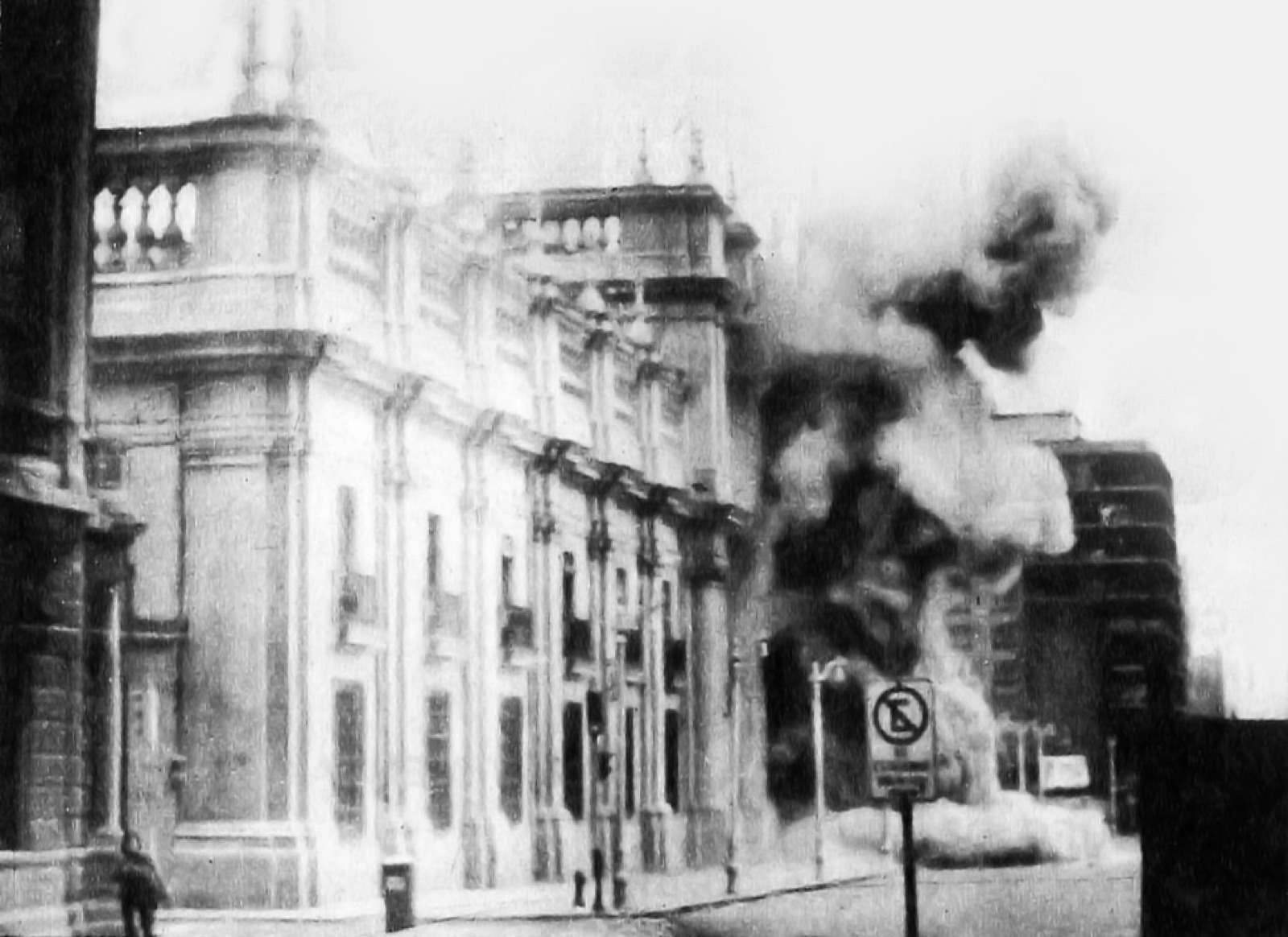
The Pinochet Coup
At 6:00 a.m. on September 11, 1973, the Chilean Navy seized the port city of Valparaíso. By 7:00, the army had blocked the streets of Santiago. By 8:00, all radio stations except two had been silenced. At 11:52, Hawker Hunter jets bombed La Moneda, the presidential palace, while the democratically elected socialist president, Salvador Allende, was inside. Allende was dead by approximately 2:00 p.m. — by his own pistol, a 2011 forensic re-examination confirmed, in the second-floor Salón Independencia under bombardment. The man who replaced him, General Augusto Pinochet, ruled Chile for seventeen years. Between 1973 and 1990, the Chilean state's own subsequent commissions documented 3,200 killed or disappeared and 38,254 imprisoned-and-tortured. The United States, through documents declassified in waves from 1999 through 2023, had been working to remove Allende since before he took office.

Iran 1953 — Operation Ajax
In the summer of 1953, the CIA was six years old. It had never overthrown a government. By August 19 of that year, working with British MI6, it had — and the country it had overthrown was Iran, the prime minister was Mohammad Mosaddegh, and the cause was, almost entirely, oil. The operation was codenamed Ajax. It was authorized by President Eisenhower against the recommendation of his Secretary of State, executed on the ground by a 36-year-old grandson of Theodore Roosevelt, and very nearly failed. The CIA officially acknowledged its role only in August 2013.
COINTELPRO
Between 1956 and 1971, the Federal Bureau of Investigation ran a counter-intelligence program against Americans. Not foreign agents — Americans. The targets were Martin Luther King Jr., Malcolm X, the Black Panther Party, the American Indian Movement, the Students for a Democratic Society, the Communist Party, the Ku Klux Klan, and dozens of others. The methods included blackmail, forged letters, planted informants, and — in at least one documented case — collaboration in a killing. The program stayed secret until eight people walked into an FBI office in Pennsylvania on the night of a heavyweight title fight.