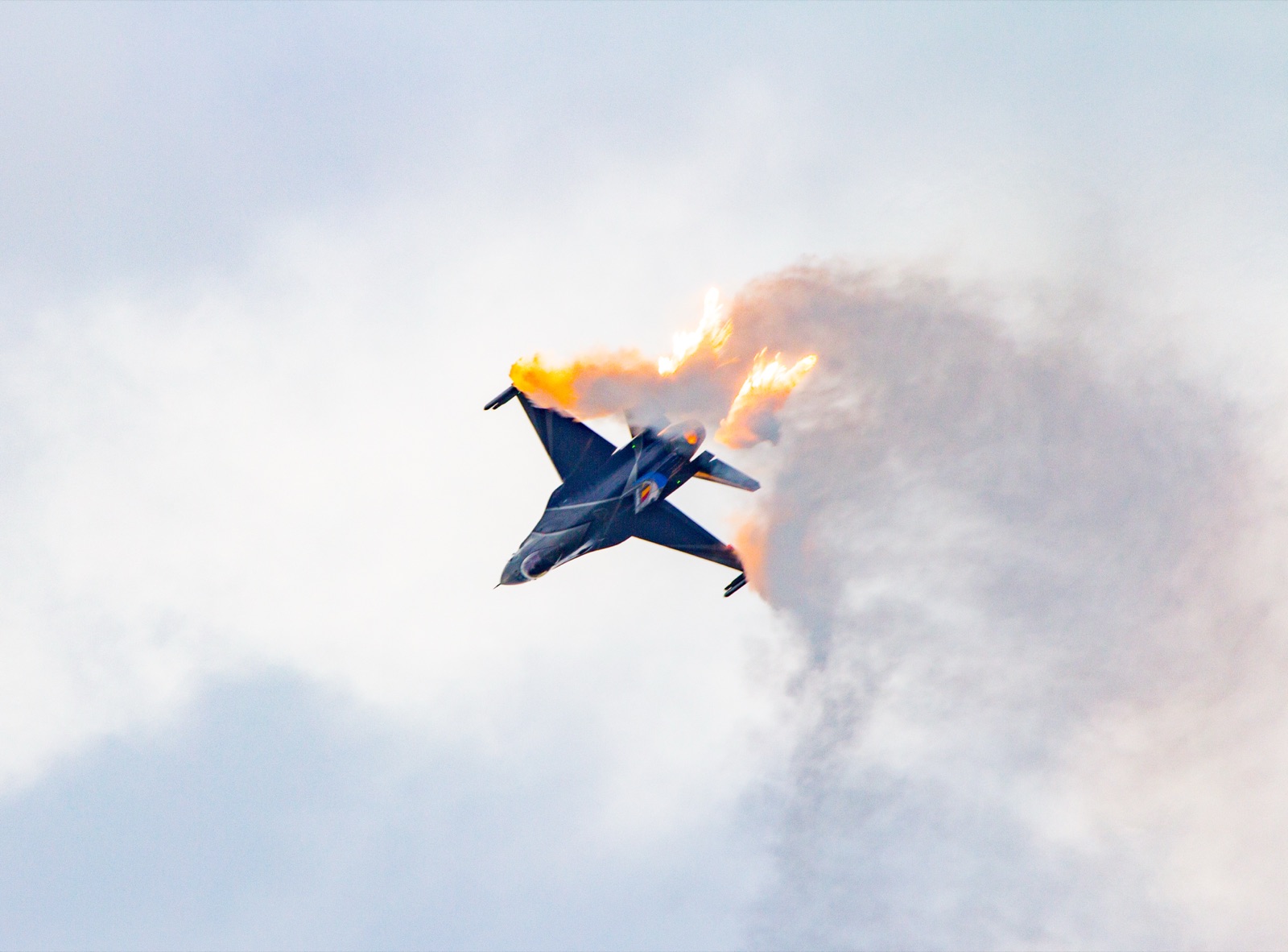
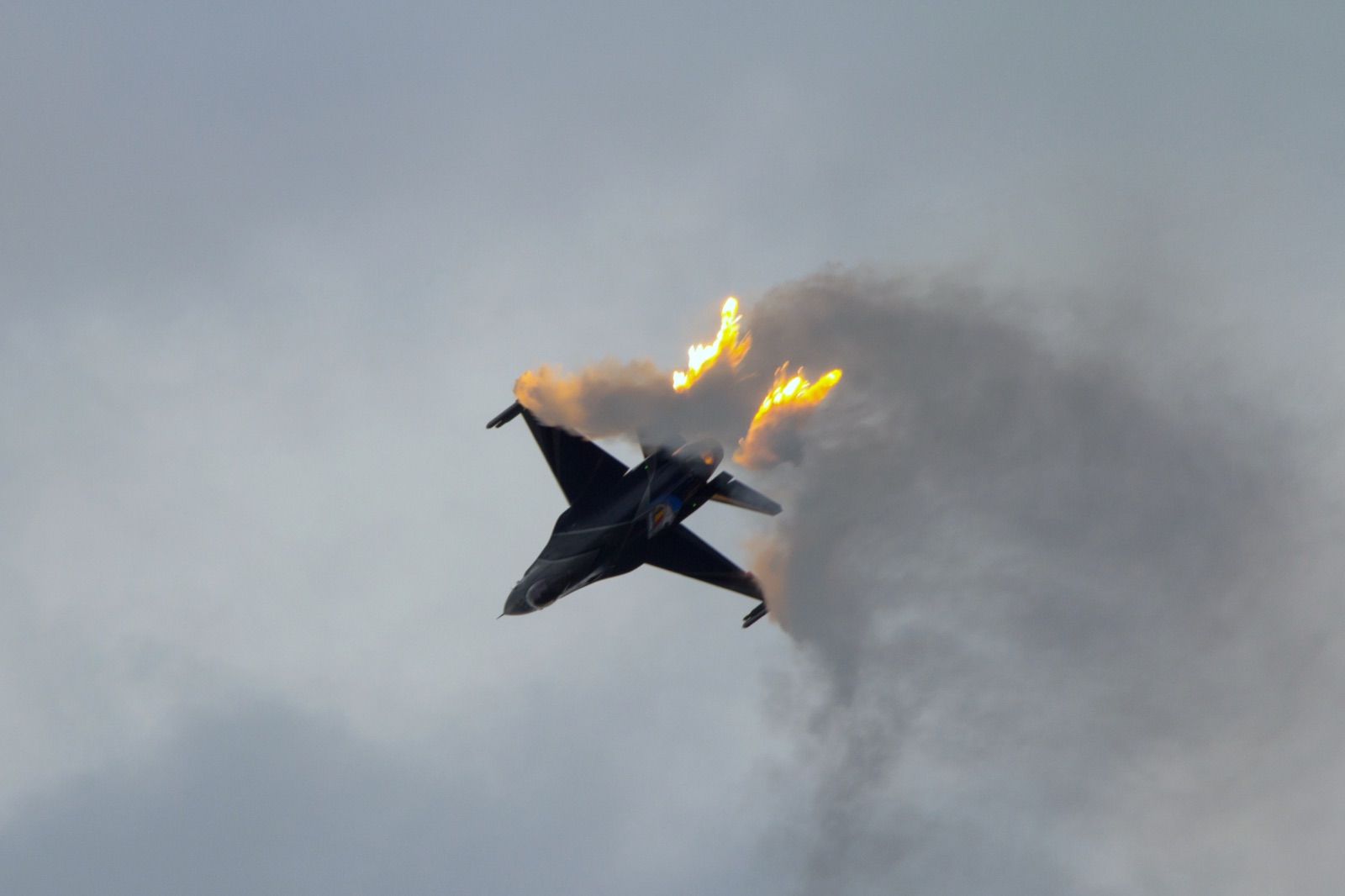
A Belgian Air Force F-16 — the type scrambled on the night of 30–31 March 1990 to chase the radar contacts of the Belgian UFO wave. The pilots got fleeting radar locks but saw nothing they could identify. Wikimedia Commons / Clemens Vasters, CC BY 2.0.
The Belgian UFO Wave: The Triangles Over Wallonia
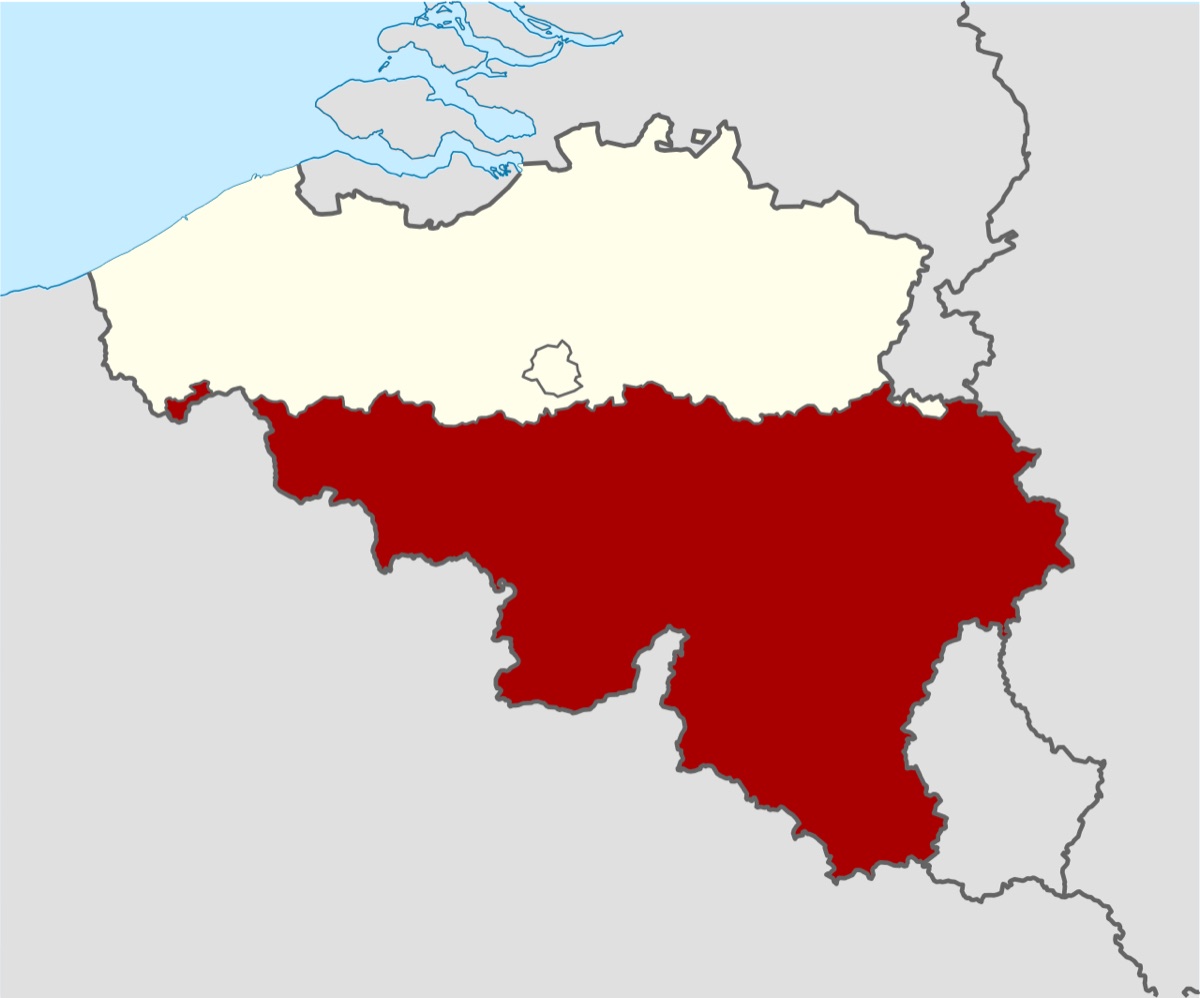
Belgium, 1989–1990 — For six months, thousands of people across eastern Belgium reported a silent, triangular craft in the night sky. Police watched it, fighter jets chased it, and the air force admitted it could not explain what happened. It remains one of the best-documented and most debated UFO episodes in Europe
- Category
- Space & UFOlogy
- Published
- Length
- 3,550 words · 18 min read
- Author
- The editors
The Belgian UFO wave occupies an unusual place in the long history of the subject. It is neither a single dramatic incident, like the lights over a forest on one strange night, nor a diffuse folk tradition built up over decades. It is a concentrated outbreak — six months of intense, overlapping reports across a defined region — that happened to unfold in a country whose military chose, almost uniquely, to take the phenomenon seriously and to say so publicly. That openness is what gives the case its peculiar weight. When an air force general goes on the record to say that his fighters chased something his radar could not explain, the episode acquires an official texture that most UFO stories never have. And yet the same case contains, at its very heart, an admitted fraud: the photograph that became its symbol was a deliberate hoax. To weigh the Belgian wave honestly is to hold both of these facts at once, and to resist the pull toward either easy belief or easy dismissal.
This is the story of the triangles over Wallonia.
A light over Eupen
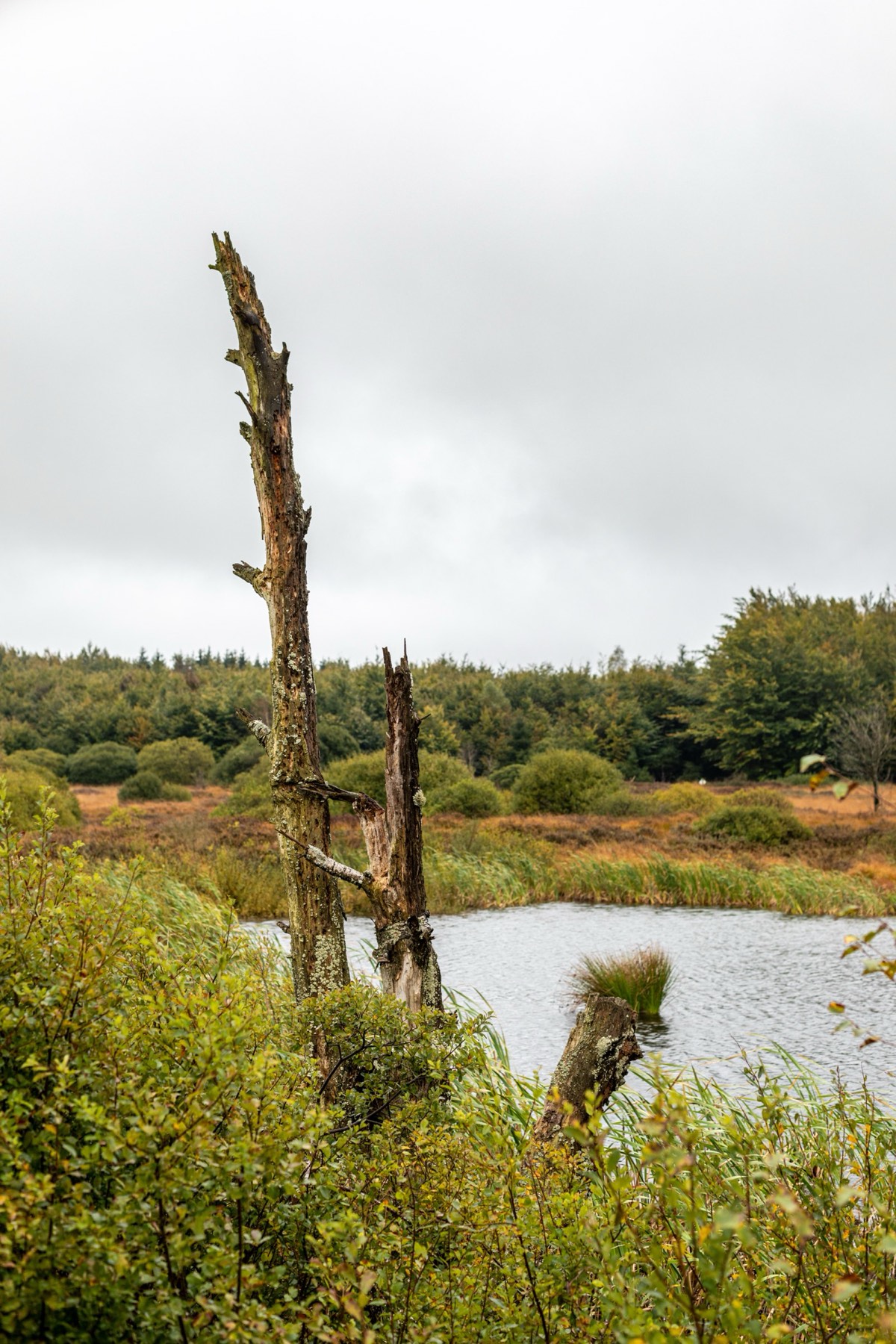
The first sighting that entered the record came on the evening of 29 November 1989, near Eupen, a small town in the hilly, forested country of the High Fens on Belgium's eastern edge, close to the German border. Two gendarmes on patrol — trained observers, the kind of witnesses whose testimony carries extra weight precisely because it is their job to notice and report accurately — described a large object moving slowly and without sound above a field, illuminated by three powerful white lights arranged in a triangle, with a red light pulsing at its centre. They said it hovered, drifted, and eventually moved off toward a nearby reservoir. Over the same evening, dozens of other reports came in from the same area, many describing the same configuration of lights.
What is notable about the Eupen reports, and about the wave that followed, is their consistency. Where many UFO accounts are wildly various — discs, cigars, spheres, coloured orbs — the Belgian reports converged, again and again, on a single form: a large, dark, triangular or boomerang-shaped object, silent or nearly so, moving slowly at low altitude, marked by bright lights at its points and often a central light. This consistency is genuinely striking, and it cuts two ways. To believers, it suggests a single real craft seen repeatedly by independent witnesses. To skeptics, it suggests something more troubling and more human: that once the first vivid description was reported and repeated in the press, it became a template, a shape that subsequent witnesses — sincerely, without any intent to deceive — fitted their own ambiguous night-sky sightings into. Both readings would recur throughout the wave.
A wave, and the men who counted it
From that first November evening the reports spread and multiplied. Over the following months they came in from across eastern and central Wallonia — from towns, villages, roadsides, and back gardens — with peaks of activity that could produce scores of sightings in a single night. The civilian organisation that took on the task of collecting and analysing them was SOBEPS, the Société Belge d'Étude des Phénomènes Spatiaux, a Brussels-based group of enthusiasts and researchers who had studied such matters for years. SOBEPS deployed observers, gathered and cross-checked witness statements, and would eventually publish two substantial volumes, Vague d'OVNI sur la Belgique, documenting the affair in exhaustive detail. By their count, the wave generated on the order of two thousand reports, of which they judged several hundred to be difficult or impossible to explain in conventional terms.
It is worth being clear-eyed about what a figure like "two thousand reports" does and does not establish. A large number of independent witnesses reporting a broadly similar thing is genuine evidence that something was being seen — that this was not the fantasy of a single unreliable person. But the number says nothing, in itself, about what was seen. Thousands of sincere people can be looking at aircraft, stars, planets, helicopters, or lights they cannot place, and — primed by news coverage and by one another — can describe them in strikingly similar terms. The psychology of a UFO wave is well studied: an initial report, amplified by the press, raises the salience of the night sky, sends more people out to look, and lowers the threshold at which an ambiguous light becomes "the triangle." This does not mean every Belgian witness was mistaken. It means that the sheer volume of reports, impressive as it is, cannot by itself carry the weight that believers sometimes place on it.
The air force that answered
The feature that truly sets the Belgian wave apart is the response of the Belgian military. In most countries, and through most of the history of the subject, official bodies have treated UFO reports with a mixture of embarrassment, secrecy, and dismissal. The Belgian Air Force did almost the opposite. It engaged with SOBEPS, shared information, and — through figures such as Colonel (later General) Wilfried De Brouwer, who headed the air staff's operations at the time — spoke about the affair openly and without ridicule. When the air force could explain a sighting, it said so. When it could not, it said that too. This transparency is genuinely rare, and it is the reason the Belgian case is taken more seriously than most, even by cautious observers. It is much harder to wave away an episode when a serving air-force general is willing to state, on the record, that his service investigated it and came away without an answer.
The night of the F-16s
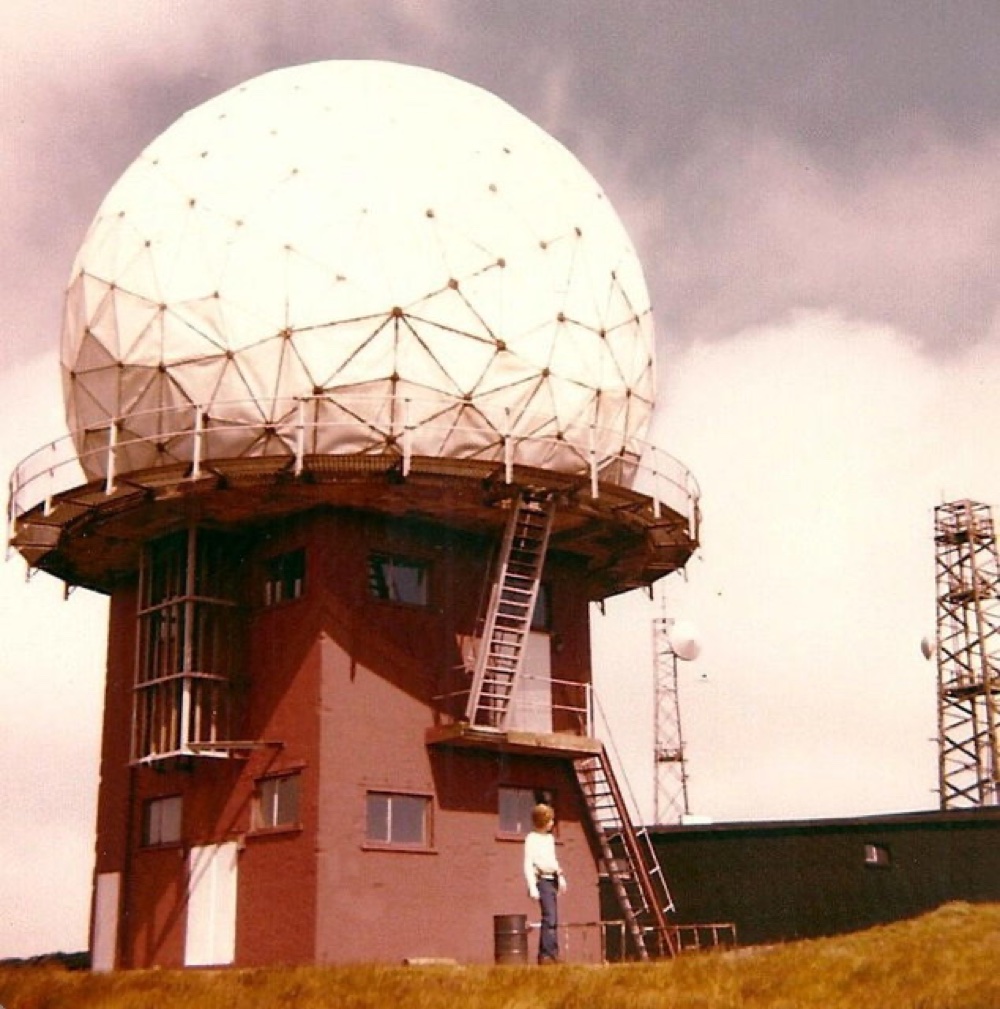
The centrepiece of the whole affair, and the part that remains most genuinely contested, is the night of 30 to 31 March 1990. That evening, Belgian ground radar stations reported unidentified contacts, and reports came in from the ground — including, again, from gendarmes — of unusual lights in the sky. Acting on these, the air force scrambled two F-16 fighters from the base at Beauvechain to investigate. Over the course of about an hour, the pilots attempted to intercept the radar contacts. On several occasions their onboard radar achieved a lock on a target, but each lock lasted only seconds before the contact broke away. The recorded radar data, when later analysed, appeared to show targets making extraordinary changes of speed and altitude — accelerations and dives that, taken at face value, no conventional aircraft of the era could have survived. Crucially, though, the pilots never obtained a reliable visual identification: they saw lights they could not connect confidently to the radar returns, and they came home having chased something they could not see.
The air force did not overstate what it had. In its public accounting, it acknowledged the radar contacts, described the intercepts honestly, and declined to declare that anything extraordinary had been proven. What it would not do — and this is the crux — was pretend to an explanation it did not have. The events of that night were logged, analysed, and left, in the official telling, unexplained. That careful honesty is precisely why the case cannot be dismissed as easily as many, and precisely why it also cannot be claimed as proof of anything.
The radar, reconsidered
In the years since, the 30–31 March episode has been picked apart by investigators on all sides, and the prosaic candidates have grown more substantial. Physicists and analysts who examined the radar data pointed to the powerful role of atmospheric temperature inversions over Belgium that night, which can generate spurious radar returns and produce exactly the sort of "impossible" jumps in apparent speed and altitude that so impressed early commentators. The fleeting nature of the F-16 locks — a few seconds each, never a sustained track — is consistent with a radar system chasing artefacts rather than a solid, manoeuvring craft. And the absence of any reliable visual contact, from pilots flying directly toward the returns on a clear-ish night, is a serious problem for the idea that a large physical object was present where the radar said it was.
One further prosaic candidate deserves mention, because it circulated widely at the time: the idea that the triangles were secret military aircraft — American stealth prototypes, perhaps the F-117 Nighthawk, then still shrouded in secrecy, or some rumoured triangular successor being tested over Europe. It is an appealing theory, because it would explain the odd shape, the reticence, and the official interest in one stroke. But it does not survive scrutiny. The F-117 is a small, fast-moving strike aircraft, not a large object that hovers silently at low altitude; and the United States firmly denied conducting any such overflights of Belgian airspace, a denial the Belgian authorities accepted. No secret triangular aircraft matching the reports has ever been shown to exist, then or since. The stealth explanation, in other words, trades one mystery for another and is not supported by the evidence — a reminder that a prosaic-sounding theory is not automatically the correct one, and must clear the same evidential bar as any other.
None of this amounts to a tidy, agreed solution, and it would be dishonest to pretend otherwise. Some who studied the data, including officers involved at the time, remained convinced that the radar behaviour was not fully accounted for by inversions and clutter, and the raw question — what, if anything, physical was in the sky that night — has never been closed to universal satisfaction. But the balance of the evidence has shifted, over the decades, away from the extraordinary and toward the mundane: a night of jittery radar in unstable air, a pair of fighters chasing ghosts, and a set of returns that look far less decisive in careful hindsight than they did in the excitement of the moment. That is not a thrilling conclusion, but it is a defensible one, and intellectual honesty requires giving it its due.
The photograph, and the confession
If the F-16 night is the case's most serious episode, a single photograph became its most famous artefact. Taken in April 1990 at Petit-Rechain, a locality near Verviers, it showed a dark triangle against a black sky, with three glowing lights at its corners and a smaller light at its centre — the exact configuration the witnesses had been describing. Sharp, striking, and endlessly reproduced, the Petit-Rechain photograph became the visual shorthand for the entire Belgian wave, printed in books, magazines, and documentaries around the world. For years it was analysed by researchers who could find no obvious sign of fakery and who treated it as among the better UFO photographs in existence.
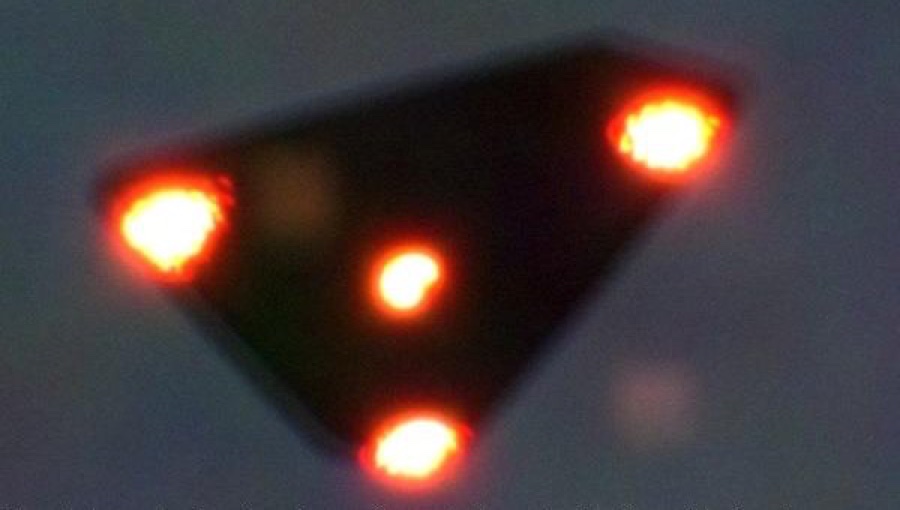
Then, in 2011, the story collapsed. The man who had taken the picture — he gave his first name as Patrick in a Belgian television interview — confessed that the whole thing had been a hoax, a joke made with a piece of expanded polystyrene painted black, fitted with small lights, and photographed. He had, he said, been astonished and then embarrassed at how seriously his prank had been taken, and how far and how long it had travelled. With that confession, the single most reproduced image of the Belgian wave — the picture that, for millions of people, simply was the Belgian triangle — was revealed as a deliberate fabrication that had fooled experts for two decades.
What remains
Three decades on, what survives of the Belgian UFO wave is not a craft, a crash, or a captured object, but a peculiarly well-documented uncertainty. The reports were real in the sense that thousands of people sincerely reported them; the military engagement was real, logged, and openly discussed; the radar contacts of 30–31 March were recorded and remain imperfectly explained; and the photograph that came to stand for it all was, in the end, a fake. General De Brouwer, long after his retirement, continued to say that the events were real and unexplained, and he was careful never to claim more than that — never to say that Belgium had been visited, only that his service had encountered something it could not identify. That measured stance is, in a way, the truest legacy of the whole affair.
The most likely reading of the Belgian wave, taken as a whole, is not dramatic. A genuine cluster of unusual sightings — perhaps seeded by misidentified aircraft, helicopters, or lights, perhaps by something never pinned down — was amplified by press coverage into a months-long social phenomenon, in which a consistent "triangle" template shaped how ambiguous lights were seen and described. Into this atmosphere came a night of anomalous radar in unstable air, honestly reported and never fully resolved, and a hoaxed photograph that gave the whole thing an unforgettable face. What the case does not offer, despite its fame, is any physical evidence of an extraordinary craft. What it offers instead is something rarer and, in its way, more valuable: a fully documented example of how a UFO wave is built — out of sincere witnesses, real instruments, an unusually honest military, the contagious power of a shared image, and at least one person having a laugh with a piece of painted foam.
In the end, the Belgian triangles endure not as a solved case and not as a proven visitation, but as one of the most instructive episodes in the whole subject — precisely because so much of it was done right. Honest witnesses reported what they saw; a rare and honest military looked into it and admitted the limits of what it knew; careful analysts later found prosaic candidates for the radar behaviour and exposed the hoax at the photograph's heart. What is left is a hard, humbling residue: a night of unexplained radar over a country that, for once, refused to pretend it had all the answers. The triangles over Wallonia never landed, never left wreckage, never resolved into anything a person could hold. They remain what they were on those long winter nights — lights in the dark that many people saw, that a few instruments recorded, and that no one, then or now, has been able to name with certainty. And in the gap between what was seen and what can be proven lies the whole difficulty, and the whole fascination, of the subject.
Inspired this / based on it
SOBEPS
The two-volume study by the Belgian civilian research group documenting the wave.
Various
The episode was widely covered in television documentaries, which spread the Petit-Rechain photograph before its 2011 hoax confession.
Filed under
Click any tag for every article carrying it.
Continue reading
The Rendlesham Forest Incident: Britain's Most Famous UFO Case
In the last week of December 1980, in Rendlesham Forest on the coast of Suffolk in eastern England, something happened that has been argued over ever since. The forest lay between two adjacent airbases, RAF Woodbridge and RAF Bentwaters, then used by the United States Air Force at the height of the Cold War, and it was American servicemen stationed there who became the witnesses to what is now often called 'Britain's Roswell.' In the small hours of 26 December, security personnel at the base saw strange lights descending into the forest, and, thinking an aircraft might have crashed, went in to investigate. What they reported finding — a metallic, structured craft with lights and strange markings, hovering or resting among the trees — became one of the most famous UFO accounts in the world. Two nights later the base's deputy commander, Lieutenant Colonel Charles Halt, led his own investigation into the forest and recorded it on tape as it unfolded, describing pulsing lights and objects in the sky. His subsequent official memorandum, released years later under freedom-of-information laws, gave the case a documentary weight that few UFO stories possess. And yet the incident has a strong and well-argued mundane explanation, centered on a nearby lighthouse, a bright meteor, and misperceived stars — an explanation the witnesses have always rejected. This is the story of what happened in Rendlesham Forest, and of why, more than four decades later, it remains unresolved.
The Phoenix Lights: The Mass Sighting Over Arizona
On the evening of 13 March 1997, thousands of people across the American state of Arizona looked up and saw something they could not explain. Reports poured in from a corridor hundreds of kilometers long, from near the Nevada border down through the city of Phoenix and on toward Tucson, and they described, in fact, two distinct phenomena. The first, earlier in the evening, was a huge V-shaped or triangular formation of lights that moved slowly and silently southward across the sky; many witnesses insisted it was not a group of separate lights at all but a single, enormous solid craft, so large it blotted out the stars as it passed overhead. The second, later that night, was a row of brilliant lights that appeared to hover over the Phoenix area and then winked out one by one. Together these became known as the Phoenix Lights, one of the largest mass UFO sightings in modern history. In the years since, the two events have followed very different paths. The later lights over Phoenix have a firm and well-supported explanation. The earlier V-formation does not, and remains genuinely debated to this day. And the story gained a strange twist when the state's governor, Fife Symington, who had at first responded to the sightings with a mocking joke, publicly reversed himself a decade later and admitted that he, too, had seen the craft that night — and believed it was something not of this world. This is the story of the Phoenix Lights, of what can be explained and what cannot, and of a governor's change of heart.
Project Blue Book: The Air Force's Long Study of UFOs
In the years after 1947, when the sighting by Kenneth Arnold and the events at Roswell launched the modern UFO era, the United States Air Force found itself confronting a steady stream of reports of unidentified objects in the sky — some from credible witnesses, some tracked on radar, all demanding some kind of official response in the anxious atmosphere of the early Cold War. The Air Force's answer was a series of official investigations, culminating in the longest and most famous of them: Project Blue Book, which ran from 1952 until 1969 and became the definitive government study of UFOs of its era. Over those seventeen years, Blue Book collected and examined more than twelve thousand reported sightings, seeking to determine what people were seeing and whether any of it threatened national security or represented technology beyond human capability. Its investigators concluded that the overwhelming majority of sightings had ordinary explanations — misidentified aircraft, weather balloons, stars and planets, atmospheric effects, and hoaxes — and that none of the cases provided evidence of extraterrestrial vehicles. Yet Blue Book also left behind a residue of several hundred cases that it could not explain, and it became the focus of a lasting controversy: was it a serious scientific effort that reached an honest, if unexciting, conclusion, or was it, as critics including its own scientific consultant came to argue, more a public-relations exercise designed to explain sightings away and reassure the public than to study them seriously? This is the story of Project Blue Book, of what it found and what it did not, and of the argument over how a government should investigate the unknown.