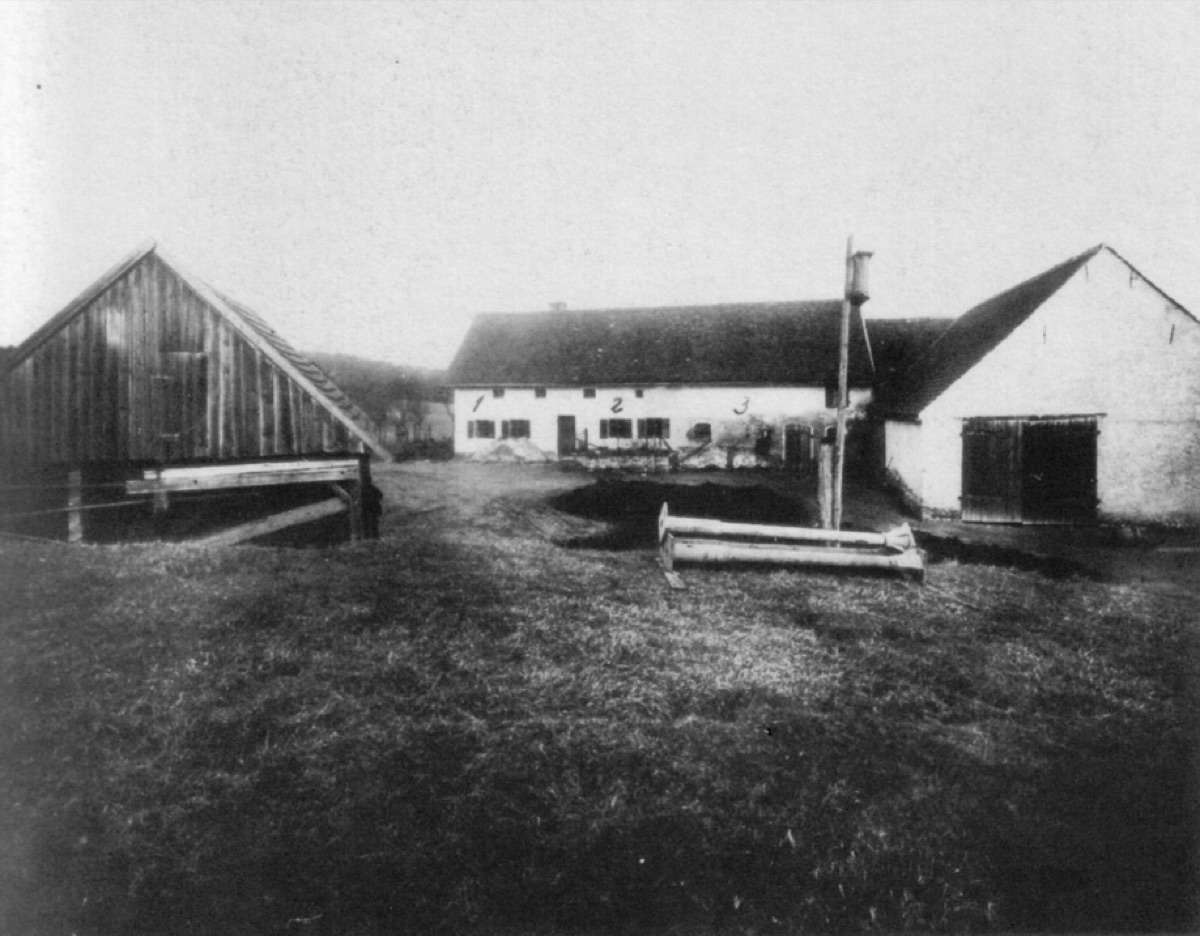
The Hinterkaifeck farmstead in Bavaria, photographed around the time of the murders in 1922. On this isolated farm, set apart from the nearest village, an entire household of six was killed — and the crime was never solved. Wikimedia Commons / Public domain.
Hinterkaifeck: The Farm Murders That Were Never Solved
Germany, 1922 — Six people were murdered on an isolated Bavarian farmstead, and the killer appears to have stayed on for days afterward, tending the animals and the fire. A century later, despite hundreds of suspects, no one has ever been brought to justice
- Category
- Assassinations & Disappearances
- Published
- Length
- 3,550 words · 19 min read
- Author
- The editors
The Hinterkaifeck murders are a special kind of horror among the world's unsolved mysteries: intimate, domestic, and claustrophobic, the slaughter of a single household on a lonely farm, surrounded by details so strange that they seem to belong to a ghost story rather than a criminal case. The premonitory signs the farmer reported, the killer who lingered for days among the dead, the century of failed investigation — each element deepens a sense of dread that the passage of a hundred years has not dispelled. Approached carefully, the case is also a study in how a real and terrible crime, left unsolved, gathers around itself a fog of theory and legend. What follows tries to hold to what is documented, to treat the six victims with the dignity their deaths deserve, and to be honest about how much remains, and will likely always remain, unknown.
This is the story of the farm where six people died.
The farm and the family
Hinterkaifeck was not a village but a single farmstead, a cluster of farm buildings standing alone in the countryside of Upper Bavaria, between the villages of the district, set apart from its neighbors by fields and a stretch of forest. Its isolation — the nearest farms were some distance away, and the place could not be seen from the road — is central to the whole story, for it meant that whatever happened there happened unobserved, and that a household could be destroyed without a sound reaching anyone in time.

The household numbered six. Andreas Gruber, in his early sixties, was the head of the farm, a man with a reputation in the area as harsh and difficult. His wife Cäzilia was in her early seventies. Their daughter Viktoria Gabriel, in her mid-thirties, was a widow: her husband, Karl Gabriel, had reportedly been killed in the First World War in 1914, though — a detail that would later matter — his body had never been recovered. Viktoria had two children, seven-year-old Cäzilia and two-year-old Josef. The family's life was marked by dark undercurrents: years earlier, Andreas and Viktoria had been convicted of incest, and there were persistent local rumors about the parentage of the children, shadows that would later feed the theories about the murders. The sixth member of the household was the newcomer, Maria Baumgartner, a maid who had arrived to take up her position at the farm only that very day — the previous maid having left some months before, reportedly because she believed the farm was haunted.
The signs before
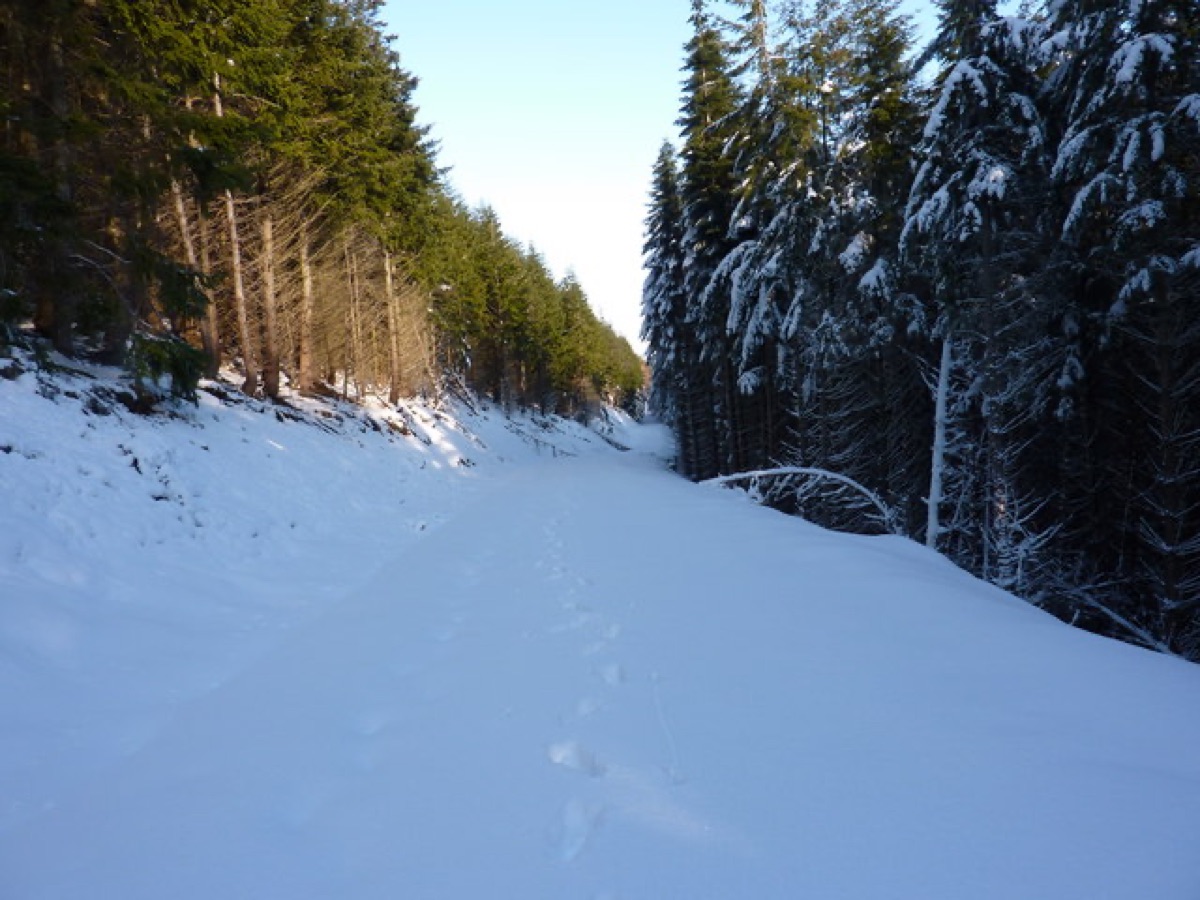
What lifts Hinterkaifeck out of the ordinary annals of crime, and into the realm of the uncanny, is the series of strange events the farmer described in the days and weeks before the murders. Andreas Gruber told neighbors of things that disturbed him. In the snow, he had found footprints leading from the edge of the forest to the farm — but none leading back, as though whoever made them had come to the farm and not left. He had heard footsteps in the attic above the house, and when he searched, found no one, though he believed someone was there. A set of house keys had gone missing. He had found a newspaper on the property that no member of the household had bought or brought home. There were scratching sounds, and marks on the buildings. Something or someone, he felt, was around the farm.
Crucially, Andreas Gruber did not report any of this to the police. In the rural Bavaria of 1922, a farmer was inclined to handle his own affairs, and perhaps he did not take the signs seriously enough, or did not wish to invite official attention to a household already touched by scandal. Whatever his reasons, the warnings went unreported, and no one came to watch over the farm. Within days, everyone in the household was dead.
The night of the murders
On the evening of 31 March 1922, the killing took place. The reconstruction that investigators pieced together, from the positions of the bodies and the evidence at the scene, suggested a methodical and appalling sequence. Four members of the family — the elder Grubers, Viktoria, and the little girl Cäzilia — were killed in the barn, apparently lured or brought there one or a few at a time and struck down with the mattock as they came. Then the killer entered the house, where the two who remained were killed: the toddler Josef, in his cot in the room he shared with his mother, and the maid Maria Baumgartner, in her own small room. By the end, all six were dead, killed with the same brutal farming tool.

The choice of weapon and method told investigators something, though not enough. A mattock was an ordinary tool found on any farm, not a weapon someone would normally carry, which suggested either a killer who seized what was at hand or one familiar enough with the farm to know what he would find there. The killings showed a terrible deliberateness rather than a frenzy, and there was no sign of the desperate disorder of a robbery gone wrong. Indeed, robbery was effectively ruled out: a substantial sum of money was later found in the house, untouched. Whoever killed the household of Hinterkaifeck had not come for money.
The killer who stayed
The most extraordinary and frightening feature of the case is what appears to have happened after the murders. The killer did not flee. Instead, the evidence strongly suggested that someone remained at the farm for several days following the killings, living among the dead. The livestock had been fed and cared for during those days. The family dog, found alive, had been looked after. Neighbors reported seeing smoke rising from the farm's chimney, and there were signs that someone had eaten meals in the kitchen and moved about the house. For perhaps three or four days, while six bodies lay in the barn and the house, someone kept the farm running as if nothing had happened.
This grim domestic continuity is what gives Hinterkaifeck its singular dread. Most murderers flee; this one settled in. Whether it was an act of stunning composure, of madness, of someone with nowhere else to go, or of someone who felt entitled to be there, no one can say. But it deepens the impression of a killer with a personal connection to the farm — someone for whom remaining was not unthinkable. It also explains why the discovery was so delayed, since the smoke and the tended animals made the farm appear normal from a distance, and gave no alarm to the neighbors who glanced toward it.
The discovery
It was the household's failures to appear in the wider world that finally raised concern. The seven-year-old Cäzilia did not come to school. Andreas Gruber was not seen at church or in the village. The post and errands went unattended. After several days of this silence, on 4 April 1922, a few neighbors went to the farm to investigate. There they made the terrible discovery: the bodies in the barn, stacked and covered, and the others in the house. The household of Hinterkaifeck had been wiped out, and had lain dead for days while, it seemed, someone went on living there.
The hunt for the killer
The investigation was vast and, by the standards of the time, thorough, but it was hampered from the start. The crime scene was compromised: the neighbors who discovered the bodies, and the crowds and investigators who came afterward, moved through the farm and even, by some accounts, handled the bodies, before modern forensic discipline could be applied. Police questioned enormous numbers of people over the years and pursued many theories, but no conclusive physical evidence ever tied a specific person to the murders, and the case resisted every effort to close it.
Several theories and suspects have dominated the long aftermath, and they must be described carefully, because no one was ever charged or convicted, and the dead cannot defend themselves any more than the accused. One line of suspicion fell on a neighbor who was among those involved in the discovery of the bodies and who had a complicated personal connection to the family, including to the question of the children's parentage; his behavior at the scene struck some as strange, and he was investigated, but nothing was ever proven against him, and he was never charged. Another enduring theory holds that Viktoria's husband, Karl Gabriel — declared killed in the war in 1914 but whose body was never found — had not died at all, and had returned to take a terrible revenge; this too was investigated and never substantiated. The dark family history of incest and disputed paternity hung over all the theories, suggesting motives rooted in the household's own buried conflicts. And the simplest explanations — a robber, a wandering madman — foundered on the untouched money and the killer's inexplicable decision to stay.
The investigation's methods reflected its era, and some were strange to modern eyes. The victims' heads were removed and taken to Munich, where they were examined by specialists and reportedly even shown to clairvoyants in the hope of identifying the murderer — a measure of the desperation the unsolvable case produced. The skulls were never returned and were lost in the upheaval of the Second World War, so that the victims could not even be buried whole. Over the following decades the file was reopened repeatedly as new generations of investigators tried their hand, and in 2007 students at a police academy re-examined the evidence as a training exercise, reportedly arriving at a private conclusion about the likeliest suspect but declining to name the person publicly out of respect for living descendants. The official answer remains the same as it was in 1922: unknown.
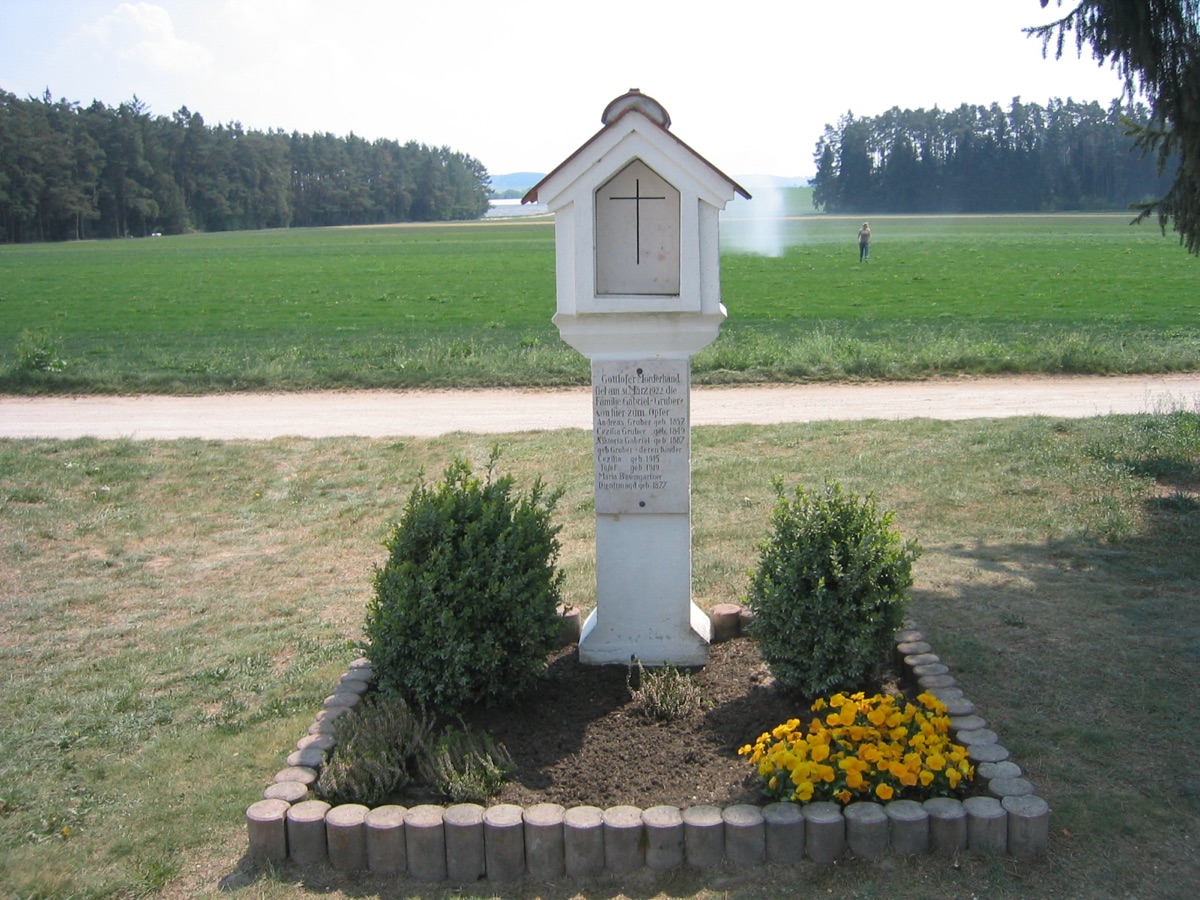
In the year after the murders, the Hinterkaifeck farmstead was torn down. The scene of such horror could not easily remain standing, and the buildings were demolished, the household's possessions dispersed. Where the farm had stood, a small memorial — a Marterl, the wayside shrine traditional in Catholic Bavaria — was later raised to the six who died there, and it stands today in the quiet countryside, marking a place that has otherwise returned to field and forest. It is the only monument to a household erased in a single night, and the only marker of a crime that the law was never able to close.
The meaning of the unsolved
In the end, Hinterkaifeck is the rare mystery whose power comes not from its strangeness but from its intimacy and its silence. Six people — a family and their new maid — were murdered in their isolated farmhouse one spring night in 1922, by someone who knew the farm well enough to use its own tools and to live among the dead for days before vanishing. The eerie warnings that preceded it, the footprints that led only one way, the smoke that rose reassuringly from a chimney above a house of corpses: these details have made Hinterkaifeck a byword for unsolved horror. But beneath the ghost-story atmosphere lies a sober and unbearable fact, that a human being did this and was never found, and that the answer, if it ever existed, was lost in a compromised crime scene, a primitive forensic age, and the destruction of the very evidence that might have spoken. The farm was torn down and a memorial raised; the case file remains open. After more than a hundred years, the six victims of Hinterkaifeck are remembered, and the question of who killed them, and why, and why he stayed, remains exactly where it has always been — unanswered, in the silence of a farm that no longer exists.
Inspired this / based on it
Various
The unsolved case has inspired German films, novels, and documentaries.
Various
The murders have been the subject of extensive German true-crime literature and research.
Filed under
Click any tag for every article carrying it.
Continue reading

The Somerton Man: The Body on the Beach and the Words 'Tamám Shud'
On the morning of 1 December 1948, the body of a man was found on Somerton Park beach near Adelaide, in South Australia, propped against the seawall as though he had fallen asleep looking out to sea. He was middle-aged, fit, and neatly dressed in a good suit, and he carried no wallet, no documents, and nothing that could say who he was. Stranger still, every maker's label had been carefully cut or removed from his clothing, as if someone had wanted to ensure he could not be identified. He had no obvious injuries; the cause of his death could not be established, and though poison was suspected, none was ever found. The investigation that followed turned up one haunting clue after another and solved none of them. Hidden in a tiny fob pocket sewn into his trousers was a scrap of paper, torn from a book, printed with two words in Persian: 'Tamám Shud' — meaning 'ended' or 'finished,' the final words of the famous poem the Rubáiyát of Omar Khayyám. The very copy of the book from which the scrap had been torn was later found, discarded in a parked car nearby, and in the back of it were pencilled a phone number and a string of capital letters that looked like a code — a code that has never been deciphered. For three-quarters of a century, no one even knew the dead man's name, and his case became one of the most famous unsolved mysteries in the world. In 2022, DNA evidence finally offered an answer to who he was. But how he came to be dead on that beach, and what the cut labels and the uncrackable code meant, remain unexplained to this day. This is the story of the Somerton Man.
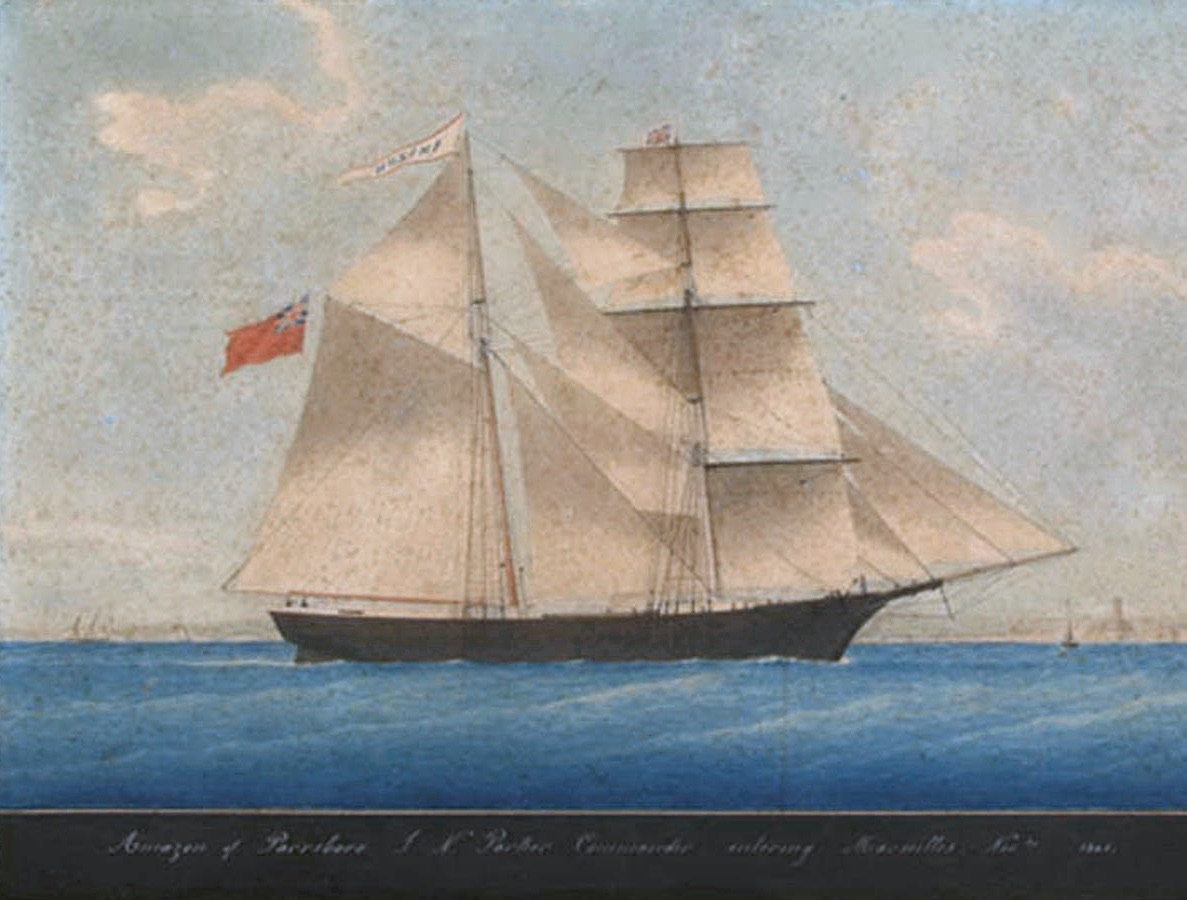
The Mary Celeste and the Ship That Sailed Itself
On December 5, 1872, the crew of the British brigantine Dei Gratia, several hundred miles west of Portugal, sighted another two-masted ship moving strangely across the swell — sails partly set, yawing as if no one had the helm. They closed on her, hailed her, got no answer, and sent a boarding party across. The ship was the Mary Celeste, an American merchant brigantine that had left New York a month earlier bound for Genoa with a cargo of industrial alcohol, and she was deserted. There was no one at the wheel and no one below; there was no sign of violence, no sign of robbery, no disorder beyond what a few days of unattended sailing would explain. The cargo sat almost untouched in the hold. There was ample food and fresh water. The crew's oilskins and boots and pipes were still where they had been left, and the captain's wife had left behind her harmonium and her child's toys. The ship was seaworthy and could have sailed on for months. But the ten people who had been aboard — Captain Benjamin Briggs, his wife Sarah, their two-year-old daughter Sophia, and seven crew — were gone, and so was the ship's single lifeboat, a small yawl that appeared to have been deliberately launched. No trace of any of them was ever found. The Mary Celeste became, and has remained, the most famous mystery in the history of the sea: not a wreck, not a massacre, but a sound ship abandoned in calm circumstances by people who had every reason to stay aboard. This article reconstructs what was actually found, what the Gibraltar inquiry made of it, and which of the many explanations — the credible and the lurid — best fits the strange, orderly emptiness of the ship that sailed itself.

Dyatlov Pass
On the afternoon of February 1, 1959, a group of nine experienced Soviet ski-tourists — eight men and one woman, all between 20 and 38 years old, all members or alumni of the Ural Polytechnical Institute in Sverdlovsk (now Yekaterinburg) — pitched a four-pole canvas tent on the eastern slope of an undistinguished 1,079-meter mountain in the northern Urals named, in the Mansi language, Kholat Syakhl — 'Dead Mountain.' The group was led by 23-year-old Igor Dyatlov, a fifth-year radio-engineering student. The party had skied approximately 280 kilometers from the closest railway terminus over the prior nine days. Their planned summit, the following day, was the higher Otorten peak ten kilometers north. None of them reached it. When a search party located the abandoned tent on February 26, it had been cut open from the inside. Most of the group's clothing and equipment was still inside. The first three bodies — including Dyatlov — were found later that day, scattered along the slope below the tent, dressed only in underwear or light layers, none in proper outer clothing, none in their boots. Two further bodies were found nearer the tent over the following weeks. The final four bodies — including the only female member, Lyudmila Dubinina — were not located until May 4, 1959, in a snow-covered ravine approximately 1.5 kilometers downslope. Three of those four had massive internal trauma — equivalent in the words of the autopsy report to high-speed automobile-collision injuries — without corresponding external wounds. Two had missing soft tissue: Dubinina lacked her tongue and eyes. Some of the recovered clothing tested positive for elevated beta-particle radiation. The Soviet criminal investigation concluded in May 1959 that the deaths were caused by 'a compelling natural force which the hikers were unable to overcome.' The Russian Procurator-General's Office reopened the case in 2019 and concluded in July 2020 that the cause was a slab avalanche followed by hypothermia and disorientation. A 2021 computational study published in *Communications Earth & Environment* by Alpine snow scientists at EPFL Lausanne provided a quantitative mechanical model supporting the slab-avalanche conclusion. The case is closed in Russia. It is, in international public discussion, the most-debated cold-weather forensic mystery of the 20th century.