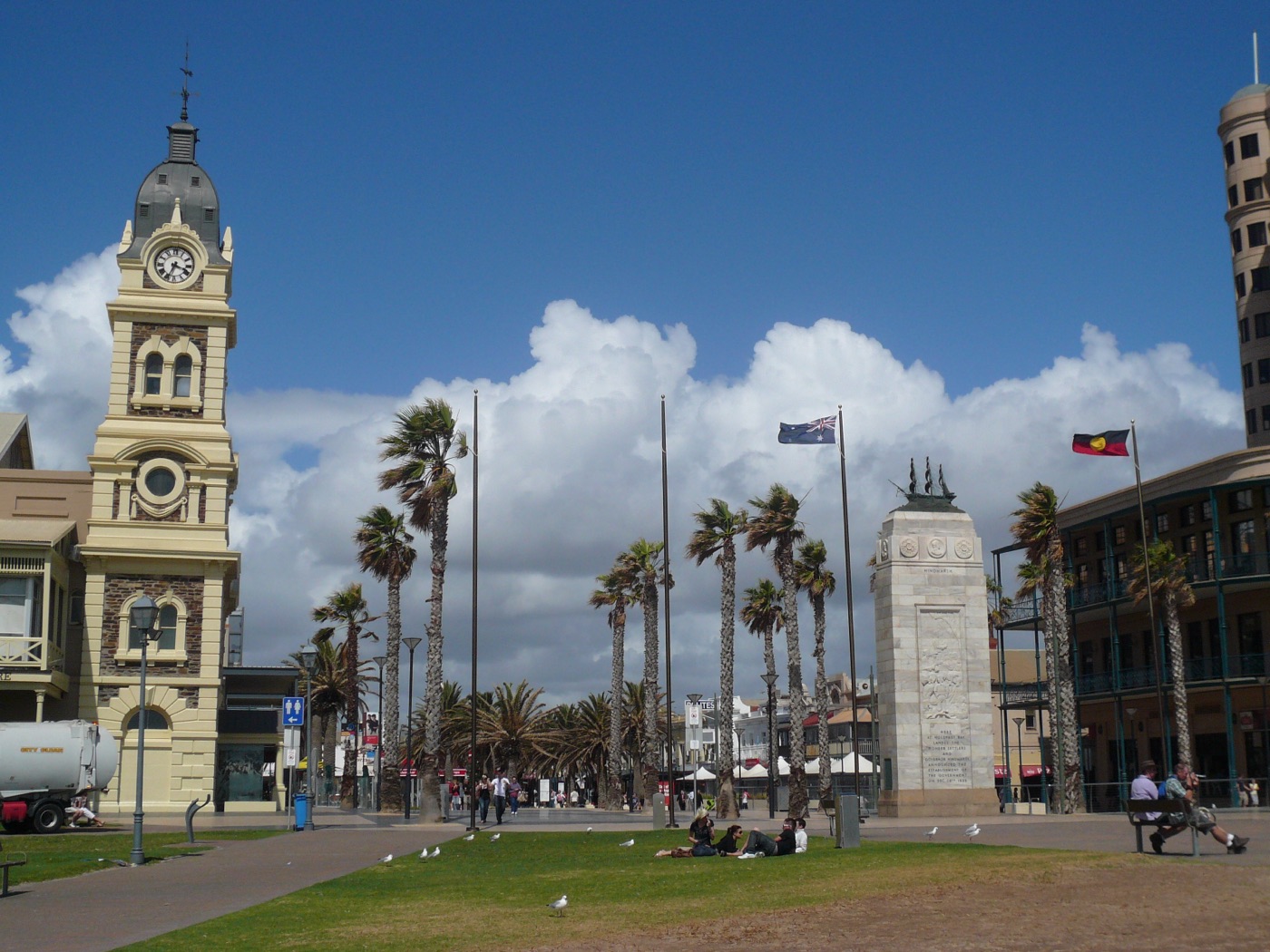
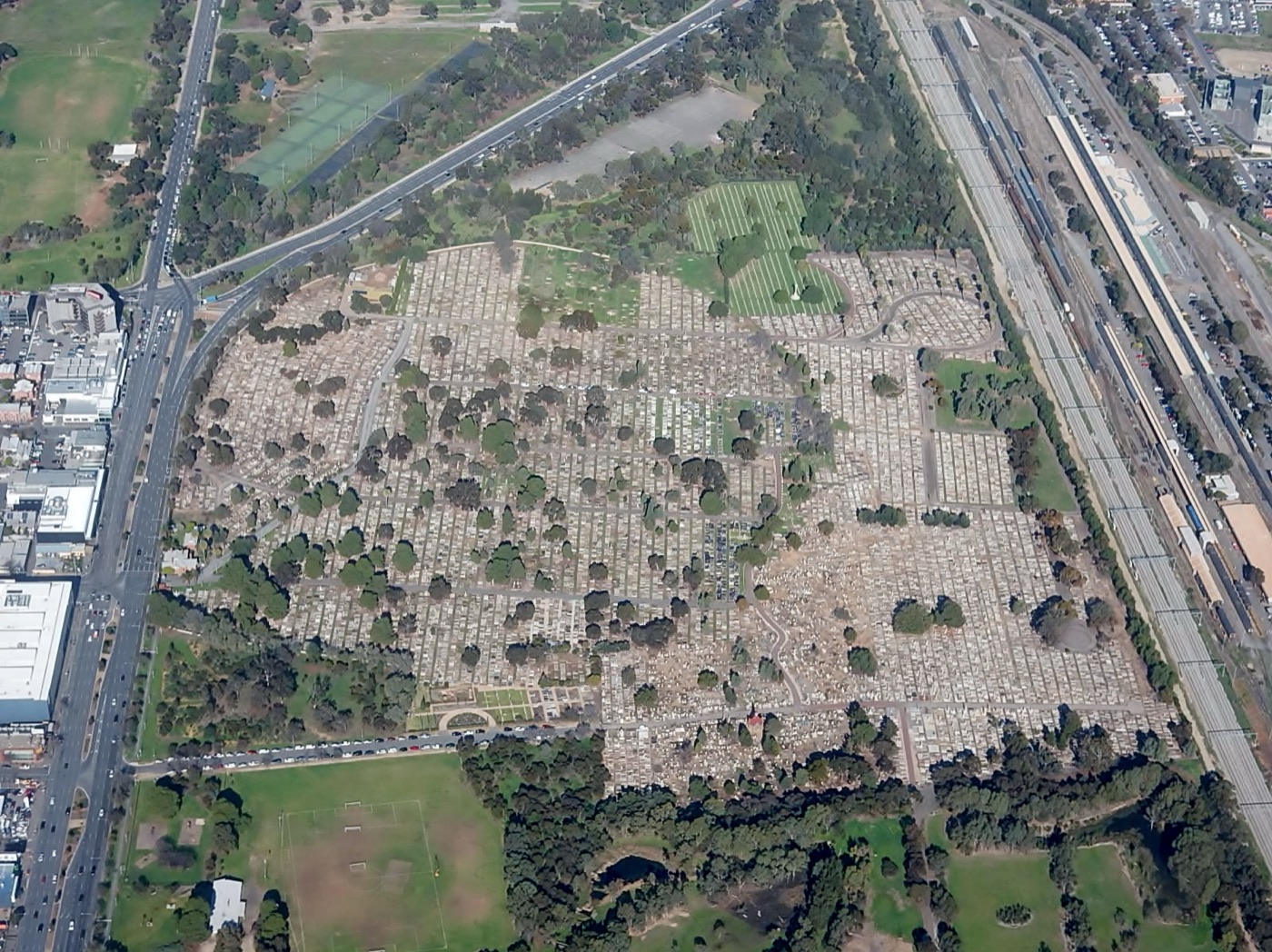
The beach near Somerton Park, Adelaide. On the morning of 1 December 1948, an unidentified man was found dead against the seawall here — well-dressed, carrying nothing, every label cut from his clothes. Wikimedia Commons / CC BY 2.0.
The Somerton Man: The Body on the Beach and the Words 'Tamám Shud'
Australia, 1948 — A well-dressed man was found dead on an Adelaide beach with no identification, every label cut from his clothes, and a scrap of Persian poetry hidden in his pocket reading 'ended.' His identity was a mystery for 74 years — and how and why he died is a mystery still
- Category
- Assassinations & Disappearances
- Published
- Length
- 3,650 words · 19 min read
- Author
- The editors
The Somerton Man is one of those rare mysteries in which almost every detail seems designed to deepen the enigma. A body with no name; a suit with no labels; a hidden scrap of poetry meaning "ended"; a book discarded in a stranger's car; a code that no one can read; a phone number leading to a woman who seemed to know more than she would say — each element, taken alone, is strange, and together they compose a puzzle so suggestive that it has drawn investigators, code-breakers, and amateur sleuths for generations. In 2022, modern science answered the first and most basic question, the dead man's identity, after seventy-four years. But the answer, if it is correct, did not so much solve the mystery as transform it, replacing the romance of the unknown spy with something quieter and perhaps sadder — and leaving the deepest questions about how and why he died exactly where they had always been: unanswered.
This is the story of the man on the beach.
The body on the beach
The discovery was, at first, unremarkable. On the evening of 30 November 1948, passers-by had noticed a well-dressed man lying on Somerton Park beach, near the seaside suburb of Glenelg, apparently asleep or drunk, one arm extended; one couple saw him and thought little of it. The next morning he was found in the same spot, dead, slumped against the seawall with his head resting on it, a half-smoked cigarette on his collar. He appeared to have simply died where he lay.
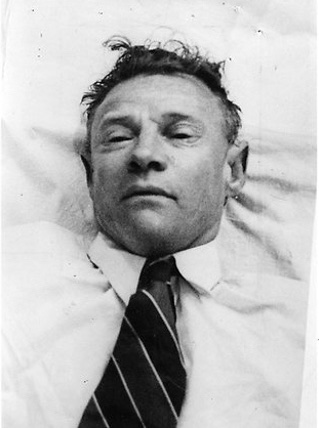
But the man defied every effort to identify him. He appeared to be in his forties, fit and well cared for, and was dressed in a quality suit — yet he carried no wallet, no papers, no identification of any kind. Investigators found a train ticket, a bus ticket, cigarettes, chewing gum, matches, and a comb, but nothing personal. And then came the detail that turned a sad anonymous death into something stranger: the labels had been removed from his clothes. Where the maker's and laundry tags should have been, they had been cut away. Whether he had done this himself or someone else had, it suggested a deliberate effort to prevent identification — and that suggestion would color everything that followed.
The medical examination only deepened the puzzle. The man was healthy and had died, it seemed, not long after eating. There were no wounds, no signs of violence sufficient to explain death. The pathologist suspected poisoning — the congestion of the organs was consistent with it — but extensive testing found no poison, leading to the theory that he had been killed by a substance that breaks down in the body and leaves no trace, such as certain rare poisons. The cause of death was, in the end, left undetermined, an open question it remains to this day.
The poisoning theory, though never proven, was taken seriously by the investigators and has shaped the case ever since. The pathologist reportedly believed the man's symptoms and the state of his organs were consistent with poisoning by a substance that the body metabolizes quickly, leaving little or no trace by the time of testing — which would explain the absence of any detectable toxin. This possibility, of a death by a poison chosen to be undetectable, was one of the pillars of the later spy theory, suggesting a deliberate, professional killing. But it was always speculative; the man might equally have died of natural causes not obvious at autopsy, or, as the later identification would suggest, have taken his own life. The undetermined cause of death is not merely a gap in the record but one of the central mysteries of the case, and one that, after the body's long burial and the passage of three-quarters of a century, may never be resolved.
Tamám Shud
The investigation's most famous clue emerged only after the body had been examined and, for a time, preserved. Sewn into the man's trousers was a small, hidden fob pocket, and in it, tightly rolled, was a tiny scrap of paper. Printed on it were two words in an ornate typeface: Tamám Shud. The phrase is Persian, and it means "ended" or "finished" — and it is the very last phrase of the Rubáiyát of Omar Khayyám, the celebrated collection of medieval Persian quatrains, in its famous English-language editions. The scrap had been torn from the final page of a copy of the book.
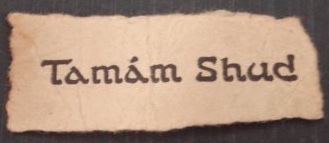
The Rubáiyát is a meditation on mortality and the fleeting pleasures of life, a poem about living fully in the face of death's certainty, and the appearance of its final word — "ended" — hidden on the body of a man who had died inexplicably on a beach was, to put it mildly, evocative. It also gave the case its enduring name: the Tamám Shud case. But the scrap was not only poetic; it was a lead, because it implied that somewhere there existed the specific book it had been torn from, with its last page mutilated to match.
A public appeal for the book produced it. A man came forward to report that, around the time of the death, he had found a copy of the Rubáiyát tossed into the back seat of his unlocked car, parked not far from the beach, and had thought nothing of it. The last page was missing its final words; a microscopic comparison confirmed that the Tamám Shud scrap had been torn from this very copy. The book had been, in effect, a message left behind — but a message in a language no one could read.
The code
In the back of the book, faintly pencilled, were two things. One was a telephone number. The other was a set of capital letters, written in five lines, that appeared to be some kind of code or cipher. The letters have been transcribed, with some uncertainty about a few characters, as beginning WRGOABABD and continuing through several further lines of seemingly random capitals, with one line crossed out. To this day, no one has deciphered them, despite decades of effort by professional and amateur cryptographers, including modern analyses by university researchers and naval code-breakers.
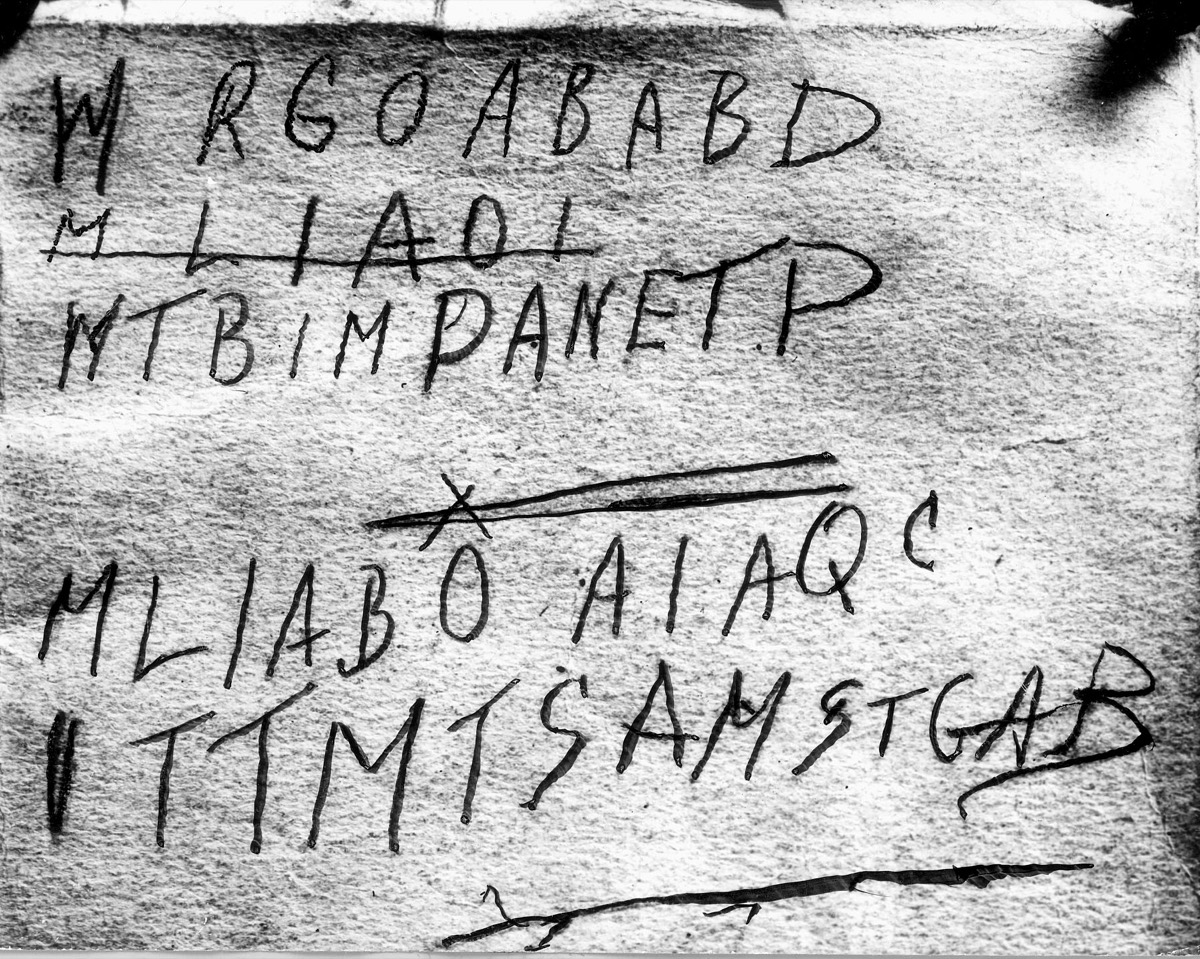
The code has been the single most tantalizing element of the case, and also the most ambiguous. Cryptographers have noted that the string is too short to crack by statistical means and may not be a cipher at all; some have suggested it could be the initial letters of words — a mnemonic for a verse or a private message — while others have wondered whether it is meaningful at all, or merely idle jotting. The crossed-out line and the resemblance of some letters between lines have fueled endless analysis. But the honest position is that the code has never been solved and may never be, and that no one even knows for certain that it contains a hidden meaning. It is a perfect emblem of the whole case: suggestive, unreadable, and possibly less significant than it appears.
The woman and the spy theory
It was this constellation of details — the body with no identity, the labels cut from the clothing, the undeciphered code, the evasive woman, and above all the year, 1948, at the dawn of the Cold War — that gave rise to the case's most enduring theory: that the Somerton Man was a spy. Adelaide was not far from the secret weapons-testing range at Woomera; the era was thick with espionage; and the hallmarks of the case — the deliberate anonymity, the possible undetectable poison, the coded message — fit the popular image of a secret agent who had been eliminated and stripped of his identity. The spy theory has been the romantic heart of the Somerton Man legend for decades, and it is easy to see why it took hold.
But it was never more than a theory, unsupported by any direct evidence, and the eventual identification of the man would point in a very different and more ordinary direction. A suitcase believed to be his, found in the cloakroom of the Adelaide Railway Station, contained more clothing — again with most labels removed — along with tools and oddments, but nothing that resolved his identity or supported the espionage story. The mystery deepened with every clue and was solved by none of them, and for decades it seemed it might never be solved at all.
The answer, at last
The breakthrough came not from code-breaking or espionage files but from genetics and genealogy. Professor Derek Abbott, an engineer at the University of Adelaide, had studied the case for many years and had long sought to extract DNA from biological material associated with the body — in particular, hairs embedded in the plaster bust that had been made of the dead man's head and shoulders after his death. Working with the American forensic genealogist Colleen Fitzpatrick, Abbott built a DNA profile and traced it through vast genealogical databases, assembling an enormous family tree to triangulate the man's identity from his distant relatives.
There was a remarkable personal dimension to Abbott's long involvement. In the course of his research he had come to believe the Somerton Man might be connected to Jessica Thomson — possibly that he was the biological father of Thomson's son, Robin — and in one of the case's stranger turns, Abbott met and married Rachel Egan, Thomson's granddaughter, whom he came to know through the investigation. If Abbott's earlier theory had been right, his own wife might have been the Somerton Man's descendant. The DNA identification of Carl Webb, however, appeared to rule out that particular hypothesis, since Webb and Thomson had no established connection and Webb is not thought to have fathered Thomson's child. The tangle illustrates how thoroughly the case had drawn its investigators into its web — and how, even as one mystery was resolved, the threads connecting its characters frayed into new uncertainty.
In 2022, they announced their conclusion: the Somerton Man was, they were confident, a man named Carl "Charles" Webb, an electrical engineer and instrument maker born in Melbourne in 1905. Webb, it emerged, had been estranged from his family, had a troubled marriage, and had apparently left his old life behind; his connection to Adelaide and the circumstances that brought him to the beach were unclear. South Australia Police, who had exhumed the body in 2021 to pursue their own DNA testing, treated the identification as compelling but continued their formal work to confirm it. After seventy-four years, the man on the beach had, in all likelihood, a name.
What remains unsolved
In the end, the Somerton Man endures as a mystery that science has answered halfway. For seventy-four years he was the nameless man on the beach, surrounded by clues that pointed everywhere and nowhere: the cut labels, the hidden words meaning "ended," the book in the stranger's car, the code no one could read, the nurse who would not explain. He became, in that long anonymity, a canvas for the most romantic of theories, the eliminated spy of the early Cold War. Then DNA reached back across the decades and, in all likelihood, restored his name — Carl Webb — and with it a more ordinary and sorrowful shape to his story. But the deepest questions stayed where they were: how he died, why he had erased himself, what the code meant, what the nurse knew. The man on the beach has a name again, and around it the same silence that has always surrounded him. "Tamám Shud," the scrap in his pocket said — ended. The mystery of who he was has ended. The mystery of what happened to him has not.
Inspired this / based on it
Gerald Michael Feltus
A detailed account of the case by the former detective who investigated it.
Various
The case has been the subject of numerous podcasts, documentaries, and a long-running online investigation.
Filed under
- #somerton-man
- #tamam-shud
- #unsolved-mystery
- #adelaide
- #rubaiyat
- #cold-war
- #unidentified-body
- #carl-webb
- #1940s
- #mystery
Click any tag for every article carrying it.
Continue reading
The Mary Celeste and the Ship That Sailed Itself
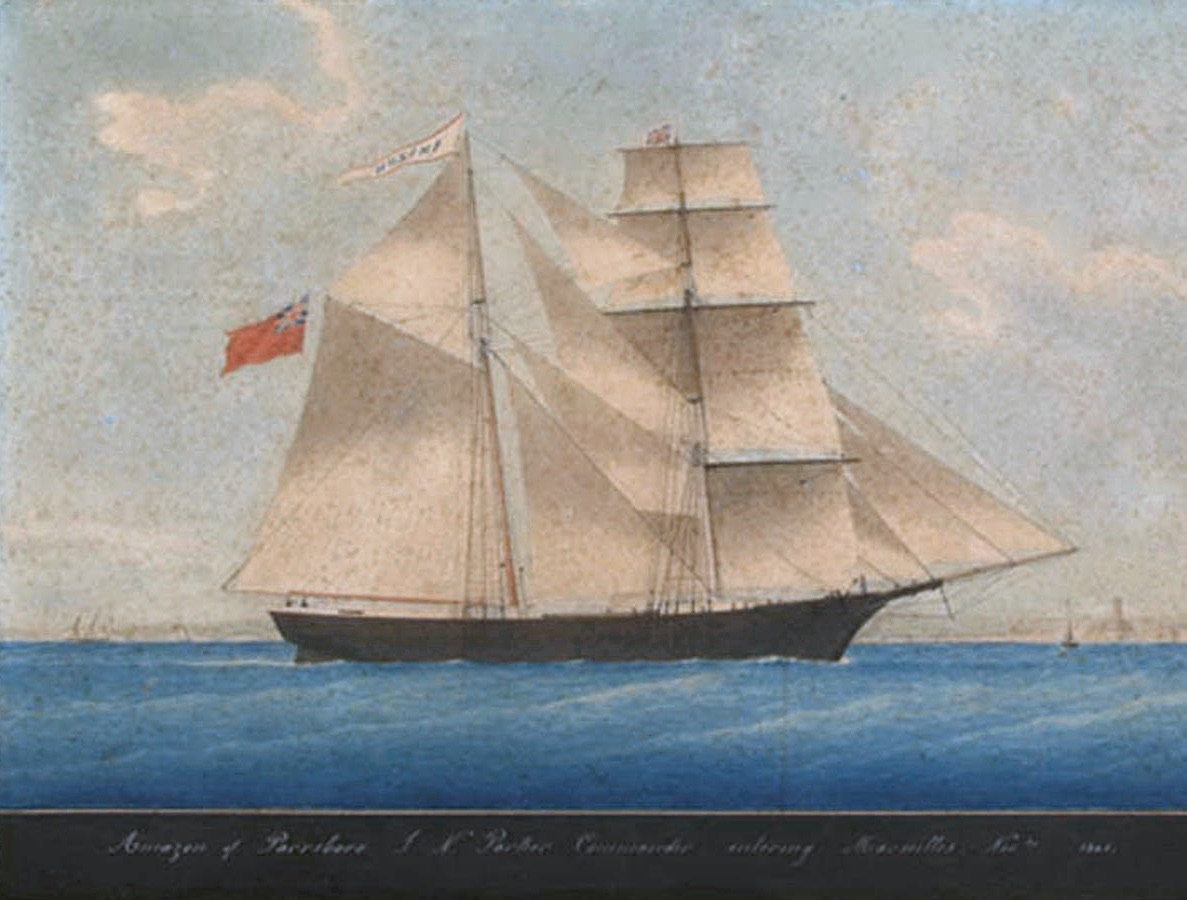
On December 5, 1872, the crew of the British brigantine Dei Gratia, several hundred miles west of Portugal, sighted another two-masted ship moving strangely across the swell — sails partly set, yawing as if no one had the helm. They closed on her, hailed her, got no answer, and sent a boarding party across. The ship was the Mary Celeste, an American merchant brigantine that had left New York a month earlier bound for Genoa with a cargo of industrial alcohol, and she was deserted. There was no one at the wheel and no one below; there was no sign of violence, no sign of robbery, no disorder beyond what a few days of unattended sailing would explain. The cargo sat almost untouched in the hold. There was ample food and fresh water. The crew's oilskins and boots and pipes were still where they had been left, and the captain's wife had left behind her harmonium and her child's toys. The ship was seaworthy and could have sailed on for months. But the ten people who had been aboard — Captain Benjamin Briggs, his wife Sarah, their two-year-old daughter Sophia, and seven crew — were gone, and so was the ship's single lifeboat, a small yawl that appeared to have been deliberately launched. No trace of any of them was ever found. The Mary Celeste became, and has remained, the most famous mystery in the history of the sea: not a wreck, not a massacre, but a sound ship abandoned in calm circumstances by people who had every reason to stay aboard. This article reconstructs what was actually found, what the Gibraltar inquiry made of it, and which of the many explanations — the credible and the lurid — best fits the strange, orderly emptiness of the ship that sailed itself.

Dyatlov Pass
On the afternoon of February 1, 1959, a group of nine experienced Soviet ski-tourists — eight men and one woman, all between 20 and 38 years old, all members or alumni of the Ural Polytechnical Institute in Sverdlovsk (now Yekaterinburg) — pitched a four-pole canvas tent on the eastern slope of an undistinguished 1,079-meter mountain in the northern Urals named, in the Mansi language, Kholat Syakhl — 'Dead Mountain.' The group was led by 23-year-old Igor Dyatlov, a fifth-year radio-engineering student. The party had skied approximately 280 kilometers from the closest railway terminus over the prior nine days. Their planned summit, the following day, was the higher Otorten peak ten kilometers north. None of them reached it. When a search party located the abandoned tent on February 26, it had been cut open from the inside. Most of the group's clothing and equipment was still inside. The first three bodies — including Dyatlov — were found later that day, scattered along the slope below the tent, dressed only in underwear or light layers, none in proper outer clothing, none in their boots. Two further bodies were found nearer the tent over the following weeks. The final four bodies — including the only female member, Lyudmila Dubinina — were not located until May 4, 1959, in a snow-covered ravine approximately 1.5 kilometers downslope. Three of those four had massive internal trauma — equivalent in the words of the autopsy report to high-speed automobile-collision injuries — without corresponding external wounds. Two had missing soft tissue: Dubinina lacked her tongue and eyes. Some of the recovered clothing tested positive for elevated beta-particle radiation. The Soviet criminal investigation concluded in May 1959 that the deaths were caused by 'a compelling natural force which the hikers were unable to overcome.' The Russian Procurator-General's Office reopened the case in 2019 and concluded in July 2020 that the cause was a slab avalanche followed by hypothermia and disorientation. A 2021 computational study published in *Communications Earth & Environment* by Alpine snow scientists at EPFL Lausanne provided a quantitative mechanical model supporting the slab-avalanche conclusion. The case is closed in Russia. It is, in international public discussion, the most-debated cold-weather forensic mystery of the 20th century.
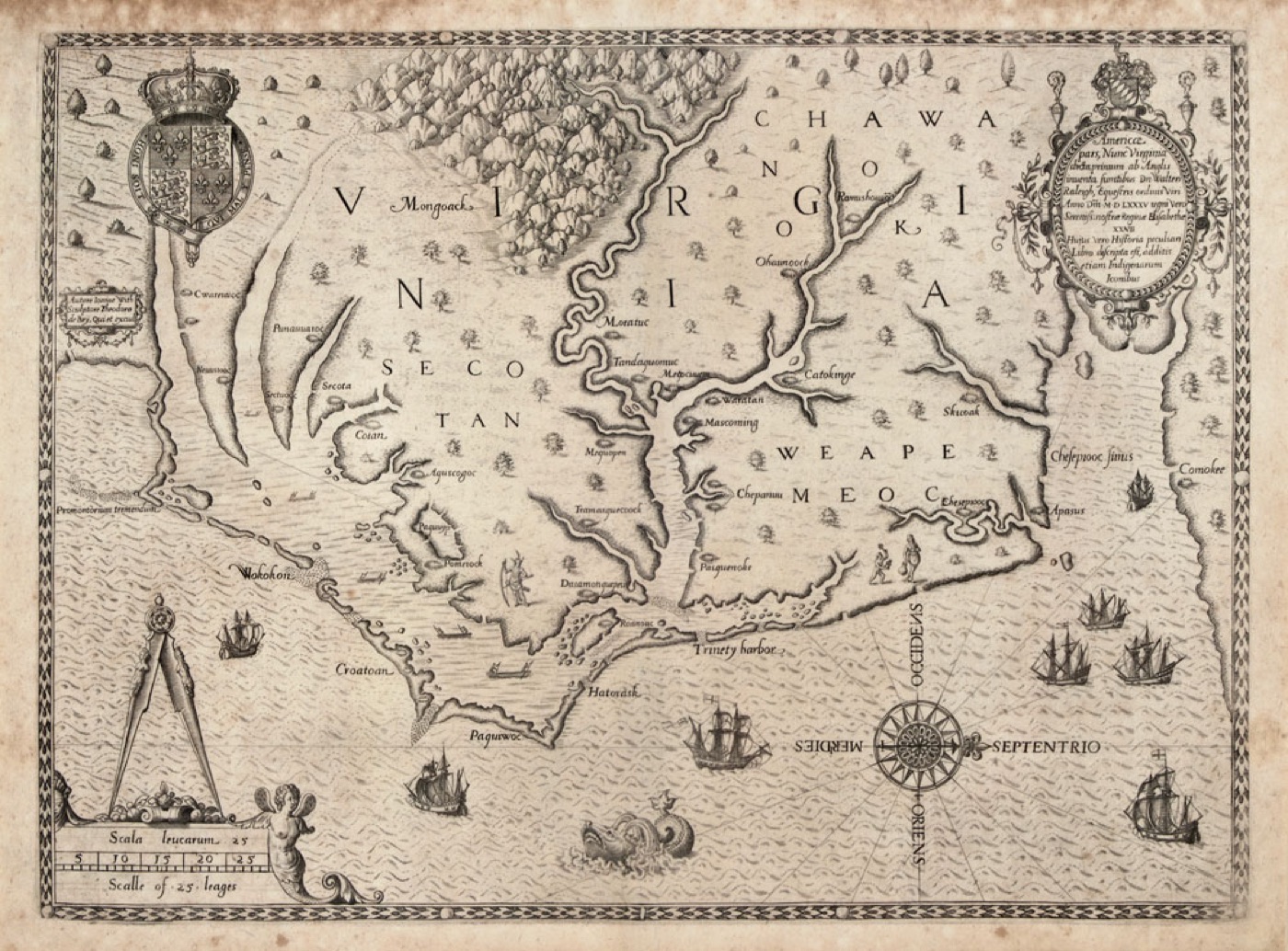
Roanoke: The Lost Colony and the Word Carved in the Post
In 1587, more than a hundred English men, women, and children were left on Roanoke Island, off the coast of what is now North Carolina, to build the first permanent English settlement in the Americas. They were a civilian colony, families intending to make new lives, sponsored by Sir Walter Raleigh and governed by an artist named John White, whose own daughter and infant granddaughter — Virginia Dare, the first English child born in the New World — were among them. Soon after their arrival, beset by hardship and conflict, the colonists persuaded White to sail back to England for supplies and reinforcements. He intended to return within months. Instead, war with Spain and the crisis of the Armada kept him from crossing the Atlantic for nearly three years. When White at last set foot on Roanoke again in August 1590, on what would have been his granddaughter's third birthday, the colony was gone. The houses had been taken down in orderly fashion, the site enclosed by a palisade, and there was no sign of the people — no bodies, no battle, no clear distress. The only clue was a single word, carved into one of the posts: CROATOAN, the name of a nearby island and of the friendly Native people who lived there. White took it as a message that the colonists had relocated, but a storm prevented him from sailing to find them, and he was forced to leave without ever learning their fate. He never saw his family again. For more than four centuries the disappearance of the Roanoke colonists has been one of the most haunting mysteries in American history. This is the story of the Lost Colony and the word carved in the post.