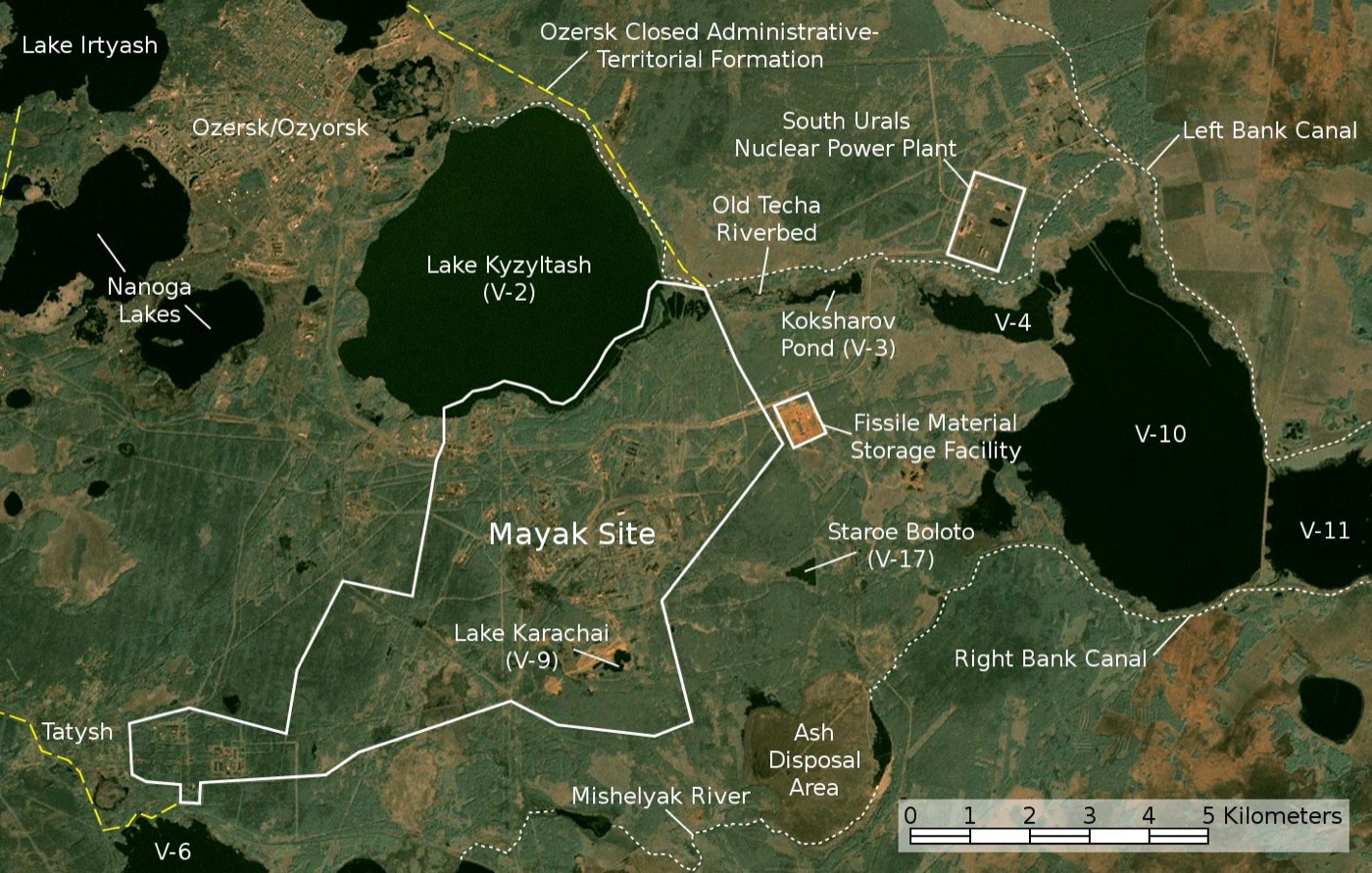
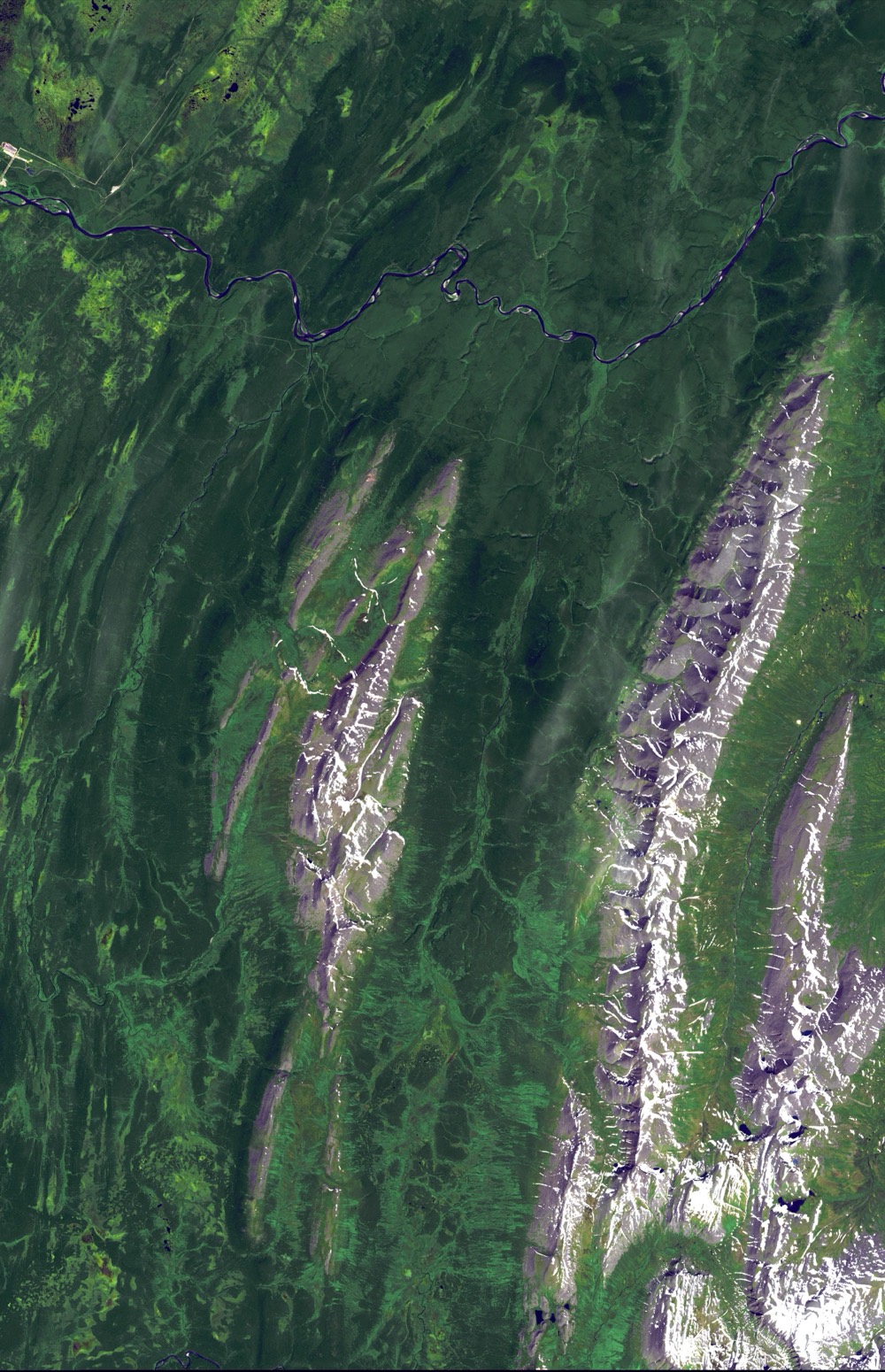
A satellite view of the Mayak nuclear complex in the southern Urals, with its reservoirs and waste lakes. So secret it did not appear on maps, Mayak was the site of the 1957 Kyshtym disaster — one of the worst nuclear accidents in history, hidden from the world for three decades. Wikimedia Commons / Public domain.
Kyshtym: The Soviet Nuclear Disaster Hidden for Thirty Years
USSR, 1957 — A tank of radioactive waste exploded at a secret Soviet weapons complex, contaminating a vast region and forcing thousands from their homes. The Soviet Union concealed the third-worst nuclear accident in history for three decades
- Category
- Cold War Files
- Published
- Length
- 3,500 words · 19 min read
- Author
- The editors
The Kyshtym disaster occupies a peculiar and instructive place in the history of nuclear accidents: it was one of the worst ever to occur, and for thirty years it was as if it had never happened. While the names Chernobyl and Fukushima are known around the world, the 1957 explosion at the Mayak complex remains comparatively obscure — not because it was minor, but because the Soviet state succeeded, for an astonishingly long time, in hiding it. The disaster is therefore two stories at once: the story of a catastrophic accident born of reckless haste and secrecy in the Soviet nuclear weapons program, and the story of the cover-up that kept a contamination affecting hundreds of thousands of people secret from its own victims and from the world. Together they make Kyshtym a defining case of what total state control of information can conceal.
This is the story of the nuclear disaster the Soviet Union hid.
The secret complex
The Mayak complex was a child of the Cold War and the Soviet rush to build an atomic bomb. After the United States demonstrated nuclear weapons in 1945, Stalin's regime threw enormous resources into catching up, and at the heart of that effort was the need to produce plutonium. Mayak, built at frantic speed in the late 1940s in the remote southern Urals, was the Soviet Union's first major plutonium production facility — the place where the material for its atomic arsenal was made. Around it grew a secret closed city, originally known by code designations such as Chelyabinsk-40, where the workers lived in relative privilege but under tight security, forbidden to speak of their work or even to acknowledge the place's existence. It did not appear on maps.
The conditions under which Mayak was built help explain, though not excuse, the recklessness that followed. The Soviet bomb program, driven by Stalin and overseen by the feared security chief Lavrentiy Beria, was a crash effort conducted under enormous pressure and absolute secrecy, in which the goal of matching the American arsenal overrode virtually every other consideration, including the safety of workers and the protection of the environment. Plutonium had to be produced, and quickly; the human and ecological costs were treated as acceptable, or simply not weighed at all. Workers received heavy radiation doses; waste was disposed of by whatever expedient was cheapest and fastest; and the all-encompassing secrecy meant that there was no external scrutiny, no independent inspection, and no public accountability to check the dangerous practices. The same forces that made Mayak a triumph of Soviet weapons production — urgency, secrecy, and the subordination of everything to the state's goal — made it a catastrophe waiting to happen.
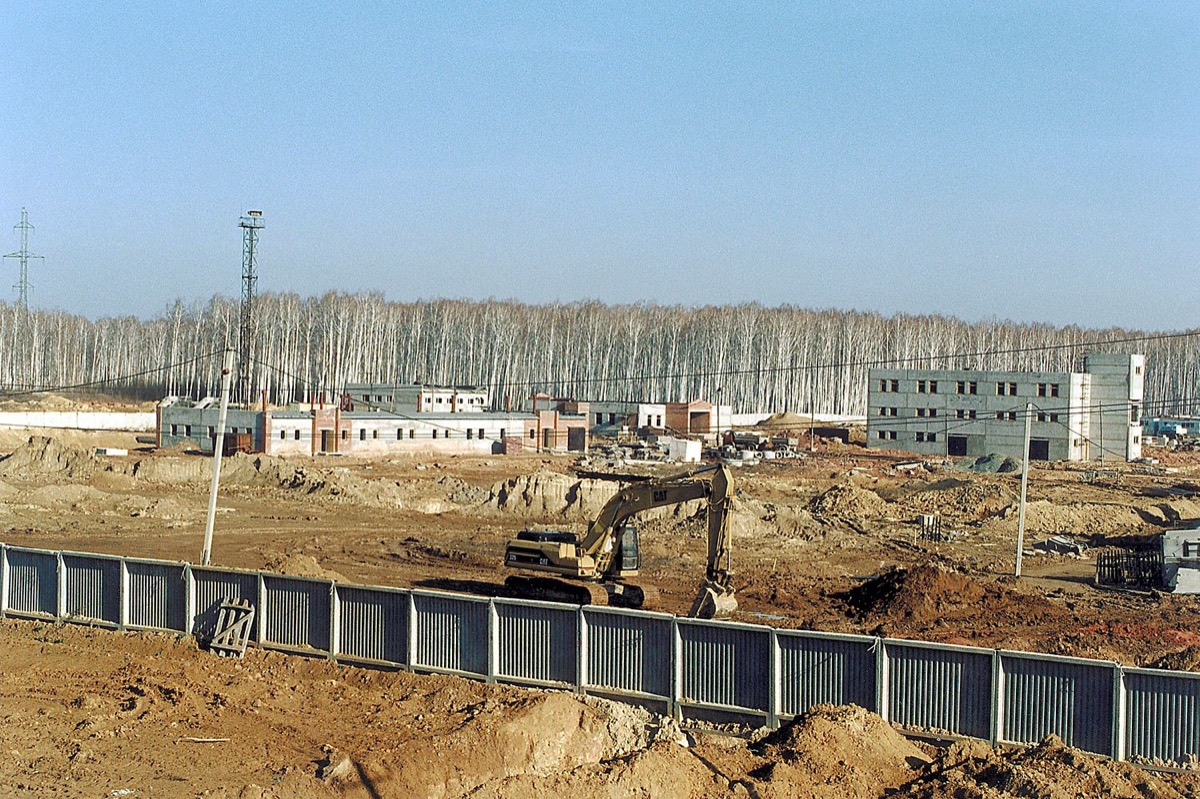
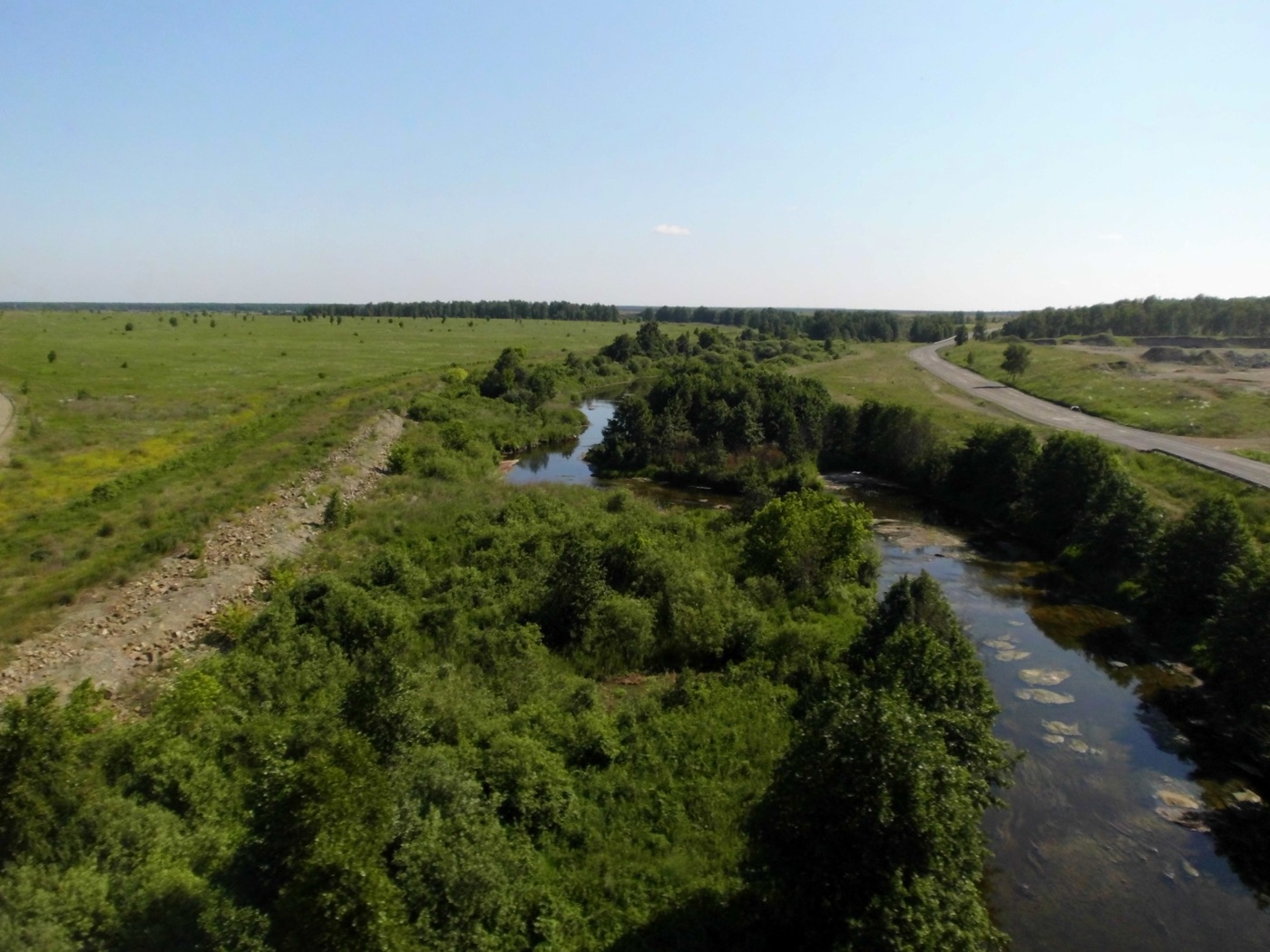
Speed and secrecy came at a terrible price in safety. In its early years, Mayak operated with a reckless disregard for the environment and for the health of its workers and neighbors that is shocking even by the standards of early nuclear programs. Most notoriously, from 1949 the complex disposed of its high-level radioactive waste by dumping it directly into the Techa River, which flowed past inhabited villages whose people drew their water, washed, fished, and watered their livestock in it — exposing tens of thousands of people to dangerous radiation before the practice was curtailed. Later, the complex used a nearby body of water, Lake Karachay, as an open dump for radioactive waste, making it one of the most contaminated spots on the planet. The catastrophe of 1957 did not come out of nowhere; it came from a culture of haste and secrecy that had already been poisoning the region for years.
Lake Karachay deserves its own grim note, for it became a byword among specialists for radioactive contamination. Used as an open-air dump for the complex's high-level waste, the small lake accumulated such an intense concentration of radioactivity that, by some later accounts, standing on its shore for an hour would deliver a lethal dose. In a later drought the lake partly dried, and radioactive dust from its exposed bed was blown across the surrounding area, spreading the contamination further — a slow-motion echo of the 1957 explosion. Over the years the Soviet authorities would labor to fill and cover the lake to contain its deadly contents. That a body of water could be turned into perhaps the single most radioactive place on Earth, beside an inhabited region, captures the reckless spirit in which the early Soviet nuclear complex treated the land and the people around it.
The explosion
The disaster itself was, in a strict sense, not a nuclear explosion but a chemical one — though its consequences were thoroughly radioactive. The high-level liquid waste from plutonium processing was stored in large tanks that generated heat continuously through the radioactive decay of their contents, and so required constant cooling. In one such tank, the cooling system failed, and the failure was not properly detected or repaired. Over time the contents heated up, the liquid evaporated, and the tank's residue — a dried mixture of nitrate and acetate compounds — became, in effect, a chemical explosive. On 29 September 1957, it detonated.
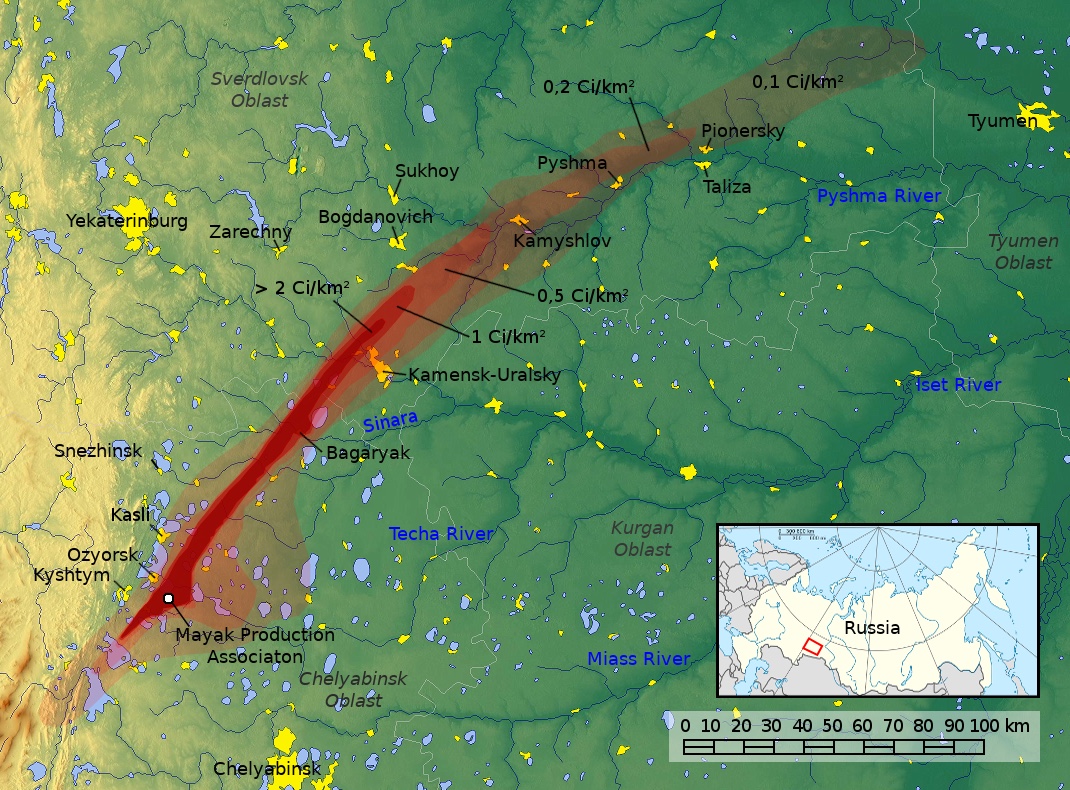
The blast destroyed the tank and its surroundings and sent a column of radioactive dust and debris into the sky, where the wind caught it and carried it to the northeast. Over the following hours the fallout settled across a long, narrow swath of countryside — the East Urals Radioactive Trace — coating fields, forests, villages, and the people and animals in them with radioactive contamination. There was no immediate fireball of casualties as in a bombing; the danger was invisible and insidious, in the soil and the water and the food, in the radiation dose accumulating silently in the bodies of those who lived there.
The silent evacuation
The Soviet authorities understood that a serious release had occurred, and over the following days, weeks, months, and in some cases years, they evacuated people from the most heavily contaminated areas — ultimately something on the order of ten thousand or more residents. But the response was marked by the same secrecy that governed everything about Mayak. The evacuations were often slow, leaving people in contaminated villages absorbing radiation for days or far longer before they were moved; and they were carried out with little or no honest explanation. Villagers were told to leave, to abandon or destroy their homes, crops, and animals, but frequently were not told the real reason — that they had been showered with radioactive fallout from a secret nuclear disaster. They were evacuated from a danger whose nature they were not permitted to know.
The contaminated land could not simply be cleaned. The most polluted zone was sealed off and, in time, turned into a restricted area — the East Ural State Reserve — closed to human use, an irradiated landscape left to itself. The villages within it were erased. The wider region, already burdened by years of waste dumping into the Techa River and Lake Karachay, became one of the most radioactively contaminated places on the face of the Earth, a distinction it retains to this day. The people of the region — those evacuated and those who remained in contaminated areas downstream and downwind — would carry the health consequences for the rest of their lives.
Thirty years of silence
What makes Kyshtym extraordinary is not only the scale of the accident but the completeness and duration of its concealment. For about thirty years, the Soviet Union simply denied that anything had happened. There was no public acknowledgment, no entry in the official record, no information for the victims about what they had been exposed to. The closed city remained secret; the disaster was a non-event. The Soviet state treated the truth as a matter of national security to be buried along with the contaminated soil.
The human cost of all this secrecy accumulated quietly over decades. The populations exposed to the fallout of 1957 and to the longer-running contamination of the Techa River suffered elevated rates of cancers, chronic radiation-related illnesses, and other health effects, studied in detail only long afterward, once the records were opened. The Techa River villages in particular became one of the most important and tragic populations in the study of chronic radiation exposure, their inhabitants having absorbed doses over years from the water and the environment of their daily lives. For the people of the region, the disaster was not a single moment but a long shadow over the health of families and generations — a shadow made worse by the fact that, for so long, they were not even told what had darkened it.
The first serious crack in the silence came from a Soviet scientist in exile. Zhores Medvedev, a biologist who had emigrated to the West, published an account in 1976 asserting that a major nuclear-waste disaster had occurred in the Urals in the late 1950s. His claims were initially met with skepticism in the West — some authorities found them hard to credit — but other scientists, examining the available evidence, came to support the conclusion that a serious radioactive contamination had indeed taken place. Medvedev's work, and the analysis it prompted, established in the Western scientific community that something terrible had happened at Mayak, even as the Soviet Union continued to deny it.
Full official acknowledgment came only with the transformation of the Soviet Union under the policy of openness in the late 1980s. Around 1989, as glasnost loosened the state's grip on information, Soviet authorities at last admitted the truth of the 1957 disaster, and the scale of what had been concealed began to emerge. By then, more than three decades had passed — three decades during which the victims had lived without the truth, the region had been studied in secret if at all, and the world's third-worst nuclear accident had been kept off the historical ledger.
The meaning of Kyshtym
The accountability for Kyshtym, such as it was, came far too late and far too partially to mean much for most of its victims. The opening of the records in the late 1980s and after allowed researchers, including those studying the long-irradiated population of the Techa River villages, to begin documenting the health effects of the contamination, and the people of the region gained, belatedly, some recognition of what had been done to them. But the long concealment had ensured that for most of their lives the victims were denied both the truth and any meaningful redress.
In the end, Kyshtym is the disaster that proves how much a closed state can hide. A tank of radioactive waste exploded at a secret complex in the Urals, scattered fallout over a vast inhabited region, and forced thousands from homes they were ordered to destroy without being told why — and then the whole catastrophe, one of the worst in the history of the atomic age, was simply erased from the record for three decades. No free press exposed it, no court judged it, no government answered for it in any timely way; the victims lived and many died without the truth. It surfaced at last not through any reckoning forced from within but through the testimony of an exile and, finally, the loosening of the Soviet system itself. Kyshtym is remembered, when it is remembered, as the third great nuclear disaster — but its more important lesson is the first one it teaches: that the surest way to make a catastrophe permanent is to control the truth about it, and that the open flow of information is not a luxury of free societies but the last defense of the people a disaster harms.
Inspired this / based on it
Zhores A. Medvedev
Norton. The exiled scientist's account that first exposed the disaster to the West.
Kate Brown
Oxford University Press. A history of the Mayak and Hanford plutonium cities and their contamination.
Filed under
- #mayak-1957
- #kyshtym
- #nuclear-disaster
- #soviet-union
- #radioactive-contamination
- #cold-war
- #cover-up
- #east-urals
- #1950s
- #confirmed
Click any tag for every article carrying it.
Continue reading
Chernobyl
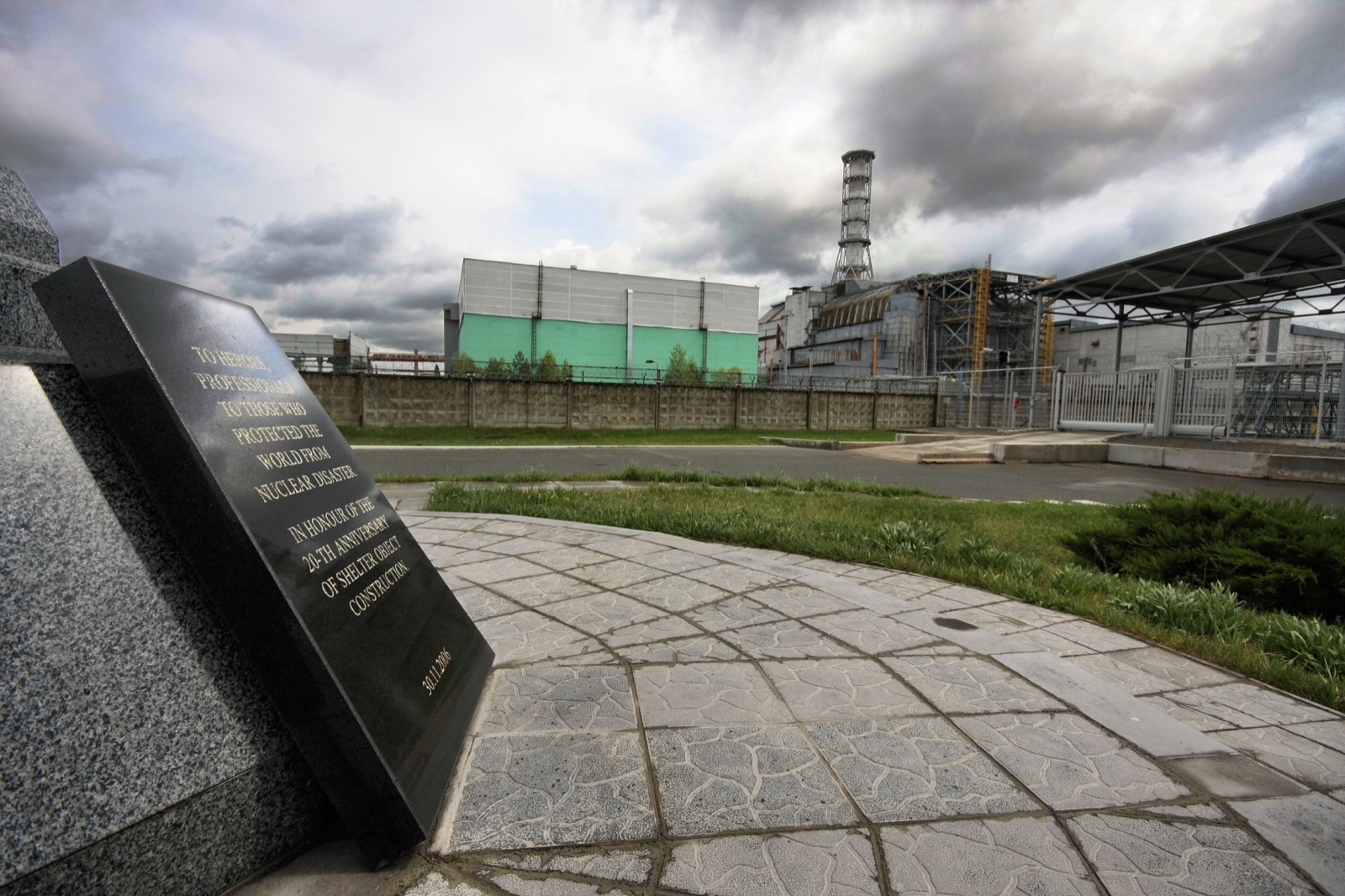
At 1:23:40 a.m. local time on Saturday, April 26, 1986, reactor 4 at the V. I. Lenin Nuclear Power Plant near Pripyat, Ukrainian Soviet Socialist Republic, exploded. A planned low-power safety test, run by night-shift personnel who had been ordered to proceed despite warnings, drove the RBMK-1000 reactor into a state its designers had specifically marked as forbidden. The graphite-tipped control rods, lowered to scram the reactor, briefly added reactivity before shutting it down. The core's thermal output spiked to approximately 30,000 megawatts — ten times rated capacity — in four seconds. Two steam explosions ripped the 1,000-tonne upper biological shield off the reactor and exposed the burning graphite core to the atmosphere. Two workers died at the moment of explosion. Twenty-nine more — firefighters, control-room operators, plant electricians — died from acute radiation syndrome within four months. Forty-eight hours passed before the city of Pripyat (population 49,360) was evacuated. The Soviet government did not publicly acknowledge the accident until April 28, after Swedish nuclear technicians at Forsmark detected the airborne plume 1,200 kilometres to the northwest. The cover-up was, by Mikhail Gorbachev's own subsequent assessment, the moment Soviet glasnost became unavoidable.
Fukushima and the Disaster That Was Foreseen
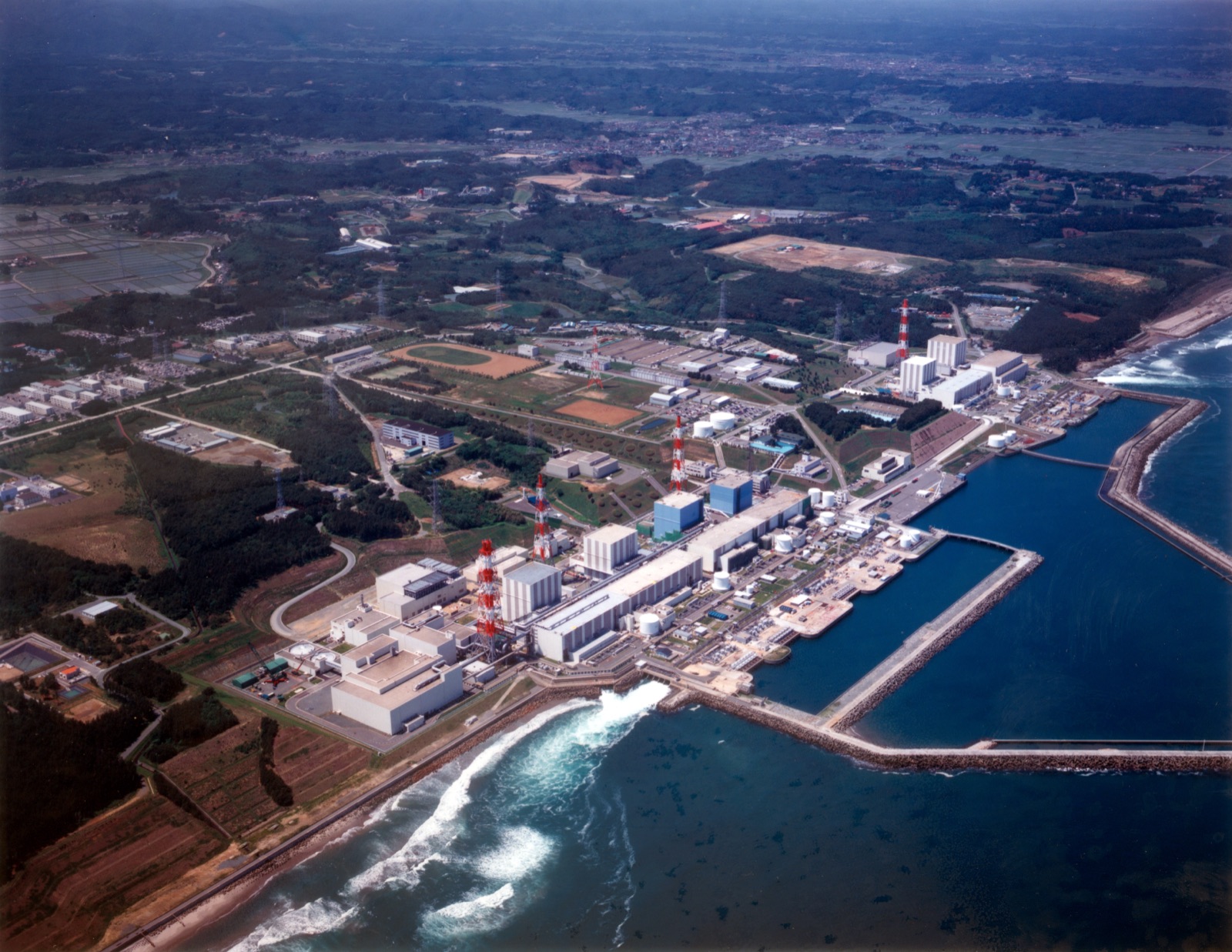
At 14:46 on the afternoon of Friday, March 11, 2011, the seabed ruptured off the Pacific coast of northern Japan in a magnitude 9.0 earthquake — the most powerful ever recorded in the country — and some fifty minutes later a tsunami reaching fourteen metres and more came over the sea wall at the Fukushima Daiichi Nuclear Power Plant, operated by the Tokyo Electric Power Company. The waves flooded the basements where the emergency generators stood, the plant lost all electrical power, and the cooling systems for three operating reactors went dark. Over the following four days the cores of units 1, 2, and 3 melted, hydrogen explosions tore the roofs off reactor buildings on March 12, 14, and 15, and radioactive material spread across the surrounding prefecture and out to sea. The accident was rated, with Chernobyl, at the maximum level of the international scale — Level 7. More than 150,000 people were evacuated from their homes, some of them never to return. And yet the central fact of Fukushima is not the wave. It is that the wave had been foreseen: that TEPCO's own engineers had calculated, three years earlier, that a tsunami of 15.7 metres was possible at the site, and that the company had deferred, doubted, and shelved the finding rather than act on it. When the National Diet of Japan convened the first independent investigation commission in the country's constitutional history, its chairman, Kiyoshi Kurokawa, wrote that what happened at Fukushima 'was a profoundly man-made disaster — that could and should have been foreseen and prevented.' This article examines the four days the cores melted, the warning that was filed away, the word the operator would not say for two months, and the strange arithmetic of accountability that followed: three executives acquitted in a criminal court, and four ordered in a civil one to pay their old company thirteen trillion yen.
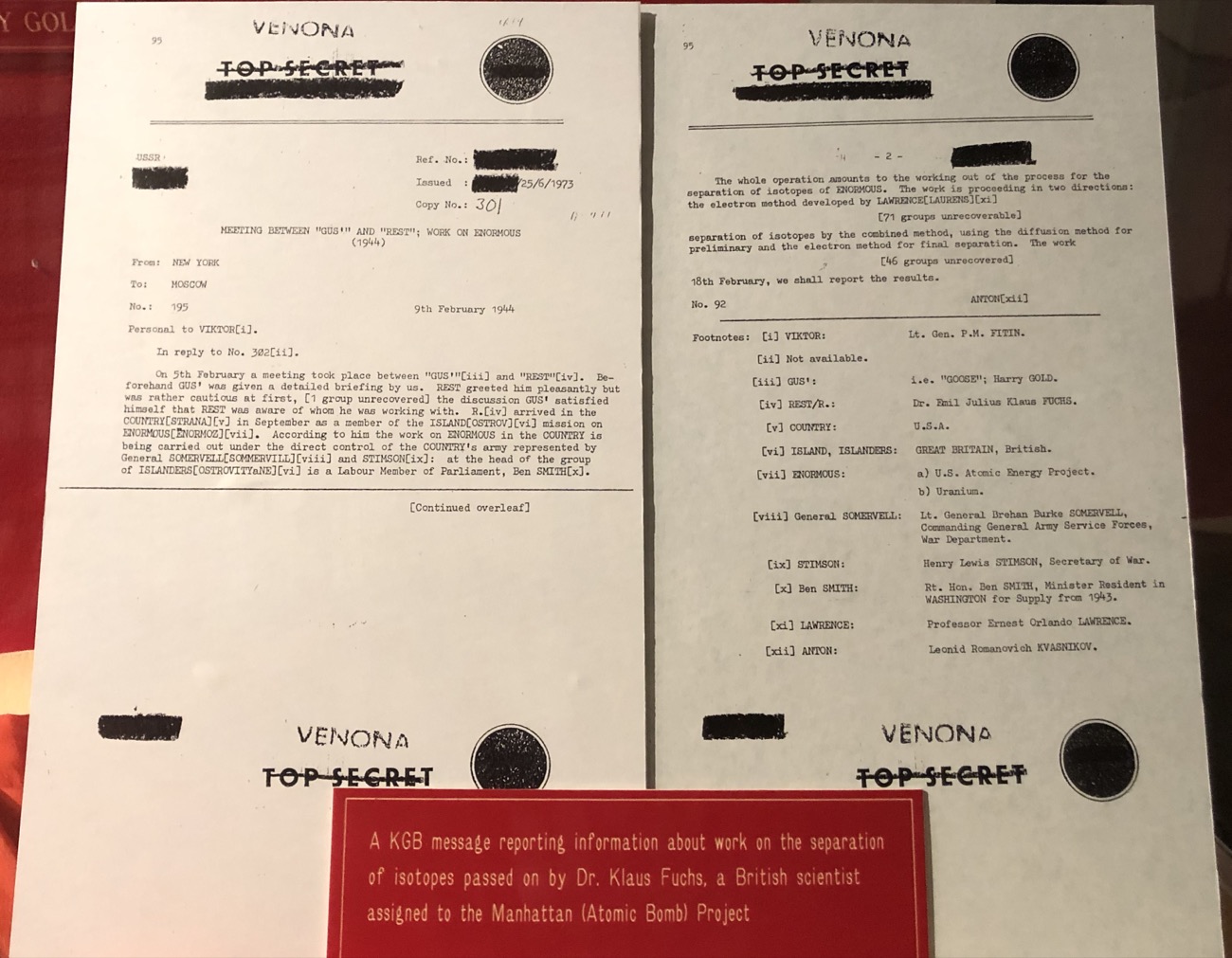
Venona: The Secret Code-Break That Exposed the Soviet Spies
In February 1943, in a converted girls' school outside Washington, a small team of American codebreakers began an attack on a target almost everyone believed was hopeless: the enciphered cable traffic of Soviet intelligence. The Soviets encrypted their most secret messages using a one-time pad, a system that is, in theory, mathematically unbreakable — and the Soviet Union was, at that moment, an ally of the United States in the war against Hitler. Yet the project, later given the codename Venona, would become one of the most consequential intelligence operations of the twentieth century. Exploiting a wartime mistake by Soviet cipher clerks, who had reused pages of supposedly single-use pads, the American cryptanalysts slowly, painstakingly began to read the unreadable. What they found, message by fragmentary message across years of labour, was staggering: the Soviet Union had run a vast espionage campaign inside the United States during the war, with hundreds of sources reaching into the Manhattan Project that built the atomic bomb, the State Department, the Treasury, and the heart of the intelligence services of both America and Britain. Venona helped expose the atomic spy Klaus Fuchs, the ring around Julius and Ethel Rosenberg, and the British traitor Donald Maclean of the Cambridge Five. But the decrypts were guarded with such obsessive secrecy that they could not be used as evidence in open court, and for decades the government knew truths it could not prove and could barely speak. The project remained classified until 1995, when the release of its files rewrote the secret history of the early Cold War. This is the story of the code-break that saw into the heart of Soviet espionage, and of the silence that surrounded it for fifty years.