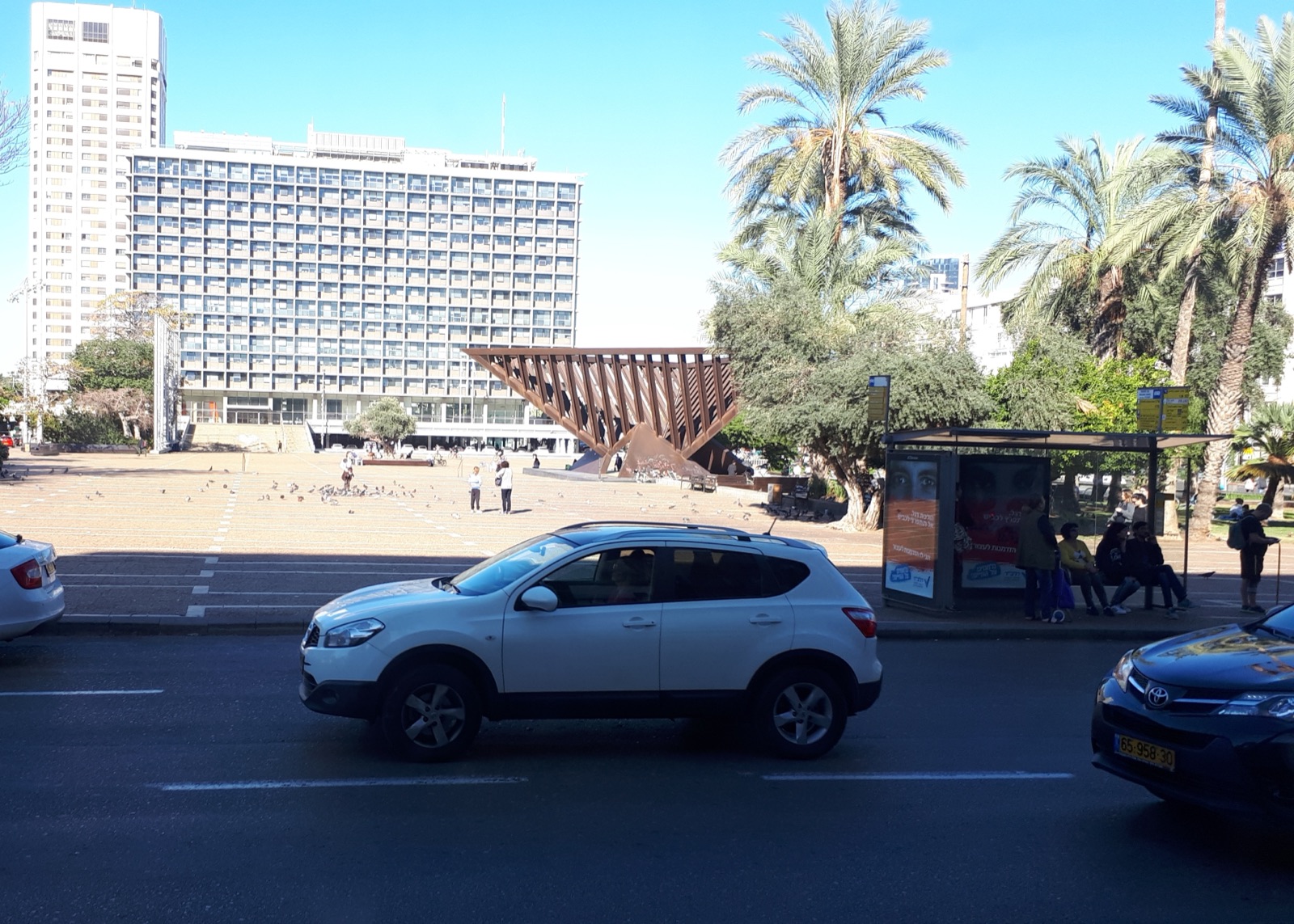
Kings of Israel Square in Tel Aviv — renamed Rabin Square after the assassination — with the slab of Tel Aviv City Hall behind. It was here, at a peace rally on the night of November 4, 1995, that Yitzhak Rabin was shot as he left the stage. (The angular rust-coloured sculpture is Yigal Tumarkin's earlier monument to the Holocaust and Revival, not the Rabin memorial, which stands at the north-east corner where he fell.) Wikimedia Commons / Rakoon, CC0 (public domain).
The Assassination of Yitzhak Rabin
Israel, 1995 — the killing was not a mystery; the assassin confessed at the scene and has never recanted. The unresolved questions are why a state with an informant inside the killer's circle, after a year of open incitement, let it happen
- Category
- Assassinations & Disappearances
- Published
- Length
- 4,850 words · 20 min read
- Author
- The editors
The Assassination of Yitzhak Rabin
Israel, 1995 — the killing was not a mystery; the assassin confessed at the scene and has never recanted. The unresolved questions are why a state with an informant inside the killer's circle, after a year of open incitement, let it happen.
November 4, 1995
The rally had been called to show that the peace camp could fill a square. Through 1995, as the Oslo process moved from the famous handshake on the White House lawn toward the hard business of handing Palestinian cities over to Palestinian control, the streets had belonged to the opposition — to mass demonstrations against the accords, some of them frighteningly venomous. Rabin's supporters wanted a show of the other side, and on the evening of Saturday, November 4, more than a hundred thousand people came to Kings of Israel Square under the banner 'Yes to Peace, No to Violence.'
Rabin, a reserved man who disliked crowds and had worried that the square would stand half-empty, was visibly moved by the turnout. Near the end of the evening he joined in singing 'Shir LaShalom,' the Song for Peace — a 1969 anthem that the political right considered defeatist — and afterward folded the printed sheet of lyrics and tucked it into the breast pocket of his jacket. Then he walked down the stairs at the northern side of the city hall toward the car park where his official car waited.
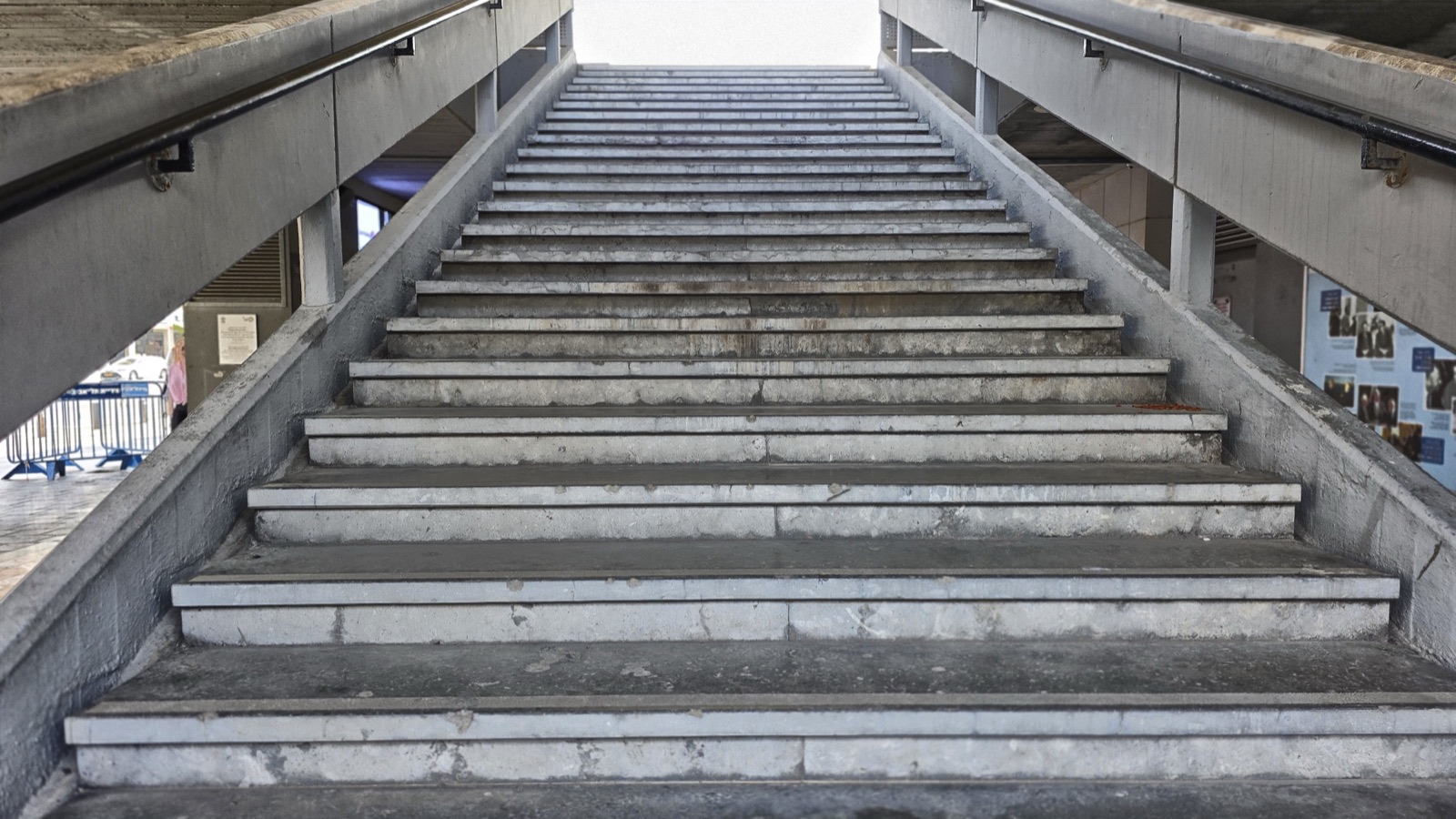
Waiting there, in the area that should have been cleared of everyone without authorisation, was Yigal Amir. He had been in the sterile zone for roughly forty minutes, near the prime minister's car, unchallenged. As Rabin reached the foot of the stairs, Amir stepped forward and fired three times at point-blank range. Two bullets struck Rabin in the back; one wounded a bodyguard, Yoram Rubin, who was bundling the prime minister toward the car. The hollow-point rounds tore through Rabin's lung and major vessels. He was driven the short distance to the Ichilov hospital — the Tel Aviv Sourasky Medical Center — in catastrophic condition.

He did not survive. At about ten past eleven, Rabin's longtime aide Eitan Haber emerged to tell the country that the government of Israel announced 'with shock, with great sorrow, and with deep grief, the death of Prime Minister and Minister of Defence Yitzhak Rabin, murdered by an assassin tonight in Tel Aviv.' In his hand was the song sheet from Rabin's pocket, the words of the Song for Peace blurred and stiffened with blood. Amir, meanwhile, had not attempted to escape. He was wrestled to the ground at the scene within seconds, still holding the pistol, and taken into custody — where, far from denying what he had done, he began to explain it.
The assassin
Yigal Amir was twenty-five years old. He came from a religious family of Yemenite-Jewish background in Herzliya, had served in the Golani infantry brigade, had studied at a hesder yeshiva combining religious study with military service, and was at the time of the murder a student of law and computer science at Bar-Ilan University, the flagship institution of Israel's religious-Zionist world. He was intelligent, articulate, and entirely unrepentant. He told his interrogators, and later the court, that he had acted alone, that he had planned to kill Rabin for months, and that he had done it to stop the Oslo process and the surrender of the biblical Land of Israel to the Palestinians.
What made Amir dangerous was not rage but reasoning. He believed he was applying Jewish law. He invoked two halakhic concepts — din rodef, the law of the pursuer, which permits killing a person who is about to take innocent life, and din moser, which concerns one who hands Jews or Jewish property over to a hostile power — and argued that Rabin, by ceding land and, as Amir saw it, endangering Jewish lives, had made himself a legitimate target under both. These were not Amir's private inventions; versions of the argument had circulated in parts of the extremist religious right, and a handful of fringe rabbis had been asked, and had reportedly mused, about whether such rulings might apply to Rabin. Amir took the abstraction and made it a bullet. He maintained at trial that he had acted on the authority of God and Jewish law, and he has spent the decades since in prison without ever recanting — marrying there in 2004, fathering a child after a court granted a conjugal visit, and continuing, in occasional reported remarks, to express pride in the murder.
The peace that enraged them
To understand why a law student decided that his prime minister had to die, one has to understand what Rabin had done — and why, to a particular slice of Israeli society, it felt not like diplomacy but like betrayal of a sacred trust.
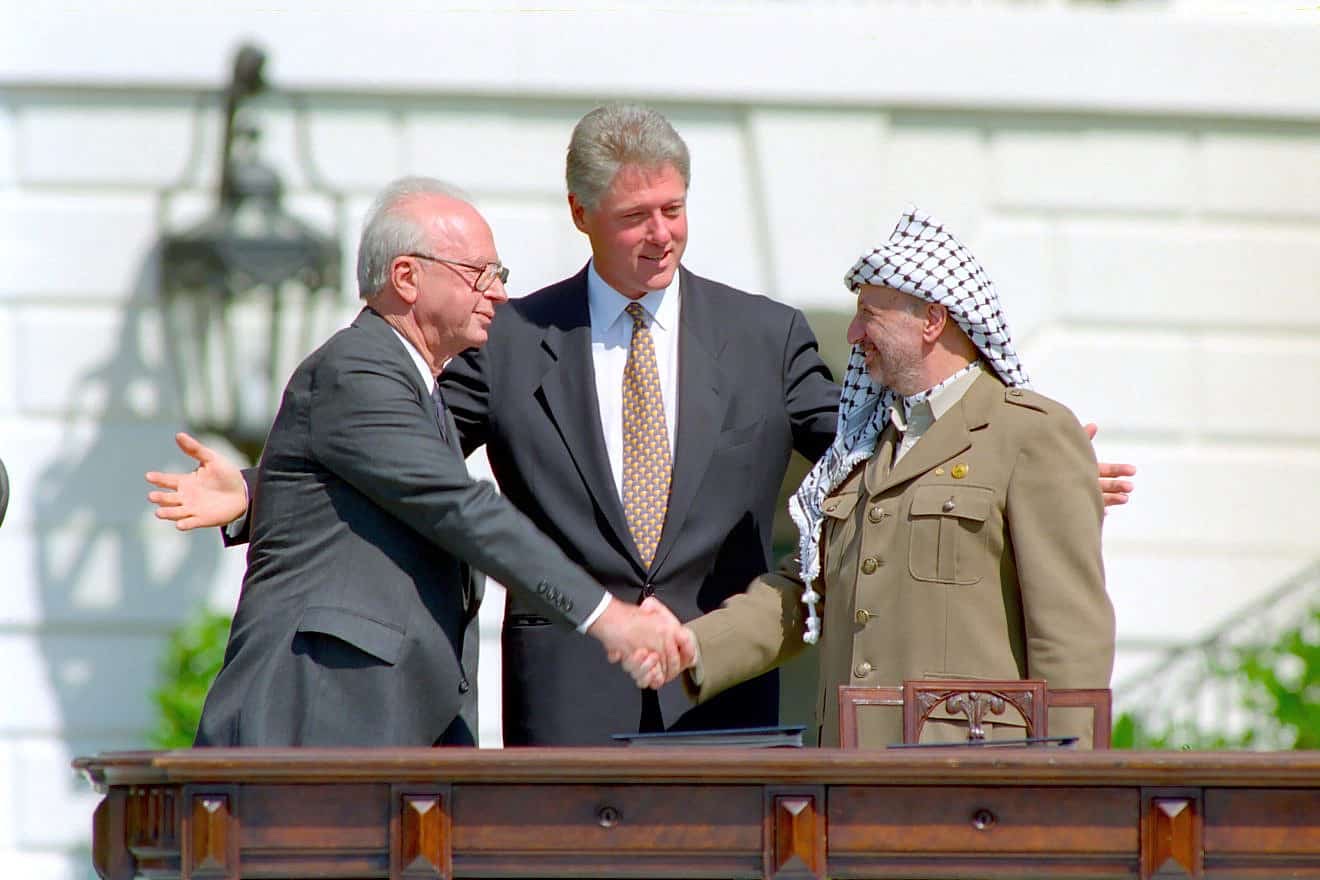
Rabin's life was, until its last chapter, a soldier's. He had commanded on the battlefield, served as chief of staff during the Six-Day War of 1967 in which Israel captured the West Bank, and built his political career on a reputation as a hard-headed guardian of the country's security — 'Mr Security' himself. It was precisely that biography that made his turn to peacemaking so consequential, and to his enemies so unbearable. In 1993, after months of secret talks in Norway, his government concluded the Oslo Accords with the Palestine Liberation Organisation: a Declaration of Principles under which the two sides recognised each other, and a framework for gradual Palestinian self-rule in the Gaza Strip and the West Bank. On September 13, 1993, on the South Lawn of the White House, Rabin shook the hand of Yasser Arafat — the leader of the organisation Israel had treated for decades as the embodiment of terrorism — with President Bill Clinton between them. The handshake, and the visible reluctance on Rabin's face as he gave it, became the defining image of the era.
For most of the world, and for much of Israel, Oslo was a brave gamble for peace, and it brought Rabin, Peres, and Arafat the Nobel Peace Prize in 1994. For the religious-nationalist right, it was something close to sacrilege. The land that Oslo proposed to hand over — Judea and Samaria, in the biblical names the settlement movement used — was, to that world, the God-given heartland of the Jewish people, not a bargaining chip. To cede it to Arafat was, in this view, both a religious transgression and a mortal danger. And the danger did not stay theoretical: through 1994 and 1995 a wave of Hamas suicide bombings on Israeli buses and streets killed scores of civilians, and the opponents of Oslo seized on each atrocity as proof that Rabin's peace was delivering not safety but coffins. The signing of the Oslo II agreement in September 1995, which extended Palestinian self-rule across much of the West Bank, brought the fury to its peak. It was six weeks later that Amir fired.
The incitement
Amir did not act in a vacuum, and the vacuum is the part Israel has found hardest to look at.
For roughly a year before the murder, the campaign against Rabin and Oslo had escalated from political opposition into something darker. At rallies, Rabin was branded a traitor — boged — and a murderer — rotzeach. Placards and posters depicted him in the SS uniform of a Nazi officer, and in the checkered keffiyeh of Yasser Arafat. Crowds chanted 'death to Rabin' and 'with blood and fire we will expel Rabin.' At a now-infamous opposition rally in Zion Square in Jerusalem on October 5, 1995, the leader of the opposition, Benjamin Netanyahu, addressed the crowd from a balcony while below him demonstrators brandished the SS-uniform image and, by some accounts, a mock coffin. Netanyahu condemned the assassination when it came and denied that his rhetoric had licensed it; Rabin's widow, Leah Rabin, never accepted the denial, and held the incitement — and those who had ridden it — partly responsible for her husband's death.
The atmosphere had a specific accelerant on the radical edge — a small, loud organisation called Eyal, the Jewish Fighting Organisation, whose provocations helped supply the imagery of a movement supposedly on the brink of violence. Its prominence, it would later emerge, was not quite what it seemed, because the man at its centre was working for the state.
The security failure
The first official reckoning was institutional rather than conspiratorial, and it was damning.
Within days of the murder the government appointed a commission of inquiry under Meir Shamgar, the recently retired President of the Supreme Court. The Shamgar Commission reported in 1996, and its findings on the conduct of the Shin Bet — the General Security Service, responsible for protecting the prime minister — were severe. The 'sterile' area beside the city hall had not been sterile; Amir had been able to stand within it, close to Rabin's car, for a long period without being identified or removed. Coordination between the protective detail and the local police had been poor. The most basic assumption of close protection — that the immediate space around the principal is controlled — had simply failed. Carmi Gillon, the head of the Shin Bet, took responsibility and resigned.
What made the lapse worse was that Amir had not been a careful conspirator who slipped through a single crack. He had stalked Rabin for the better part of a year and had positioned himself to strike on earlier occasions — by his own account at a Holocaust memorial event at Yad Vashem in January 1995, and at the dedication of a road interchange — turning back each time only because the moment was not right, the prime minister out of reach, the angle wrong. He had spoken of his intention to kill Rabin within his own circles. He was not invisible; he was simply not identified as the threat he was, by a service whose own informant moved in the very world where Amir talked. On the night itself, the gap between the protective detail and the surrounding police left the parking area effectively open, and Amir walked into it with a loaded pistol and waited. A determined assassin who announces himself, tries more than once, and is finally allowed to stand unchecked beside his target's car for forty minutes is not the signature of bad luck. It is the signature of a system that had stopped watching the things it existed to watch.
The informant
The genuinely troubling thread of the Rabin case is not a hidden gunman. It is a man named Avishai Raviv.
Raviv was a far-right activist, the head of the radical Eyal group, a familiar face at the most extreme anti-Oslo demonstrations — and, in secret, an informant of the Shin Bet, run under the codename 'Champagne.' He had known Yigal Amir; the two had moved in the same small world of religious-nationalist militancy, and Amir had, by various accounts, spoken in that world of his desire to kill Rabin. The questions write themselves. If the state's own agent was embedded in this milieu, did he know that Amir was serious? Did the Shin Bet? If it did, why was Amir not stopped — and if its agent was helping to whip up the very atmosphere of incitement, what exactly was the state's hand in the conditions that produced the murder? It was reportedly Raviv who had a part in circulating one of the notorious images of Rabin in an SS uniform — an agent provocateur, on the public payroll, manufacturing the appearance of an extremism he was supposed to be monitoring.
These are not the questions of cranks; they are the questions the documented facts force. The official answer, in the end, was that Raviv had not known of a concrete, imminent plan. He was investigated, and charged in connection with a failure to prevent the assassination; in 1999 a court acquitted him, finding the evidence insufficient to prove that he had known Amir intended to go through with it. That verdict closed the legal question without dissolving the unease. An informant whose job was to watch the violent fringe was personally acquainted with the man who killed the prime minister, and the system around him neither connected nor acted on what it might have known. That is a failure of a deeper kind than a breached cordon — and it is the part of the Rabin case that remains, reasonably, contested.
The conspiracy theories
Onto that real and unresolved unease, a parallel structure of pure conspiracy theory was built — and the two should not be confused, because the second discredits the first.
The theories hold, in various combinations, that Amir fired blanks and Rabin was killed elsewhere; that the Shin Bet itself murdered him and framed Amir; that the bodyguard Yoram Rubin was complicit; that the whole event in the square was staged. Their evidentiary anchor is usually the Kempler film — amateur footage shot from a nearby rooftop by a bystander, Roni Kempler, which captured the moments around the shooting — read, by the theorists, as showing inconsistencies in the official account. The most energetic promoter of this material, the writer Barry Chamish, built an entire cottage industry around the claim that Rabin was the victim of a conspiracy far larger than one law student with a pistol.
The theories do not survive contact with the evidence. Amir was seized at the scene with the weapon, confessed within minutes, has maintained for thirty years that he killed Rabin, and has never once suggested he was a patsy — an extraordinary thing to ask of a supposed frame-up, that its scapegoat should insist, against his own interest and for decades, on his guilt. The forensic evidence, the eyewitnesses, the medical findings, and the assassin's own unwavering pride in the act all point one way. What sustains the theories is not evidence but need: the difficulty, for a society, of accepting that a man formed within its own mainstream religious-nationalist world killed its prime minister over the politics of peace — and the easier comfort of believing the killer must have been someone else's creature.
The aftermath
The shot in the car park did not only kill a man; it killed, by most reckonings, a possibility.
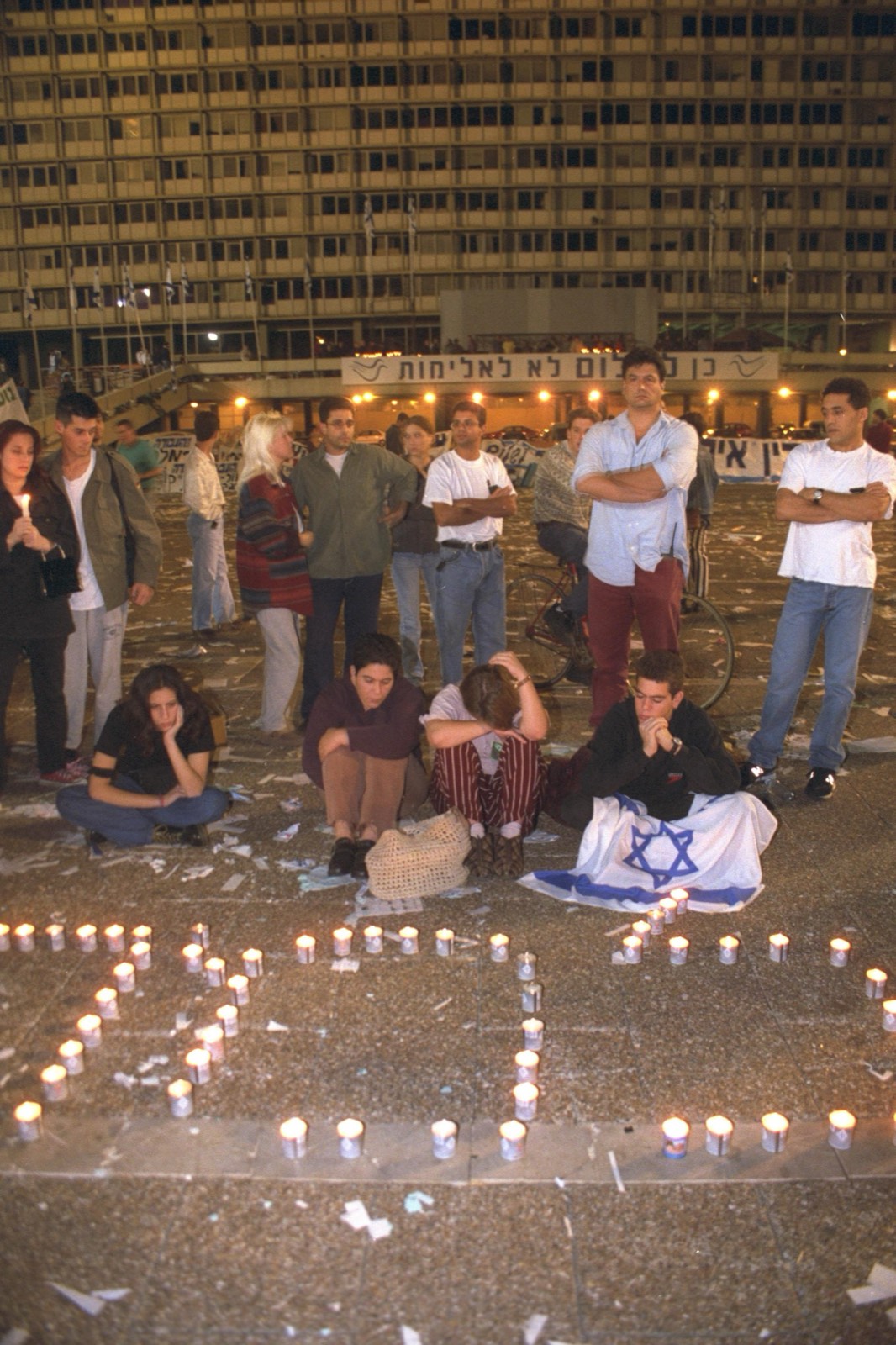
In the immediate term, Shimon Peres, Rabin's old rival and partner and the co-architect of Oslo, became acting prime minister. Israel and much of the world mourned; the square filled with the candles of grieving teenagers; the place was renamed Rabin Square, and the anniversary became a day of national remembrance. But the political momentum did not hold. In the election of May 1996 — held in the long shadow of a wave of suicide bombings as well as of the assassination — Peres was narrowly defeated by Benjamin Netanyahu, and the government that had signed Oslo gave way to one deeply sceptical of it. Whether Rabin, had he lived, could have carried the process to a settlement is one of history's great unanswerable questions; that his death removed the one figure with the security credentials and the public trust to try is much harder to dispute. The assassin had set out to stop Oslo. In the narrowest political sense, he was not wrong about what his bullet could do.
The deeper damage was to the country's sense of itself. Israel had been founded on the premise that the gravest dangers came from outside; the discovery that a Jew had murdered the prime minister, in the name of Judaism, over the politics of the conflict, forced a reckoning with the enemy within that has never fully resolved. Each year on the anniversary the country pauses to remember, and each year the same arguments resurface: over who share the blame for the incitement, over whether the lessons were learned, over whether the peace died with the man. More corrosively still, the conspiracy theories did not fade with time but settled into a stubborn sediment of public doubt — surveys in the years since have repeatedly found that a meaningful minority of Israelis profess uncertainty about the official account, a remarkable figure for a murder so thoroughly documented and so fully confessed. That doubt is itself part of the assassination's legacy: not because the facts are unclear, but because a society that cannot agree on why the murder happened finds it easier to quarrel over whether it happened as everyone knows it did.
What the question still is
The Rabin assassination is the rare political murder that is, at its centre, not a whodunit at all. The killer is known, convicted, unrepentant, and alive; the weapon, the motive, and the act are documented beyond reasonable doubt. To treat it as an unsolved mystery — to chase blanks and body doubles and rooftop footage — is to misunderstand it, and worse, to grant the murderer the very thing he does not deserve: the suggestion that he might not have done it.
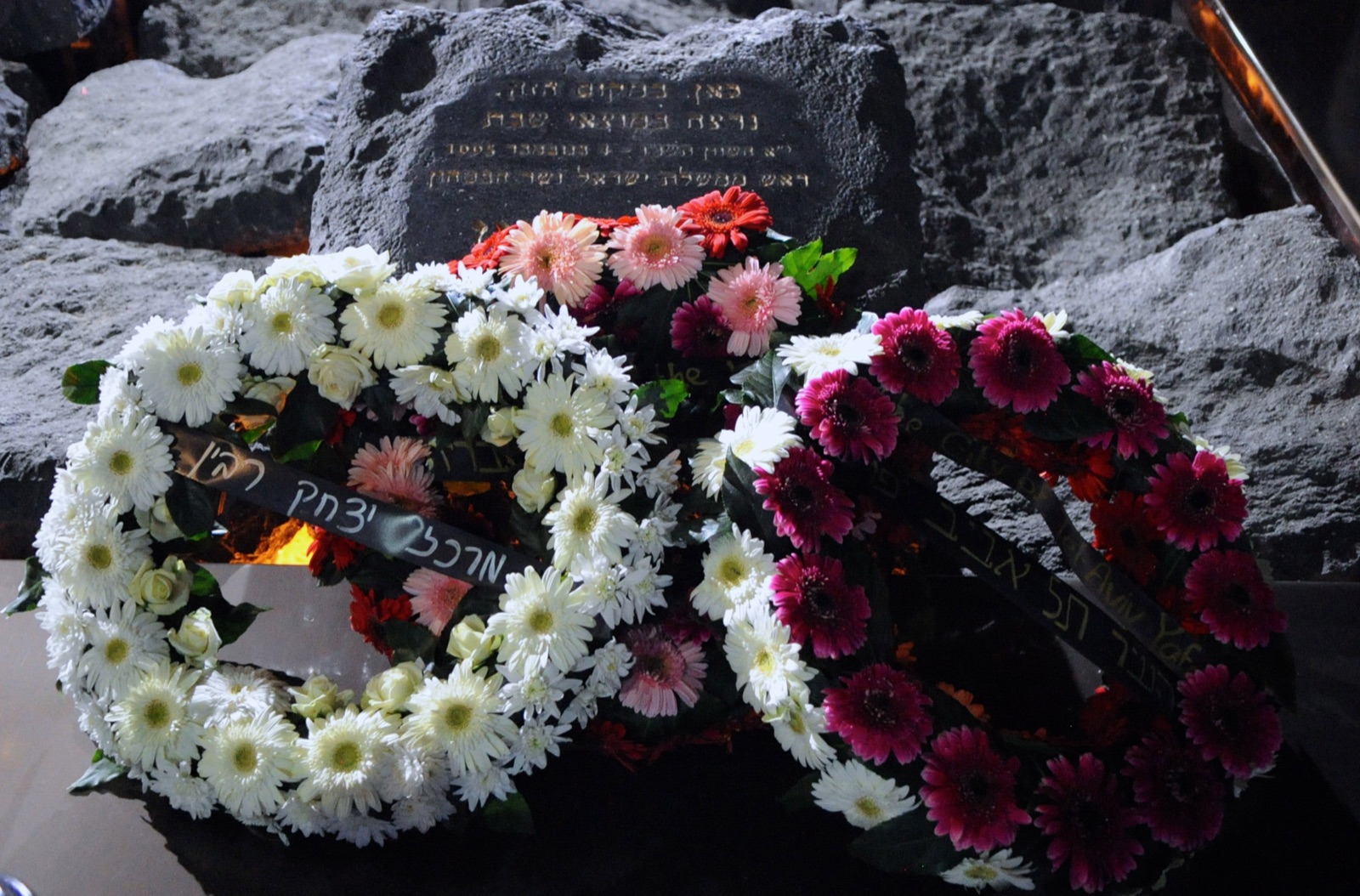
The real questions are the ones the fantasies crowd out. How did a year of placards showing an elected prime minister as an SS officer come to seem, to the people waving them, like ordinary politics? How did a security service lose control of the few square metres around the man it existed to protect? And what does it mean that the state had an agent inside the violent fringe, on nodding terms with the assassin, and that the machine around that agent failed either to know or to act? The Shamgar Commission answered the second question and gestured at the third; the acquittal of Avishai Raviv closed the legal file on it without settling the conscience of it.
Yigal Amir wanted to be understood as a man who saved his people from a traitor. He should be understood as what the evidence shows him to be: a citizen of the mainstream religious-nationalist world, who took an argument that was circulating in that world and carried it to its end, in a country whose politics had spent a year teaching that the prime minister was a traitor and that traitors deserve what they get. The mystery of Rabin's death is not who fired. It is how a society talks itself, out loud and in public, to the edge of a killing — and what its institutions do, and fail to do, while it happens.
Sources
Primary
- The Commission of Inquiry into the Murder of the Late Prime Minister Yitzhak Rabin (the Shamgar Commission), report, 1996 (with classified annexes).
- The criminal trial and conviction of Yigal Amir, Tel Aviv District Court, 1996, and subsequent appellate rulings.
- The 1999 trial and acquittal of Avishai Raviv on the charge of failing to prevent the assassination.
- The Kempler film — contemporaneous amateur footage of the rally and shooting — as entered into the public record.
- Eitan Haber's announcement of Rabin's death, November 4, 1995, and the text of the bloodstained 'Shir LaShalom' lyric sheet.
- Contemporary Israeli police and Shin Bet statements on the apprehension and confession of Yigal Amir.
Secondary
- Contemporaneous and retrospective reporting in Haaretz, the Jerusalem Post, Yedioth Ahronoth, the BBC, The New York Times, and The Guardian on the assassination, the inquiry, the trials, and the incitement campaign.
- Dan Ephron, Killing a King: The Assassination of Yitzhak Rabin and the Remaking of Israel (2015).
- Leah Rabin, Rabin: Our Life, His Legacy (1997).
- Reporting and analysis of the Avishai Raviv affair and the agent-provocateur question.
Academic / reference
- Scholarship on political assassination, religious extremism, and the concepts of din rodef and din moser in their misuse by the violent fringe.
- Studies of incitement and political violence in Israel in the Oslo period.
- Survey research on the persistence of Rabin assassination conspiracy theories in Israeli public opinion.
Inspired this / based on it
Dan Ephron
W. W. Norton. The definitive English-language reconstruction, interweaving Rabin's last year with Amir's plotting.
Erez Laufer
Documentary built from Rabin's own recordings, speeches and writings, released for the 20th anniversary.
Amos Gitai
Israeli docudrama on the assassination and the Shamgar Commission, with the incitement campaign as backdrop.
Michael Karpin and Ina Friedman
Metropolitan Books. Early investigation of the religious-extremist milieu and the incitement that preceded the murder.
Filed under
- #rabin-1995
- #yitzhak-rabin
- #yigal-amir
- #oslo-accords
- #shamgar-commission
- #shin-bet
- #avishai-raviv
- #incitement
- #din-rodef
- #shir-lashalom
- #israel
- #1990s
- #confirmed
Click any tag for every article carrying it.
Continue reading
The Olof Palme Assassination
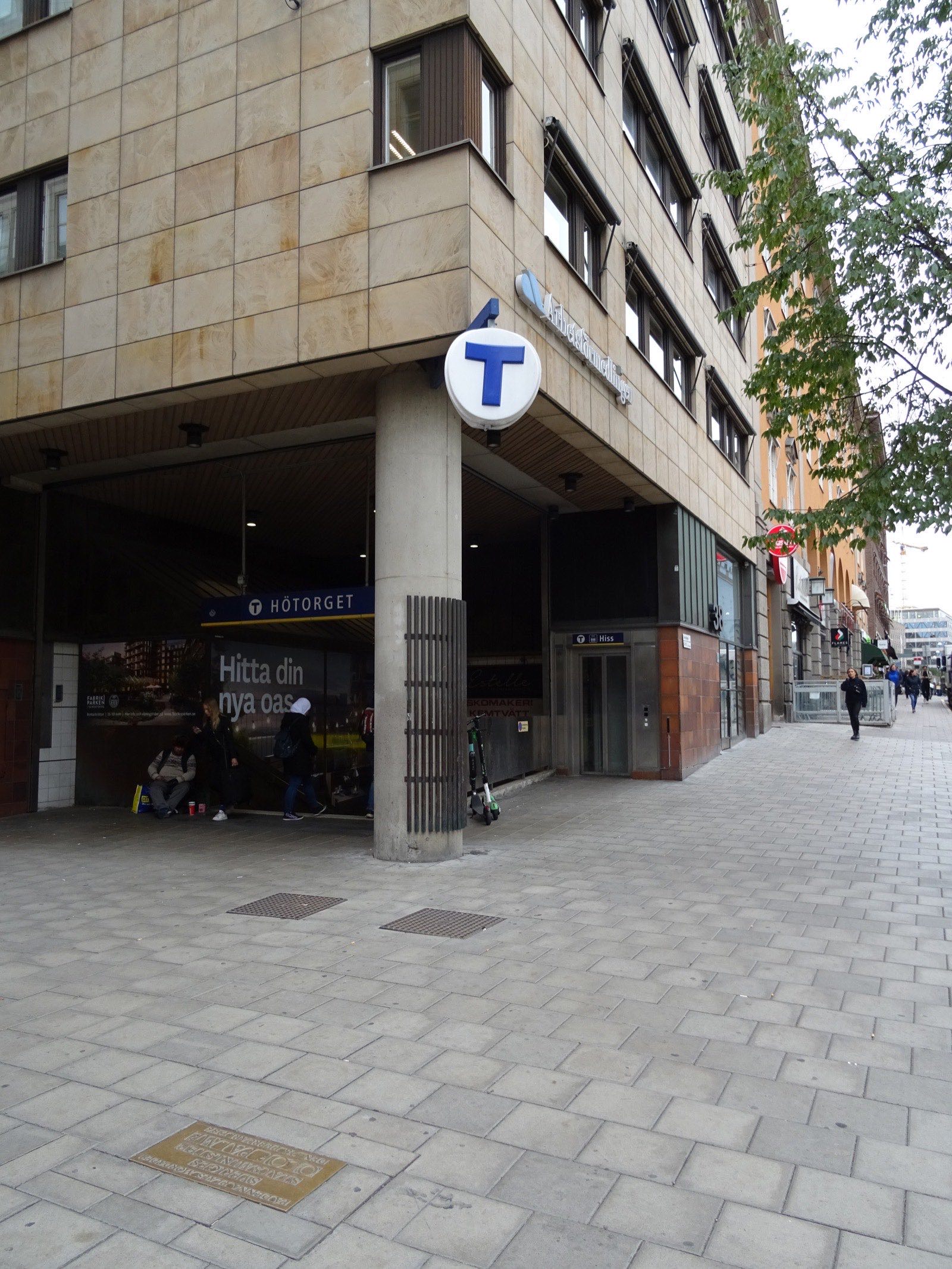
At 11:21 p.m. on Friday, February 28, 1986, the Prime Minister of Sweden, Olof Palme, was shot in the back at point-blank range on Sveavägen, Stockholm, while walking home from a cinema with his wife Lisbet. Lisbet Palme was grazed by a second shot. Olof Palme was 59 years old. He had been the Prime Minister of Sweden from 1969 to 1976 and again from 1982. He had no bodyguards that night. The killer ran east up Tunnelgatan and disappeared. He has never been positively identified. Sweden's Palme Commission and its successor police investigation ran for 34 years. On June 10, 2020, Chief Prosecutor Krister Petersson publicly named the most likely perpetrator — a Swedish graphic designer named Stig Engström, the so-called "Skandiamannen" — and simultaneously closed the case because Engström had died in 2000 and could not be tried. The 40-year-old investigation produced 22 binders of investigative material, dozens of failed theories, one wrongful conviction, and no court ruling. It is the largest unsolved political assassination in modern European history.
The JFK Assassination
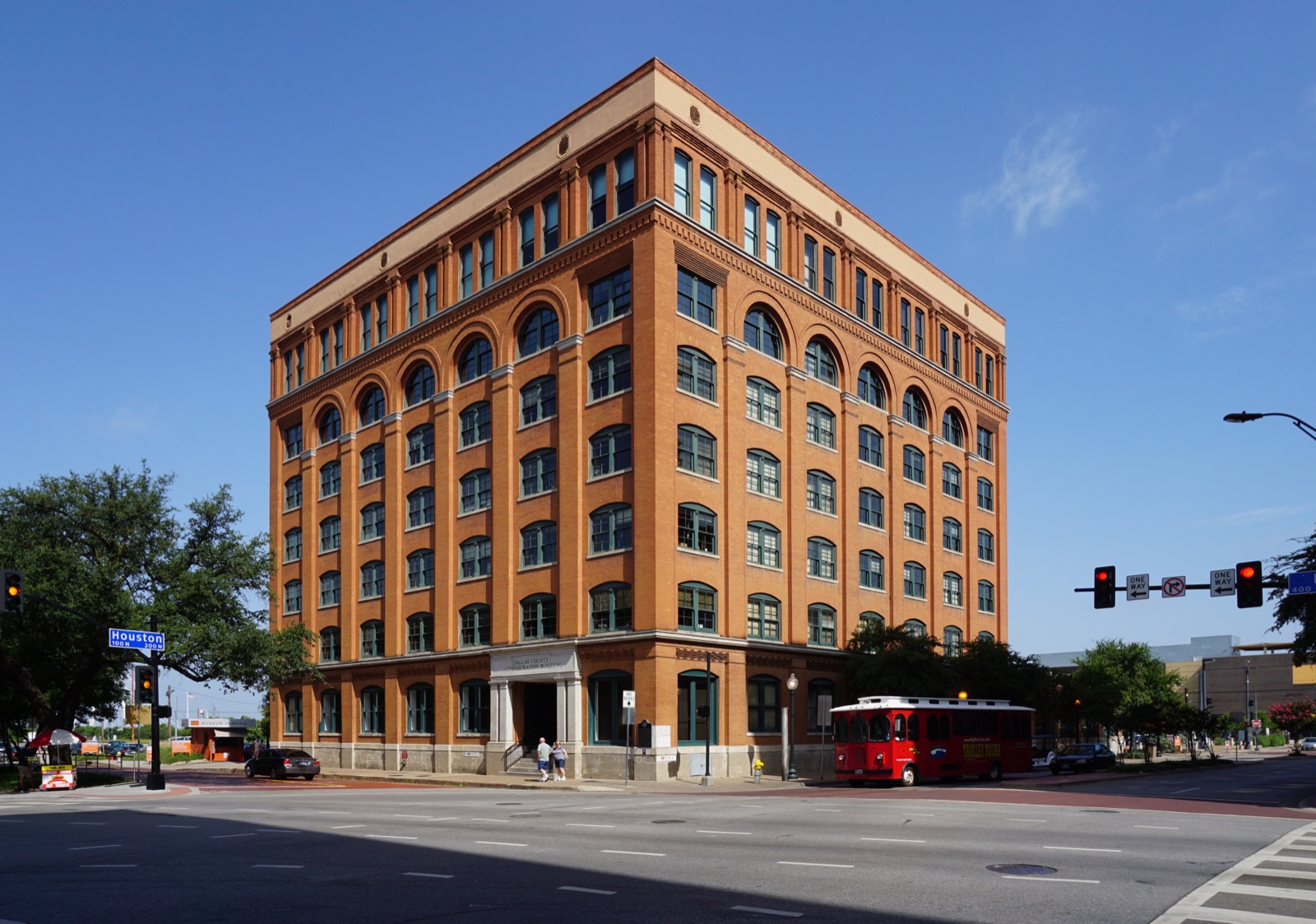
At 12:30 p.m. local time on Friday, November 22, 1963, three rifle shots were fired at the presidential motorcade as it traveled through Dealey Plaza in downtown Dallas. The 35th President of the United States, John Fitzgerald Kennedy, was struck twice — first through the neck and then in the head. He was pronounced dead at Parkland Memorial Hospital at 1:00 p.m. The man arrested for the killing — Lee Harvey Oswald, a 24-year-old former U.S. Marine who had defected to the Soviet Union in 1959 and returned to the United States with his Russian wife in 1962 — was shot to death two days later, on November 24, in the basement of the Dallas Police Department by Jack Ruby, a Dallas nightclub owner with documented organized-crime connections. Oswald was never tried. The Warren Commission, appointed by President Lyndon Johnson on November 29, 1963, concluded in its September 1964 report that Oswald had acted alone. The 1976-1979 House Select Committee on Assassinations concluded that Oswald had assassinated Kennedy but that 'a conspiracy was probable' based on disputed acoustic evidence. Approximately 5 million pages of classified material related to the case have been declassified in waves since the 1992 JFK Records Act — most recently in major batches in October 2017, November 2017, April 2018, December 2022, and June 2023. The final tranche under Trump's second presidency was released March 18, 2025. The declassifications have confirmed extensive operational CIA activity connected to Oswald's pre-assassination movements but have not produced documentary evidence of a second shooter or of senior-level U.S. government involvement. The case remains the foundational American conspiracy story and the principal modern example of how partially-declassified state files can sustain — rather than resolve — public doubt.
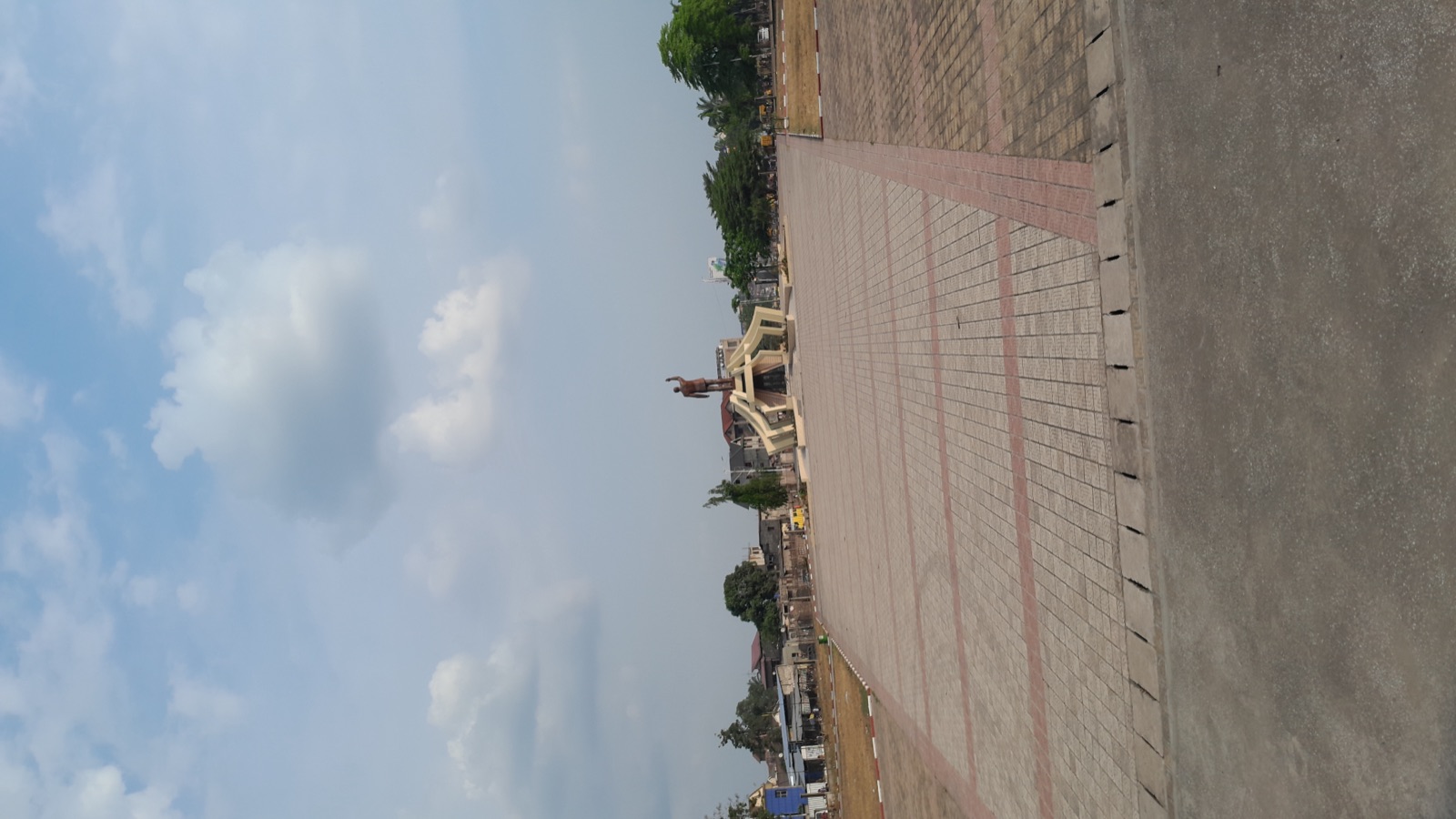
The Assassination of Patrice Lumumba
At approximately 9:43 p.m. on Tuesday, January 17, 1961, the first Prime Minister of the newly independent Democratic Republic of the Congo, Patrice Émery Lumumba, was shot to death by a Belgian-supervised firing squad in a forest clearing outside Élisabethville (now Lubumbashi) in the secessionist Katanga province. He was 35 years old. He had been in office for less than three months before being deposed by a Belgian-and-American-supported coup, held in extralegal detention for two months, transferred to his political enemies on January 17 under explicit Belgian escort, and killed within hours of arrival. The U.S. Central Intelligence Agency had a parallel plan to poison him with a tube of doctored toothpaste; the CIA plan did not need to be activated because the Belgian-Katangan operation succeeded first. The Belgian government formally acknowledged its 'moral responsibility' in 2002 after a Belgian parliamentary inquiry. The Belgian state returned Lumumba's recovered tooth — the only physical remain that had not been dissolved in acid by his Belgian guards — to his family in Brussels on June 20, 2022, in a formal ceremony attended by Belgian Prime Minister Alexander De Croo. King Philippe of Belgium had earlier, in June 2020, issued the first formal Belgian royal expression of regret for the colonial period. The Congolese state has yet to conduct a comprehensive investigation.