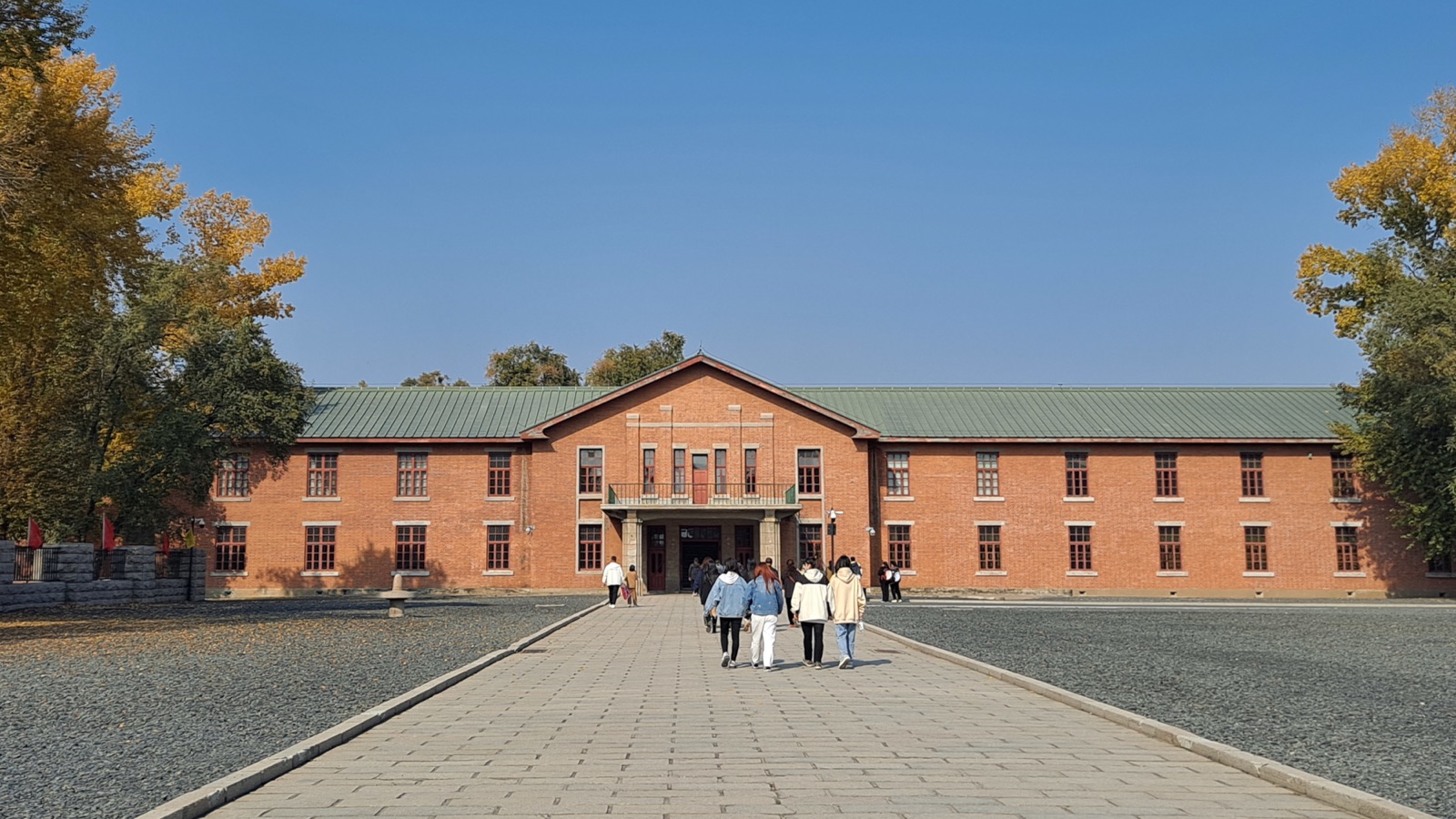
The preserved former headquarters of Unit 731 at Pingfang, now the Crimes Evidence Museum (Chinese: 侵华日军第七三一部队罪证陈列馆). The museum opened to the public in 1985 and was substantially expanded in 2015. Wikimedia Commons, CC BY-SA 4.0.
Unit 731
Pingfang, Manchuria — 1936-1945
- Category
- State & Intelligence Operations
- Published
- Length
- 3,700 words · 17 min read
- Author
- The editors
Unit 731
Pingfang, Manchuria — 1936-1945.
The conception
Shirō Ishii had been a Kyoto Imperial University-trained microbiologist before joining the Imperial Japanese Army Medical Corps. In 1928-1930, he had been sent on a two-year study tour of European and American military medicine — visiting France, Germany, the United States, the Soviet Union, and several other countries. His observations during the tour, recorded in internal Army medical-corps memos, led him to conclude that biological warfare offered Japan a strategic asymmetry: a research-intensive, low-resource weapons program that could compensate for Japan's industrial disadvantage relative to the Western powers.
Ishii submitted formal proposals to the Army Ministry between 1930 and 1932. His advocacy was strengthened by the 1925 Geneva Protocol, which prohibited biological and chemical weapons but which Japan had signed without ratifying. Ishii's specific argument was that Geneva-Protocol non-ratification permitted research; and that even without ratification, the threat of biological retaliation might constrain other powers from deploying chemical weapons against Japan.
In 1932, the Imperial Japanese Army established the Army Epidemic Prevention Research Laboratory at the Tokyo Army Medical College. The laboratory was officially a defensive research operation. Its actual mission, by Ishii's contemporary documentation, was offensive biological-warfare development.
The decision to relocate operations to occupied Manchuria came in 1936. The reasons, by the internal documentation:
- Distance from Tokyo for plausible deniability if the program's scope became externally known.
- Access to subjects for testing — a population of Manchurian Chinese, Korean, and Russian-emigrant civilians without legal recourse.
- Climate conditions appropriate for the cold-weather research Ishii had identified as a priority.
- Proximity to potential battle zones (Soviet Union, China) for operational deployment.
The Pingfang facility began construction in 1936 and reached its full operational scale by 1939.
The facility
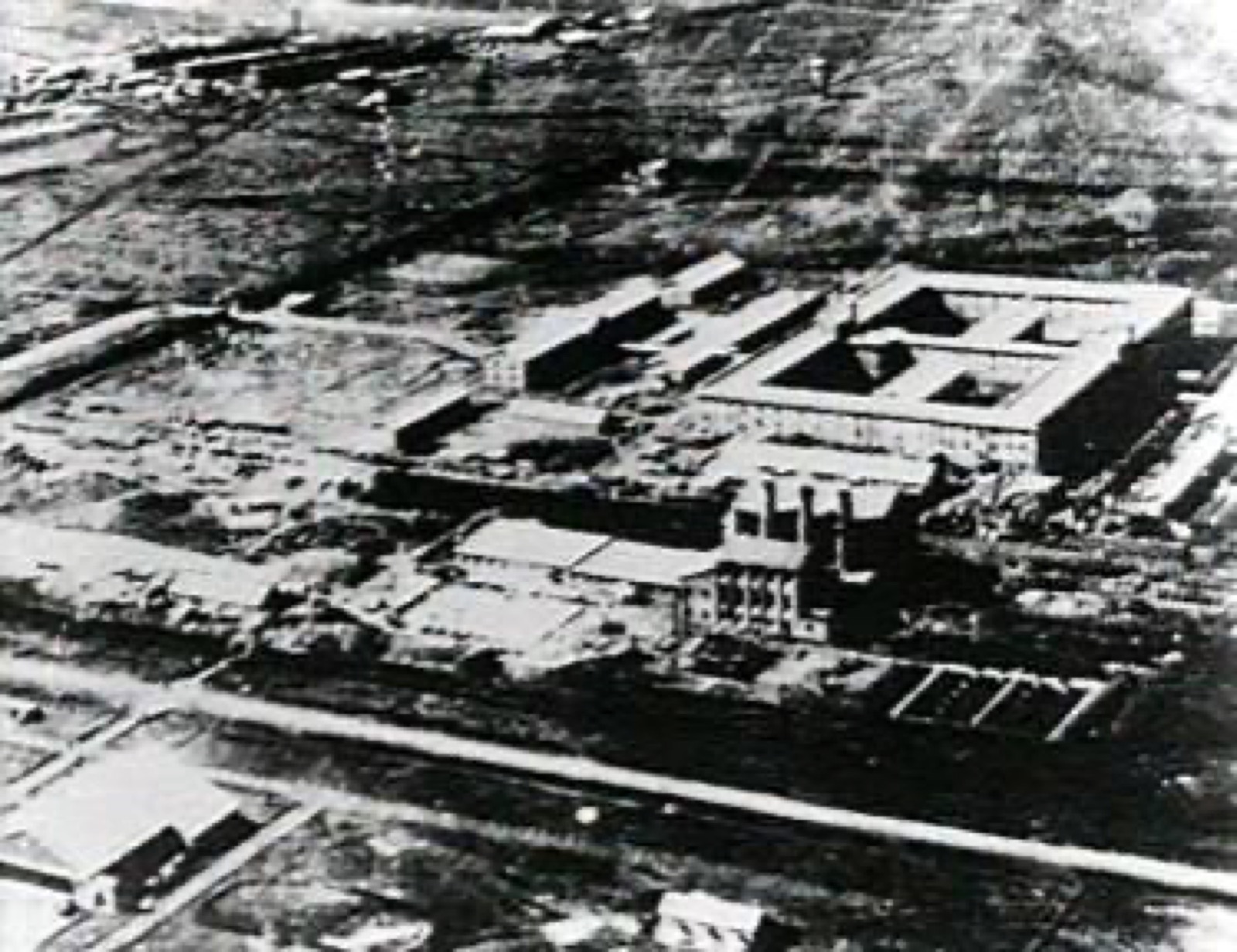
The Pingfang compound at peak operation occupied approximately 6 square kilometers and contained approximately 150 buildings. The principal structures:
- The central square building (the "Ro Block") — a four-story block-style structure containing the principal laboratories, the prisoner-holding cells (approximately 400 capacity), the operating theaters for vivisection, and the senior staff offices.
- Specialized research buildings — bacteriology (Building 1), pathology (Building 2), entomology and plague-flea breeding (Building 3), and others.
- The crematorium — a large industrial-scale facility for disposing of experimental subjects.
- Staff residential housing — for approximately 3,000-4,500 personnel.
- Agricultural and animal-husbandry facilities — for breeding experimental animals (rats, mice, monkeys, horses).
- An airfield — for Unit 731 aircraft and for the field- deployment plague bombs.
- The Anda test range — approximately 150 km north, where weapons-testing experiments were conducted using prisoners.
The total annual operating budget of Unit 731 at peak (1942-44) was approximately 10 million yen, equivalent to approximately $200 million in 2026 U.S. dollars. The unit's annual production capacity at peak: approximately 300 kg of dried bacteria-rich agar concentrate per month, sufficient for substantial-scale biological weapons deployment.
The experiments
The experimental program is documented through the 1949 Khabarovsk trial confessions, post-war Japanese-veteran testimonies (notably the 1981 confessions of former Unit 731 medical officer Naoji Uezono and the 1989 confessions of former member Yoshio Shinozuka), Chinese historical research based on post-1949 archival access, and U.S. military intelligence reports based on direct post-war interviews with Ishii and other senior staff.
The program's principal experimental categories:
Lethal infection studies. Prisoners — internally referred to as maruta ("logs," a term derived from the cover story that the Pingfang facility was a lumber mill) — were deliberately infected with bacterial pathogens including Yersinia pestis (plague), Bacillus anthracis (anthrax), Vibrio cholerae (cholera), Salmonella typhi (typhoid), and others. Infection was via various routes: injection, ingestion, aerosol inhalation, contaminated wound, and (in some experiments) deliberate flea infestation. Mortality data was documented; the purpose was to establish the optimal route of infection and the effective dose for weapons-deployment planning.
Hypothermia and frostbite studies. Prisoners — primarily during winter months — were exposed to freezing temperatures to study frostbite progression, the effects of rewarming, and the limits of human cold tolerance. Documented procedures included immersion in freezing water of arm or leg, prolonged outdoor exposure with monitored body-temperature recording, and deliberate amputation of frozen limbs to study tissue damage.
Vivisection. Living prisoners were dissected, typically without anesthesia (which was withheld because anesthesia was believed to alter physiological responses being studied). The procedures included exploration of internal organs during active infection, removal and examination of organs from living subjects, and assessment of disease progression. The practice has been confirmed by multiple post-war Unit 731 veteran confessions including Akira Makino (1981) and Toshimi Mizobuchi (1989).
High-altitude and pressure studies. Prisoners were placed in decompression chambers to study the physiological effects of high-altitude exposure. The chambers were designed to simulate altitudes of up to approximately 15,000 meters.
Weapons testing. At the Anda test range, approximately 150 km north of Pingfang, prisoners were placed in fixed positions or staked to posts in field-test arrangements. They were then subjected to: explosive blast effects, shrapnel, flamethrower testing, glass-shard fragmentation, and other weapons. Mortality and injury data was recorded.
Forced impregnation. Female prisoners were forcibly impregnated, in some cases by Unit 731 personnel and in some cases by other prisoners, to study pregnancy effects under disease conditions. The infants born to these subjects were typically experimental subjects themselves and were killed upon birth or shortly thereafter.
The total number of direct experimental subjects who died at Pingfang is contested. The Khabarovsk trial established approximately 3,000 based on confessions of specific veterans. Subsequent Chinese investigations, including post-1985 site excavation at Pingfang, have estimated 10,000-12,000.
The field deployments
The operational deployment of Unit 731-produced biological weapons against Chinese populations is documented through contemporaneous Japanese military records (partially recovered post-1945), Chinese-side records of disease outbreaks, post-war veteran confessions, and post-2000 Japanese historical research including the work of Sheldon Harris and Jiang Chunzhang.
The principal documented field operations:
Nomonhan (Khalkhin Gol), August 1939. Limited use of bacterial contamination of streams during the Soviet-Japanese border conflict. Casualties on the Japanese side from the operation reportedly exceeded casualties inflicted on Soviet/Mongolian troops.
Ningbo (Zhejiang), October 22, 1940. A Unit 731 aircraft released plague-infected fleas over the city. Subsequent Chinese records documented a localized plague outbreak affecting approximately 100 fatalities.
Changde (Hunan), November 4, 1941. A larger plague-flea release over Changde, accompanied by ground-troop bacterial contamination of food supplies. Chinese records documented approximately 300 documented plague fatalities; the broader epidemic may have killed an additional 2,000-7,000 over the following months.
Zhejiang-Jiangxi campaign, May-September 1942. A coordinated biological-warfare campaign during the Japanese ground offensive, deploying plague, cholera, dysentery, and typhoid bacteria. Chinese records documented approximately 50,000 civilian deaths from disease during the campaign period.
Yunnan and Burma, 1943-44. Limited operations against British and Chinese forces during the Burma campaign.
The total civilian deaths from Unit 731 field operations against Chinese populations is contested. Lower estimates (Sheldon Harris, 1994) place the figure at approximately 200,000. Higher estimates (Chinese government investigations 2002-2010) place the figure at 480,000-580,000 across all operations.
What MacArthur did
The U.S. military occupation of Japan began September 1945 under General Douglas MacArthur as Supreme Commander for the Allied Powers (SCAP). MacArthur's administration was responsible for the prosecution decisions at the International Military Tribunal for the Far East (the Tokyo Trials), which ran from May 1946 to November 1948.
The U.S. Army's first awareness of Unit 731 came through the arrest and interrogation of Ishii in September 1945. Ishii had returned to Japan in August 1945 and was located at his family estate in Chiba prefecture. He was initially questioned by U.S. Army CIC (Counter-Intelligence Corps) officers.
The U.S. military's initial position, in late 1945 and early 1946, was that Ishii and his senior officers should be prosecuted at the Tokyo Trials. The Soviet Union, having captured Pingfang in August 1945, had begun its own interrogation of captured Unit 731 personnel and had requested access to Ishii and his immediate subordinates for the Khabarovsk proceedings being planned.
The U.S. position changed between mid-1946 and late 1947 through a sequence of decisions documented in subsequently-declassified correspondence:
June 1947. Lieutenant Colonel Murray Sanders, chief of the U.S. Army biological-warfare research program at Camp Detrick (now Fort Detrick), arrived in Japan to conduct technical interviews with Ishii. Sanders' subsequent report characterized the Japanese research data as "of great value" to the U.S. biological-warfare program.
Summer 1947. General Charles Willoughby, MacArthur's G-2 intelligence chief, advocated a "deal" arrangement — immunity for Ishii and his senior staff in exchange for the surrender of the Unit 731 research data. Willoughby's argument was that Soviet interrogation of Ishii would otherwise produce intelligence-sharing benefits to the Soviet Union.
December 12, 1947. MacArthur cabled the U.S. Joint Chiefs of Staff requesting authorization for the immunity arrangement. The cable specifically named Ishii and his senior officers and articulated the rationale. The Joint Chiefs authorized the arrangement within weeks.
Late 1947-early 1948. Ishii and his senior officers transferred approximately 8,000 pages of Unit 731 research data to U.S. Army Camp Detrick representatives. Edwin V. Hill of the Army's biological-warfare research program signed the receipt.
May 1948. The Tokyo Trials concluded. Ishii and his staff were not indicted.
The arrangement is documented in subsequently-declassified U.S. Army documents, including the December 12, 1947 MacArthur cable and the May 31, 1948 Hill summary report. The May 1948 Hill report characterizes the data as "of incalculable value to the United States." It also acknowledges, in writing, the operational arrangement: "It is important that this information be obtained in promptness of action, not constrained by 'War Crimes' evidence."
The arrangement paralleled, in its operational logic, the contemporary Operation Paperclip arrangement with German scientists. The two operations were managed by different parts of the U.S. occupation administration — Paperclip by the State- Department-Army Joint Intelligence Objectives Agency, the Ishii arrangement by MacArthur's G-2. The two arrangements were not formally coordinated, but their operational logic was substantially identical.
The Khabarovsk trial

While the U.S. arrangement protected Ishii and the senior Pingfang staff from Tokyo Trial prosecution, the Soviet Union proceeded with its own trial of Unit 731 personnel it had captured during the August 1945 Manchuria advance.
The Khabarovsk War Crimes Trial opened in December 1949 and concluded December 30. Twelve former Unit 731 personnel were prosecuted, of whom the most senior was General Otozō Yamada, commander of the Kwantung Army at the time of Japan's surrender (though not a direct Unit 731 administrator).
The trial's evidentiary base included extensive Japanese documents captured at Pingfang, the captured personnel's own testimony, and Soviet military-intelligence-collected materials. The proceedings were extensively documented and the trial transcript was published in 1950 in Russian and several other languages including English (Materials on the Trial of Former Servicemen of the Japanese Army Charged with Manufacturing and Employing Bacteriological Weapons).
The Khabarovsk verdicts:
- Yamada (commander, Kwantung Army): 25 years' imprisonment
- Major General Kajitsuka (medical service, Kwantung Army): 25 years
- Major General Takahashi: 25 years
- Lieutenant General Kawashima: 25 years
- Lieutenant Colonel Hirazakura: 10 years
- Major Karasawa: 20 years
- Captain Mitomo: 15 years
- Six others: 2-25 year sentences
All twelve convicts were repatriated to Japan in 1956 under the Soviet-Japanese normalization agreement. None served their full sentences. The Soviet trial transcript was, for decades after the Cold War, the primary documentary basis for Western understanding of Unit 731's specific experimental practices.
The Khabarovsk trial was, in the immediate postwar period, characterized by Western intelligence officials as Soviet propaganda. The U.S. State Department's Tokyo Embassy circulated internal assessments dismissing the trial's evidentiary base. The 1990s declassification of U.S. internal documents established that those dismissive assessments had been issued in awareness that the Khabarovsk evidence was substantially accurate.
Why the disclosure took fifty years
The U.S. arrangement with Ishii was originally classified at the highest U.S. security levels and remained substantially classified through the 1980s. The 1989 Freedom of Information Act request by historian Sheldon Harris produced the first major documentary release. Harris's 1994 book Factories of Death was the first comprehensive Western academic treatment.
Subsequent declassification waves:
- 1999 — U.S. Department of State Indonesia Working Group released approximately 25,000 pages.
- 2002-2007 — Interagency Working Group on Nazi War Crimes (which had expanded to cover Japanese war crimes) released approximately 100,000 additional pages.
- 2010 — Final tranche of operational records released.
The Japanese government's institutional position has evolved slowly:
- 1989 — First Japanese government acknowledgment that Unit 731 existed, in a Diet response from the Health Ministry.
- 2002 — Tokyo High Court ruling in the Sai Tian Lai plaintiffs' case acknowledged the wartime activities; declined to award damages.
- 2018 — Japanese Defense Ministry released approximately 3,600 pages of Unit 731-related Imperial Army records.
The Japanese government has not issued a formal apology specific to Unit 731. The 1995 Murayama Statement and the 2015 Abe Statement, both general acknowledgments of wartime Japanese aggression, did not specifically reference Unit 731.
The cast
Why this case is filed as "confirmed"
Unit 731 is one of the most extensively documented programs of state-organized atrocity in the 20th century. The Khabarovsk trial record (1949), the U.S. Army declassified records (1999-2010), the Japanese-government acknowledgments (1989-), the multi-decade Chinese historical research, and the surviving Japanese veteran confessions (1981-1995) together constitute a documentary base that meets any reasonable standard of historical confirmation.
What is sometimes still misunderstood — particularly by general audiences in Western countries where Unit 731 has had limited cultural exposure — is the systematicness. This was not, in the historical-analytical sense, isolated atrocity. It was a sustained, state-funded, institutionally-organized program of medical research conducted on living human subjects without their consent, killing them as part of the research design, and operationally deploying the resulting weapons on civilian populations. The factual base is settled.
What we still don't know
The complete data inventory. The 8,000 pages Ishii transferred to Camp Detrick in 1948 represented some portion of the original Unit 731 research records. The full scope of what was destroyed in August 1945, what was retained in Japan, and what was transferred to the U.S. has never been comprehensively catalogued.
The complete civilian-death toll from field deployments. Chinese government investigations have produced estimates from 200,000 to 580,000. The methodology and the underlying records have been disputed; the precise figure is the subject of ongoing scholarship.
The successor institutional connections. Several Unit 731 veterans became prominent post-war Japanese medical and pharmaceutical figures. The Green Cross pharmaceutical company, founded by former Unit 731 director Masaji Kitano, was Japan's major blood-products manufacturer until its 1995 scandal involving HIV-contaminated hemophilia treatments.
The Japanese government position. Successive Japanese governments have acknowledged Unit 731's existence but have declined to issue a specific apology or to make reparations to identified Chinese, Korean, or Russian victim families.
Sources
Primary documents:
- Materials on the Trial of Former Servicemen of the Japanese Army Charged with Manufacturing and Employing Bacteriological Weapons — Khabarovsk War Crimes Trial transcript, December 1949. Soviet Foreign Languages Publishing House, 1950 (English edition).
- December 12, 1947 MacArthur cable to U.S. Joint Chiefs of Staff regarding Ishii immunity. Released through 1999 Freedom of Information Act.
- May 31, 1948 Edwin V. Hill summary report on Unit 731 data receipt. Released 1999.
- Murray Sanders, Investigation of Japanese Biological Warfare (October 1947). U.S. Army Camp Detrick.
- Approximately 100,000 pages of U.S. Army declassification, 1999-2010. Available through National Archives Interagency Working Group records.
- Chinese Communist Party Central Archives, Unit 731-related materials, released in stages 1985-2020.
Secondary investigative/historical reporting: 7. Sheldon H. Harris, Factories of Death: Japanese Biological Warfare 1932-1945 and the American Cover-Up (Routledge, 1994; revised 2002). The foundational Western scholarly treatment. 8. Peter Williams and David Wallace, Unit 731: The Japanese Army's Secret of Secrets (Hodder & Stoughton, 1989). 9. Hal Gold, Unit 731 Testimony: Japan's Wartime Human Experimentation Program (Tuttle, 1996, reissued 2003). 10. Daniel Barenblatt, A Plague upon Humanity: The Hidden History of Japan's Biological Warfare Program (Souvenir Press, 2004). 11. Hiromi Yoshida, Unit 731: A Japanese Mengele (Yokohama, 2007). Japanese-language; partial English translations. 12. The New York Times, multi-decade Unit 731 coverage particularly Nicholas Kristof in the 1990s. 13. Pingfang Crimes Evidence Museum exhibitions and catalog publications, 1985-present. 14. 60 Minutes, "Did the U.S. Make a Deal with the Devils?" CBS, March 5, 1986.
Academic / specialist scholarship: 15. Yuki Tanaka, Hidden Horrors: Japanese War Crimes in World War II (Westview, 1996). 16. Suzy Wang, Plague-War: The Japanese Empire and Bioweapons of Mass Destruction (Routledge, 2024). 17. Jing-Bao Nie, ed., Japan's Wartime Medical Atrocities: Comparative Inquiries in Science, History, and Ethics (Routledge, 2010). 18. Tsuneishi Keiichi, 731 部隊:生物兵器犯罪の真実 (Unit 731: The Truth of the Biological-Weapons Crimes) (Kodansha, 1995). Principal Japanese-language scholarly account.
Corrections & updates
2026-05-27: First publication.
Inspired this / based on it
Tun Fei Mou · ★ 6.6
Hong Kong / China co-production. Graphic dramatization; controversial. Filmed at the actual Pingfang site.
Minoru Matsui · ★ 7.5
Documentary of 14 Japanese veterans confessing to wartime atrocities including Unit 731 service.
BBC Horizon
BBC investigative documentary based on the 1999-2002 U.S. declassifications.
Sheldon H. Harris
The foundational Western scholarly treatment. Routledge.
Hal Gold
Tuttle. Reissued 2003. Collected veteran testimonies.
Daniel Barenblatt
Souvenir Press. The most-cited recent popular-history treatment.
Filed under
- #unit-731
- #shiro-ishii
- #japan
- #manchuria
- #pingfang
- #harbin
- #biological-warfare
- #macarthur
- #khabarovsk-trial
- #tokyo-trial
- #immunity
- #kwantung-army
- #1936
- #1945
- #asia
- #declassified
Click any tag for every article carrying it.
Continue reading
Operation Paperclip
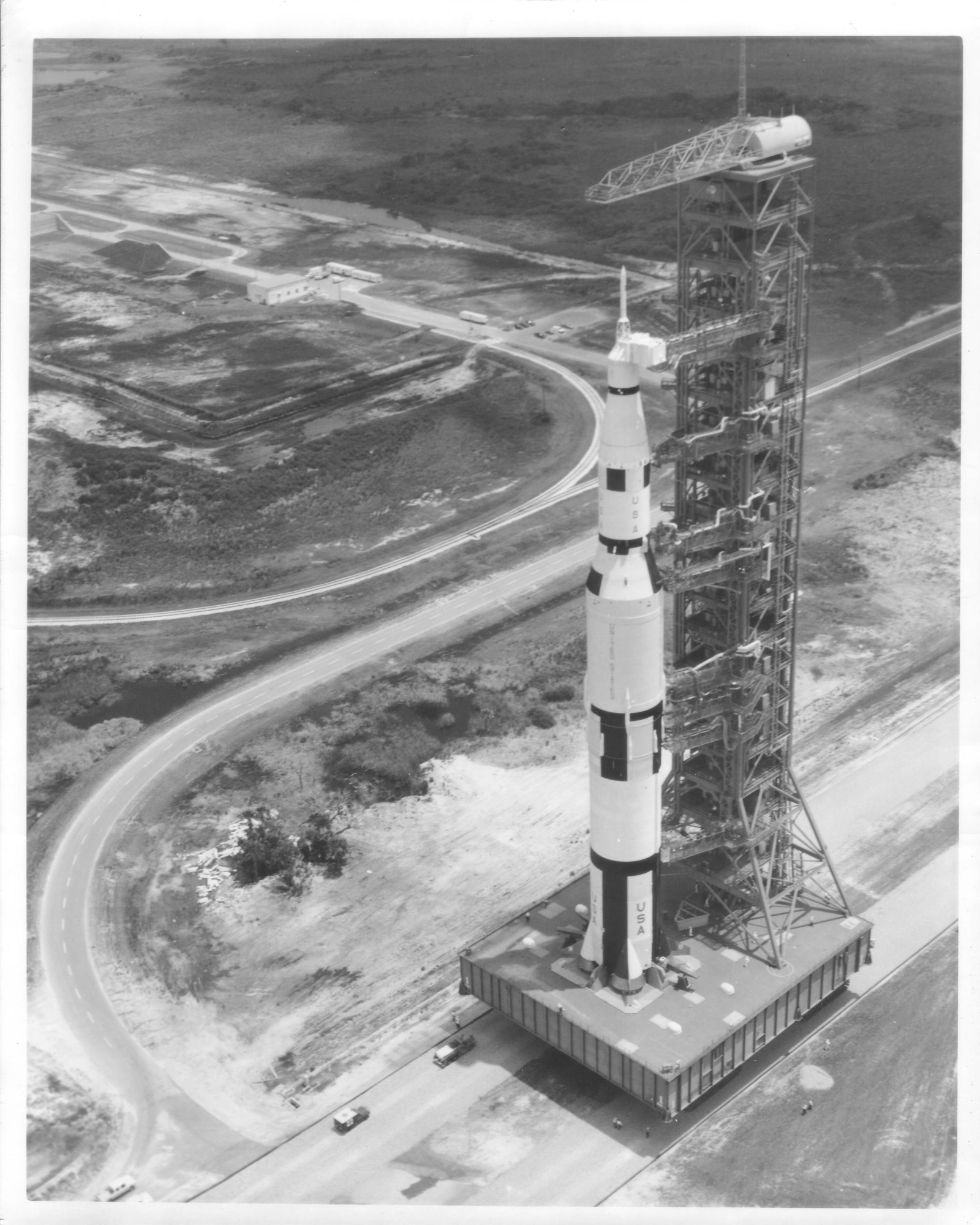
Between 1945 and 1959, the U.S. Army Ordnance Corps and the Joint Intelligence Objectives Agency secretly transported more than 1,600 German scientists, engineers, and technicians from defeated Nazi Germany to the United States — together with files that had been quietly stripped of references to Nazi Party membership, SS rank, and slave-labour exploitation. The clip on the folder was where the program got its name. The most prominent of the imported men was Wernher von Braun, designer of the V-2 ballistic missile, who twenty-four years later watched the Saturn V — a rocket built by his Huntsville team — lift Apollo 11 toward the Moon.
The Tuskegee Syphilis Study
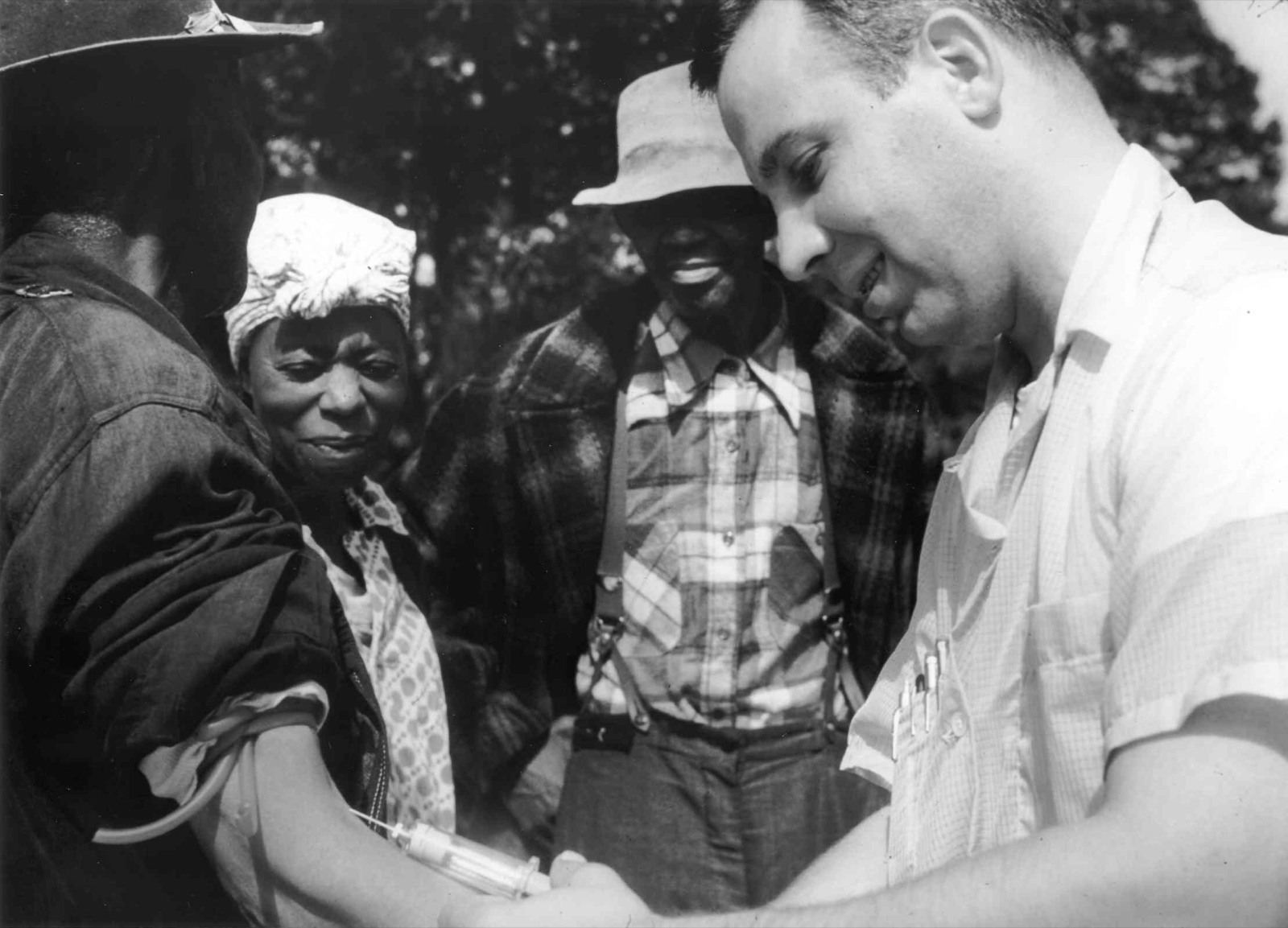
In 1932, the U.S. Public Health Service began a study of 399 Black men in Macon County, Alabama, who had syphilis. They were told they were being treated. They were not. For forty years — including the twenty-five years after penicillin became standard care — the Public Health Service watched the disease take its course. A whistleblower's documents reached the Associated Press on July 25, 1972, and the study ended a few months later. President Clinton apologized on behalf of the United States government in 1997.
MK-Ultra
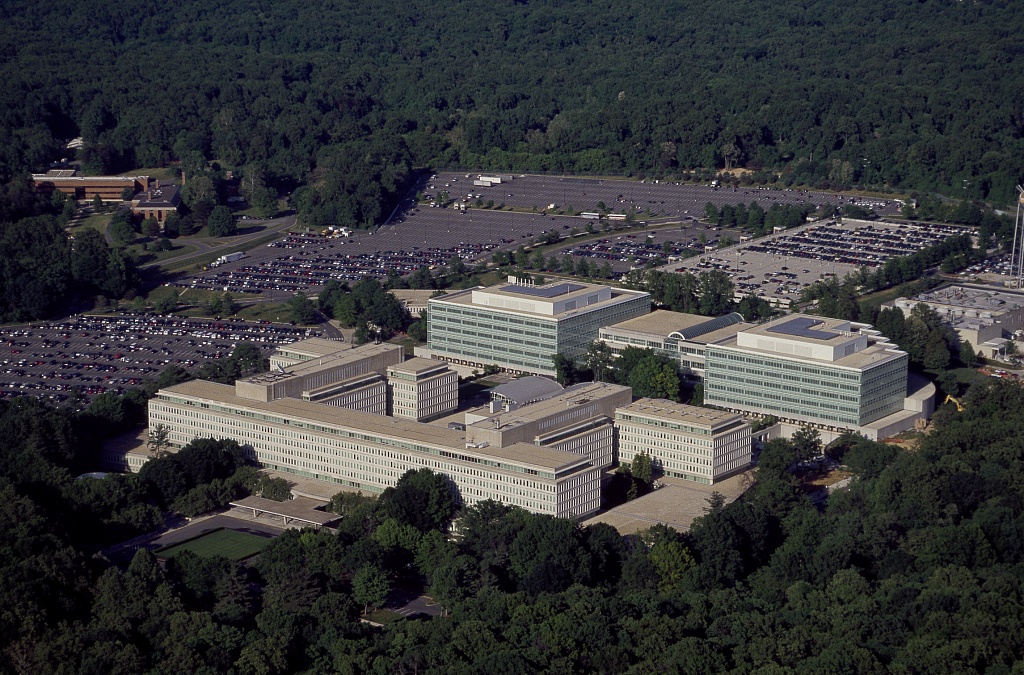
Between 1953 and 1973, the Central Intelligence Agency ran one of the most ambitious — and least restrained — human-experimentation programs in American history. The goal was mind control. The subjects rarely knew they were subjects. By the time the public found out, most of the records had been burned.