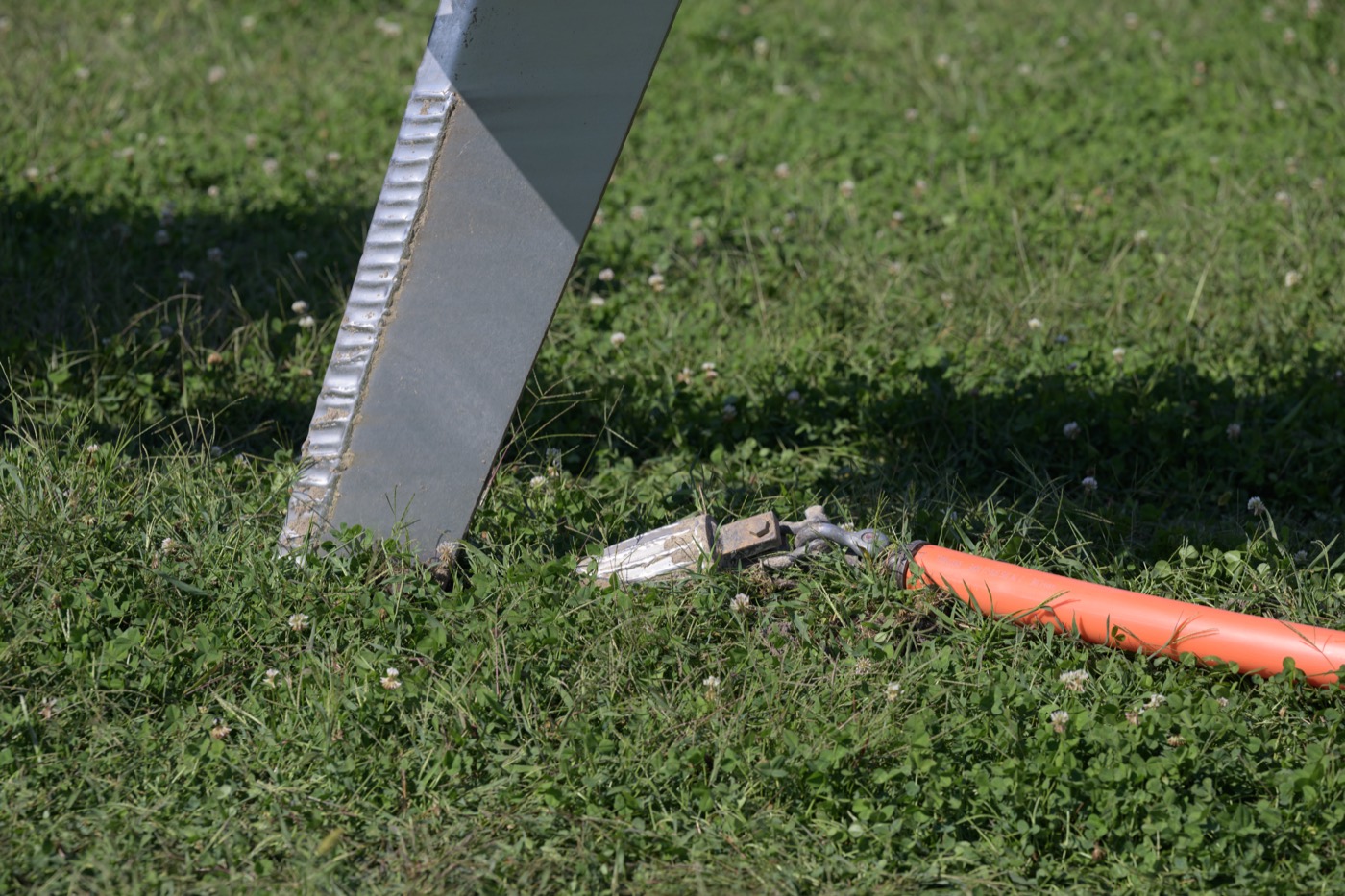
Fiber-optic cable, the physical backbone of the telecom boom. WorldCom rode that boom to become a global giant — and when the bubble burst, it hid billions of dollars in network costs by pretending they were long-term investments in infrastructure like this. Wikimedia Commons / USDAgov, Public domain.
WorldCom and the $11 Billion Accounting Fraud
United States, 2002 — A telecom giant built on acquisitions hid billions in expenses to fake its profits. A small internal-audit team, working at night, found it — and triggered the largest bankruptcy in American history and a law that reshaped corporate accounting
- Category
- Finance & Economy
- Published
- Length
- 4,045 words · 19 min read
- Author
- The editors
The Enron scandal is the more famous of the two great corporate frauds of 2002, remembered for its baroque complexity — the off-the-books partnerships, the energy-trading schemes, the swaggering culture. WorldCom, which collapsed only months later, was in some ways the more frightening, precisely because it was so simple. There was no exotic financial engineering at its heart, no labyrinth that only a specialist could follow. There was just an accounting trick a first-year student could understand — pretending that everyday expenses were long-term investments — performed on a scale of billions of dollars, quarter after quarter, in plain sight of auditors and regulators. And the people who finally caught it were not crusading outsiders but a small team of the company's own employees, doing their jobs carefully when it would have been far easier and safer not to.
This is the story of the biggest accounting fraud of its era and the internal auditors who refused to look away.
The empire Bernie built
Bernard Ebbers did not look or sound like a titan of finance, and that was part of his appeal. Born in Canada in 1941, he had worked as a milkman and a bar bouncer, coached high-school basketball, and run a chain of motels in Mississippi before he stumbled into the telephone business in the 1980s. The breakup of the AT&T monopoly had opened the long-distance market to competition, and Ebbers and a group of investors started a small company to resell long-distance service in the South. Its name, eventually, was Long Distance Discount Services — LDDS — and from this modest base, in the small city of Clinton, Mississippi, Ebbers built one of the largest telecommunications companies in the world.

He built it by buying. Through the late 1980s and the 1990s, Ebbers's company swallowed competitor after competitor in a relentless campaign of acquisitions — dozens of them — growing larger and changing its name to WorldCom along the way. Each purchase added customers, networks, and revenue, and each was financed in part by WorldCom's ever-rising stock, which acted as a currency for the next deal. The strategy reached its zenith in 1998, when WorldCom acquired MCI, one of the giants of American long-distance telephony, in a deal worth around $37 billion — an astonishing leap for a company that had begun as a tiny Southern reseller. Ebbers tried to go further still, agreeing in 1999 to merge with Sprint in what would have been one of the largest mergers in history, until regulators in the United States and Europe blocked it on competition grounds.
The acquisitions made Ebbers immensely rich and, in the financial world, immensely admired. He was celebrated as a visionary empire-builder, a folksy outsider in cowboy boots who had beaten the establishment at its own game. But the strategy had a hidden fragility. A company that grows by serial acquisition, paid for with its own soaring shares, depends utterly on that share price staying high — and the share price depended on WorldCom continuing to report the strong, growing earnings that justified its valuation. As long as the deals kept coming and the stock kept rising, the machine ran. When the music stopped, the same dependence would become a trap.
When the music stopped
Around the turn of the millennium, the telecom boom that had carried WorldCom upward went into reverse. The industry had massively overbuilt — laying far more fiber-optic capacity than the market could use — and the bursting of the broader dot-com bubble in 2000 and 2001 sent telecom revenues and share prices tumbling across the sector. WorldCom, built for perpetual growth and saddled with the debts of its acquisition spree, was acutely exposed. Its costs were high, its revenues were softening, and the profits Wall Street expected were becoming harder and harder to produce by honest means.
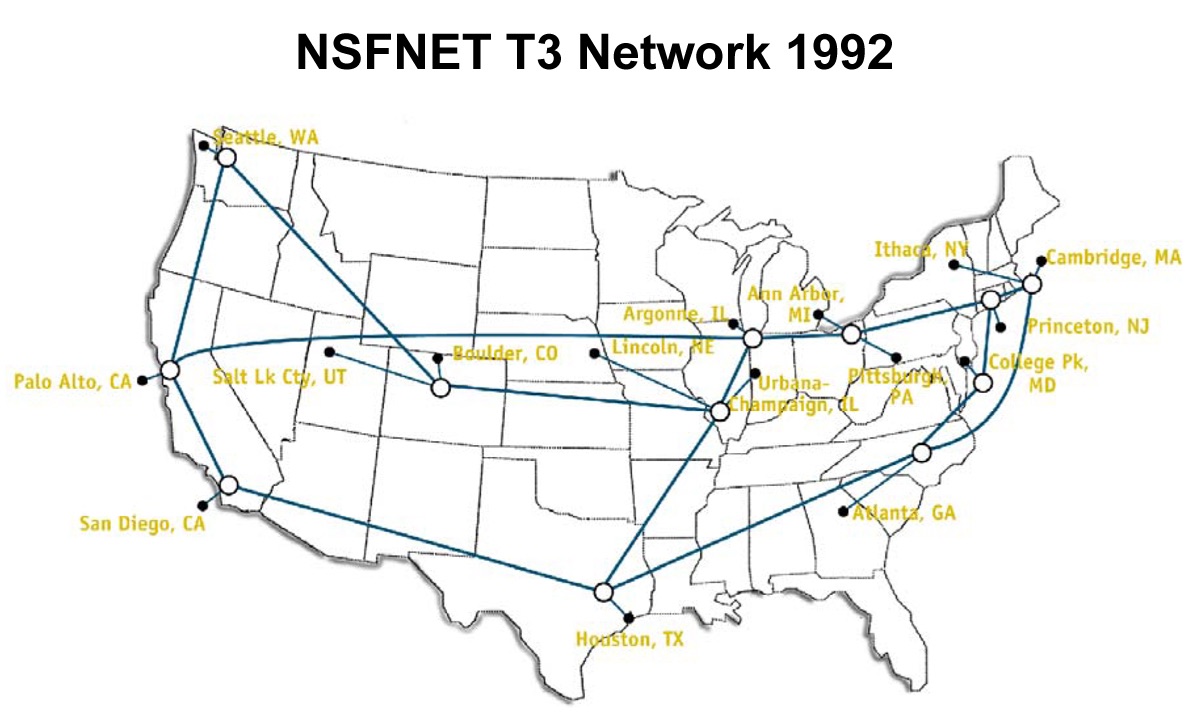
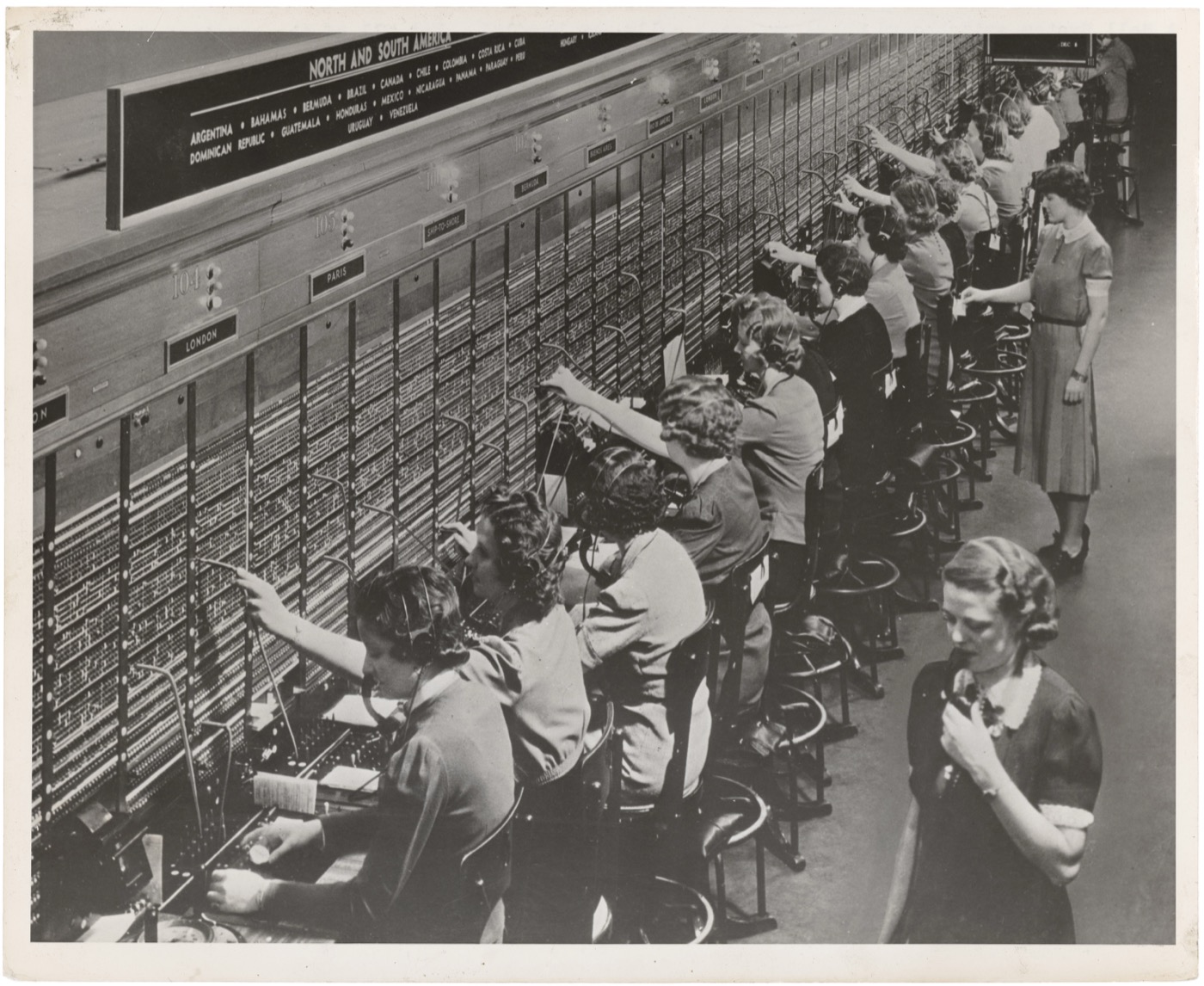
The central problem lay in what WorldCom called its line costs. These were the fees it paid to other telecommunications companies for the use of their networks — the cost of completing calls and carrying traffic that did not travel entirely over WorldCom's own lines. Line costs were among the company's single largest expenses, and crucially, they were operating expenses: under any honest accounting, they had to be subtracted from revenue in the period they were incurred, directly reducing reported profit. As revenues fell but the line costs stayed stubbornly high, the gap between what WorldCom was earning and what it had promised investors grew into a chasm. Reported honestly, the company would have had to show that its profits were collapsing.
It chose not to report honestly. Beginning in 2001, under the direction of chief financial officer Scott Sullivan, WorldCom's finance department began moving huge sums of line costs off the income statement, where they belonged as expenses, and onto the balance sheet, where they were recorded as capital expenditures — investments in long-term assets. The distinction is fundamental to accounting. An expense is consumed immediately and reduces this year's profit; a capital investment, like building a network, is treated as an asset whose cost is spread out over many years. By relabeling everyday operating costs as capital investments, WorldCom made billions of dollars of expenses simply disappear from its current results, transforming losses into the profits the market expected.
The mechanics were as banal as the principle. Quarter after quarter, as the books were closed, senior finance staff made or directed large journal entries shifting line costs into capital accounts — often in round, suspiciously tidy sums, plugged in near the end of the reporting period to make the final numbers hit the targets analysts expected. There was no business justification for the entries and no documentation that could have supported them; they were simply the difference between the profit WorldCom had earned and the profit it had promised, moved by hand from one column to another. Lower-level accountants who questioned the entries were pressured to make them anyway. What had begun as a stopgap to get through a bad quarter became a routine, a treadmill that had to keep running because stopping would have revealed everything that had already been hidden — the classic trap of the accounting fraud, where each lie requires a larger one to sustain it.
The auditor who would not let go
The person who eventually looked in the right place was Cynthia Cooper, WorldCom's vice-president of internal audit. Internal audit is a department often regarded as a backwater — its usual work is checking operational efficiency and compliance, not hunting for fraud, and at WorldCom it was supposed to confine itself to those routine matters and stay out of the financial accounting, which was the province of the outside auditors at Arthur Andersen. But Cooper and her small team began pulling at threads that did not add up.
The first thread came from elsewhere in the company. An executive in the wireless division had complained that money he had set aside as a reserve had been taken away and used to prop up profits elsewhere — a sign that the accounting was being manipulated. Cooper's curiosity, once aroused, did not subside. As her team probed the company's capital expenditures, they kept finding enormous sums booked as capital that did not correspond to any identifiable assets — billions of dollars that seemed to have no physical existence as equipment or construction. The numbers pointed, with growing clarity, toward the relabeling of line costs.
What followed was a quiet act of considerable courage. When Cooper sought explanations, Scott Sullivan, the CFO — a powerful and respected figure, named the industry's best CFO only a couple of years earlier — pressed her to back off and to delay her audit. To investigate the company's own chief financial officer, against his explicit wishes, was to risk her career and her team's. Cooper pressed on anyway. She and her colleagues, including the auditor Gene Morse, worked in secret and often at night, using the company's own computer systems to trace the fraudulent entries, careful not to alert the executives who might shut them down. Step by step they assembled the evidence: billions of dollars of line costs improperly capitalized, with no legitimate basis.
By June 2002, Cooper had concluded that WorldCom had improperly capitalized about $3.8 billion in line costs — an amount large enough to turn the company's reported profits into losses. Rather than take her findings to the executives who might bury them, she went over their heads to the audit committee of WorldCom's board of directors. She laid out what her team had found. The committee, confronted with the evidence, demanded answers that management could not honestly give. Within days the board acted: Scott Sullivan was fired, the controller David Myers resigned, and on 25 June 2002 WorldCom publicly announced that it had improperly accounted for billions of dollars in expenses and would have to restate its financial results. The figure would only grow as investigators dug deeper, eventually reaching around $11 billion.
The largest bankruptcy
The disclosure detonated. WorldCom's shares, already battered, collapsed toward worthlessness; its credit evaporated; and on 21 July 2002, less than a month after the announcement, the company filed for Chapter 11 bankruptcy protection. With roughly $107 billion in assets, it was the largest bankruptcy in American history to that point, surpassing Enron's collapse of just months before. Tens of thousands of employees lost their jobs in the restructuring that followed, and shareholders — including many ordinary investors and pension funds that had trusted in WorldCom's reported strength — saw their holdings wiped out.
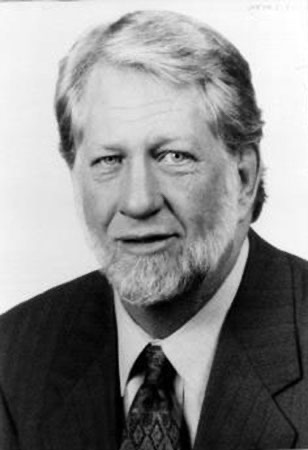
The legal reckoning fell hardest on the men at the top. Scott Sullivan, the architect of the accounting scheme, pleaded guilty to fraud and cooperated with prosecutors, ultimately receiving a five-year sentence in exchange for his testimony. The central target became Bernie Ebbers himself. Ebbers had always presented himself as a big-picture salesman who left the numbers to others, and his defense was essentially that he had not understood or known about the accounting fraud committed by his CFO. The jury did not believe him. In 2005 Ebbers was convicted of securities fraud, conspiracy, and filing false statements, and was sentenced to 25 years in federal prison — one of the stiffest sentences ever handed to a corporate executive. It emerged that he had also borrowed hundreds of millions of dollars from the company, loans approved by a compliant board, to support his personal investments as his WorldCom stock fell. Ebbers served years in prison and was released in late 2019 on grounds of failing health; he died in 2020.
The company itself did not vanish. Stripped of its fraudulent accounts and placed under new management, WorldCom restructured in bankruptcy, paid a large settlement to regulators and defrauded investors, and re-emerged in 2004 under the name of the brand it had once acquired, MCI. The reborn company never regained its old stature, and in 2006 it was bought by Verizon, folded into the operations of one of the very Baby Bells that the long-distance upstarts of the 1980s had set out to challenge. The empire Bernie Ebbers had spent a decade assembling through dozens of acquisitions was, in the end, dismantled and absorbed in turn — the networks and customers surviving under new owners while the name WorldCom passed permanently into the history of corporate fraud.
Sarbanes-Oxley and the whistleblower's vindication
WorldCom did not collapse into a vacuum. It fell just months after Enron, in a year when one corporate fraud after another — Tyco, Adelphia, Global Crossing — was tumbling into public view, and when the auditing firm Arthur Andersen, which had signed off on both Enron's and WorldCom's books, was itself disintegrating. The cumulative effect was a crisis of confidence in the integrity of American corporate accounting and in the watchdogs meant to police it. The outside auditors had not caught WorldCom; the board had not caught it; the regulators had not caught it. Public faith in the numbers that underpin the stock market was badly shaken.
Congress responded with the Sarbanes-Oxley Act, passed with overwhelming bipartisan support and signed into law on 30 July 2002, only days after WorldCom's bankruptcy. Named for Senator Paul Sarbanes and Representative Michael Oxley, it was the most sweeping reform of corporate governance and financial regulation since the New Deal. It required chief executives and chief financial officers to personally certify the accuracy of their companies' financial statements, on pain of criminal penalty. It mandated rigorous assessments of internal financial controls. It created the Public Company Accounting Oversight Board to regulate the auditors, ending the profession's long era of self-policing, and it strengthened auditor independence and whistleblower protections. The law was, in large part, a direct answer to the failures that WorldCom and Enron had exposed.
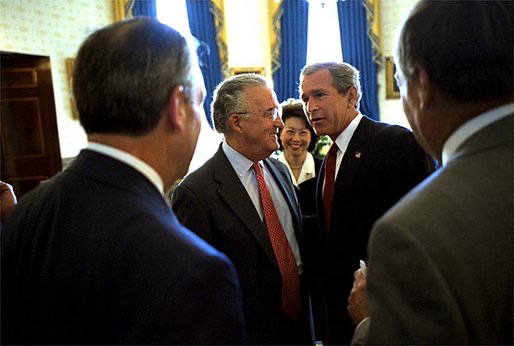
For Cynthia Cooper, the aftermath brought a vindication that few whistleblowers receive. At the end of 2002, Time magazine named her one of its Persons of the Year, alongside two other women who had spoken up that year — Sherron Watkins, who had warned of the fraud at Enron, and Coleen Rowley, the FBI agent who had exposed intelligence failures before the September 11 attacks. Cooper had not set out to be a hero; by her own account she was simply an auditor doing her job thoroughly, following the numbers where they led even when powerful people told her to stop. That, in the end, is what the WorldCom story turns on. The elaborate machinery of external auditors, regulators, and boards had all failed to catch a crude and enormous fraud. What caught it was the persistence of a few ordinary employees who declined to look away.
In the end, WorldCom is the fraud that proves the danger is not complexity but inattention. There was nothing ingenious about moving expenses into the wrong column; the genius, such as it was, lay only in the assumption that no one would check. For a year and a half that assumption held, and a company employing tens of thousands of people and carrying a great share of the world's communications floated on a profit that did not exist. Then a small team of auditors, told to mind their own business, decided that the business was exactly theirs, and pulled the lie apart. The company they exposed became the largest bankruptcy in the nation's history; the law their discovery helped inspire still governs how every public company in America keeps its books. And the lesson endures long after the names have faded: that the safeguards of honest finance are only as strong as the willingness of someone, somewhere, to keep asking the question the powerful would rather they did not.
Inspired this / based on it
Cynthia Cooper
Wiley. The internal auditor's own account of uncovering the fraud.
PBS Frontline
Television documentary on the WorldCom and Enron accounting scandals.
Filed under
- #worldcom-2002
- #bernard-ebbers
- #cynthia-cooper
- #accounting-fraud
- #sarbanes-oxley
- #telecom
- #whistleblower
- #scott-sullivan
- #2000s
- #confirmed
Click any tag for every article carrying it.
Continue reading

Enron and the Most Innovative Company That Never Really Made Money
For six consecutive years, Fortune magazine named Enron the most innovative company in America. The Houston-based energy company had, the story went, transformed itself from a sleepy operator of natural-gas pipelines into a dazzling new kind of business — a trading powerhouse that bought and sold energy and almost anything else, light on physical assets and heavy on financial genius, the very model of the modern corporation. Its stock soared; its executives were celebrated as visionaries; its revenues, on paper, rocketed past $100 billion. And then, in the autumn of 2001, it all came apart with breathtaking speed. It emerged that Enron's reported profits were substantially an illusion, manufactured through aggressive and deceptive accounting; that the company had hidden enormous debts and losses in a web of hundreds of secretive off-the-books entities, some named after Star Wars characters; and that the 'innovation' the world had admired was, to a damaging degree, the art of making a company that did not really make money look as though it made a great deal. In about six weeks, Enron went from a $60 billion blue-chip giant to the largest corporate bankruptcy in American history to that point. Twenty thousand employees lost their jobs and, in many cases, their retirement savings, which had been tied up in Enron stock. Its auditor, Arthur Andersen — one of the five great global accounting firms — was destroyed in the fallout. The scandal sent executives to prison, prompted landmark reforms, and became the defining symbol of corporate fraud at the turn of the millennium. This article tells the story of how the most admired company in America turned out to be a confidence trick, and how the trick unravelled.

Bernie Madoff and the Biggest Ponzi Scheme in History
Bernard L. Madoff was not a fringe hustler but a pillar of Wall Street. He had helped build the Nasdaq stock market and served as its chairman; he ran a respected market-making firm; he moved easily among the wealthy, the philanthropic, and the powerful. And alongside his legitimate business, he ran an investment-advisory operation that was, for decades, the envy of finance: a fund that delivered remarkably steady, positive returns year after year, in good markets and bad, never seeming to lose money. To be allowed to invest with Madoff was a mark of status, a privilege extended to wealthy individuals, charities, university endowments, banks, and feeder funds around the world. There was only one problem, and it was total: the investments did not exist. Madoff was not generating those steady returns by any strategy at all. He was running a Ponzi scheme — paying the 'returns' and redemptions of existing investors with the fresh money of new ones, while no real trading took place. For decades it worked, because as long as more money came in than went out, the scheme could continue and the statements could show whatever Madoff wanted them to show. When the financial crisis of 2008 triggered a wave of withdrawals he could not meet, the scheme collapsed, and the scale of it stunned the world: customer account statements showed about $65 billion that did not exist, built on perhaps $17–20 billion of real money that investors had actually handed over and that was now largely gone. It was the largest Ponzi scheme in history. And the most damning detail of all was that a financial analyst named Harry Markopolos had been telling the Securities and Exchange Commission, repeatedly and in detail, for nine years, that Madoff was a fraud — and had been ignored. This article tells the story of the respectable man who ran the biggest financial fraud ever, the warnings the watchdogs missed, and the lives it destroyed.

Nick Leeson and the Rogue Trader Who Broke a 233-Year-Old Bank
Barings Bank was an institution almost synonymous with British financial respectability. Founded in 1762, it had financed the Napoleonic Wars and the Louisiana Purchase, served the British monarchy, and survived for 233 years as one of the City of London's most venerable merchant banks. In February 1995, it ceased to exist — destroyed not by war or recession but by a single trader on the other side of the world. Nick Leeson, a 28-year-old from a working-class background, ran Barings' futures-trading operation in Singapore, and he appeared to be a star, generating spectacular profits that made him one of the bank's most valued employees. In reality, he was concealing catastrophic losses in a secret error account numbered 88888, doubling down again and again on losing bets that the Japanese stock market would stay stable. The bank's management, dazzled by his apparent success and failing utterly to supervise him, kept sending him money to cover his positions, believing it was funding profitable trades. Then, on 17 January 1995, a massive earthquake struck the Japanese city of Kobe, sending the Tokyo market into turmoil and turning Leeson's enormous bets disastrously wrong. As the losses ballooned past the bank's entire capital — ultimately around £827 million — Leeson fled, leaving a note that read 'I'm sorry.' Within days, Barings was bankrupt, sold to a Dutch bank for one pound. This article tells the story of how one unsupervised young man, a hidden account, and an earthquake brought down a bank that had stood for nearly two and a half centuries — and what it revealed about the dangers of trading without control.