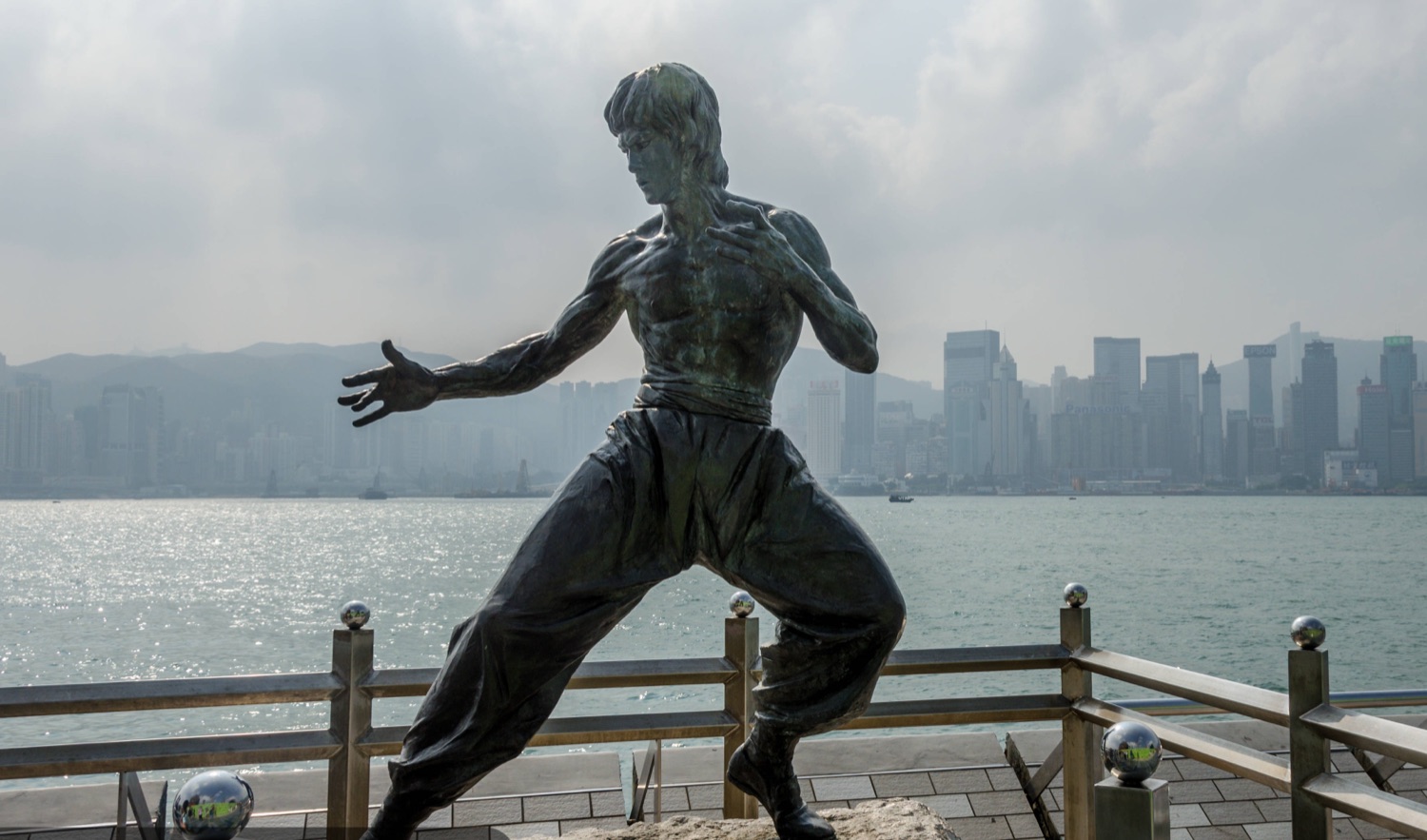
The statue of Bruce Lee at the Avenue of Stars in Hong Kong, honouring the martial artist and film star who died in the city in 1973 at the age of thirty-two. Wikimedia Commons / CC BY-SA 2.0.
The Death of Bruce Lee: The Dragon's Sudden End
Hong Kong, 20 July 1973 — The most electrifying martial artist the screen had ever seen died at thirty-two, at the peak of his powers, of a swollen brain. An inquest ruled it 'death by misadventure' — but the true cause has been debated ever since, and the myths of curses and murder have never faded
- Category
- Assassinations & Disappearances
- Published
- Length
- 3,550 words · 18 min read
- Author
- The editors
The death of Bruce Lee is a case where the shock of the event has always outrun the explanation. When a thirty-two-year-old at the apparent summit of human fitness dies suddenly and without obvious cause, the mind rebels; a headache and a swollen brain feel wholly inadequate to the enormity of losing so vivid a life so soon. Into that gap between the smallness of the apparent cause and the vastness of the loss have rushed all manner of explanations — some the honest work of doctors still debating the medicine decades later, others the fantasies of curses, contract killings, and secret martial-arts techniques that turn a medical tragedy into a thriller. The two must be kept apart. There is a genuine and unresolved medical question at the heart of Bruce Lee's death, one that serious physicians continue to argue over, and it deserves to be taken seriously. There is also a body of pure legend, feeding on the drama of his life and the later tragedy of his son, that deserves to be set aside. To tell the story well is to honour the first and dismiss the second, and to keep sight of the remarkable man whose loss started it all.
This is the story of the dragon's sudden end.
The dragon
To understand why his death caused such disbelief, one must understand what Bruce Lee was. Born in San Francisco in 1940 and raised in Hong Kong, he was a child actor, a street-fighting youth, and then, after returning to the United States, a martial-arts instructor of revolutionary ideas. He rejected the rigid, traditional styles in favour of a fluid, pragmatic philosophy of combat he called Jeet Kune Do — "the way of the intercepting fist" — that prized adaptability over dogma. But it was on screen that he became a phenomenon. Through a series of films made in Hong Kong — The Big Boss, Fist of Fury, Way of the Dragon — and then the Hollywood-backed Enter the Dragon, he brought a speed, intensity, and charisma the martial-arts genre had never seen, and made kung fu a global craze. He was not merely an actor who could fight; he was, by common consent, a genuine martial-arts genius who happened also to possess magnetic screen presence.
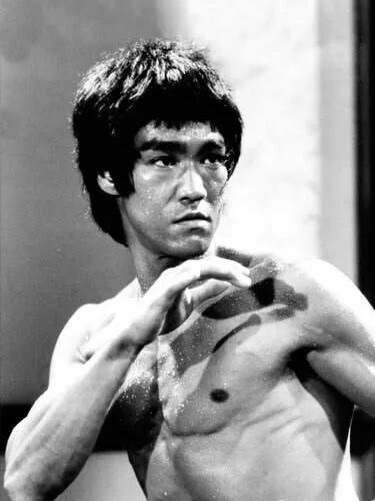
By the summer of 1973 he was poised to become one of the biggest stars on Earth. Enter the Dragon, the first Hollywood–Hong Kong co-production of its kind, was about to be released and would prove a colossal success; Lee had transcended the regional fame of his earlier films and stood ready for a global career that might have reshaped cinema. That this should be the moment of his death — a man of extraordinary discipline and fitness, thirty-two years old, on the cusp of everything — is precisely what has made the event so hard for the world to accept, and so fertile a ground for legend. The sheer implausibility of the timing has always felt, to many, like it demanded a sinister explanation.
The warning
There had, in fact, been a warning just weeks before. In May 1973, while dubbing dialogue for Enter the Dragon in a hot, air-conditioned room, Lee collapsed, suffering seizures and a dangerous swelling of the brain. He was rushed to hospital, where doctors treated the cerebral oedema — reducing the pressure on his brain — and he recovered. At the time the episode was variously attributed to heat, exhaustion, or a reaction to something he had taken, and its true cause was never definitively established. But it was, in retrospect, an ominous rehearsal: two months later, an almost identical process — a swelling of the brain — would kill him. That Lee had already suffered one near-fatal episode of exactly the kind of event that took his life is a crucial and often-overlooked fact, and it points away from the exotic explanations and toward an underlying physiological vulnerability.
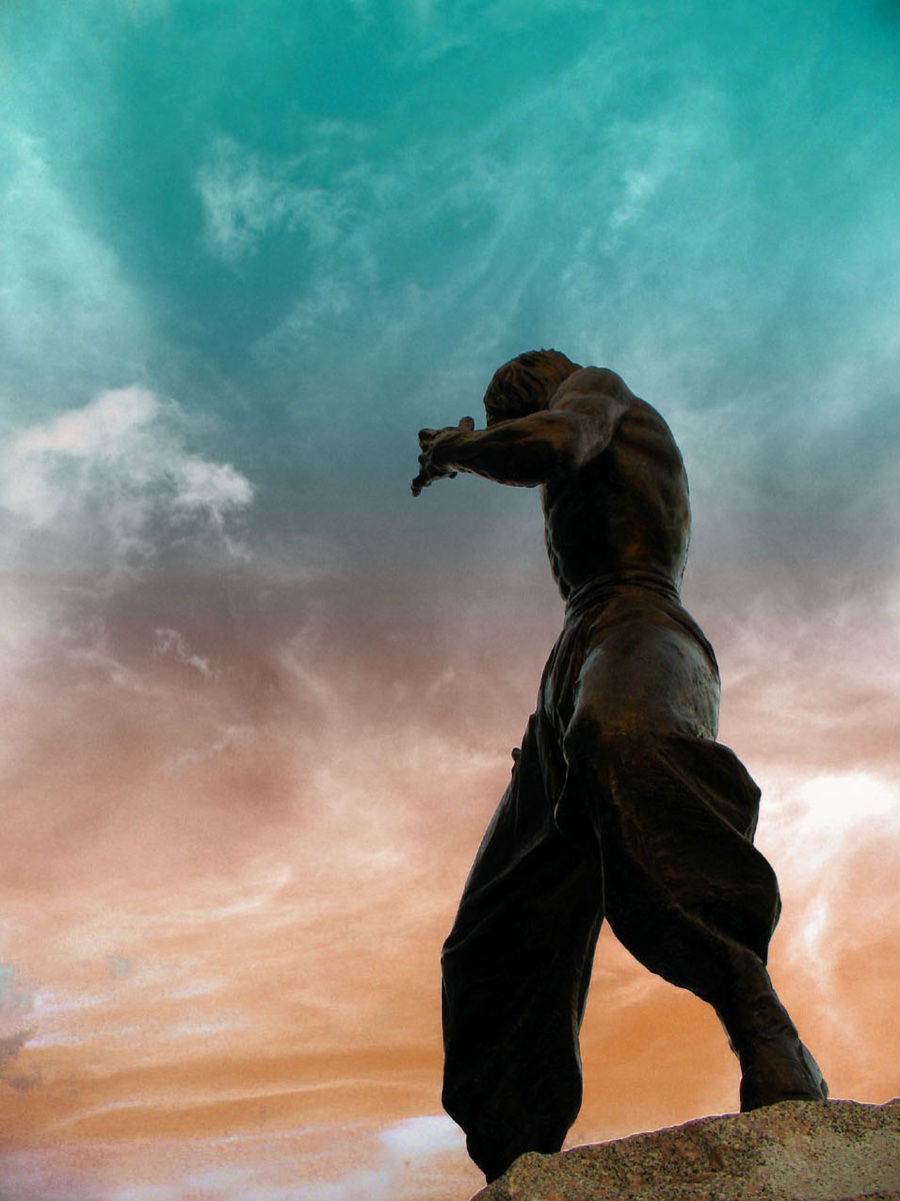
The May collapse matters because it reframes the July death. A person who dies suddenly with no prior history invites suspicion of an external cause — poison, a blow, foul play. But Lee was not such a person: he had, only weeks earlier, nearly died of the very same condition, unprompted by any assailant, in a recording studio. Whatever made his brain swell and nearly kill him in May was plainly something within his own body or its reaction to substances he took, and it is the most natural candidate for what finished the job in July. The warning episode transforms the death from an inexplicable bolt from the blue into the second, fatal occurrence of a known and recent danger.
The day
The events of 20 July are, in outline, well documented, though they have been endlessly embroidered. That day Lee met the producer Raymond Chow to work on his next film, Game of Death, and in the evening the two went to the apartment of Betty Ting Pei, an actress cast in the film, to continue discussions. Lee developed a headache, and Ting Pei gave him Equagesic, a common prescription painkiller containing aspirin and the tranquiliser meprobamate. He lay down in the bedroom to rest. When he could not be roused later that evening, an ambulance was called and he was taken to Queen Elizabeth Hospital, but efforts to revive him failed, and he was pronounced dead. Betty Ting Pei, through no fault established against her, would spend years unfairly hounded by rumour and innuendo simply for having been the person in whose home he died — a reminder of how readily the search for a villain falls on the nearest, most convenient target.
The medical debate
Where genuine, respectable uncertainty remains is in the deeper question of why Lee's brain swelled — and here the debate is real and ongoing among doctors, not a matter of conspiracy. The inquest's favoured explanation, an allergic reaction to the painkiller, is plausible but not certain; hypersensitivity reactions severe enough to cause fatal cerebral oedema are unusual, and the diagnosis was in part one of exclusion. Other physicians have proposed alternatives over the years: heatstroke, given that Lee had recently had surgery to remove his underarm sweat glands (to look better on camera), which may have impaired his ability to cool himself; an adverse effect of other substances or of his intense regimen; or an underlying seizure disorder. The recurrence of cerebral oedema in both May and July, in a young and fit man, suggests some real physiological susceptibility whose exact nature was never pinned down with the tools of the time.

The most striking recent contribution came in 2022, when researchers publishing in a medical journal proposed that Bruce Lee may have died of hyponatremia — a dangerously low level of sodium in the blood — which can cause the brain to swell with water. They pointed to a constellation of factors in his life and habits that could have overwhelmed his kidneys' ability to excrete water, from a high fluid intake to his diet, medications, and prior kidney issues, arguing that "the dragon" may, in a sense, have drowned from within. It is an elegant and much-discussed hypothesis, consistent with the recurrent brain swelling, but it is a retrospective reconstruction from limited records, not a proven diagnosis. What it illustrates is that the true medical cause of Lee's death remains, half a century on, an open and legitimately contested question — a real mystery of medicine, not of murder.
Curses, murder, and the death touch
The legends that have grown around Bruce Lee's death are as vivid as they are unfounded. Because he died so young and so suddenly, and because he had made enemies in the worlds of martial arts and entertainment, theories of murder took hold at once: that he had been assassinated by Hong Kong Triads for refusing to pay protection or for defying the industry's power-brokers; that a jealous rival martial artist had killed him with dim mak, a mythical "death touch" said to cause delayed death; that he was poisoned. None of these has ever been supported by evidence, and the dim mak notion belongs to fantasy rather than physiology. A related legend holds that the Lee family was cursed, and this belief was powerfully reinforced two decades later by a genuine tragedy: in 1993, Bruce Lee's son Brandon Lee, himself a promising actor, was killed in an accident on the set of the film The Crow, when a prop gun that had been improperly prepared fired a real projectile lodged in its barrel.
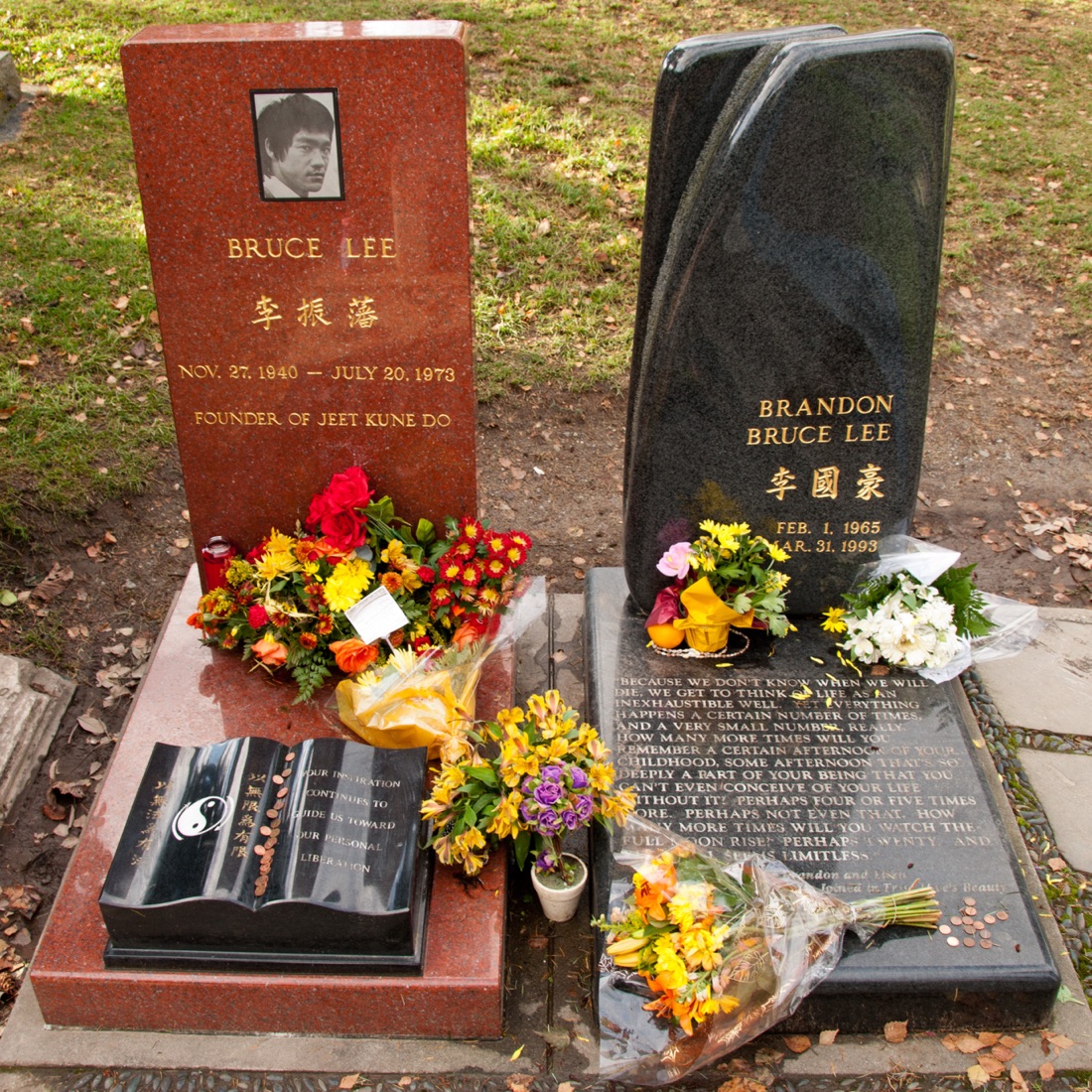
The death of Brandon Lee was a real and terrible event, and its coincidence with his father's early death is genuinely poignant — but it was not evidence of a curse. Brandon died because of a specific, documented, and preventable failure of safety procedure on a film set, a chain of negligence that has, tragically, recurred in other productions. Two premature deaths in one family, however painful, are a coincidence of the kind that ordinary probability produces across the many famous families in the world; the human mind, pattern-seeking and drawn to meaning, reads a curse into what is in fact grief compounded by chance. To attribute Bruce Lee's medical death and his son's on-set accident to a supernatural family doom is to mistake sorrow for evidence, and it does justice to neither man.
Weighing it
Set the legends aside, and what remains is a case that is largely understood in its mechanics and genuinely uncertain only in its deepest cause. Bruce Lee died of cerebral oedema; that is settled. He had nearly died of the same thing two months before, which tells us the cause lay in his own physiology and its interactions with what he took, not in an assailant's hand. The precise trigger — an allergic reaction to a painkiller, heatstroke, hyponatremia, or some combination — cannot now be determined with certainty, and reasonable physicians disagree. That is the honest shape of the mystery: a real medical question, unresolved by the limited evidence of 1973 and unlikely ever to be settled, wrapped in a thick layer of myth that the facts do not support. The murder theories collapse for want of evidence; the curse dissolves into coincidence; and what is left is the sad, ordinary truth that even the strongest body can harbour a fatal vulnerability.
What it means
Bruce Lee's death did nothing to diminish him; if anything, dying young and at his zenith sealed his immortality. Enter the Dragon was released weeks later to enormous success, and Lee became not merely a star but a lasting icon — of martial arts, of Asian representation in a Western cinema that had offered little, of a philosophy of self-cultivation that reached far beyond fighting. His influence on action cinema, on the global spread of martial arts, and on generations of admirers is incalculable, and it has grown rather than faded across the decades. The very intensity of his legend is part of why his death attracted, and still attracts, such mythologising: a figure so extraordinary seems to demand an extraordinary end, and the ordinary medical tragedy of a swollen brain can feel like a betrayal of his image.
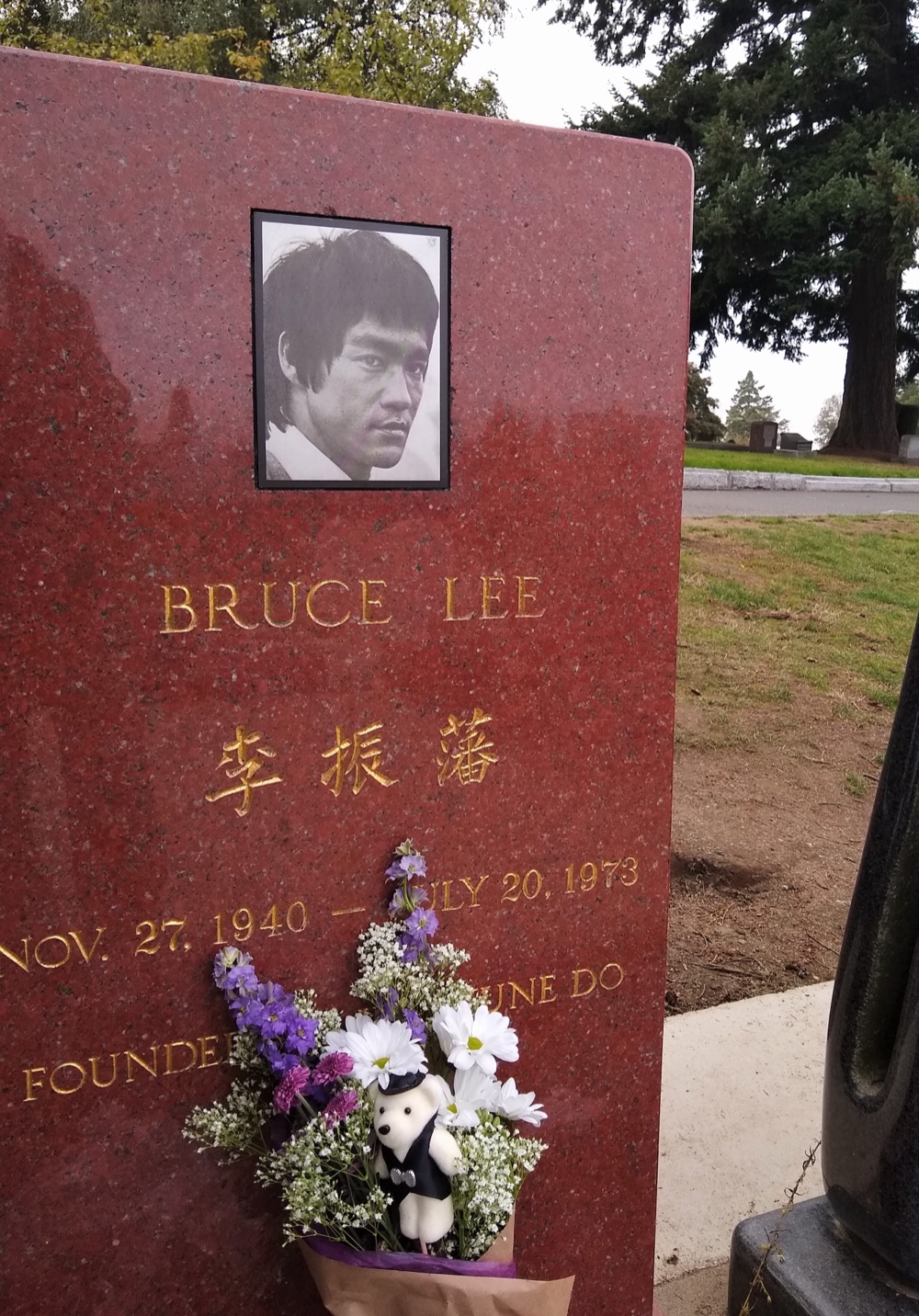
The scale of the public grief was itself extraordinary and revealing. Lee was mourned in two funerals — a first in Hong Kong, where tens of thousands of stunned fans thronged the streets, so vast and emotional was the crowd, and a second in Seattle, where he was buried at Lake View Cemetery near the university he had attended. The disbelief that ran through those crowds — the refusal to accept that so vital a man could simply be gone — was the same emotional current that would feed the conspiracy theories, and it is worth naming honestly. Much of the mythologising of Lee's death springs not from any evidence but from love and shock: the sense that a life so luminous could not have ended so quietly, that such a loss must mean something, must have a culprit. It is a very human response, and an understandable one, but it is not a form of knowledge, and the kindest thing that can be said of it is that it measures how much he was adored.
In the end, the death of Bruce Lee is best understood as a genuine medical mystery stripped of its false ones. He died, at thirty-two, of a swelling of the brain whose ultimate cause the medicine of his day could not fix and the medicine of ours still debates — a real, unresolved question that honest inquiry can pursue without embarrassment. What he did not die of, so far as any evidence shows, is murder, or a death-touch, or a curse; those are the stories a grieving world told itself because the truth felt too small for so large a life. The kindest and most accurate memorial is to hold both facts at once: that we do not know precisely why his body failed him, and that there is no mystery at all about the man himself — a once-in-a-generation talent, taken far too soon, whose loss was tragedy enough without the legends, and whose legacy needs none of them to endure.
In the end, the death of Bruce Lee endures as one of the great "what ifs" of modern culture, and as a lesson in the difference between a mystery worth pursuing and a myth worth discarding. A young man of astonishing gifts died suddenly of a cause that medicine has never fully explained, and that unexplained quality is real and legitimate — the kind of open question that careful science may yet illuminate. But the murders and curses and death-touches that have clung to his memory are not mysteries; they are the debris of a loss too great and too sudden for the world to accept plainly. Bruce Lee was not killed by an enemy or a spell. He was, by every indication, killed by his own body, in a way that even now we cannot fully name — and that honest uncertainty, held without embellishment, is a truer tribute than any legend. The dragon's fire went out early and without warning, and half a century later we still do not know exactly why; but we know, at least, that the answer lies in medicine and mortality, not in murder and myth.
Inspired this / based on it
Robert Clouse
Lee's breakthrough Hollywood film, released weeks after his death, which sealed his global stardom.
Bao Nguyen
An ESPN documentary on Bruce Lee's life, legacy, and cultural significance.
Filed under
Click any tag for every article carrying it.
Continue reading
The Death of Marilyn Monroe: The Star, the Overdose, and the Theories
In the early hours of 5 August 1962, Marilyn Monroe — the most photographed and adored star of her age, an icon of Hollywood glamour recognised the world over — was found dead in the bedroom of her modest home in the Brentwood district of Los Angeles. She was thirty-six years old. The Los Angeles County coroner determined that she had died of acute barbiturate poisoning, a lethal quantity of sleeping pills in her system, and classified the death as a 'probable suicide,' consistent with her long and painful history of depression, insomnia, and dependency on the drugs that both sustained and endangered her. It should have been, and in its essentials was, the tragic end of a brilliant, fragile woman whom fame had exploited more than it had protected. But the investigation that night was careless and confused, the timeline muddled, the accounts of those present contradictory; and Monroe's rumoured connections to President John F. Kennedy and his brother, Attorney General Robert Kennedy, gave rise almost immediately to whispers, and then to an enduring industry, of conspiracy — that she had been murdered, or silenced, to protect powerful men. Sixty years on, those theories persist, unproven and unpersuasive, while the documented evidence points, as it did from the start, toward a lonelier and more ordinary tragedy. This is the story of the death of Marilyn Monroe — what is known, what is not, and why the difference matters.

The Death of Natalie Wood: Drowning Off Catalina
On the morning of 29 November 1981, the body of Natalie Wood — one of the most cherished actresses of her generation, a star since childhood — was found floating in the Pacific Ocean about a mile from her yacht, the Splendour, off the coast of Santa Catalina Island in California. She was forty-three, and she had drowned. The night before, she had been aboard the yacht with three other people: her husband, the actor Robert Wagner; her Brainstorm co-star, Christopher Walken; and the boat's captain, Dennis Davern. The Los Angeles coroner initially ruled the death an accidental drowning, theorising that she had slipped while trying to secure or board the yacht's dinghy and had been unable to climb back out of the cold water. But the account of that night was troubled from the start — there had reportedly been drinking and an argument aboard, the stories of those present shifted over the years, and Wood, it was widely known, had a lifelong fear of water. Three decades later, in 2011, the case was reopened; the cause of death was formally amended to 'drowning and other undetermined factors'; and in 2018 her husband was named a 'person of interest' — though he has always denied any wrongdoing, was never arrested or charged, and no evidence of foul play has ever been established. This is the story of the death of Natalie Wood — a genuine mystery in which the official record itself declines to say for certain what happened.
The Death of Kurt Cobain: The Reluctant Icon and the Theories
In early April 1994, Kurt Cobain — the singer, songwriter, and guitarist of Nirvana, the band that had carried underground rock into the mainstream and made him, against his own wishes, the defining voice of a generation — was found dead at his home in Seattle. He was twenty-seven years old. His death, from a self-inflicted gunshot wound, was ruled a suicide by the King County medical examiner and the Seattle police, a conclusion the authorities have reaffirmed in the decades since, including in a fresh review on the twentieth anniversary. Cobain had long struggled with severe depression, a debilitating chronic stomach condition, and heroin addiction, and had survived a near-fatal overdose only weeks before; a note was found at the scene. For most of those who knew him and have studied the case, his death was the tragic culmination of years of pain. Yet from the beginning a minority have insisted otherwise — that Cobain was murdered, that the suicide finding was wrong, with suspicion aimed in various directions — and these claims, amplified by books and films, have kept a conspiracy alive. This article examines his death with the care such a subject demands: what the evidence establishes, why the murder theories have not held up, and, above all, the human tragedy of mental illness and addiction that the conspiracy too often obscures. If you are struggling, please know that help is available, and that reaching out is a sign of strength, not weakness.