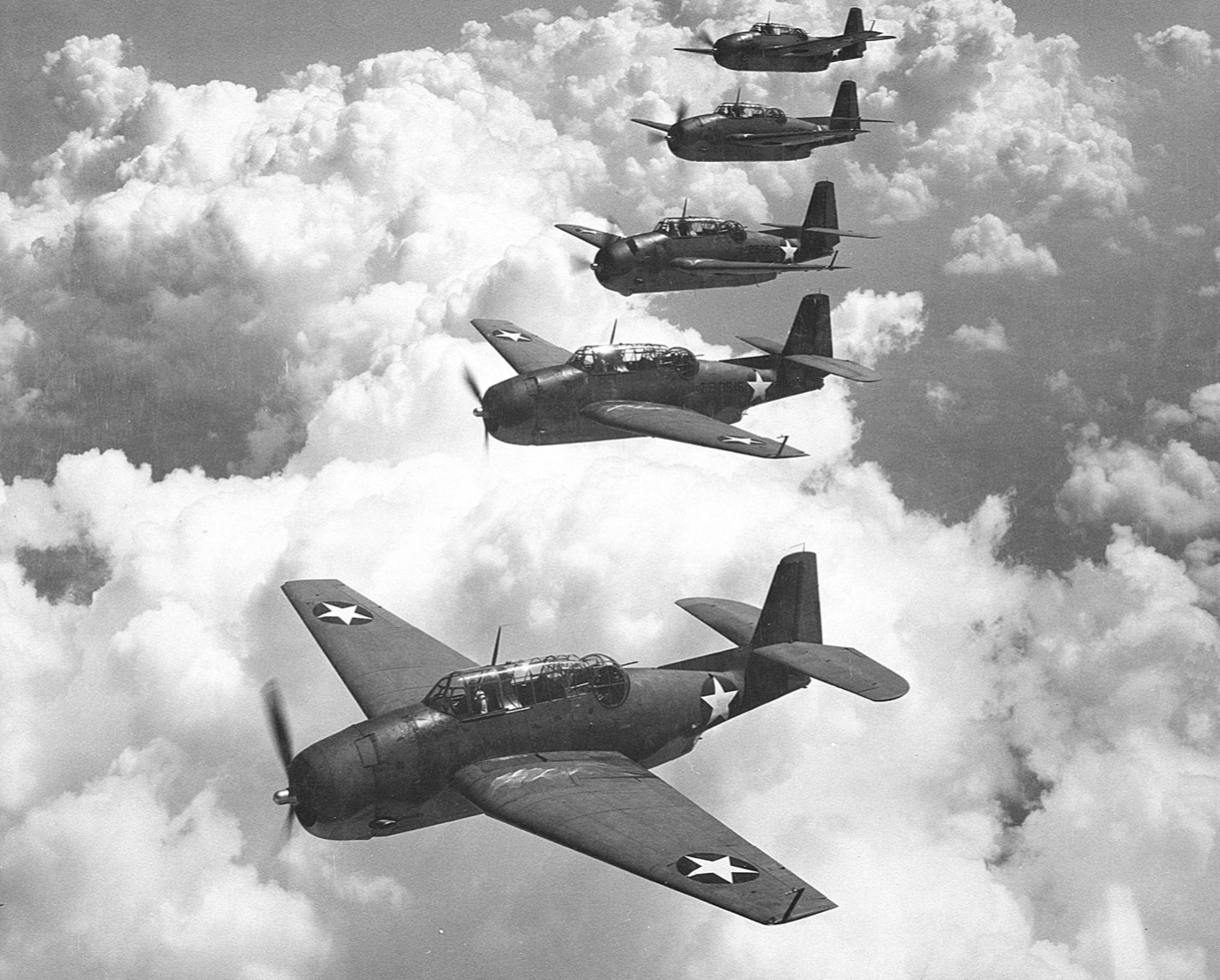
A formation of US Navy TBF/TBM Avenger torpedo bombers, the type that made up Flight 19. Five such aircraft, with fourteen airmen, vanished off Florida on 5 December 1945 — and a rescue plane sent to find them disappeared too. Wikimedia Commons / U.S. Navy, Public domain.
Flight 19: The Lost Squadron and the Birth of the Bermuda Triangle
United States, 1945 — Five Navy bombers vanished off Florida on a training flight, their leader's radio growing more confused as he lost his bearings. The rescue plane sent to find them disappeared too. The mundane explanation is tragic; the legend it spawned is far stranger
- Category
- Space & UFOlogy
- Published
- Length
- 3,650 words · 19 min read
- Author
- The editors
Flight 19 is the case where a real and explicable tragedy became the seed of one of the modern world's most durable myths. The disappearance of five aircraft and their crews on a training flight in 1945 was a genuine disaster, and its cause, while never confirmed in every detail, is reasonably well understood: a flight that lost its bearings and ran out of fuel over the open ocean. Yet from this sober and sorrowful event grew the legend of the Bermuda Triangle, a story of supernatural forces and unexplained vanishings that has been told and retold in books, films, and television for half a century — and that the actual record of Flight 19 does almost nothing to support. To examine Flight 19 honestly is to watch a myth being born, and to see how the gap between a tragedy and its full explanation can be filled, in the popular imagination, with something far stranger than the truth.
This is the story of the lost squadron.
The training flight
By December 1945, the Second World War was over, but the United States Navy continued the constant training that kept its airmen sharp. At the Naval Air Station in Fort Lauderdale, Florida, crews flew the TBM Avenger, a rugged single-engine torpedo bomber that had served throughout the Pacific war — a large, heavy aircraft with a crew of two or three. On the afternoon of 5 December, five Avengers were assigned a standard navigation training mission known as Navigation Problem No. 1: fly east from Fort Lauderdale to a shoal where they would conduct practice bombing runs, then continue east and turn north, then turn back southwest to return to base — a triangular route out over the Atlantic and home.
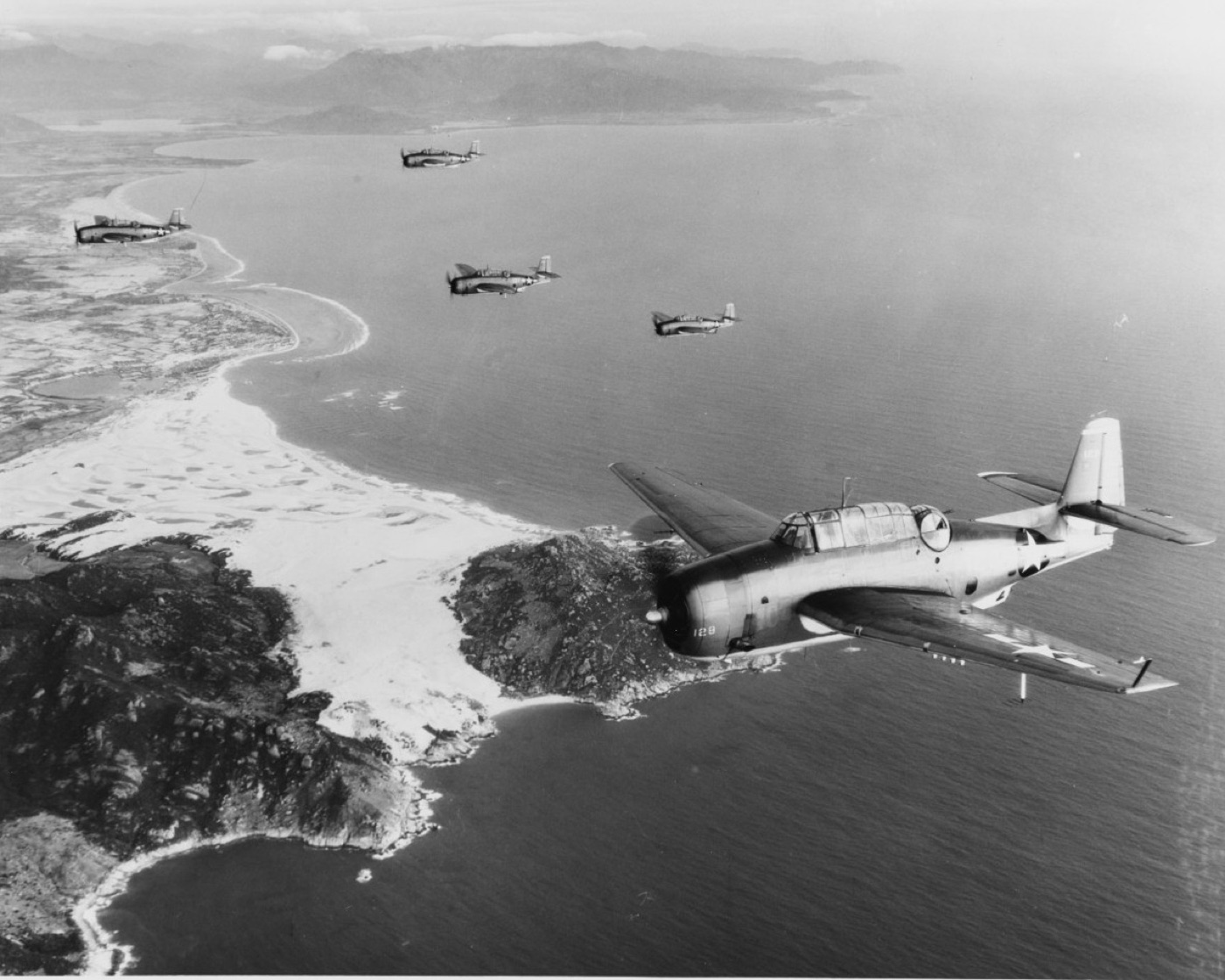
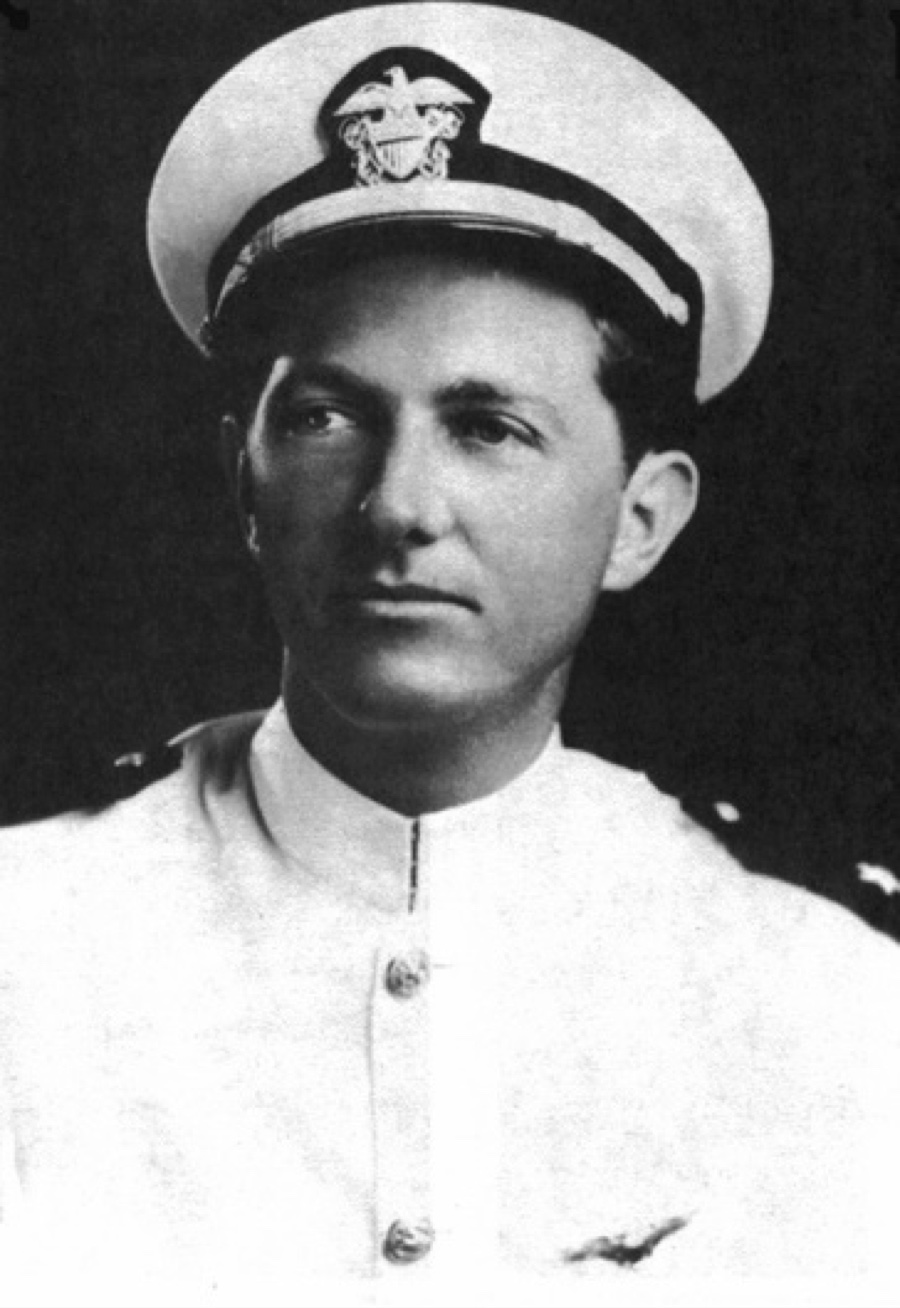
The flight of fourteen men was led by Lieutenant Charles Taylor, a combat veteran who had flown in the Pacific. Taylor was an experienced aviator, but he was relatively new to the Fort Lauderdale area, and that unfamiliarity may have mattered greatly in what followed. The other pilots were students completing their training, capable but reliant on their leader. The flight took off in the early afternoon under conditions that were adequate at the start but would deteriorate, with the weather worsening and the seas below growing rough as the day wore on.
Lost
The flight proceeded normally at first, completing its bombing practice. But sometime afterward, something went badly wrong. Taylor came to believe that his compasses had failed and that he was lost, and his radio transmissions, picked up by stations on shore and by other aircraft, recorded a mounting confusion. He thought he could see land and believed he was over the Florida Keys, far to the south of his actual position — when he was, in all likelihood, over the Atlantic to the east of Florida. Acting on this mistaken belief, he led the flight in directions that took it not toward safety but further from it.
The tragedy of the situation, as later analysts reconstructed it, lay in a fatal misorientation. If Taylor believed he was south of Florida over the Keys, then flying north and east would, in his mind, bring him back over the Florida peninsula. But if he was in fact east of Florida over the open Atlantic, those same headings carried the flight further out to sea, away from land. The students in the other planes are said to have at one point urged a westward course, which would have brought them toward the Florida coast, but the flight followed its leader. Round and round the confusion went, recorded in fragments of radio traffic, as the afternoon faded into a stormy evening.
The genuine radio fragments, far from being eerie, are heartbreakingly human. Taylor was heard saying that both his compasses were out and that he was trying to find Fort Lauderdale, that he was sure he was over the Keys but did not know how to get to Fort Lauderdale. Shore stations and other aircraft tried to help, urging him to fly west — for the simple, correct reason that flying west from anywhere over that part of the Atlantic would eventually reach the Florida coast. But Taylor, convinced he was already south of the peninsula over the Keys, feared that flying the wrong way would take him out over the Gulf of Mexico, and he hesitated and changed course. At one point a voice in the flight was reportedly heard saying that if they would only fly west they would get home. The tragedy is contained in that exchange: the way to safety was known and stated, and the flight, trusting its disoriented leader, did not take it.
As darkness fell and the weather worsened, the flight's situation became hopeless. The aircraft had a limited endurance, and the hours of confused flying had consumed their fuel. The last transmissions indicated that the planes were nearly out of fuel and would have to ditch in the sea. To put a heavy Avenger down on a rough night-time ocean was extraordinarily dangerous, and the aircraft, once in the water, would sink quickly. Somewhere over the dark Atlantic, the five planes of Flight 19 went into the sea, and their fourteen crewmen were lost. The exact location was never known.
The conditions could hardly have been worse for any chance of survival. By the time the flight would have been forced down, night had fallen and the weather over that part of the Atlantic had deteriorated badly, with strong winds and high seas. A controlled water landing in daylight and calm conditions is survivable; a forced ditching at night, in a storm, in a heavy aircraft low on fuel, by crews who could not see the surface they were descending toward, was very nearly a death sentence. Any men who survived the impact would have faced the open ocean in darkness, in December water, with little hope of being found before exhaustion and exposure took them. The same rough, deep sea that killed them then made the recovery of any trace almost impossible afterward, scattering and swallowing whatever debris there was across a vast and stormy expanse.
The rescue plane
The disappearance produced a second disaster that has become part of the legend. As it became clear that Flight 19 was in serious trouble, the Navy launched search aircraft, among them a PBM Mariner, a large twin-engine flying boat, with a crew of thirteen. Not long after taking off into the night to search for the lost flight, the Mariner itself disappeared. It was never seen again, and the most likely explanation is grim and unmysterious: the PBM Mariner had a reputation as a "flying gas tank," prone to fuel-vapor explosions, and a passing ship reported seeing a burst of flame in the sky and an oil slick on the water in the area at about the right time. The rescue plane, in all probability, exploded in mid-air, killing all thirteen aboard.
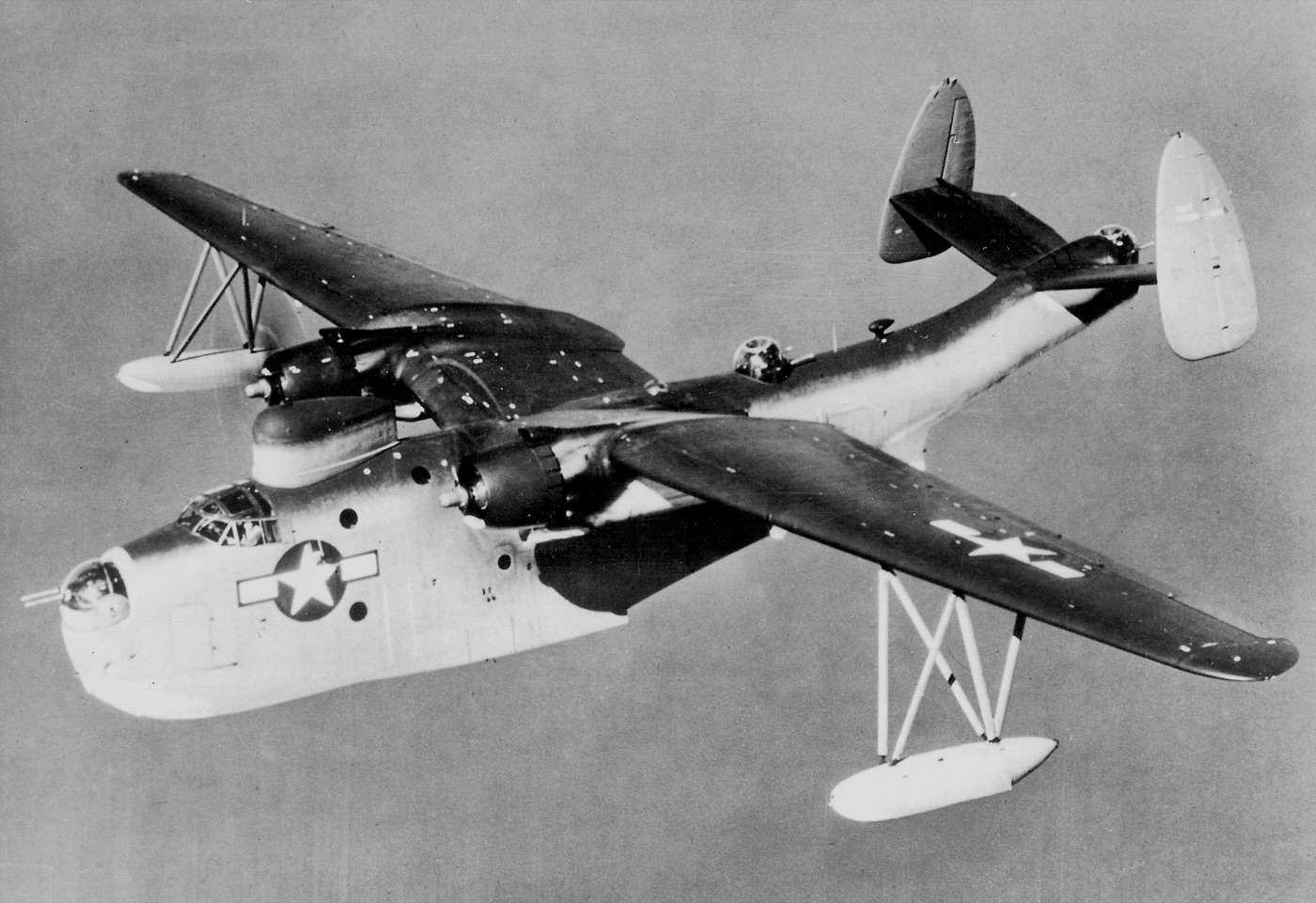
The loss of the Mariner brought the night's toll to twenty-seven men: the fourteen of Flight 19 and the thirteen of the search plane. It also added a second vanishing to the story, deepening the sense of an inexplicable catastrophe — even though the Mariner's fate, far from being mysterious, was the all-too-explicable end of a notoriously dangerous aircraft.
The search and the conclusion
The disappearance triggered one of the largest air and sea searches of the era. Ships and aircraft scoured a vast area of the Atlantic and the Gulf for days, covering thousands of square miles. They found nothing — no wreckage, no debris, no survivors, no bodies that could be tied to the lost flight. The five Avengers and their crews, and the Mariner and its crew, had vanished into the ocean as completely as if they had never been.
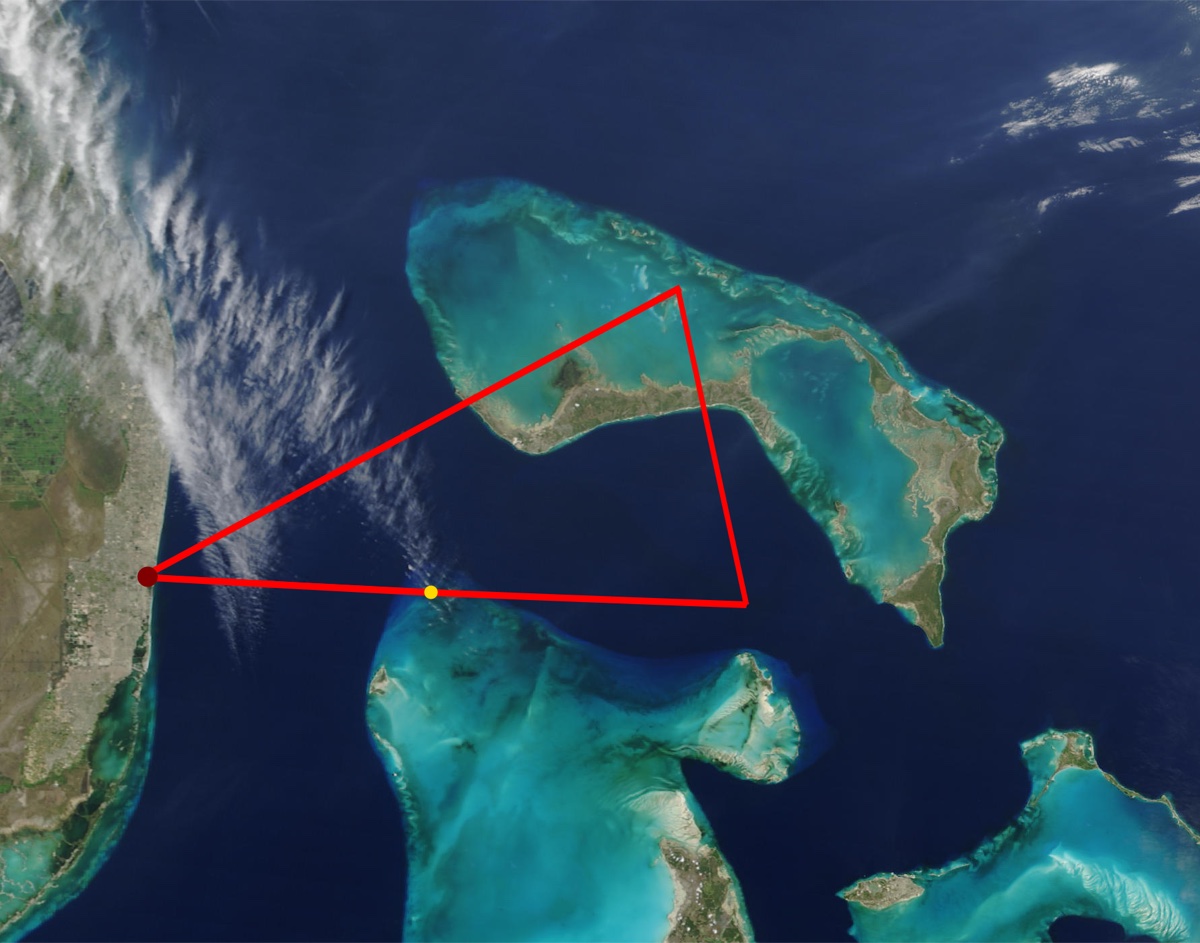
The Navy's investigation examined the radio logs and the circumstances and reached a conclusion centered on navigational error. The initial report attributed the loss substantially to the flight leader, finding that Taylor had become confused about his position and led the flight astray. Later, partly in response to the appeals of Taylor's family, who objected to the blame placed on a man who could not defend himself and whose fate was uncertain, the official finding was amended to attribute the loss to "causes unknown." This change, made for understandable and humane reasons, had an unintended consequence: an official verdict of "causes unknown" could be, and later was, seized upon as evidence that the disappearance was genuinely inexplicable — which the underlying investigation had not concluded at all.
The birth of the legend
The Bermuda Triangle legend, once established, proved enormously durable, precisely because it offered something the dry facts could not: the thrill of the genuinely unexplained, a zone where the normal rules seemed not to apply, where compasses spun and aircraft slipped into other dimensions and the sea swallowed the unwary without trace. Flight 19 was perfect raw material — a real disappearance, with no wreckage and an official verdict of "causes unknown" — and the embellishments did the rest. The famous 1977 film Close Encounters of the Third Kind even opened with the conceit that the lost airmen of Flight 19 had been taken by aliens, a measure of how thoroughly the tragedy had been absorbed into myth.
The statistical reality is mundane. The area called the Bermuda Triangle is a heavily trafficked region of ocean, crossed by countless ships and aircraft, and subject to sudden storms, the powerful Gulf Stream, and deep water — and the rate of losses there is not, by careful analysis, greater than in other busy and weather-prone stretches of sea. Disasters occur there because a great deal of traffic passes through a sometimes dangerous environment, not because of any anomaly. The Bermuda Triangle, as a zone of special supernatural peril, is a myth assembled from ordinary tragedies, of which Flight 19 is the most famous.
Kusche's debunking went further, and its method is instructive. Going back to the original sources for the Triangle's celebrated cases — the contemporary newspaper reports, the official investigations, the weather records — he found again and again that the mystery dissolved on contact with the evidence. Ships said to have vanished in calm seas had in fact gone down in violent storms; planes described as disappearing without explanation had reported trouble and come down for known reasons; incidents had been relocated into the Triangle that had occurred elsewhere; and dramatic details had been invented or embellished by authors who did not check, or did not wish to check, the facts. The Bermuda Triangle, Kusche concluded, was a "manufactured mystery," created by writers who repeated and embroidered one another's accounts without returning to the primary record. Flight 19, examined the same way, fits the pattern exactly: a real and explicable loss, dressed by later retelling in a costume of the inexplicable.
The meaning of the loss
In the end, Flight 19 is the tragedy that became a myth, and the myth has so overgrown the tragedy that the real men are often forgotten beneath it. Five aircraft and fourteen airmen were lost off Florida on a December afternoon in 1945, most likely because their leader lost his bearings and led them, in deepening confusion and worsening weather, out over an ocean from which their fuel could not bring them back; a rescue plane and thirteen more men were lost the same night to a separate and explicable disaster. No wreckage was found, because the Atlantic is deep and wide and keeps its dead. From these sober facts, and an official verdict softened out of kindness to a grieving family, was built the Bermuda Triangle, a legend of supernatural vanishings that has thrived for half a century on invented quotes and suppressed explanations. The honest accounting is less thrilling but more humane: that twenty-seven men died in an ordinary, terrible accident of aviation and the sea, and that they deserve to be remembered as the victims of a real tragedy rather than as the cast of a myth. The mystery of exactly where Flight 19 came down endures, sealed in the ocean. The mystery of why it was lost was, in truth, never much of a mystery at all.
Inspired this / based on it
Lawrence David Kusche
Harper & Row. The definitive debunking of the Bermuda Triangle legend, including Flight 19.
Charles Berlitz
Doubleday. The best-seller that popularized the legend with Flight 19 as its centerpiece.
Filed under
- #flight-19
- #bermuda-triangle
- #us-navy
- #avenger
- #disappearance
- #aviation
- #charles-taylor
- #unsolved-mystery
- #1940s
- #mystery
Click any tag for every article carrying it.
Continue reading
The Mary Celeste and the Ship That Sailed Itself
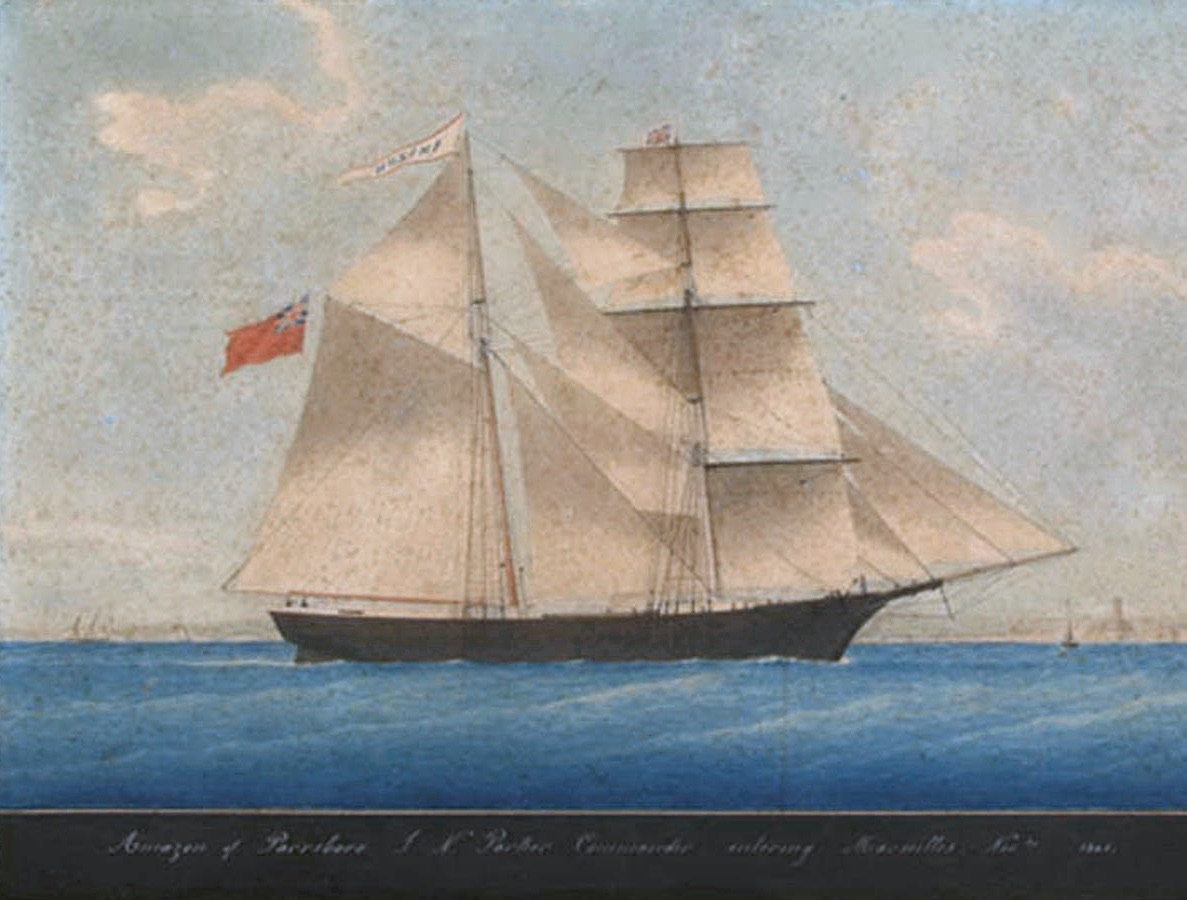
On December 5, 1872, the crew of the British brigantine Dei Gratia, several hundred miles west of Portugal, sighted another two-masted ship moving strangely across the swell — sails partly set, yawing as if no one had the helm. They closed on her, hailed her, got no answer, and sent a boarding party across. The ship was the Mary Celeste, an American merchant brigantine that had left New York a month earlier bound for Genoa with a cargo of industrial alcohol, and she was deserted. There was no one at the wheel and no one below; there was no sign of violence, no sign of robbery, no disorder beyond what a few days of unattended sailing would explain. The cargo sat almost untouched in the hold. There was ample food and fresh water. The crew's oilskins and boots and pipes were still where they had been left, and the captain's wife had left behind her harmonium and her child's toys. The ship was seaworthy and could have sailed on for months. But the ten people who had been aboard — Captain Benjamin Briggs, his wife Sarah, their two-year-old daughter Sophia, and seven crew — were gone, and so was the ship's single lifeboat, a small yawl that appeared to have been deliberately launched. No trace of any of them was ever found. The Mary Celeste became, and has remained, the most famous mystery in the history of the sea: not a wreck, not a massacre, but a sound ship abandoned in calm circumstances by people who had every reason to stay aboard. This article reconstructs what was actually found, what the Gibraltar inquiry made of it, and which of the many explanations — the credible and the lurid — best fits the strange, orderly emptiness of the ship that sailed itself.
The Flannan Isles: The Lighthouse Keepers Who Vanished
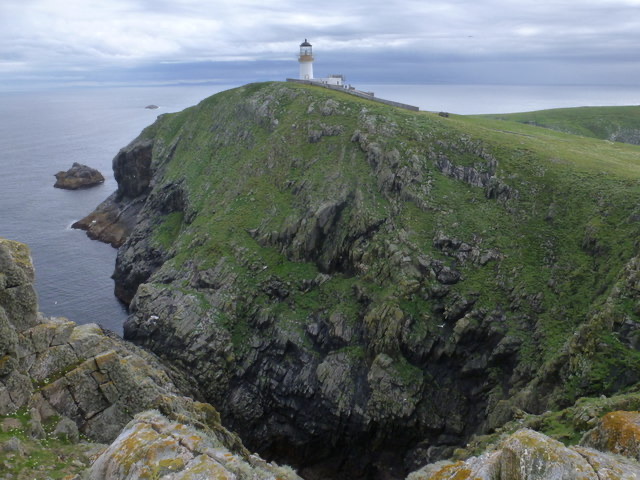
On a tiny, uninhabited island in the Atlantic off the northwest coast of Scotland, a lighthouse stood watch in the winter of 1900, manned by three experienced keepers. The Flannan Isles — a scatter of rocky islets the Hebridean fishermen called the Seven Hunters, long reputed to be uncanny — lay some thirty kilometers out into the open ocean, and the lighthouse on the largest of them, Eilean Mòr, was one of the loneliest postings in the British Isles. In mid-December, a passing steamer noticed that the light was not burning, but the report went unheeded, and bad weather delayed the relief vessel. When it finally reached the island the day after Christmas, the relief keeper climbed up to the lighthouse and found it empty. The three men — James Ducat, Thomas Marshall, and Donald MacArthur — were gone. The lamp was clean and ready but unlit; the entrance gate and the doors were shut; the clock had stopped; the last entry in the log was days old. There was no sign of the keepers anywhere on the island, and there never would be: their bodies were never found. At the island's west landing, far above the normal reach of the sea, the investigators found startling damage — equipment torn from a crevice high on the cliff, iron railings bent, a great rock shifted — the marks of a wave of extraordinary size. The official conclusion was that the three men had been swept into the sea by such a wave while trying to secure their gear in a storm. It is the most likely explanation, and it is probably true. But because no one saw it happen and nothing was ever recovered, the disappearance became one of the most haunting mysteries of the sea, and the facts were soon overgrown with legend. This is the story of the keepers who vanished from the Flannan Isles.
Tunguska: The Cosmic Explosion That Flattened a Forest
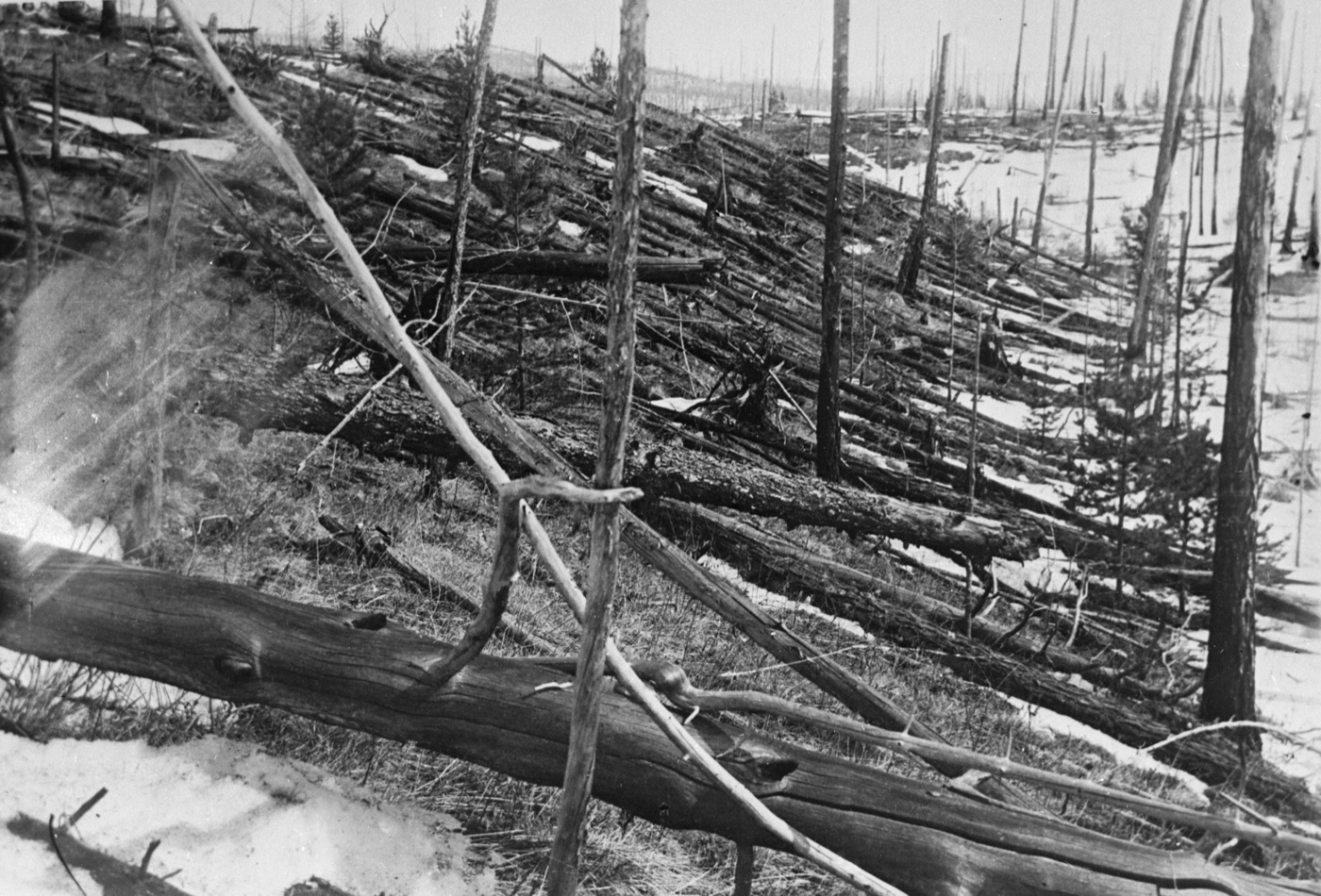
On the morning of 30 June 1908, the sky over a remote stretch of Siberia split open. Witnesses scattered across hundreds of kilometers saw a brilliant column of fire brighter than the sun streak across the heavens, followed by a flash, a series of deafening explosions like artillery, and a scorching wind. At a trading post some sixty-five kilometers from the center, a man was thrown from his chair and felt a heat so intense he thought his shirt was on fire; windows shattered and the ground shook. The blast, centered over the basin of the Podkamennaya Tunguska River, released energy estimated at the equivalent of ten to fifteen megatons of TNT — hundreds of times the power of the bomb that would later destroy Hiroshima — and it flattened some two thousand square kilometers of forest, knocking down an estimated eighty million trees in a vast radial pattern pointing away from the blast. For days afterward, the night skies of Europe and Asia glowed so brightly that people could read by them. And yet, when scientists finally reached the devastated zone — not until nearly twenty years later, after war and revolution had convulsed Russia — they found something that deepened rather than solved the puzzle: a colossal field of flattened trees, but no impact crater, and no great meteorite. The Tunguska event was the largest cosmic impact in recorded history, and the strange circumstances of its discovery left a gap that filled, over the decades, with theories ranging from the sober to the fantastical. This is the story of the explosion that leveled a Siberian forest, and of the answer that took the longest time to confirm.